

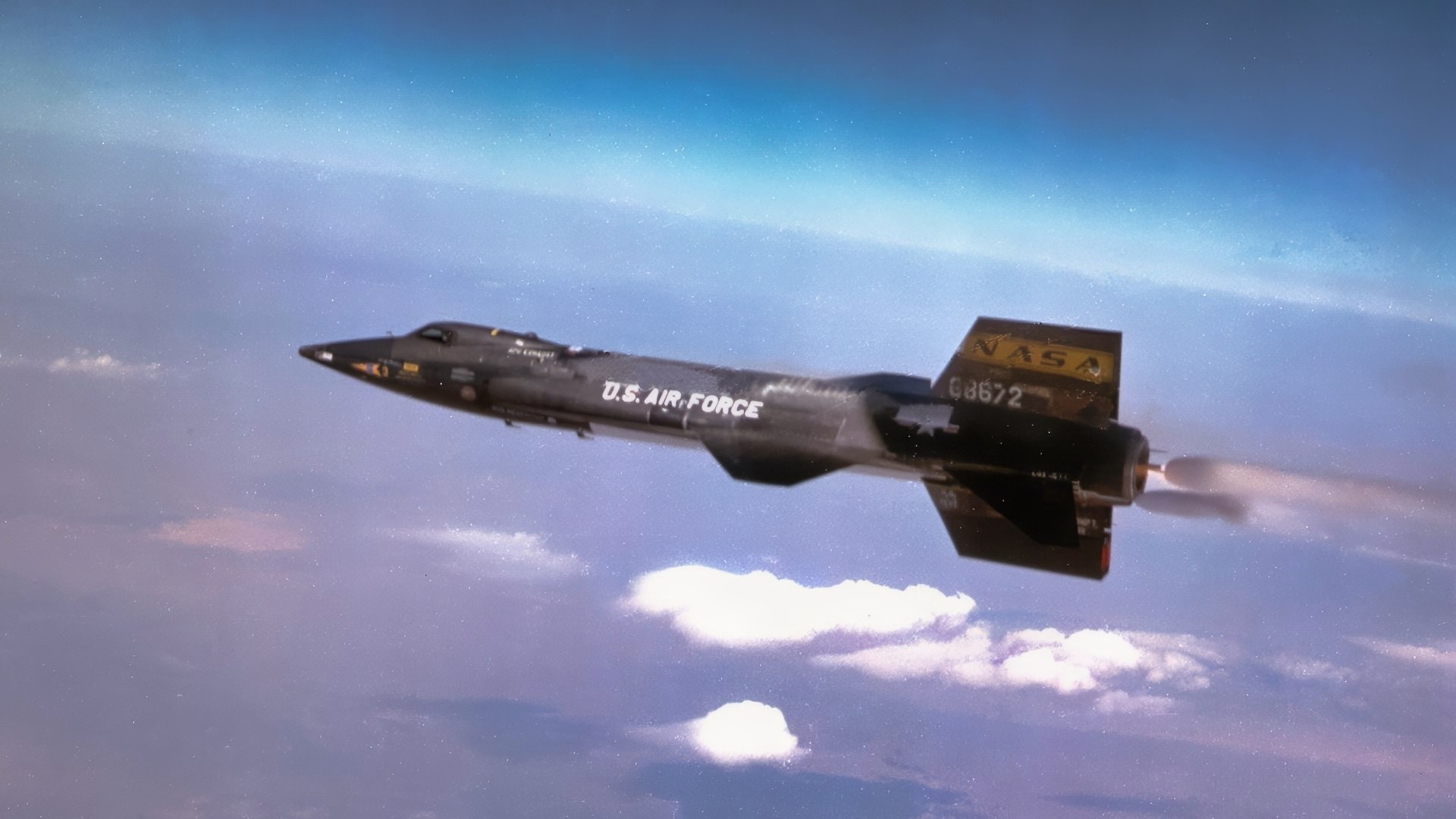
Summary and Key Points: On October 3, 1967, test pilot William “Pete” Knight flew the rocket-powered X-15 to Mach 6.7 — about 4,520 mph — a speed no crewed aircraft has matched in nearly 60 years.
-Dropped from a B-52 over the Mojave, the X-15 was part airplane, part rocket, part spacecraft, reaching the edge of space on a single rocket burn before gliding home.
-Its 12 pilots included Neil Armstrong, and its data helped shape Apollo and the Space Shuttle.
-We visited this plane back in July, 2025 and took some amazing pictures we have included below.
The X-15: We Got Up Close To This Famous Piece of Aviation History
On October 3, 1967, U.S. Air Force test pilot William “Pete” Knight was dropped from the wing of a B-52 bomber over the vast Mojave Desert in an unusually shaped aircraft that looked more like a huge, black dart than a jet.
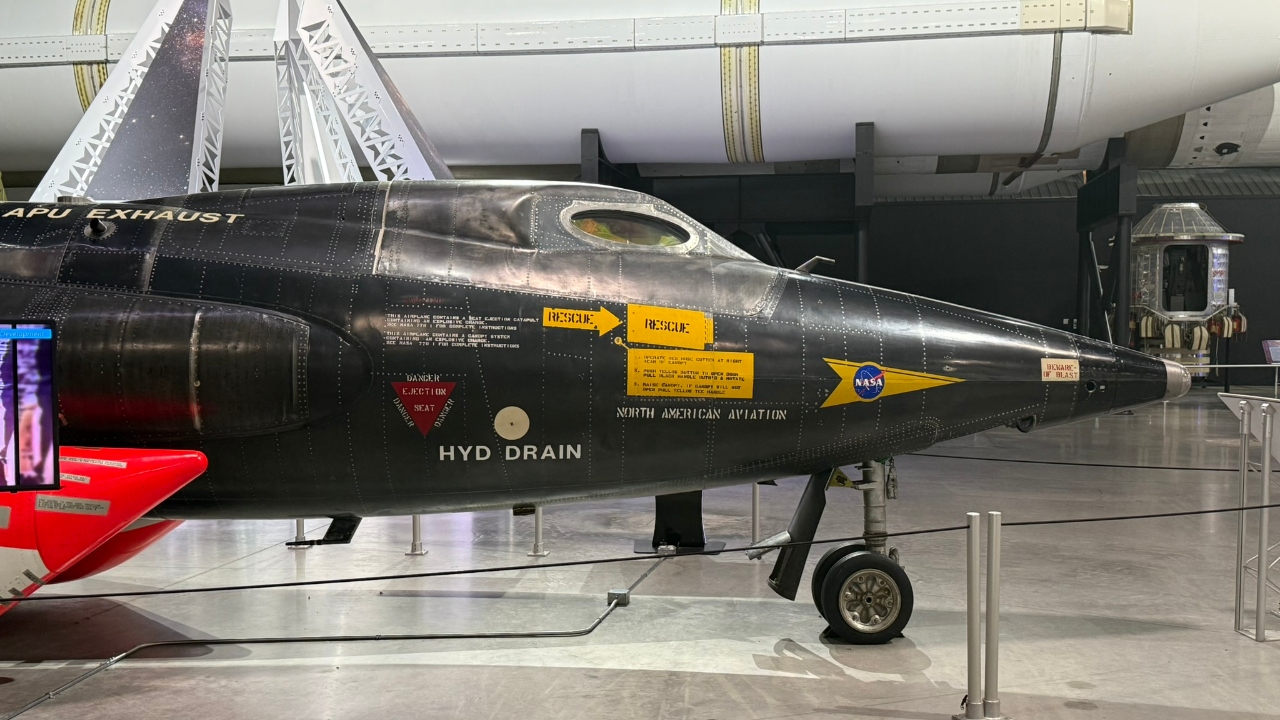
X-15 Harry J. Kazianis National Security Journal Photo.

X-15 Long Shot and Engine Photo. Image Credit: National Security Journal.

North American X-15 Head On. Image Credit: National Security Journal.

X-15 from U.S. Air Force Museum Original Photo. Image Credit: National Security Journal.

X-15 USAF Museum Photo. Image Credit: National Security Journal.

X-15A from U.S. Air Force Museum. Image Credit: National Security Journal.
Seconds later, he lit the rocket engine and the North American X-15 accelerated past Mach 1 up to Mach 6 in little more than a minute. It kept increasing its speed, eventually reaching a whopping Mach 6.7, about 4,520 miles per hour, at 100,000 plus feet.
An Unbroken Record
Nearly 60 years on, no crewed, powered aircraft has ever been recorded as having broken this impressive feat.
Aviation may have dramatically changed since the 1960s, but the X-15 is still an impressive piece of kit. Its heyday predated modern digital flight control, fly-by-wire systems, and the extensive safety automation now built into experimental aerospace programs. In many ways, it was a flying laboratory – part airplane, part rocket, and part spacecraft.
The X-15 was built by North American Aviation for NASA and the U.S. Air Force, designed to answer questions that could not be solved in wind tunnels alone. What happens to an aircraft at hypersonic speed? How does a pilot control a vehicle at the edge of space? What temperatures can an airframe survive? And what does manned flight actually look like when the atmosphere becomes too thin for ordinary aerodynamic controls?
The Program’s Impressive List of Alumni
The program ran between 1959 and 1968. It completed 199 flights with 12 pilots, which included Neil Armstrong, who would later become the first man to walk on the moon.
Then there was Scott Crossfield, who made the first powered X-15 flight; Joe Walker, who set the aircraft’s altitude record; and Knight, who set its speed record. The aircraft also set an altitude record when NASA pilot Joe Walker reached 354,200 feet on August 22, 1963, high enough to cross the Kármán line by the international definition of space.
X-15s did not take off like normal aircraft, but were carried under the wing of a modified B-52 Stratofortress and released at roughly 45,000 feet. The Reaction Motors XLR99 rocket engine ignited after this brief fall.
It burned through fuel rapidly, nudging the aircraft toward the edge of space and transforming it into an unpowered glider when the fuel was exhausted. The pilot then had just one chance to line up correctly and land.
The X-15 did not reach this speed record without considerable strain. Knight’s record-setting flight occurred in the modified X-15A-2. This model had been kitted out with external fuel tanks and a special ablative coating to reduce the risk of extreme heating. Despite all this, the post-flight inspection still showed that the aircraft had sustained extensive heat damage. The X-15A-2 never flew again, despite its impressive record.
At hypersonic speeds, air compressed around the vehicle can heat surfaces to temperatures that would destroy ordinary aircraft materials. The X-15 used a nickel-chromium alloy (Inconel X) to withstand conditions that would melt aluminum. The aircraft also needed to work where regular control surfaces became ineffective, such as at extreme altitudes. Given that the air was too thin for ailerons, elevators, and rudders to function properly, the X-15 had to implement reaction control thrusters to orient itself, as spacecraft do.
How X-15 Helped Later Advances
According to NASA, the X-15’s data gathering helped shape subsequent programs such as the Mercury, Gemini, Apollo, and the Space Shuttle. The aircraft’s unique features enabled the development of later hypersonic and reusable spaceflight concepts.
The program was not all plain sailing. On November 15, 1967, Air Force pilot Michael J. Adams died when his X-15 entered a hypersonic spin during reentry and disintegrated.
Still, the X-15 is often overlooked because it was both rocket-powered and launched from a separate aircraft. Under stricter standards, the Lockheed SR-71 Blackbird is often regarded as the fastest conventional jet aircraft, capable of cruising over Mach 3.
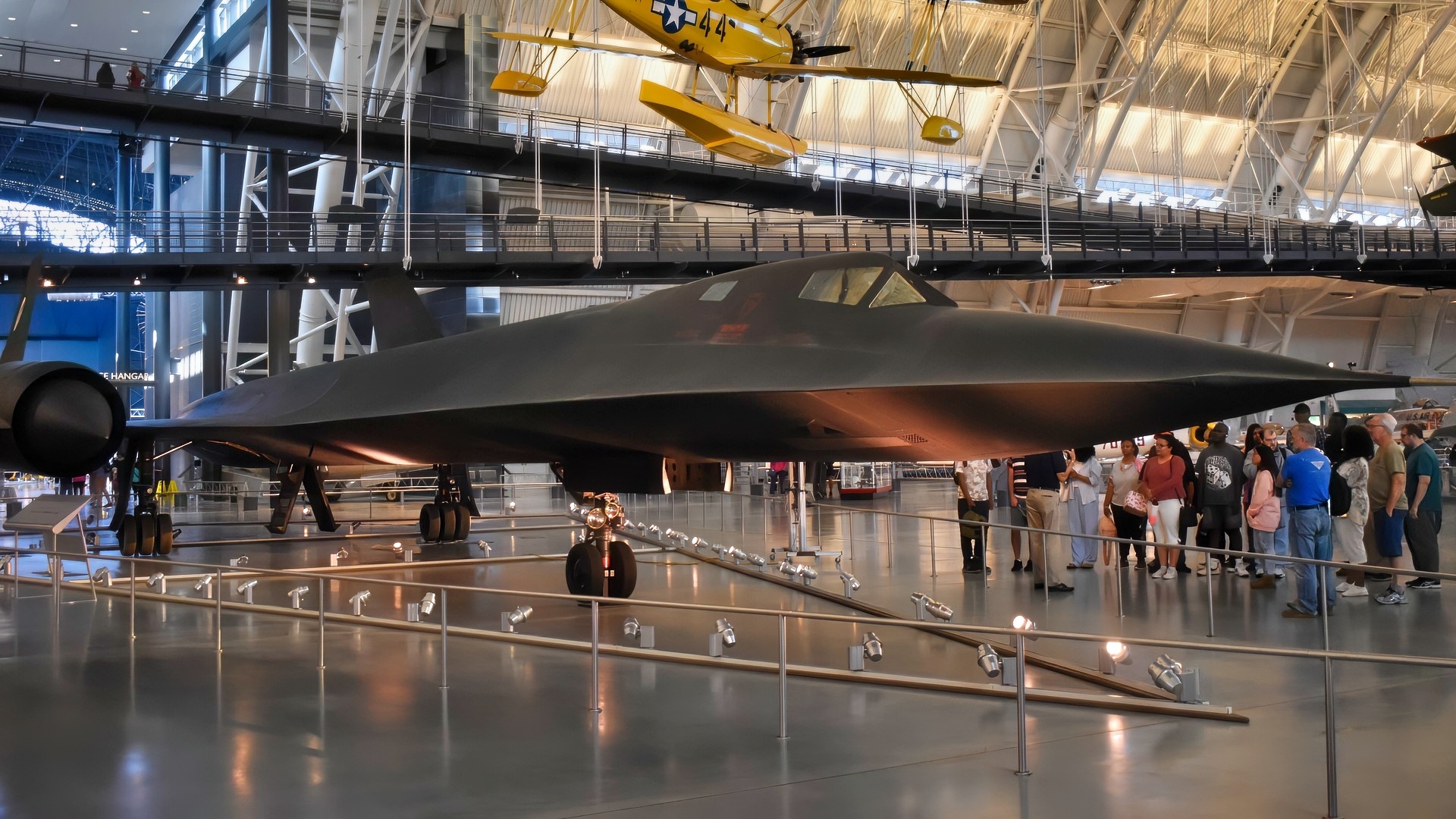
SR-71 Blackbird NSJ Photo. Image Credit: Dr. Brent J. Eastwood.
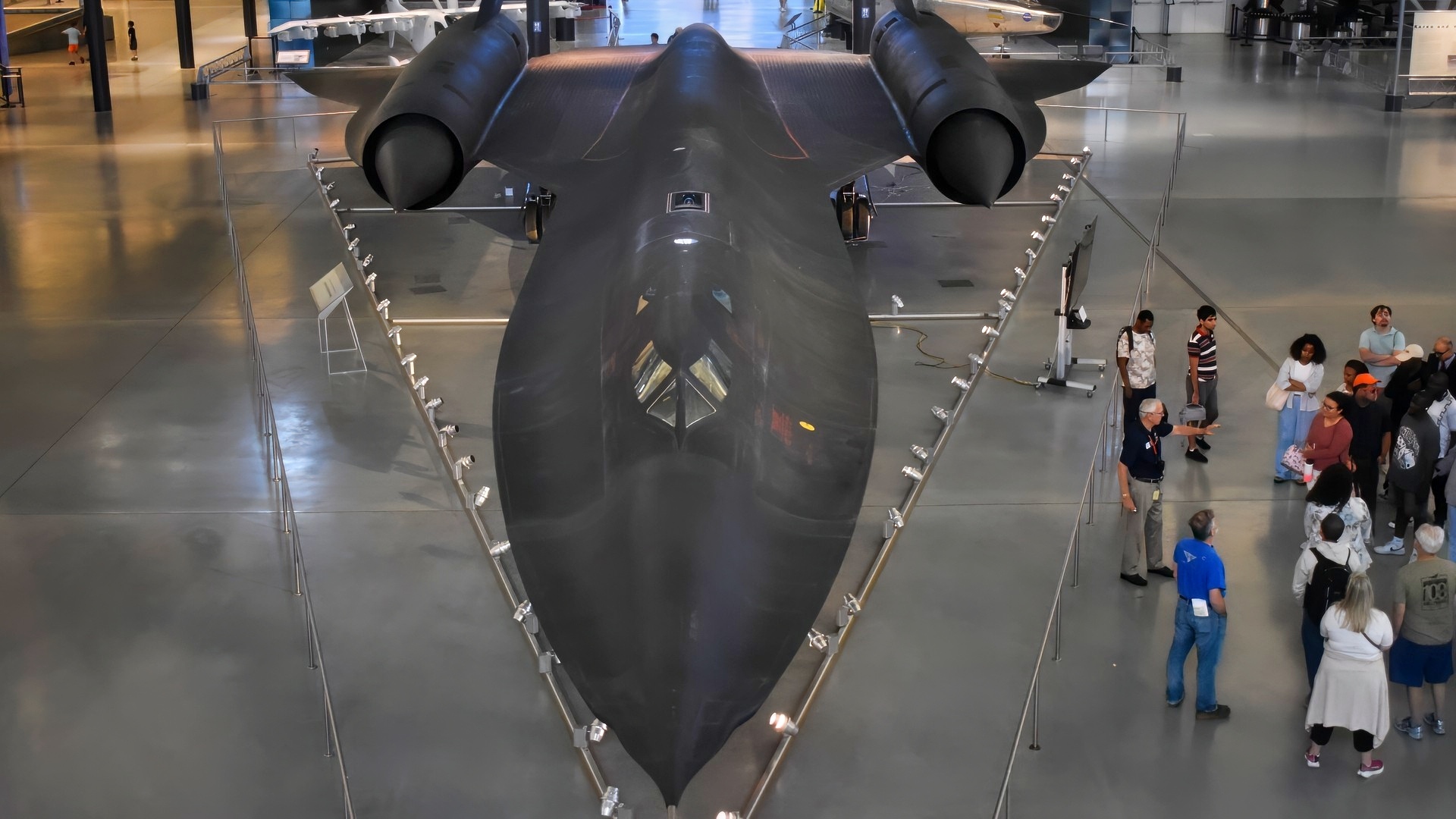
SR-71 Photo Taken September 26, 2025. Image Credit: National Security Journal.
NASA’s unmanned X-43A later reached Mach 9.6 with scramjet power, breaking a separate record for an air-breathing vehicle. But the X-15 is still notable for carrying a human pilot faster than any powered aircraft has ever flown.
About the Author: Georgia Gilholy
Georgia Gilholy is a journalist based in the United Kingdom who has been published in Newsweek, The Times of Israel, and the Spectator. Gilholy writes about international politics, culture, and education. You can follow her on X: @llggeorgia.


