

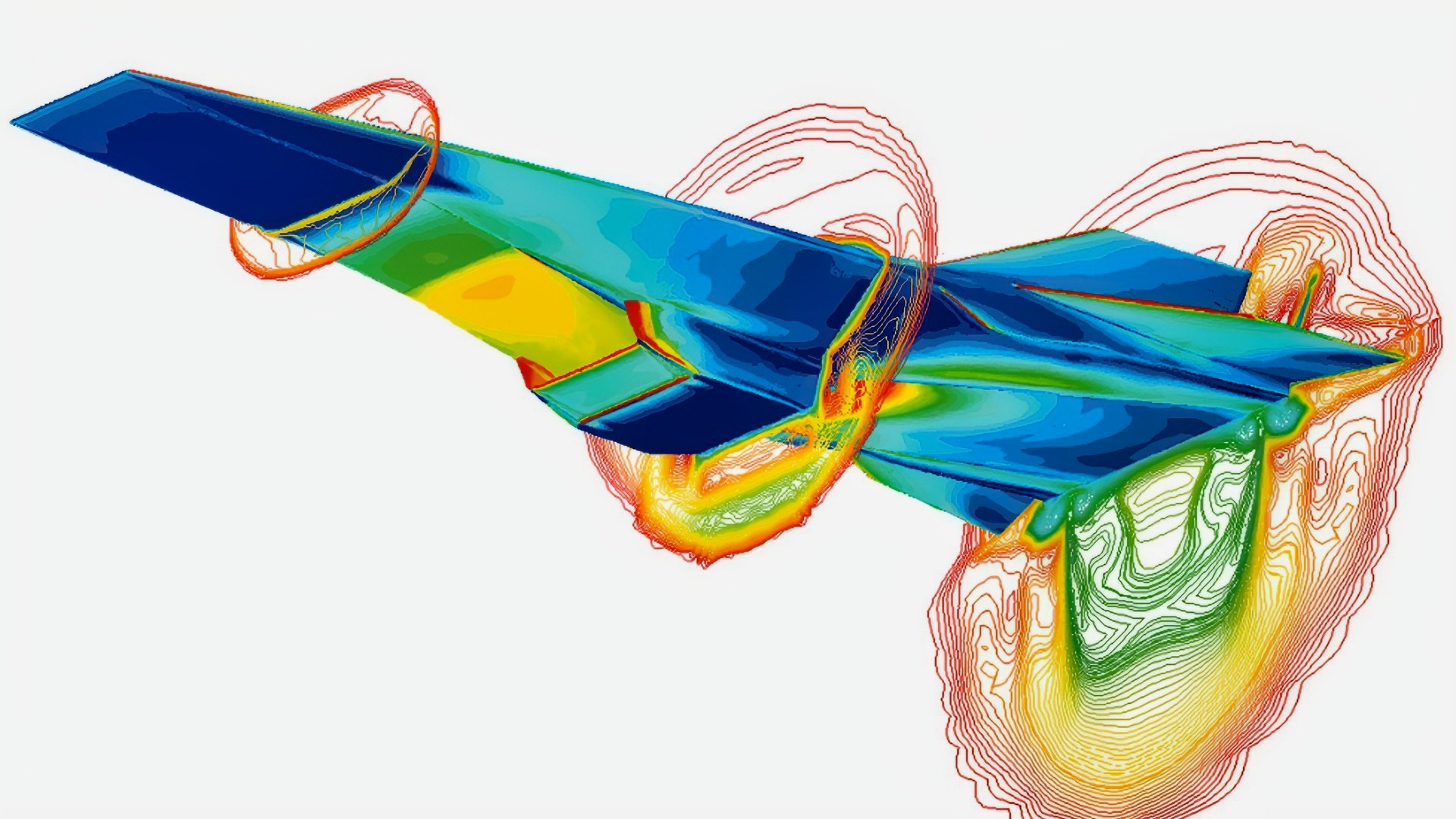
In the early 2000s, NASA was among the first to achieve sustained hypersonic flight. As part of the broader Hyper-X program, NASA developed the X-43, a small, unmanned research aircraft powered by an experimental scramjet. From 2001 to 2004, X-43A conducted three test flights, with the third proving particularly successful. Originally, there were plans to produce more test aircraft and develop variants of the X-43A, but these were later scrapped in favor of other projects.
Origin of the Hyper-X Program
The Hyper‑X program emerged after the cancellation of the National Aerospace Plane (NASP), an ambitious and costly project intended to develop a single-stage-to-orbit vehicle powered by advanced air‑breathing engines. When NASP was terminated in 1994 due to technical limitations and budget constraints, NASA sought a more practical approach to advancing hypersonic technology. This led to the creation of the Hyper‑X program in the late 1990s, a focused research initiative designed to validate specific technologies rather than deliver an operational vehicle.

X-15 USAF Museum Photo. Image Credit: National Security Journal.

X-15A from U.S. Air Force Museum. Image Credit: National Security Journal.

X-15 from U.S. Air Force Museum Original Photo. Image Credit: National Security Journal.
Hyper‑X was conceived as a relatively low-cost but high-risk program that would provide real-world flight data on hypersonic propulsion. It began around 1996 and lasted approximately eight years, with a total cost of approximately $230 million.
The central goal of the program was to demonstrate that an air‑breathing engine could operate effectively at hypersonic speeds. Until that point, hypersonic flight had typically been achieved using rocket propulsion, which carries its own oxidizer and is therefore less efficient for atmospheric flight.
The challenge was to demonstrate that a vehicle could use atmospheric oxygen while traveling at extreme velocities.
X-43A: Testing Scramjet Technologies
At the core of this effort was the scramjet engine (short for supersonic combustion ramjet).
This propulsion system represented a major departure from traditional jet engines. In conventional engines, incoming air is slowed to subsonic speeds before combustion occurs. In contrast, a scramjet allows air to remain supersonic throughout the engine, enabling operation at far higher speeds. This design eliminates the need for heavy mechanical compressors and allows the vehicle to rely on atmospheric oxygen rather than carry an oxidizer, making it lighter and potentially more efficient.
For a time, hypersonic flight was deemed practically impossible. At hypersonic speeds, airflow moves through the engine so quickly that fuel mixing, ignition, and combustion must occur within mere milliseconds.
Maintaining stable combustion under these conditions had proven extremely difficult in both theoretical studies and laboratory experiments. Before the Hyper‑X program, no air‑breathing engine had successfully powered a vehicle at hypersonic speeds in free flight.
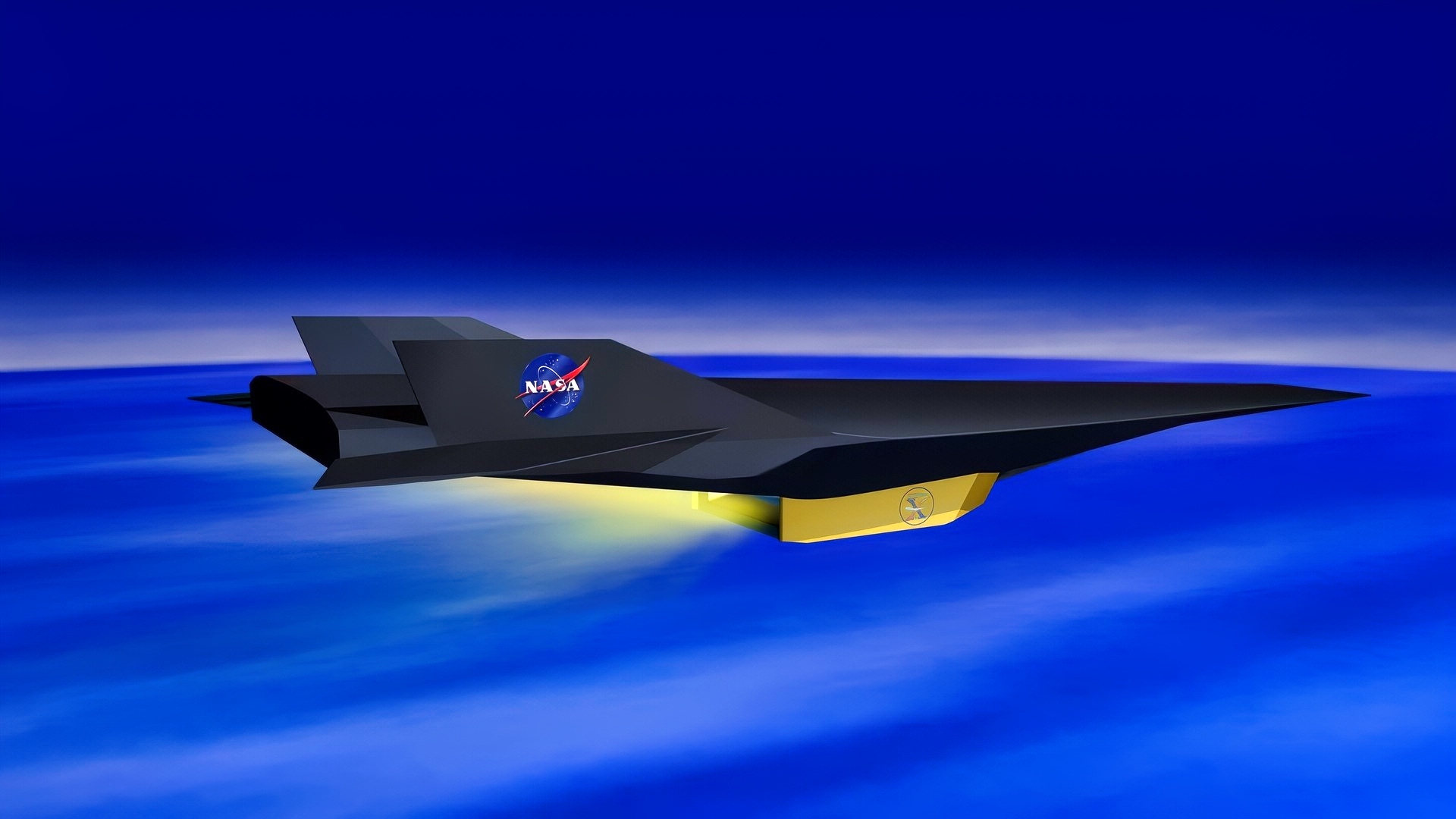
X-43A from NASA. Image Credit: Creative Commons.
Development of X-43A
To test this revolutionary propulsion system, NASA developed the X‑43, specifically the X‑43A variant used in the program’s initial phase. The X‑43 was a small, uncrewed research aircraft, measuring about 12 feet in length and designed for a single flight. Its compact size and disposable nature made it ideal for collecting data. Once its flight ended, the aircraft would crash harmlessly into the Pacific Ocean.
The vehicle featured a lifting-body design, where the aircraft’s shape itself provided lift, and the engine was integrated into the lower surface of the fuselage. This design allowed the vehicle’s forebody to compress incoming air before it entered the scramjet, effectively making the entire airframe part of the propulsion system.
Because scramjets cannot operate at low speeds, the X‑43 required a complex launch sequence.
Each flight began with the vehicle attached to a Pegasus rocket booster and carried under the wing of a B‑52 bomber. After being released at high altitude, the booster accelerated the combined system to hypersonic speeds. Once the desired speed and altitude were reached, the X‑43 separated from the booster and ignited its scramjet engine for a brief period of autonomous flight.
Test Flights
NASA built three X‑43A vehicles, each intended for a single mission. The first flight, conducted on June 2, 2001, ended in failure when the booster rocket malfunctioned and the vehicle was lost. Although the failure was a setback, it provided valuable engineering data that contributed to improvements in later flights. The second flight, on March 27, 2004, marked the first successful demonstration of scramjet-powered hypersonic flight.
During this mission, the X‑43 reached a speed of approximately Mach 6.8, proving that the concept of air‑breathing hypersonic propulsion was viable.
The most significant achievement came on November 16, 2004, during the third and final flight.
On this mission, the X‑43 reached Mach 9.6, or nearly ten times the speed of sound, making it the fastest air‑breathing aircraft ever flown at the time. While future test vehicles would beat their speed record, none retained the controlability that the X-43 had. Although the scramjet engine operated for only about ten seconds, the data collected during that short interval was invaluable.
Planned Variants and the End of the Program
NASA drew up plans to fly other variants of the X-43, each at various sizes and using different fuel types. X-43B, for example, was supposed to be a full-size aircraft powered by a turbine-based combined-cycle (TBCC) engine.
This configuration would use traditional jet turbines to bring the aircraft to supersonic speeds before the ramjet would take over. The X-43D was another notable variant. This aircraft was powered by a hydrogen-fuelled scramjet intended to propel it to speeds approaching Mach 15.
It would be carried to high altitudes by a two-stage rocket before the engine kicks in, propelling it to hypersonic speeds.
Sadly, none of NASA’s other designs would make it past the conceptual stage.
Overall, the Hyper‑X program was relatively short-lived.
The program was concluded in part due to budget concerns and in part because other projects emerged to take its place. In 2006, the U.S. Air Force teamed up with DARPA to create the Force Application and Launch from Continental United States (FALCON) Project.
The USAF also partnered with Boeing to develop the X-51 WaveRider, which paved the way for many future hypersonic developments. All of these projects, however, benefited from the data gathered by NASA and the Hyper-X program.
About the Author: Isaac Seitz
Isaac Seitz, a Defense Columnist, graduated from Patrick Henry College’s Strategic Intelligence and National Security program. He has also studied Russian at Middlebury Language Schools and has worked as an intelligence Analyst in the private sector.


