


Summary and Key Points: In June 2025’s Operation Midnight Hammer, seven B-2 stealth bombers flew a 36-hour, 12,000-mile round trip from Missouri to strike Iran’s nuclear facilities — a feat only American airpower can manage.
-The mission hinged on a vast aerial-refueling bridge, and six F-16 pilots who cleared the bombers’ path earned the Distinguished Flying Cross after flying out “on fumes.”
-Experts warn the Air Force’s aging KC-135 tankers — most over 60 years old — must be replaced to sustain that reach.
The U.S. Air Force Has a Tanker Crisis to Contend With
Is the U.S. Air Force (USAF) headed for a shortage of aerial refueling tanker aircraft that could turn into a full-blown crisis?
During a presentation earlier this year, John Venable, a senior fellow at the Mitchell Institute for Aerospace Studies and a retired USAF F-16 pilot, described the USAF tanker dilemma as “whistling past the graveyard.”
The USAF’s problem with its tanker shortage even has its own nickname – coined by mission planners and other officials responsible for assembling strike packages: the “tanker gap.”
That already crippling shortage of tanker assets has been additionally exacerbated by the age of the average tanker.
Age, as with human beings, is a problem that only worsens with time.
The current USAF tanker fleet was supposed to consist of 466 aircraft by the start of fiscal year 2025.
At the time, the service was engaged in a large-scale modernization designed to retire older aircraft and procure new platforms.
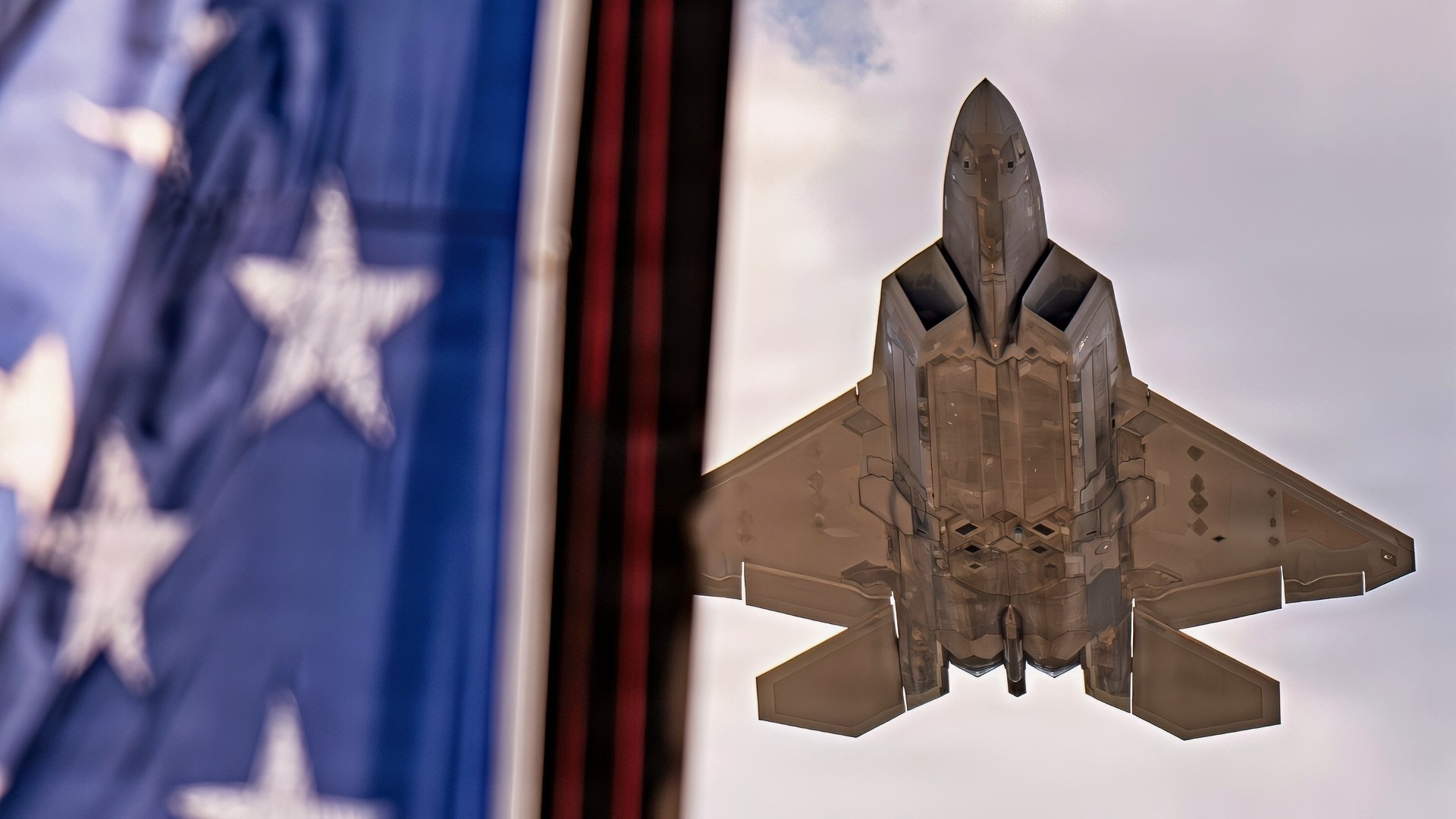
U.S. Air Force Capt. Nick “Laz” Le Tourneau, pilot and commander of the F-22 Raptor Aerial Demonstration Team, performs an aerial demonstration during the 52nd Annual SUN ‘n FUN Aerospace Expo in Lakeland, Florida, April 18, 2026. Capt. Le Tourneau showcased the unmatched capabilities of the F-22 to the SUN ‘n FUN crowds by performing multiple series of combat maneuvers. (U.S. Air Force photo by Staff Sgt. Mary Bowers)

F-22 Raptor Flying in the Dark Clouds. Image Credit: Creative Commons.
At present, the workhorse of the tanker fleet is the Boeing KC-135 Stratotanker, which was first delivered to the USAF in 1957 and accounts for 80 percent of the fleet.
It is also the oldest fleet of airframes operated by the USAF, with an average airframe age of over 63 years.
The tanker gap has become one of the most common vulnerabilities in the USA, as detailed by end-of-industry studies and policy papers from watchdog organizations. Congressional research papers, etc.
And as Venable and other experts point out, there is no backup cap
acity for the USAF – even if for a small operation.
Large Scale Operations
The tanker shortage is now a headache for the manner of operations the US has been engaged in lately.
But that deficit in refueling capacity could become a full-blown nightmare in a conflict in the Asia-Pacific theatre. In any operations in this region, the much greater distances create demands for aerial refueling that will be much higher.
During Operation Midnight Hammer in June 2025, the US Air Force (USAF) utilized 125 aircraft.
These included B-2 Spirit bombers, numerous refueling tankers, as well as F-35 Lightning IIs, F-22 Raptors, F-15s, and F-16 Fighting Falcons.
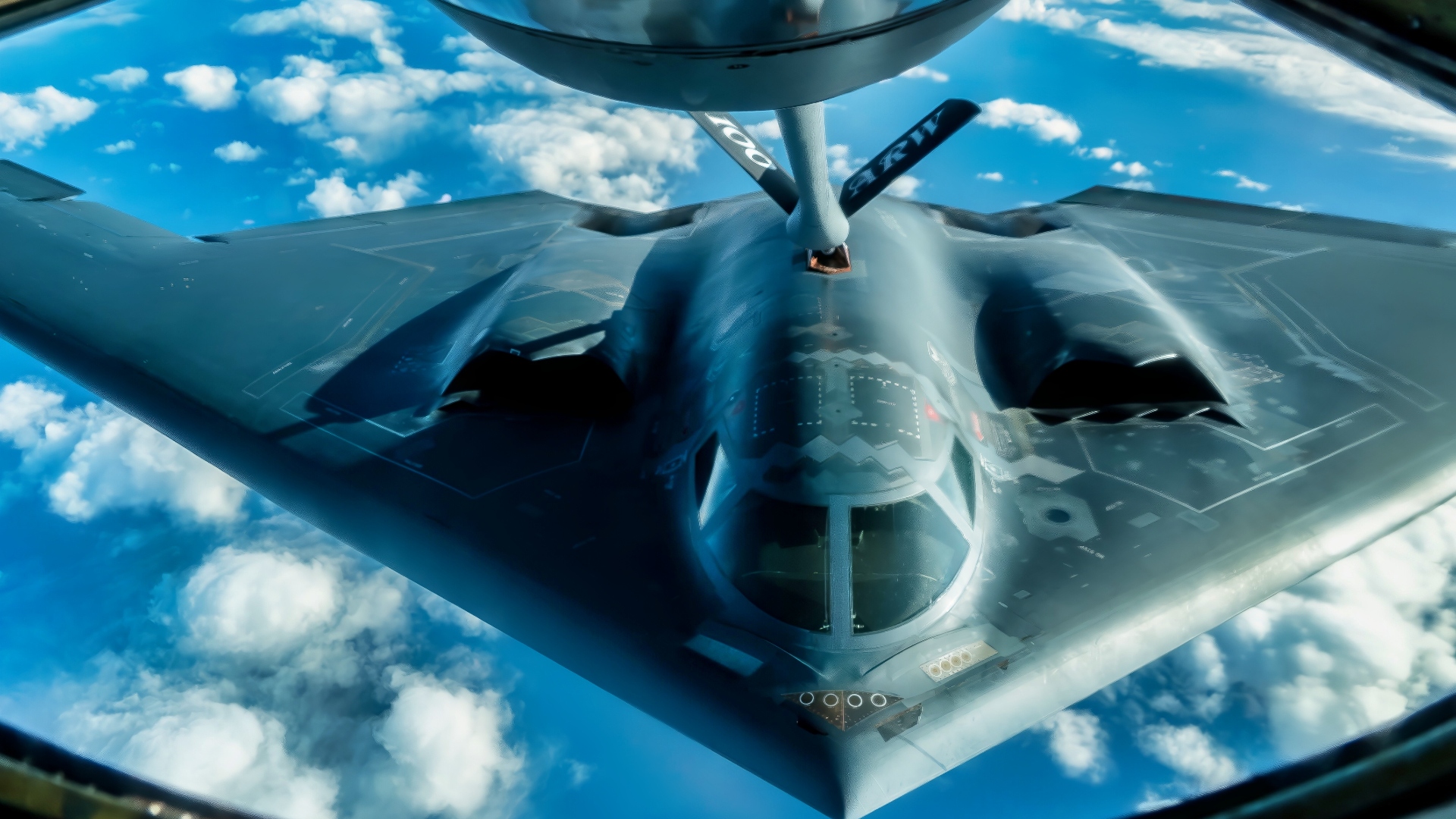
A U.S. Air Force B-2 Spirit assigned to the 509th Bomb Wing from Whiteman Air Force Base, Missouri, receives fuel from a 100th Air Refueling Wing KC-135 Stratotanker during Global Thunder 20, Oct. 28, 2019. Global Thunder is an annual command and control exercise that provides training opportunities for all of U.S. Strategic Command’s mission areas, tests joint and field training operations, and has a specific focus on nuclear readiness. (U.S. Air Force photo by Staff Sgt. Trevor T. McBride)
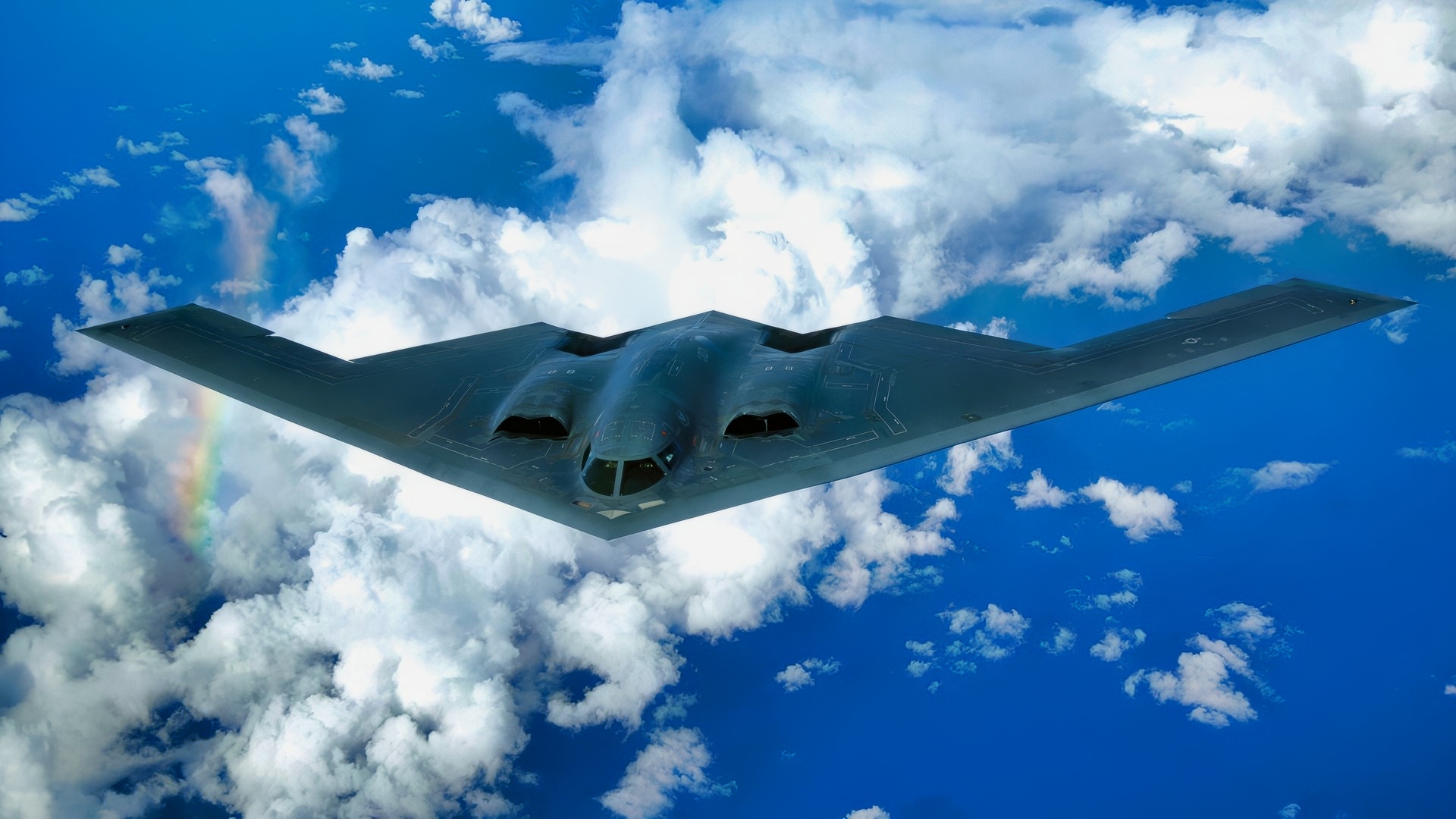
A B-2 Spirit soars after a refueling mission over the Pacific Ocean on Tuesday, May 30, 2006. The B-2, from the 509th Bomb Wing at Whiteman Air Force Base, Mo., is part of a continuous bomber presence in the Asia-Pacific region. (U.S. Air Force photo/Staff Sgt. Bennie J. Davis III)
Six months later, USAF B-1B Lancer bombers, F-35s, F-22s, tankers, and other aircraft made up Operation Absolute Resolve, which was the successful capture of Venezuela’s former president, Nicolás Maduro, and his wife.
“Operation Midnight Hammer, Absolute Resolve—that is a definition of readiness,” said Director of Staff Lt. Gen. Scott L. Pleus on 29 January at the Air Force Association’s (AFA) Mitchell Institute for Aerospace Studies Airpower Forum. “We do things in the United States Air Force that no other country can do.”
Lt. Gen. Jason R. Armagost, Deputy Commander, Air Force Global Strike Command, explained at the same forum that “the first thing I worry about when something like a Midnight Hammer starts to take shape is what does the tanker force look like, what’s the position of it, and how do we posture in the world to actually do this.”
New-Age Stealth v. Older Platforms
Operation Midnight Hammer required a 36-hour round-trip flight of seven B-2s from Whiteman Air Force Base in Missouri to Iran and back. The mission covered more than 12,000 nautical miles and depended on a vast tanker bridge.
Continuing to depend on today’s tanker fleet for these types of large-scale missions is more or less a losing proposition, as today’s tanker fleet numbers 500 aircraft, and around 375 of them are still the same 60+ year-old KC-135.
During the operation, USAF F-16 fighter jets flying a Wild Weasel mission cleared a path for the B-2 bombers that dropped 30,000-pound GBU-57 Massive Ordnance Penetrators on Iran’s nuclear facilities – and almost ran out of fuel in the process.
Six of the pilots who flew F-16 fighters on this mission from the 55th Fighter Squadron were awarded the Distinguished Flying Cross for their part in the operation, with special designations for service in combat. The award is bestowed for heroism or extraordinary achievement in flight.
The awards were largely due to their aircraft flying dangerously low on fuel out of the target area, according to the award citations. The pilots who received the DFC were: Lt. Col. Christopher M. Beckett, who commands the 55th Fighter Squadron, Maj. Matthew J. Croghan, Maj. Alexander J. Trembly, Capt. Abigail D. Maio, Capt. Megan C. Langas, Capt. Daniel J. Dodson.
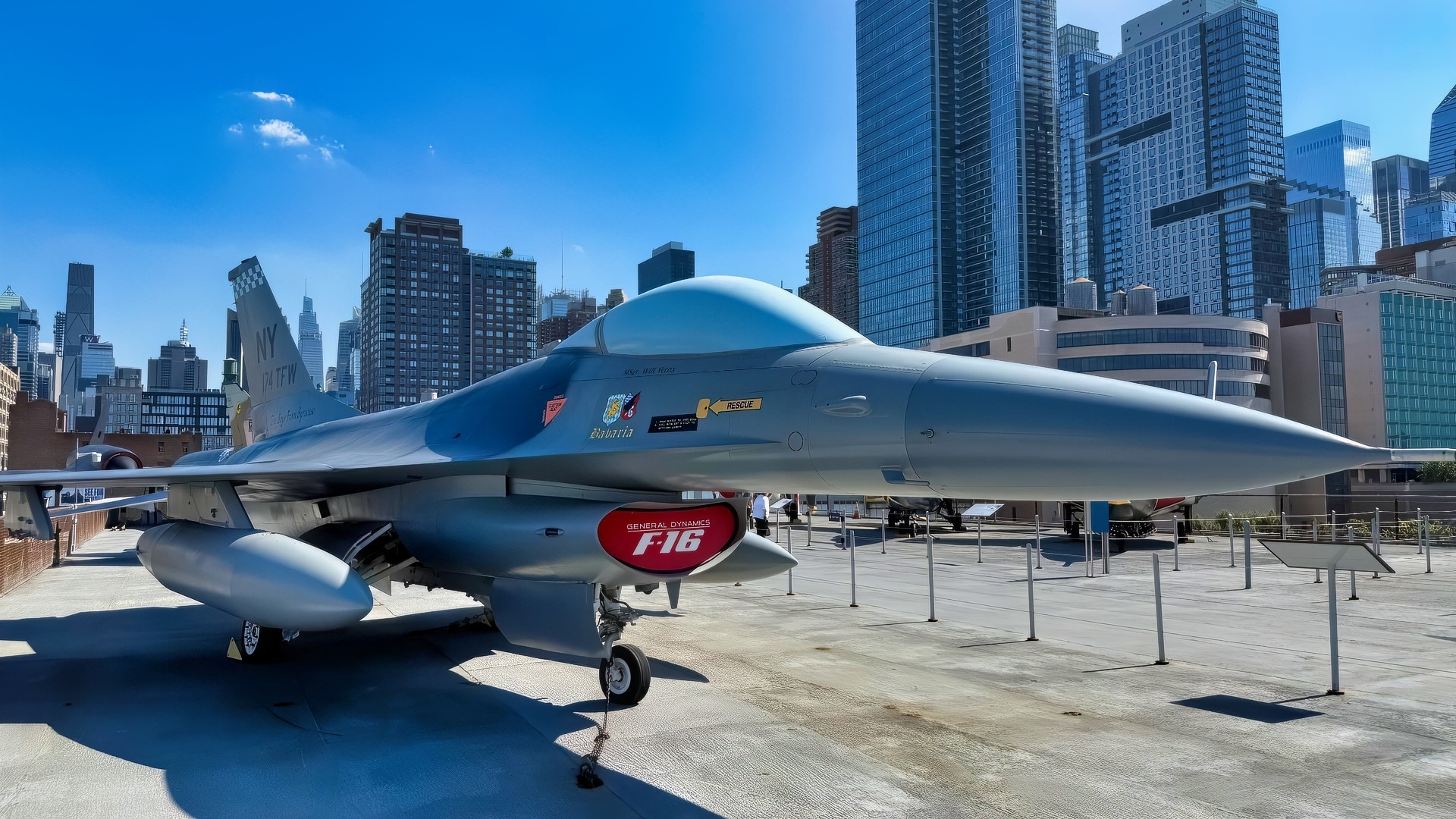
F-16 Fighting Falcon National Security Journal Photo. Taken on 9/18/2025, onboard USS Intrepid.
These older aircraft are not stealthy, making them visible to air defense units that might have been tracking them. But as non-stealthy designs, they can also exhibit greater drag, increasing fuel consumption and leaving them very low on fuel during mission egress – a double-jeopardy scenario.
During Venable’s presentation, he highlighted how F-16s hit their tankers “on fumes” to refuel. Others could not reach a tanker at all and were forced to divert to some “unusual locations.”
About the Author: Reuben F. Johnson
Reuben F. Johnson has thirty-six years of experience analyzing and reporting on foreign weapons systems, defense technologies, and international arms export policy. Johnson is the Director of Research at the Casimir Pulaski Foundation. He is also a survivor of the Russian invasion of Ukraine in February 2022. He worked for years in the American defense industry as a foreign technology analyst and later as a consultant for the U.S. Department of Defense, the Departments of the Navy and Air Force, and the governments of the United Kingdom and Australia. In 2022-2023, he won two awards in a row for his defense reporting. He holds a bachelor’s degree from DePauw University and a master’s degree from Miami University in Ohio, specializing in Soviet and Russian studies. He lives in Warsaw.


yeye
May 31, 2026 at 8:41 am
B-2s flew 12,000-mile round trip to bomb iran ??? ???
What the heck. What the heck.
Recently, the black low-intellect commander of all US forces stationed in korea, in a woke-moment of inspiration said “US bases in korea are the dagger in the heart of asia” when seen from the china coast.
Clearly, the commander isn’t concerned about tankers or 12,000-mile trips.
The commander stressed on the operative words ‘dagger’ and ‘heart’.
Thus, tankers ain’t NEEDED.
What’s NEEDED are FOBS systems. A FOBS system can easily clock a round trip of 30,000 miles or more.