

China’s crude oil imports have collapsed since the Iran War began, but global oil markets have so far avoided the supply shock many analysts predicted. Prices at the pump are elevated, but not as high as some predictions, and crude price per barrel continues to fluctuate every time the White House indicates that a deal could be on the way. But the reason for the optimism is not that demand has fallen, or that supply isn’t short – it is, in part, because China and other economies are drawing from strategic reserves in the hope that the problem will be rectified soon.
China, in particular, has also been well prepared, after spending years expanding its reserves in anticipation of exactly this kind of disruption.
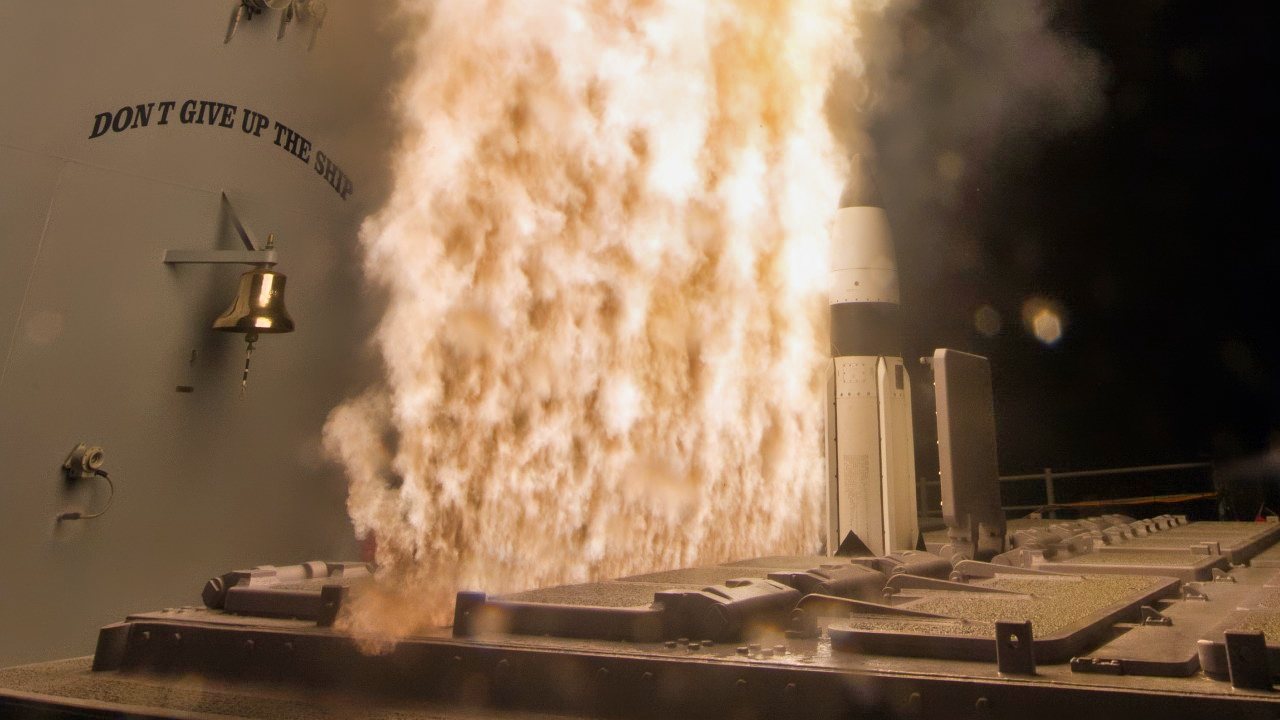
(Feb. 13, 2013) A Standard Missile-3 (SM-3) Block 1A interceptor is launched from the guided-missile cruiser USS Lake Erie (CG 70) during a Missile Defense Agency and U.S. Navy test in the Pacific Ocean. The SM-3 Block 1A successfully intercepted a target missile that had been launched from the Pacific Missile Range Facility, Barking Sands, Kauai, Hawaii. (U.S. Navy photo/Released)

110630-N-ZZ999-002.ATLANTIC OCEAN (June 30, 2011) The Virginia-class attack submarine USS California (SSN 781) underway during sea trials. (U.S. Navy photo by Chris Oxley/Released).
According to Kpler data, China imported an average of just 6.36 million barrels of crude oil by sea per day in May, down from 11.39 million barrels per day in February, the last full month before the war began. A reduction of almost half.
Normally, a reduction of that magnitude from the world’s largest crude importer would trigger panic across global energy markets – but instead, Chinese refineries are processing 13.5 million barrels per day, allowing the country to maintain almost normal consumption levels despite the significant drop in imports. China has one of the largest oil stockpiles in the world, and not only is it keeping the Chinese economy moving for now, but it also seems to be masking a much bigger problem.
China’s Imports Have Collapsed
China has been hit hard by the effective closure of the Strait of Hormuz, given how heavily its economy depends on crude oil shipped from the Middle East. Before the war, China imported roughly 11.4 million barrels of crude oil per day, making it the world’s largest oil importer – and a substantial portion of those imports originated in Gulf states whose exports normally pass through Hormuz, including Saudi Arabia, Kuwait, Iraq, the United Arab Emirates, and Iran.
More than 10 million barrels per day of normal supply has effectively disappeared from global markets.
The shortage is forcing Asian countries to compete aggressively for alternative cargoes. The United States has already exported a record 63.6 million barrels of crude to Asia during May, while countries including India, Japan, and South Korea have accelerated efforts to secure replacement supplies from North America and other producers outside the Gulf region.

(Feb. 25, 2019) The aircraft carrier USS John C. Stennis (CVN 74) transits the South China Sea at sunset, Feb. 25, 2019. The John C. Stennis Carrier Strike Group is deployed to the U.S. 7th Fleet area of operations in support of security and stability in the Indo-Pacific region. (U.S. Navy photo by Mass Communication Specialist 1st Class Ryan D. McLearnon/Released)
The Refineries Are Still Running
Despite the collapse in imports, China’s refineries continue operating at surprisingly high levels. According to Kpler estimates, Chinese refiners processed more than 13 million barrels of crude oil per day in May, and while that figure was slightly lower than April’s refinery throughput, the decline was relatively modest compared to the actual reduction in imported supply.
The numbers only demonstrate the sheer scale of China’s drawdown from its strategic reserves – and while China does not publicly disclose its exact inventory, analysts are staying on top of estimated supplies using a combination of customs data, export statistics, and refinery throughput.
China Was Ready
For more than a year before the Iran War began, Chinese buyers consistently purchased more crude oil than the country consumed – a strategy that allowed Beijing to take advantage of discounted Russian and Iranian crude when it was available, and fill up its strategic reserve in the process.
China is understood to have been stockpiling up to 1.5 million barrels of crude per day through much of 2025, with those purchases ultimately accumulating into an estimated reserve of around one billion barrels.
How Beijing Prepared
“We estimate that China added an average of 1.1 million barrels per day of crude oil to strategic oil inventories in 2025, which reached nearly 1.4 billion barrels as of December 2025. Prior to the Iran conflict, preliminary government data indicate that China has continued building inventories in 2026,” the U.S. Energy Information Administration (EIA) reports.
“While we assume that both commercial and government-held crude oil inventories in China are part of strategic oil inventories, we estimate that government-held inventories in China averaged about 360 million barrels in December 2025, which is similar to the U.S. SPR level of nearly 414 million barrels during the same time period. Commercial crude oil inventories in China, which include inventories held at refineries, have grown to an estimated 1 billion barrels as of December 2025, compared with 411 million barrels held commercially in the United States,” the EIA report continues.
China also invested heavily in expanding storage infrastructure, with reports indicating that the country constructed 11 new oil storage facilities last year, totaling approximately 169 million barrels of capacity.
Hiding the Scale of the Problem?
The result of China’s preparations is that its economy can keep moving as usual for now, but it also creates a misleading picture of the global energy market. China’s strategic reserves are allowing refiners to keep operating and consumers to keep buying fuel even as imports collapse, reducing the immediate demand shock that would normally send prices skyrocketing.
As long as Beijing can continue drawing down those stockpiles, the full impact of the Strait of Hormuz disruption will remain partially hidden – but when the reserves begin to run low, global markets may suddenly be forced to confront a supply shortage that has existed all along but temporarily masked by China’s stockpiles.
About the Author: Jack Buckby
Jack Buckby is a British researcher and analyst specializing in defense and national security, based in New York. His work focuses on military capability, procurement, and strategic competition, producing and editing analysis for policy and defense audiences. He brings extensive editorial experience, with a career output spanning over 1,000 articles at 19FortyFive and National Security Journal, and has previously authored books and papers on extremism and deradicalization.


