

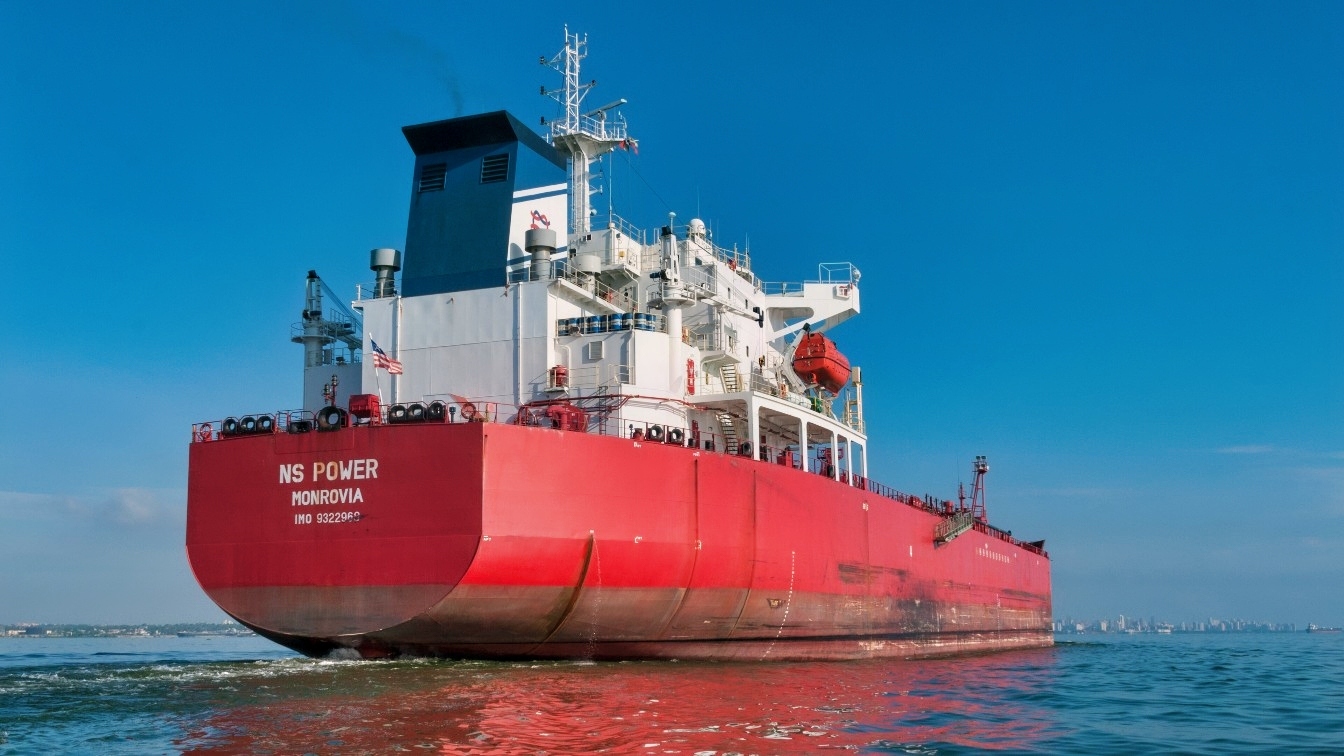
Iran has time on its side — and every week the Strait of Hormuz stays closed, the danger to the global economy grows. A new analysis lays out three ways this ends. The best case: a deal reopens the strait within weeks and the world dodges disaster. The darker paths are alarming — $200 oil, negative growth across the U.S. and Europe, a recession by the fourth quarter, an economy “scarred” beyond repair. And a single summer hurricane hitting a U.S. refinery could double prices overnight. Which path the world takes may come down to one deadline — and Tehran knows it.
Could the Strait of Hormuz Crisis Plunge the World Into a Recession?
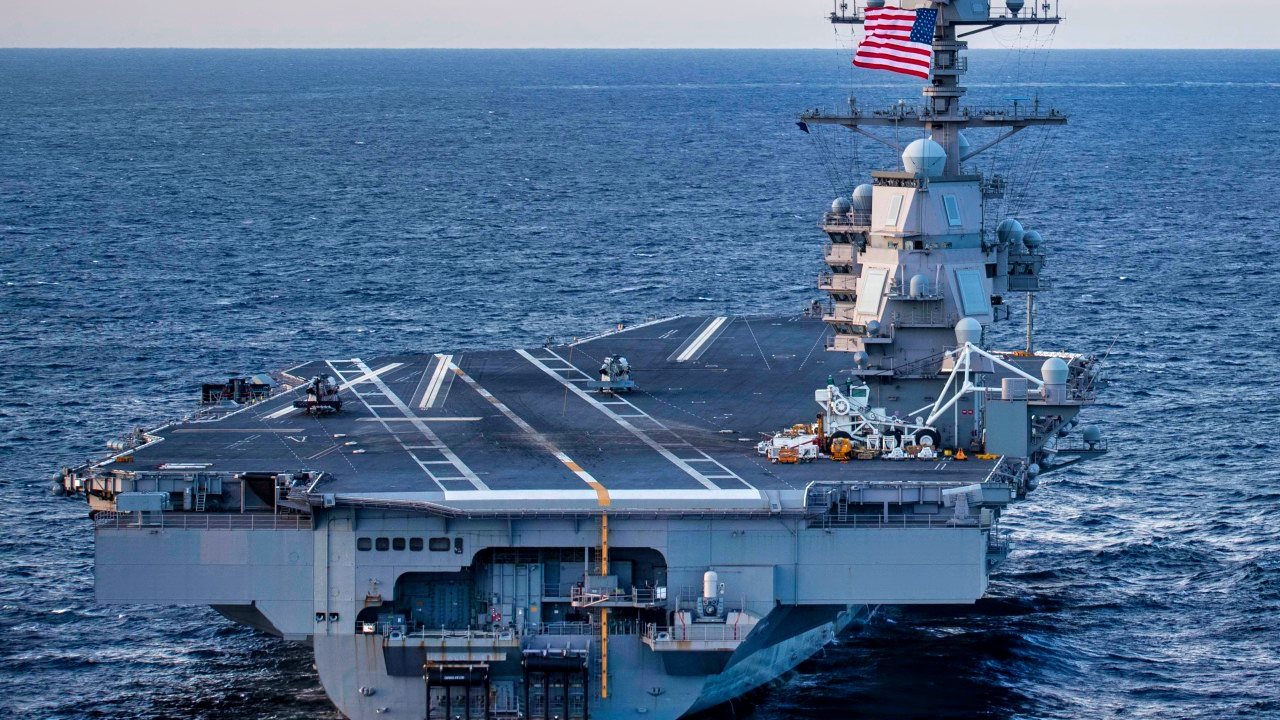
The Ford-class aircraft carrier USS Gerald R. Ford (CVN 78) and the Italian aircraft carrier ITS Cavour (CVH 550) transit the Atlantic Ocean March 20, 2021, marking the first time a Ford-class and Italian carrier have operated together underway. As part of the Italian Navy’s Ready for Operations (RFO) campaign for its flagship, Cavour is conducting sea trials in coordination with the F-35 Lightning II Joint Program Office’s Patuxent River Integrated Test Force to obtain official certification to safely operate the F-35B. Gerald R. Ford is conducting integrated carrier strike group operations during an independent steaming event 17 as part of her post-delivery test and trials phase of operations. (U.S. Navy photo by Mass Communication Specialist 3rd Class Riley McDowell)
Iran has time on its side.
Tehran is liable to block the Strait of Hormuz until the American midterm elections in November. It is conceivable that the Democrats could win control of both chambers of Congress, and then there would be a movement to strip President Donald Trump of his ability to conduct the conflict against Iran without a war powers resolution or authorization of military force.
Iran is also interested in an elongated peace process that hurts the American people with high gas prices indefinitely. What does that mean for the U.S. and the global economy, and do these developments have international implications for a prolonged recession?
The Energy Supply Interruption Has Bad News for Economic Growth
This impasse in Iranian-American relations could affect the broader economy beyond the energy crisis. A new report from British energy consultancy Wood Mackenzie, reviewed by Engineering News-Record, has bad news about the amount of oil and gas taken off the market and the economic impact of this dangerous development.
At least 11 million barrels per day of Middle East oil has been removed from supply, and over 80 million metric tons per year of liquefied natural gas, which is about 20 percent of the global supply, is now “inaccessible” to global markets, Wood Mackenzie wrote.

A B-2 Spirit Stealth Bomber, assigned to Whiteman Air Force Base, Missouri, prepares to take off at RAF Fairford, United Kingdom, on March 20, 2020. The aircraft is deployed as part of Bomber Task Force Europe, which tests the readiness of the Airmen and equipment that support it, as well as their collective ability to operate at forward locations. U.S. Strategic Command routinely conducts such operations across the globe to demonstrate U.S. commitment to collective defense as these aircraft, Airmen and key support equipment from Whiteman AFB, Missouri, integrate with Geographic Combatant Command operations and activities. (U.S. Air National Guard photo by Tech. Sgt. Colton Elliott)
Industrial Activity and Trade Flows Negatively Affected
The Strait “is the most critical chokepoint in global energy markets, and a prolonged shutdown would become far more than an energy crisis,” said Peter Martin, head of economics at Wood Mackenzie. “The longer disruption persists, the greater the impact on energy prices, industrial activity, trade flows, and global economic growth.”
Short-term Relief Scenario
The report examined three scenarios for the future of the global economy.
The best-case scenario is that the peace plan could be agreed upon soon and the strait could be opened by July 1. This would provide greater relief to the global energy supply and not increase costs for manufacturing and global trade flows through the Middle East.
This has a chance of happening, and that would avoid a recession.

U.S. Air Force Maj. Josh Gunderson, F-22 Demo Team commander, performs the Raptor Slide during the Abbotsford Airshow, Aug. 5, 2021, at Abbotsford International Airport, Abbotsford, British Columbia, Canada. During the Raptor-slide the aircraft actually slides down and backwards under control before Gunderson adjusts the aircrafts position and powers out of the maneuver. (U.S. Air Force photo by Staff Sgt. Don Hudson)
Recession at the End of the Year
However, even if the ceasefire is observed and there is interim progress toward a comprehensive peace deal, the strait may not see typical unrestrained traffic until the end of the summer. This would continue to hamper commercial flows for the next three months or more and could mean a recession starting in the fourth quarter of 2026.
Economy Could Be ‘Scarred’ Beyond Repair
The third scenario is what the report refers to as “extended disruption,” with the strait closed until the end of the year, as the ceasefire never completely takes hold and peace is not attained. This would create long-term “economic scarring.”
“Further damage to existing production facilities and infrastructure lengthens the recovery time of exports back to pre-war levels,” the authors wrote.
This could drive oil prices to as much as $200 a barrel and create conditions for negative GDP growth in the United States and Europe. Imports from East Asia would be hampered, and the region would also experience an economic downturn, leading to a severe recession that could cost jobs and cause a collapse in GDP. The Middle East would also see a huge demand shock that could plunge the region into a depression.
Other research institutions and investment banks have made different conclusions about the oil shock lasting several months.
Differing Opinions on Economic Impact
Forecasters at Goldman Sachs said the U.S. economy would be relatively unscathed even if the Strait of Hormuz does not reopen until later this year. Meanwhile, HFI Research, a self-described “contrarian” investment research firm, said “energy markets were about to hit a wall and risked gasoline shortages in the coming months,” according to Investopedia.
A Hurricane in America Would Be Devastating
One scenario is dangerous if the Strait of Hormuz crisis lasts the entire summer. A hurricane could take out one or more refineries in the United States, raising the price of crude even further. This could spark panic in the oil market and lead to a doubling of hydrocarbon costs.
A U.S. recession could be possible due to this weather-related disaster. But so far, the U.S. economy is muddling through the oil shock and Strait of Hormuz crisis. The American job numbers and the unemployment report will be released on Friday, and it will be interesting to see how employment growth has been affected.
U.S. Financial Markets Remain Healthy
So far, U.S. financial markets have remained steady and even grown throughout the war negotiations. The S&P 500 is up nearly 10 percent this year as of June 3. The NASDAQ has spiked 20 percent since January 1, and the Dow Jones Industrial Average has climbed 5 percent this year.
The U.S. natural resource economy has been mostly resilient so far. The country is the leading producer of oil and natural gas and even serves as the “swing” supplier, able to increase energy production during times of trouble in global markets.
Numerous Americans Are Still Struggling Financially
The downside is that many Americans are struggling financially, living paycheck to paycheck, with little savings for emergencies such as prolonged gasoline price hikes. Many are working second jobs in the gig economy to make ends meet, and higher prices for food and other finished goods take a bite out of stagnant paychecks.
Moreover, technology firms have laid off 100,000 workers due to the shift toward artificial intelligence. These are often high-paying jobs that lift the economies in Silicon Valley, Austin, and Boston, among other technology hubs.
The Trump Administration Should Be Concerned
But a prolonged closure of the strait can harm Europe, the Middle East, and East Asia if Americans continue to struggle and refrain from importing goods and services from other countries due to price hikes.
The Federal Reserve Bank, the Department of the Treasury, and the White House must plan for the worst-case scenario. The American people may not be able to handle a recession with the accompanying job losses and lack of wage growth. The Strait of Hormuz crisis could continue throughout the summer, with negative knock-on effects on the global economy, potentially triggering a recession and perhaps even a depression.
About the Author: Dr. Brent M. Eastwood
Author of now over 3,500 articles on defense issues, Brent M. Eastwood, PhD, is the author of Don’t Turn Your Back On the World: A Conservative Foreign Policy and Humans, Machines, and Data: Future Trends in Warfare, plus two other books. Brent was the founder and CEO of a tech firm that predicted world events using artificial intelligence. He served as a legislative fellow for US Senator Tim Scott and advised the senator on defense and foreign policy issues. He has taught at American University, George Washington University, and George Mason University. Brent is a former US Army Infantry officer. He can be followed on X @BMEastwood.


