

Can Trump Extricate Himself from the Iran War?: When President George W. Bush ordered U.S. troops to invade Iraq almost a quarter century ago, he was giddy: His own father had defeated Iraq just 12 years previously in just 100 hours, forcing Iraqi President Saddam Hussein into a humiliating withdrawal from Iraq. For a generation of Middle Easterners, the so-called “highway of death” became synonymous with American power. The war led Donald Rumsfeld to embrace “fourth generation warfare,” placing technology above manpower.
Many Americans today consider the 2003 Iraq war a quagmire. Sen. Bernie Sanders (I-Vermont) declared it “the worst foreign policy blunder in the history of the country.” Even John McCain, shortly before his death, said the war was a “mistake.” With his usual bombast, President Donald Trump called the Iraq invasion “the single worst decision ever made.”

B-2A, serial #88-0331, ‘Spirit of South Carolina’ of the 509th Bomb Wing, Air Force Global Strike Command, on the parking ramp at Tinker Air Force Base, Oklahoma, during a visit April 11, 2017. The B-2A ‘stealth bomber’ visited the base to allow hundreds of personnel who work in direct support of the aircraft program through continuous software upgrades to see it in person and better understand the aircrafts’ role in the nation’s defense. (U.S. Air Force photo/Greg L. Davis)
The Iran War: Another Mistake? Not Exactly
Is it déjà vu all over again, this time with Iran?
No. Iran 2026 and Iraq 2003 are not synonymous.
Most obviously, the United States has not sent ground troops to occupy Iran. Still, there is a similarity. When Bush unleashed his “shock and awe,” he expected a cake walk.
He was not wrong. U.S. forces bypassed major cities and drove to Baghdad. Information Minister Mohammed Saeed Al-Sahhaf, colloquially known as “Baghdad Bob,” famously declared, “We crushed the forces at Saddam International Airport” as video emerged showing Americans walking around its terminals.
When American forces took Baghdad, Iraqis toppled Saddam statues and greeted the Americans with candies.
On April 10, 2003, for example, the Washington Post reported the toppling of one Saddam statue: “It was a strong statue,” said Stefan Abu George as he watched the scene unfold. “It’s not strong anymore.” Down the street, crowds greeted U.S. troops with flowers, candy, and, occasionally, kisses.
Beyond the decision to engage in nation-building in Iraq, Bush made one big mistake: trusting Iran. Immediately prior to the war, National Security Council aide Zalmay Khalilzad and seasoned Ambassador Ryan Crocker met in Geneva with a senior Iranian diplomat. Tehran agreed not to interfere in Iraq.
In reality, the Islamic Revolutionary Guard Corps had other plans. The U.S. advantage quickly became its liability. If the Islamic Republic could not prevent tens of thousands of U.S. troops from entering Iraq, they crafted their own leverage from the next best thing: Preventing Americans from leaving.

A B-2 Spirit makes a low pass flyover during the 2024 Warriors Over the Wasatch Open House and Air Show June 29, 2024, at Hill Air Force Base, Utah. The B-2 Spirit, the predecessor to the new B-21 Raider, has been the U.S. Air Force’s premiere stealth bomber for more than 20 years. (U.S. Air Force photo by Cynthia Griggs)
Rightly or wrongly, the United States has a reputation among its enemies as having little strategic patience. Hezbollah forced President Ronald Reagan to make a humiliating exit from Beirut. Mohamed Farrah Aidid, a local Somali warlord, forced American troops to withdraw from Somalia after the “Blackhawk Down” episode. Bill Clinton faced tremendous pressure to extricate himself from the Balkans without putting boots on the ground. To put it crudely, Iranian strategists concluded that their greatest chance of success against the American military was not to defeat it in open combat, but rather to grab the United States by the balls and refuse to let go, trapping it in a place the American public did not want to be.
From a military standpoint, Trump is right that Operation Epic Fury has been a success. Decades of military planning and targeting intelligence not only enabled the United States to target Supreme Leader Ali Khamenei but also to remove the top layers of its military command. Put another way, Iranians had a better chance of surviving Stage IV cancer than of becoming a flag officer in the Islamic Revolutionary Guard Corps.
Iran’s Plan: Outlast America
None of this matters, though, if the Iranian war aim has become simply to outlast the United States and to demonstrate resistance to an increasingly impatient American electorate and international audience.
Trump’s options are limited. Those around him may counsel diplomacy and moderation, but negotiating with Iran is a multi-year affair, not something that he can accomplish on his own political timeline. Iranian leaders are savvy; they understand the pressure of American elections and assume and perhaps even exaggerate American impatience.
Here, Trump might take another lesson from the younger Bush. When Americans called the Iraq war a disaster and demanded American forces come home, Bush doubled down and announced the surge: He declared his goal of victory and assigned no timeline to fulfilling it. Essentially, he pulled the rug out from those in Iraq who believed they did not need to defeat the Americans on the battlefield, just outlast them.
An Iran surge would be different, firstly because it would not involve ground troops. Rather, it would require demanding peace and continuing to target Iranian leaders until they defected or agreed. While American presidents traditionally fear lame duck status because they realize it means they hemorrhage power, Trump should flip the script and embrace it. Rather than allow Iranians to use the price of gasoline to hold the United States proverbially by the you know what, Trump should show that never having to face another election can be liberating. Political strategists will warn of disaster, but allowing Iran’s strategy to succeed will only compound it.
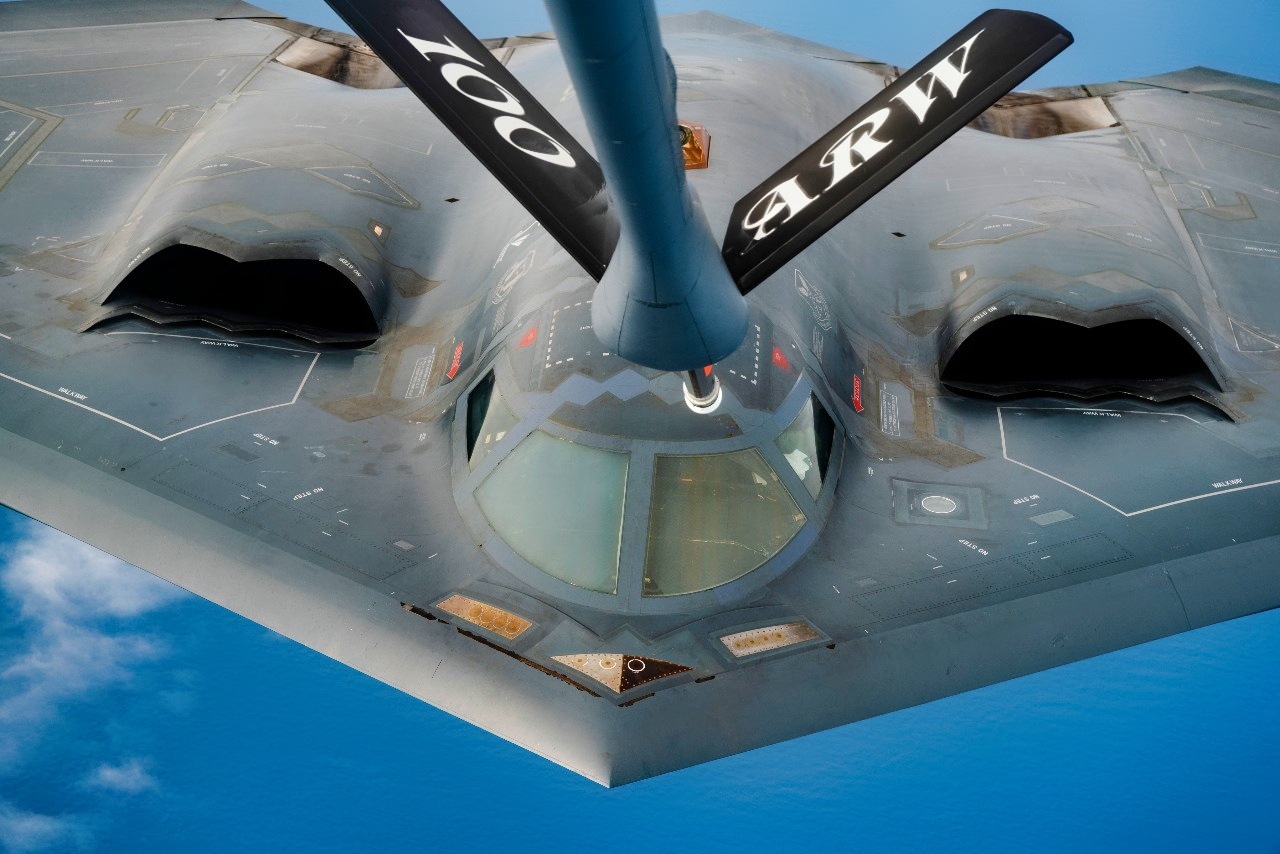
A U.S. Air Force B-2 Spirit assigned to the 509th Bomb Wing, conducts aerial refueling operations during a Bomber Task Force mission over the Atlantic Ocean, Sept. 6, 2021. Strategic bomber missions enhance the readiness and training necessary to respond to any potential crisis or challenge across the globe. (U.S. Air Force photo by Staff Sgt. Rachel Maxwell)
Trump should also stop empowering Iran and affirming its leaders’ conspiracy theories by tying Lebanon to his own deal. Unlike Hezbollah, which is a terrorist group and an Iranian proxy, Israel is a sovereign country. Israel is talking openly to the Lebanese government. That is welcome; they share an interest in defeating Hezbollah.
But if Iran demands Israel stop bombing Hezbollah, then Trump should not pressure Israeli Prime Minister Benjamin Netanyahu, but rather tell Tehran: if you have a problem with Israel, negotiate with them. After all, Israel is not a puppet of the United States, despite what Iranian conspiracy theorists might believe. The same holds true with direct Israeli attacks on Iran. If Tehran wants that to stop, they need to talk to Jerusalem itself.
The Real Way to Handle the Iran Crisis and Strait of Hormuz
When faced with a wildfire, the worst outcome would be to extinguish it 90 percent and then go home. If Iran is allowed to weaponize the Strait of Hormuz, it will never stop. Every time the Islamic Republic needs a distraction or wants a diplomatic concession, it will simply threaten a repeat. Even without making good on their threats, the insurance markets and shipping companies will freeze if not fold. Iraq had its no-fly zone; Iran needs one. No boat or ship, no matter how small, should be allowed at or near an Iranian port. Boarding an Iranian boat should become a death sentence for any Islamic Revolutionary Guardsmen or smuggler.
The regime is facing tremendous pressure, even if its bluster makes it appear time is on its side. Rather than negotiate unfreezing assets, Trump should do the opposite: To hemorrhage Iranian hope, Trump should confiscate that money as reparations for the Gulf Arab states Iran has attacked. Launch missiles at Kuwait International Airport? Billions of dollars in Iranian cash kept in Qatar should be used to rebuild the terminal or Emirati and Saudi oil infrastructure.
No Middle Way
Americans have a problem. There is a widespread belief in the Middle East that the United States can no longer win wars. Partisan politicians would rather drag down the incumbent than end an adversary. In World War II, Americans of all stripes rallied to defeat ideologies bent on world domination; Iran’s “export of revolution” should be no different.
Not only will half-measures fail, but a diplomatic bargain that allows the Islamic Republic to rebuild will be as bad as a loss. There is a conceit in Washington that there is always a do-over. But sometimes when a decision is made, there can be only one choice: win or lose; Trump’s best way forward is to realize there is no middle way.
About the Author: Dr. Michael Rubin
Dr. Michael Rubin, a Director of Policy Analysis at the Middle East Forum, specializes in Iran, Turkey, and the Horn of Africa. His career includes time as a Pentagon official, with field experiences in Iran, Yemen, and Iraq, as well as engagements with the Taliban prior to 9/11. Mr. Rubin has also contributed to military education, teaching U.S. Navy and Marine units about regional conflicts and terrorism. His scholarly work includes several key publications, such as “Dancing with the Devil” and “Eternal Iran.” Rubin earned his Ph.D. and M.A. in history and a B.S. in biology from Yale University.


yor uncle bob
June 4, 2026 at 11:32 pm
US president donald chuanpu is the preordained loser in the ongoing US-iran standoff.
Because magnificient centcom has already run out of targets, and everything upright has been fully blown up, the only things not blown up are cemeteries, and you can’t go blowing up cemeteries.
In the meantime, ammo reserves are running low, and putin is about to behead ukraine.
Iran can afford to Wait.