
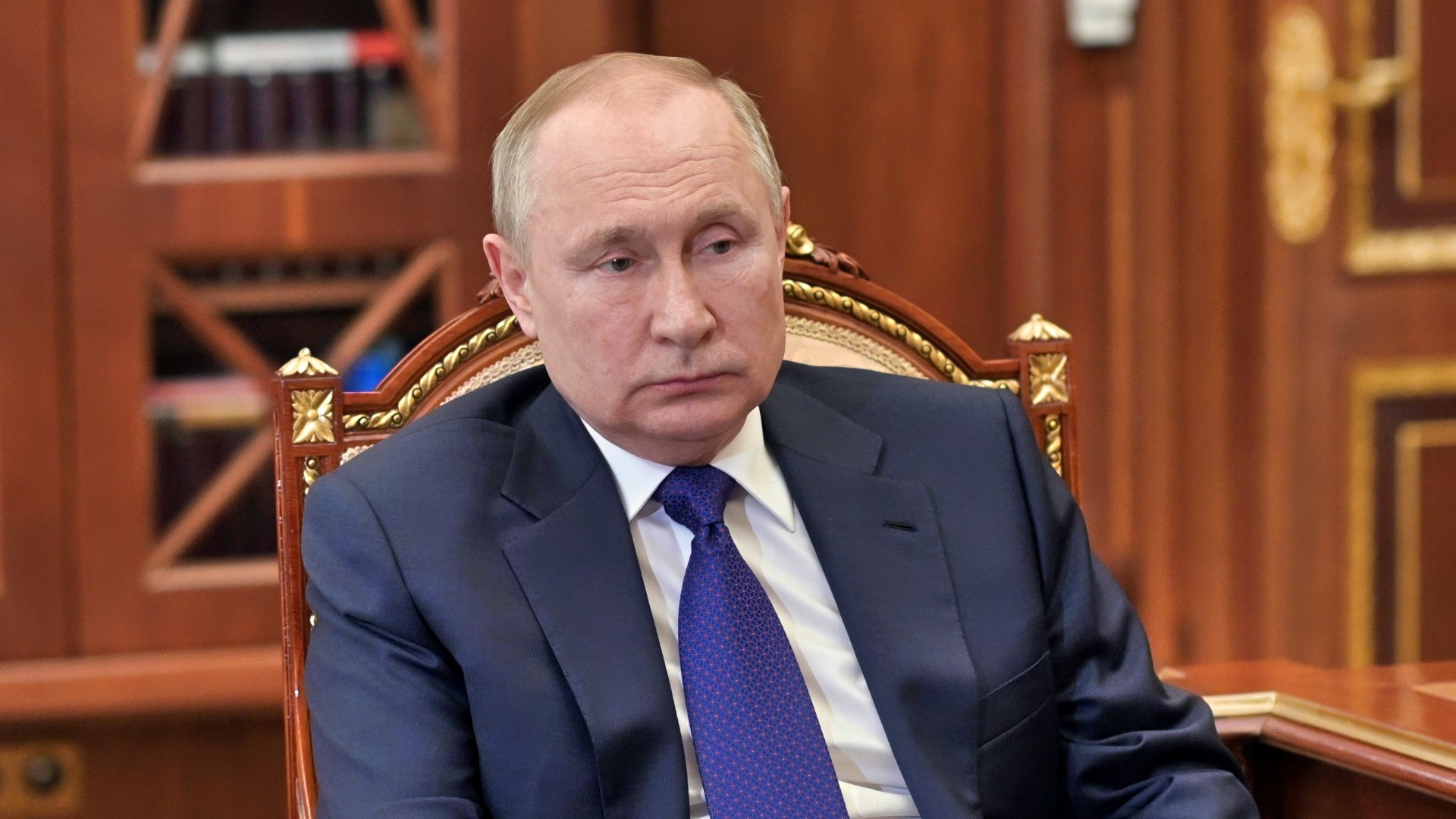
Kremlin Warns Of “New Paradigm” In Ukraine War: Here’s What That Means: As Ukraine finds its feet as a drone operator, conducting deeper and deeper strikes into Russian territory using inexpensive unmanned aerial vehicles (UAVs), the Kremlin is now claiming that the war has entered an “entirely different paradigm.”
The warning comes after Russia launched one of its largest aerial attacks of the war so far, firing 656 drones and 73 missiles at targets across the country overnight. The strikes hit Kyiv, Dnipro, Kharkiv, Poltava, and Zaporizhzhia. At least 17 people were killed, and around 100 were injured.

MSTA-S Russian Army. Image Credit: Creative Commons.
The comments could indicate that Moscow is preparing both domestic and international audiences for further escalation – but they also come at a moment when Ukraine is demonstrating an unprecedented ability to strike strategic targets inside Russia itself, without expending expensive missiles.
The Kremlin Says the Rules Have Changed in the Ukraine War
Speaking to reporters on June 2, Kremlin spokesman Dmitry Peskov said Russia viewed recent Ukrainian attacks as evidence that the war was entering a new phase.
“If the Kyiv regime is consciously committing such inhumane … acts of terror against civilians, against children, then this is an entirely different paradigm,” Peskov said.
The remarks referred, in part, to a strike on a student dormitory in Russian-controlled Luhansk that Moscow says killed 21 people. The Russian side has accused Ukraine of deliberately targeting civilians – something Russian forces have also been accused of repeatedly throughout the years-long conflict. Kyiv denies deliberately targeting civilians and said that the strike was aimed at a drone command center operating in the area.
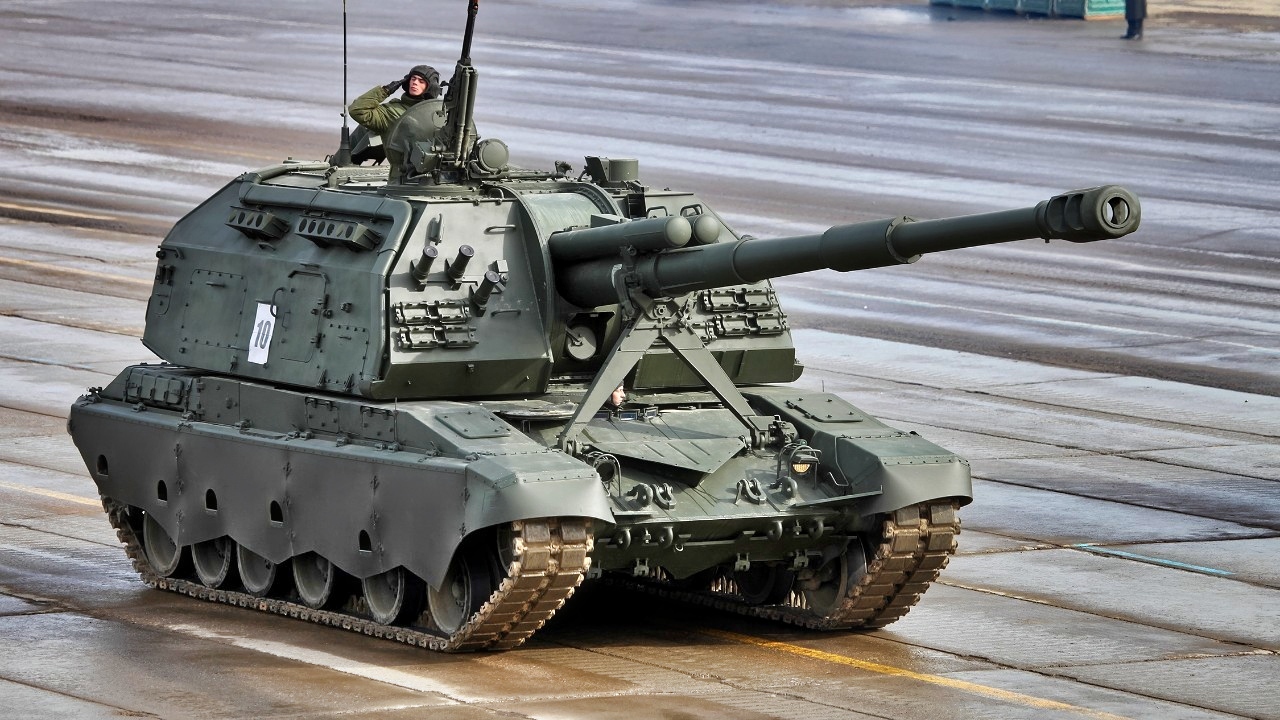
Msta-S Russian Army. Image Credit: Creative Commons.
Notably, though, the “different paradigm” comment – while it gained significant media attention – was not accompanied by any announcement of a formal change in military doctrine. Instead, the language is notable because it possibly suggests that the Kremlin is looking to continue its retaliatory strikes on Ukraine while also attempting to portray Ukrainian strikes as terrorism rather than military operations conducted in response to an invasion.
The comments also come amid stalled peace negotiations, with Russian forces attempting to regain lost ground.
Ukraine’s Drones Are Reaching Deeper Into Russia
When Ukraine launched Operation Spider’s Web on June 1, 2025, it shocked the world. It was one of the most ambitious long-range drone operations of the war, with Ukrainian drones, which had been smuggled over the border on trucks, targeted multiple Russian air bases, including Olenya Air Base in Murmansk, Belaya Air Base in Irkutsk, Dyagilevo Air Base in Ryazan, and Ivanovo Severny Air Base. Satellite imagery confirmed damage to several high-value aircraft, including Tu-95MS and Tu-22M3 bombers. That strike was a warning to Russia of things to come, and since then, Ukraine has conducted a number of successful strikes inside Russia.
On May 29, Ukrainian drones reportedly struck the Lukoil refinery in Volgograd. The facility processes approximately 13.5 million tons of crude oil annually and accounts for roughly 5% of Russia’s refining capacity.
And throughout the spring, Ukrainian drones have successfully hit fuel depots and airfields, industrial facilities and logistics hubs, and several infrastructure sites across Russia. The campaign ultimately forced Moscow to defend targets located hundreds and sometimes thousands of miles away from the frontline.
Russia Is Struggling to Defend Everything
In May, the Russian State Duma approved legislation allowing banks and financial institutions to take part in drone defense efforts. It was perhaps the clearest sign yet that the Russian military and authorities are aware that it is impossible to fully protect the entirety of its vast territory from Ukrainian drone strikes.
The move is unusual because air defense, traditionally, is the responsibility of the military and security services – not private institutions.
The decision reflects the scale of the threat posed by Ukrainian unmanned aircraft, which has become too widespread for the state to handle alone. Russia, after all, is the largest country in the world. Every air defense system assigned to protect a refinery or a bank’s headquarters cannot be deployed elsewhere.
What Peskov Meant
Peskov’s comments could be interpreted as an indication that the war is about to change – and that Russia may begin expending expensive missiles to force Ukraine to use its own finite supply of Patriot interceptors. It might also be a psychological game. The comments create uncertainty about what future Russian retaliation may look like, and the message is aimed not only at Kyiv but also at Ukraine’s Western supporters.
If the war is entering a different paradigm, after all, it could suggest that more countries – particularly those supporting Ukraine – are vulnerable in some way. It could also indicate new, asymmetric tactics. Or maybe it’s just another threat.
At the same time, though, Moscow continues to insist that it remains open to a negotiated settlement – as long as that settlement satisfies its demands.
“We remain open to peace negotiations,” Peskov also said.
About the Author: Jack Buckby
Jack Buckby is a British researcher and analyst specializing in defense and national security, based in New York. His work focuses on military capability, procurement, and strategic competition, producing and editing analysis for policy and defense audiences. He brings extensive editorial experience, with a career output spanning over 1,000 articles at 19FortyFive and National Security Journal, and has previously authored books and papers on extremism and deradicalization.


