

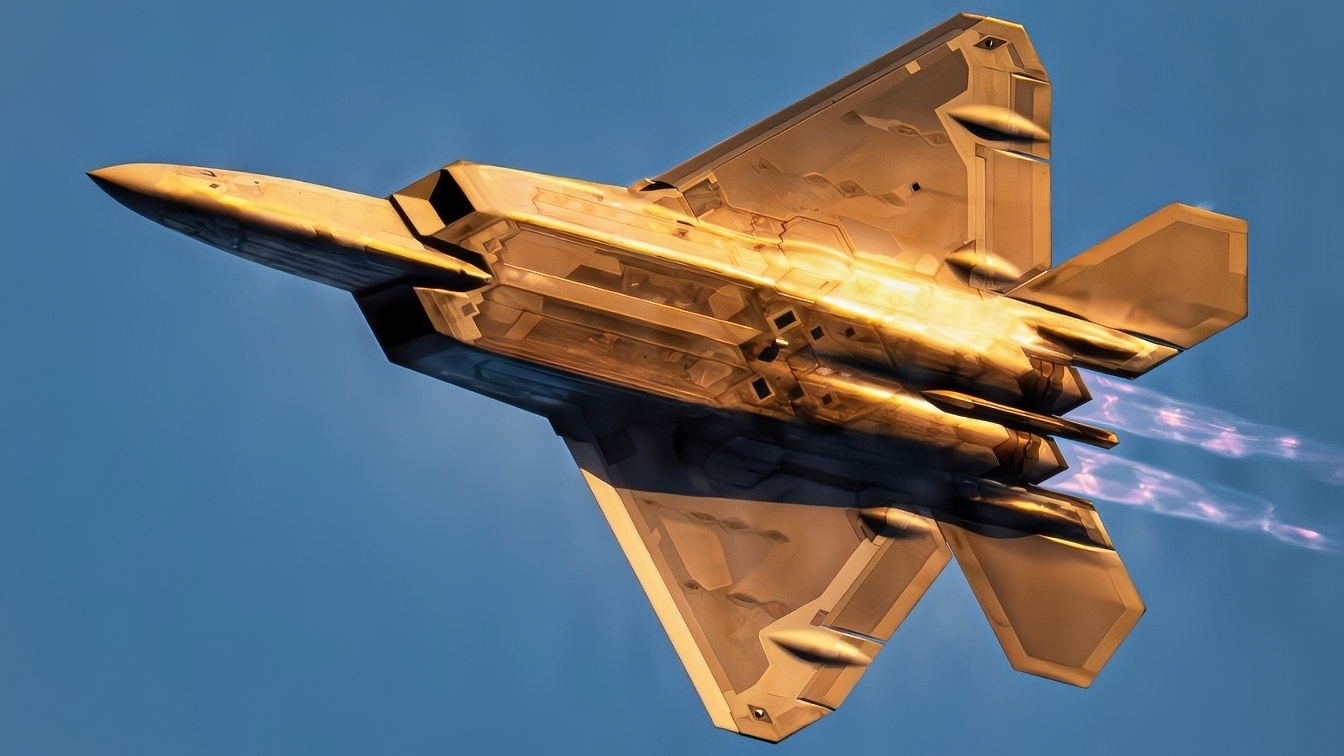
All 184 of the U.S. Air Force’s F-22 Raptors will officially be here to stay, according to a pending amendment in the House Armed Services Committee. This amendment came after years of debate, arguing whether the USAF should withdraw a small number of Raptors from service due to cost considerations. The F-22 is considered one of the U.S.’s most capable fighter jets and is a crucial component of the Air Force’s fleet. The aircraft is expected to remain in service until the 2040s, when sixth-generation platforms such as the F-47 will replace them.
The F-22 Will Remain in Service Until 2032 at Least
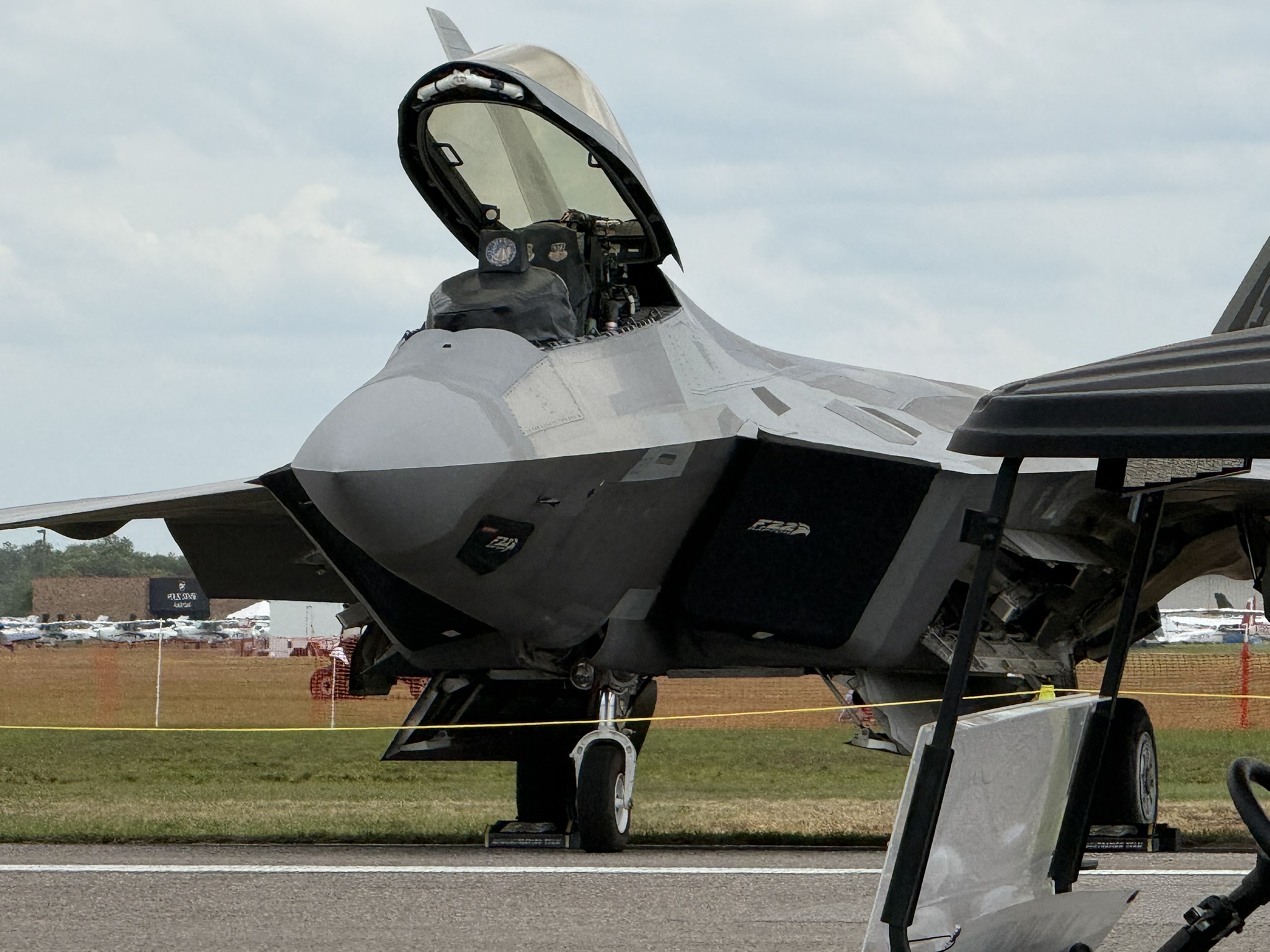
F-22 Raptor at Lakeland Air Show in Lakeland, Florida. Image Credit: National Security Journal.
The amendment was introduced to the Committee’s version of the National Defense Authorization (NDAA) bill and was authored by Rep. Austin Scott (R-Ga). As it currently stands, the amendment would prohibit the U.S. from retiring any F-22 Raptors until September 30, 2032.
This also includes the older Block 20 aircraft, which are not combat-capable and are currently used for training. The amendment passed through the Committee and is expected to reach the House floor, after which it will also have to pass the Senate and be signed by the President.
This is not the first time that Congress has come to the F-22’s aid. The 2023 NDAA prevented the Air Force from making any F-22 divestments until 2027. This new amendment extends that by another five years, ensuring that all operational Raptors will remain in service until then.
Earlier attempts at retiring some aircraft were also blocked by the House Armed Services Committee. In 2024, the USAF proposed reducing its fleet by 250 aircraft, including 32 Block F-22 fighters, which it said were too expensive to convert to combat standards. Congress blocked these efforts and insisted that all Raptors must remain in service. “They’re still the best air superiority jets we have in the world today,” one Congressional staffer said.
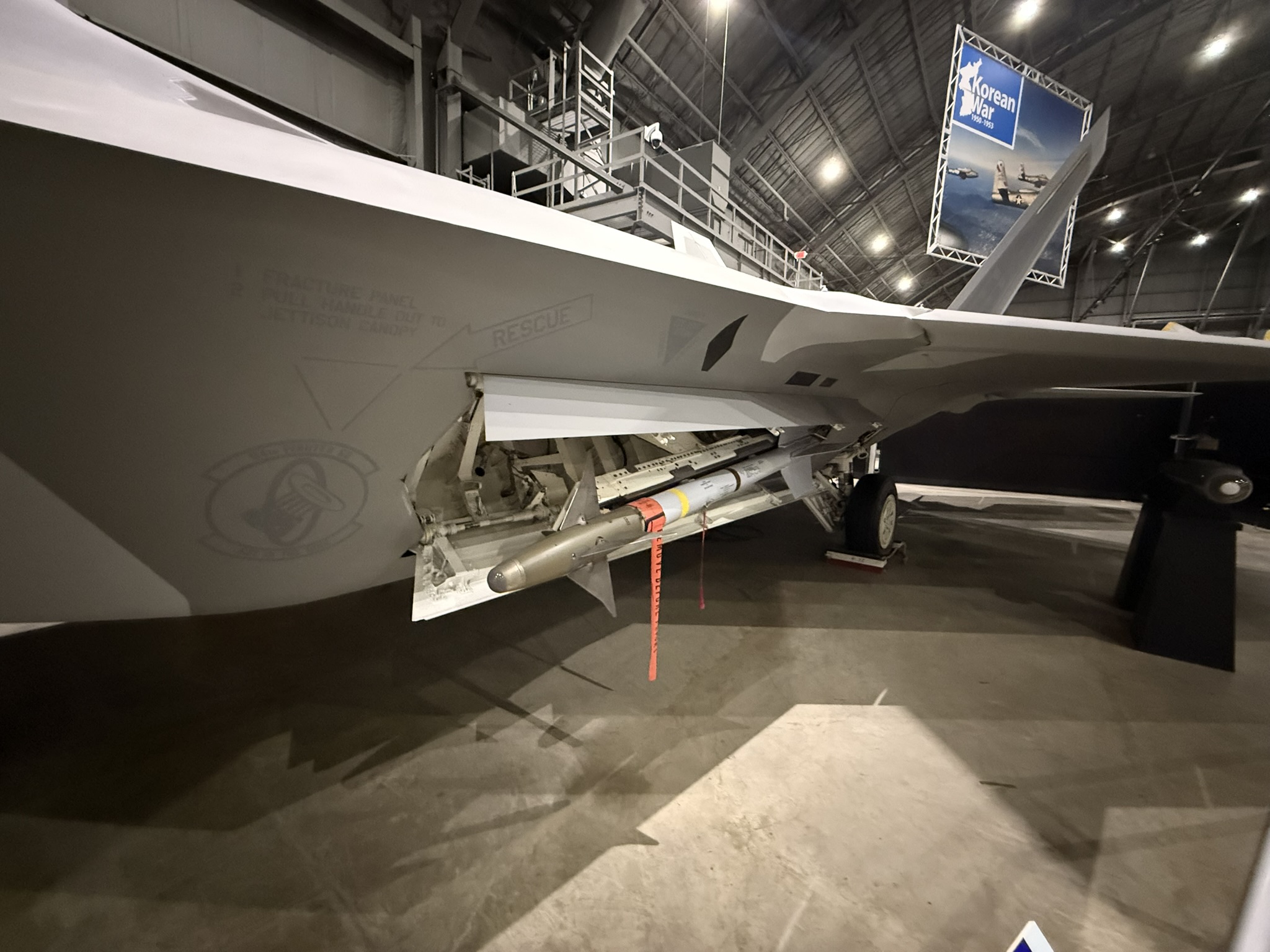
F-22 Raptor at the National Museum of the U.S. Air Force. Image Credit: National Security Journal.
The Raptor Stronger Than Ever
This new extension on the F-22’s service life coincides with the proposed new series of upgrades for the Raptor. The new “Raptor 2.0” upgrades, as some have called them, give the F-22 a set of low-observable drop tanks that increase the aircraft’s range without compromising its stealth profile
One of the bigger constraints of the F-22 has been its range, or its lack thereof. With a combat range of only 460 nautical miles, the Raptor falls behind many fourth-generation aircraft, which can easily be equipped with external fuel tanks without compromising stealth. Now the aircraft can retain its low-observability while also significantly increasing its operational range.
Another addition to the Raptor 2.0 is the inclusion of IRST pods on external wingtips.
The F-22 was originally supposed to receive IRST sensors from the outset, but Lockheed Martin ultimately decided against it due to cost concerns and questions about whether it would compromise the aircraft’s stealth profile.
However, the advantages offered by IRST capabilities outweigh any potential stealth compromises. Another upgrade to the F-22 reportedly includes avionics upgrades to make the aircraft compatible with collaborative combat aircraft (CCAs). This would enable the aircraft to control one or several CCAs, which can act as recon drones and perform SEAD/DEAD missions.
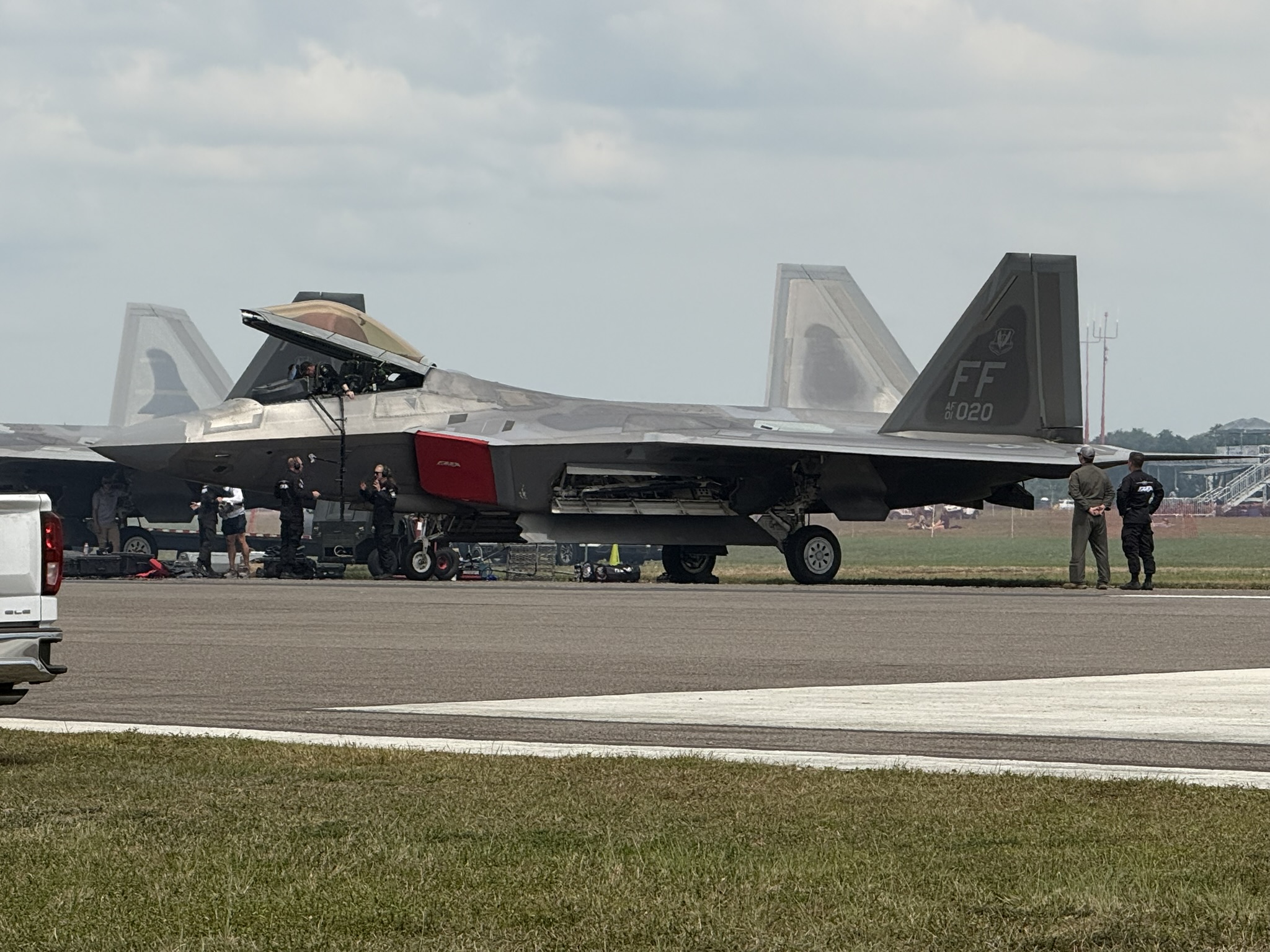
F-22 Raptor in Lakeland, Florida. Original National Security Journal Photo.
Why the Air Force Considered Retiring the F-22
For years, the USAF had been considering whether it wanted to retire a number of F-22s. A major reason for this is the aircraft’s high operating costs relative to its relatively small fleet. “The F-22 fleet was not produced in sufficient quantities to replace the F-15,” said aviation expert James Smith. “Therefore, its logistics and supply chain do not benefit from economies of scale as much as jets like the F-16 and F-35.”
Likewise, the F-22’s stealth qualities come at an immensely high price. Its stealth coatings are expensive and require extensive maintenance compared to new fifth-generation aircraft like the F-35.
Additionally, while the F-22 is still one of the most advanced aircraft in the world, the frame is reaching its limits for future upgrades. The Raptor was designed for combat in Europe against the USSR. As a result, the aircraft’s range was not as much of a priority for the designers at the time.
Now that China has become the U.S.’s primary adversary, this oversight is rearing its ugly head. Its avionics, which are still quite advanced, rely on older code, limiting their modularity and adaptability. As a result, adding new sensors, such as helmet-mounted displays, requires considerable effort. From this perspective, a new clean-sheet design made more sense to the Air Force as it would provide a more open and modular solution to contemporary threats.
Replacement by the F-47
The F-47 is envisioned as that clean-sheet solution. Currently in development by Boeing, the F-47 seeks to rectify the (few) shortcomings of the F-22. It is designed from the outset to possess a combat range of 1,000 nautical miles, vastly further than the Raptor or the F-35.
The Next-Generation Air Dominance (NGAD) fighter is also envisioned to feature the latest, most advanced stealth capabilities ever equipped on a fighter jet and the most capable sensors. The aircraft is set to enter service in the 2040s, with the F-22 serving as a stopgap until then.
About the Author: Isaac Seitz
Isaac Seitz, a Defense Columnist, graduated from Patrick Henry College’s Strategic Intelligence and National Security program. He has also studied Russian at Middlebury Language Schools and has worked as an intelligence Analyst in the private sector.


