


Summary and Key Points: When two American pilots ejected from their F-15Es over Iran and were pulled to safety, they survived something most people never think about: one of the most violent experiences a human body can endure. The pilots who’ve been through it describe a brutal, split-second ordeal. The moment the handle is pulled, rockets blast the seat out of the cockpit with a force that can bruise shoulders to the bone and snap collarbones — and a pilot who fails to tuck in fast enough risks far worse.
What Every Fighter Pilot Fears: Ejection
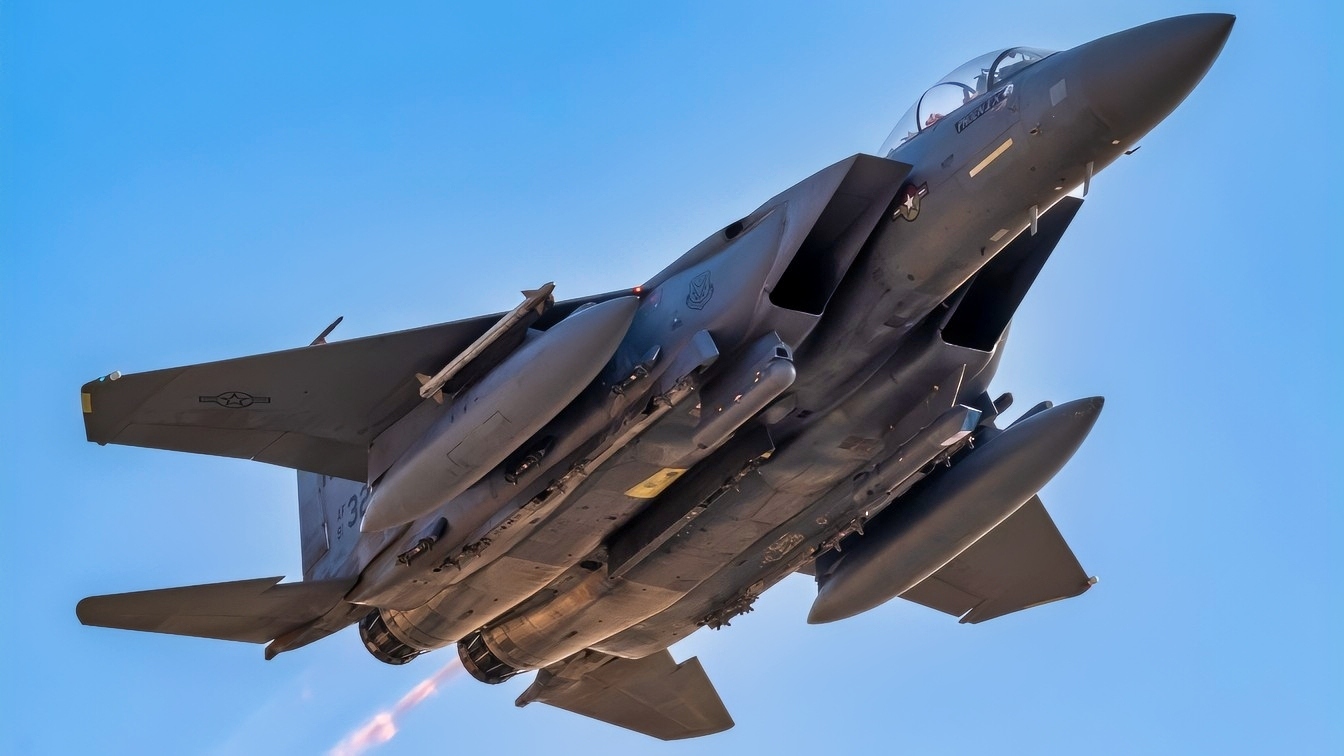
A U.S. Air Force F-15E Strike Eagle aircraft soars through the air during exercise Marauder Shield 26.1 within the U.S. Central Command area of responsibility, Nov. 11, 2025. Marauder Shield 26.1 emphasized a coordinated response to the growing threat of unmanned aerial systems. The exercise featured advanced counter-Unmanned Aircraft Systems integration between the U.S. and Kuwaiti forces, bolstering regional security and demonstrating a commitment to collaborative defense.
(U.S. Air Force photo by Staff Sgt. Tylin Rust)
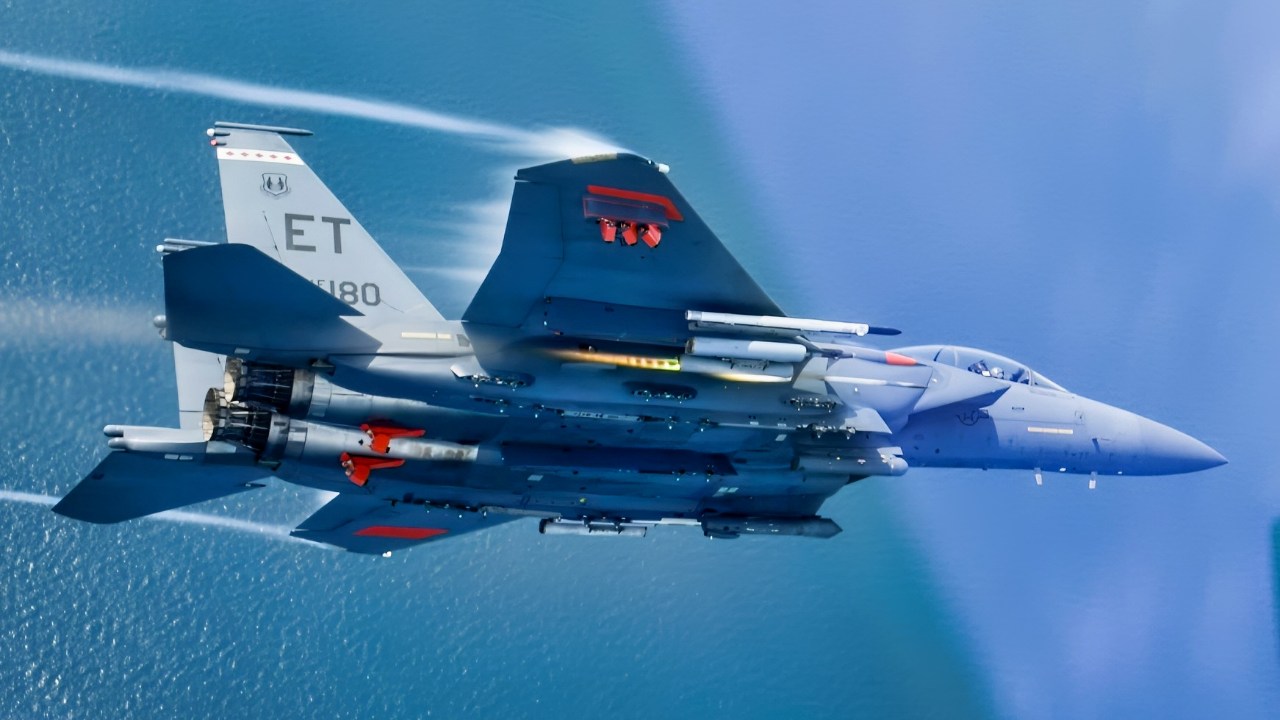
A 96th Test Wing F-15E Strike Eagle flies during a test mission May 22, 2025 over Eglin Air Force Base, Florida. The 96 TW and the 53rd Wing teamed up to test AGR-20F Advanced Precision Kill Weapon System II laser-guided rockets on the F-15E in May in an effort to get the capability to the warfighter as quickly as possible. (U.S. Air Force photo by Staff Sgt. Thomas Barley)
In Iran, during Operation Epic Fury, two American pilots were rescued after they ejected from their F-15Es. In the weeks since, a few publications have spoken with pilots who have been through that process about how dangerous and risky it is.
Pilots, in that situation, have to decide the right time to eject, to determine whether doing so is necessary, and also must think about where they’re landing and whether it’s hostile territory.
And also, they go through this way, the knowledge that it’s likely going to be painful.
Warplane Ejection: “One of the Most Violent Experiences a Body Can Go Through”
The New York Post, after the Iran rescue, talked to Matthew “Whiz” Buckley, who is a Top Gun graduate and president of the veteran suicide prevention charity the No Fallen Heroes Foundation. In Iraq, he flew F-18 Hornets in 44 combat missions.
Buckley told the Post that the pilots in Iran made “a pretty stark choice to either die or eject.”
“You’re always worried about the condition of the aviator and aircrew, if they had to eject, because ejecting is one of the most violent experiences a body can go through,” Buckley said, noting that those who eject from planes are subject to “instantaneous 10 to 20 Gs of force.”
Buckley also said that pilots receive less parachute training than you might think.

An F-15E Strike Eagle assigned to the 494th Fighter Squadron launches for a training sortie April 11, at Royal Air Force Lakenheath, England. The 494th conducts routine training daily to ensure RAF Lakenheath brings unique air combat capabilities to the fight when called upon by United States Air Forces in Europe-Air Forces Africa. (U.S. Air Force photo/ Tech. Sgt. Matthew Plew),

A F-15 Strike Eagle, assigned to the 4th Fighter Wing, approaches a KC-135 Stratotanker, assigned to the 6th Air Refueling Wing, for refueling over the southeastern United States, Aug. 29, 2024. A multi-mission avionics system sets the F-15 apart from other fighter aircraft. It includes a head-up display, advanced radar, inertial navigation system, flight instruments, ultrahigh frequency communications, tactical navigation system and instrument landing system. (U.S. Air Force photo by Staff Sgt. Lauren Cobin)
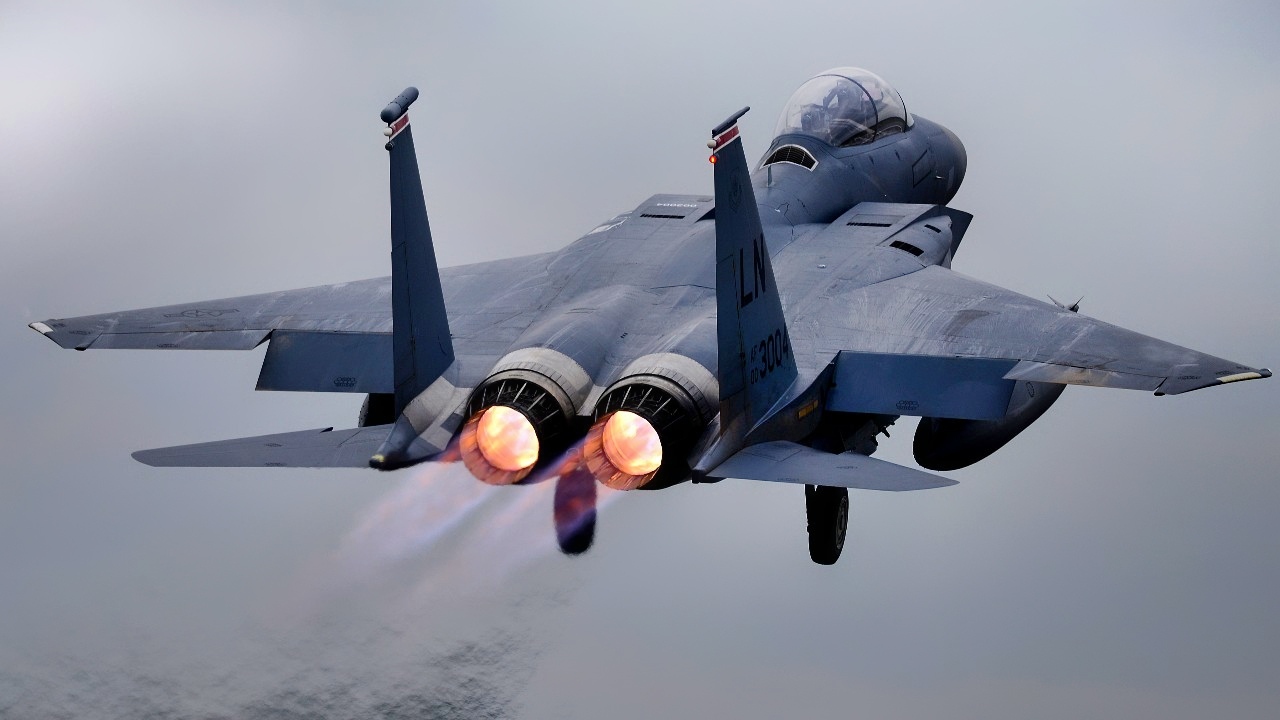
An F-15E Strike Eagle assigned to the 494th Fighter Squadron takes off for a training sortie at Royal Air Force Lakenheath, England, Oct. 26, 2018. The 494th trains regularly to ensure RAF Lakenheath brings unique air combat capabilities to the fight. (U.S. Air Force photo/ Tech. Sgt. Matthew Plew)
“A lot of people think that, oh yeah, if you’re a fighter pilot, you must do some parachute training. Zero,” he told the Post.
In March, after some pilots ejected after friendly-fire missions over Kuwait, Task & Purpose also talked to some Air Force fliers about what it was like for them to eject.
“An ejection is about 70 unrelated miracles that happen in about seven seconds,” said Gen. David Goldfein, whose ejection over Serbia in 1999 has become a well-known story. Goldfein went on to serve as Chief of Staff of the Air Force.
Retired Maj. Gen. Ronald Bath told T&P that his training came in handy when it came time to eject.
“You’re trained from the day you get into pilot training when you’re flying in an airplane with an ejection seat. You go through this training over and over and over and over, and it’s just second nature,” Bath told the publication, of the time he ejected in 1988.
Task & Purpose also spoke to retired Gen. CQ Brown, who rose all the way up to chairman of the Joint Chiefs of Staff. Indeed, several airmen who have ejected from planes have reached high places in the military chain of command.
“It’s not something you wanna do, but when you do it, you’re glad all the stuff works,” Brown said. “My hats off to the life support personnel who pack all those chutes, and the maintainers that actually maintain the seat. They’re real specialist. That’s one of the things we want to do when we first get back on the ground. We go back and thank those junior service members, who are often in their early 20s, that are doing a lot of that work.”
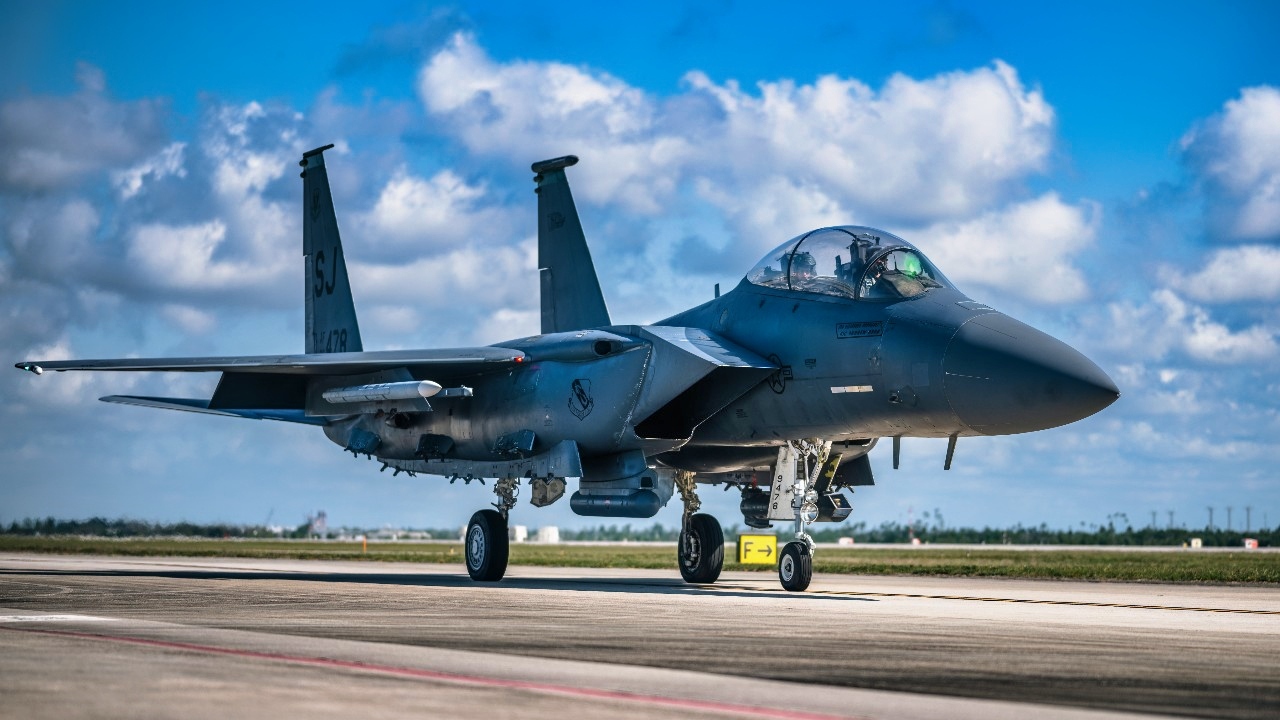
A U.S. Air Force F-15E Strike Eagle assigned to the 335th Fighter Squadron, Seymour Johnson Air Force Base, North Carolina, taxis during Checkered Flag 25-2 at Tyndall AFB, Florida, May 14, 2025. Checkered Flag, one of the Department of Defense’s largest air-to-air exercises, integrates fourth and fifth-generation aircraft to enhance mobility, deployment, and employment capabilities. (U.S. Air Force photo by Airman 1st Class Zeeshan Naeem).

An F-15E Strike Eagle stands static on the flightline before morning takeoffs at Royal Air Force Lakenheath, England, Jan. 5, 2021. The 48th Fighter Wing conducts daily flying operations in order to ensure the Liberty Wing can deliver unique air combat capabilities when called upon by its NATO allies. (U.S. Air Force photo by Senior Airman Madeline Herzog)
All About Ejection
Meanwhile, Popular Mechanics, back in 2023, published an explainer about what’s actually required to eject from a plane.
“You want to avoid it at all costs,” the story says. “But when there is no other option, it can save your life.”
And there are many reasons for that.
“The turbulent process of ejecting puts pilots at serious risk of injury. Once those rockets fire under the seat, they blow a person up and out of the cockpit with enough force to seriously bruise both shoulders on the harness straps and possibly break collarbones. And you better tuck in your knees and elbows, because if anything hits the side of the cockpit on the way out, it’s coming off,” Popular Mechanics said.
About the Author: Stephen Silver
Stephen Silver is an award-winning journalist, essayist, and film critic, and contributor to the Philadelphia Inquirer, the Jewish Telegraphic Agency, Broad Street Review, and Splice Today. The co-founder of the Philadelphia Film Critics Circle, Stephen lives in suburban Philadelphia with his wife and two sons. For over a decade, Stephen has authored thousands of articles that focus on politics, national security, technology, and the economy. Follow him on X (formerly Twitter) at @StephenSilver, and subscribe to his Substack newsletter.


