

Iran’s Strategic Victory: The Week the War’s Outcome Became Clear – With the resumption of hostilities in the War for the Greater Middle East, it’s time to understand what’s happening, because it’s quite an incredible story. Indeed, if you’ll forgive the phrasing, future historians will write astounding histories of how the War for the Greater Middle East ended in an Iranian strategic victory, with its turning point occurring this week.
They’ll also write about how a superpower went to die in the geopolitical quicksand of the Middle East.
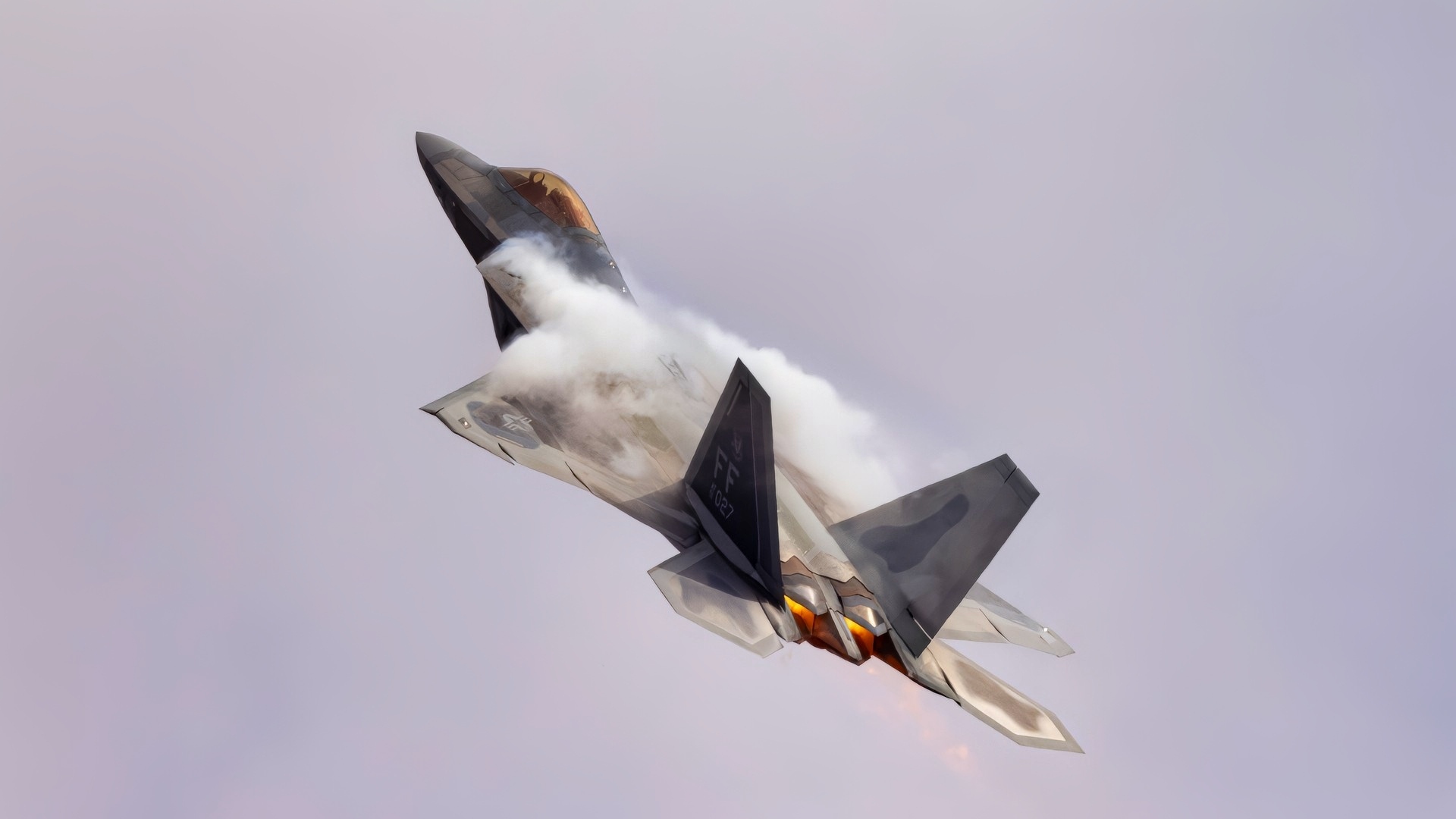
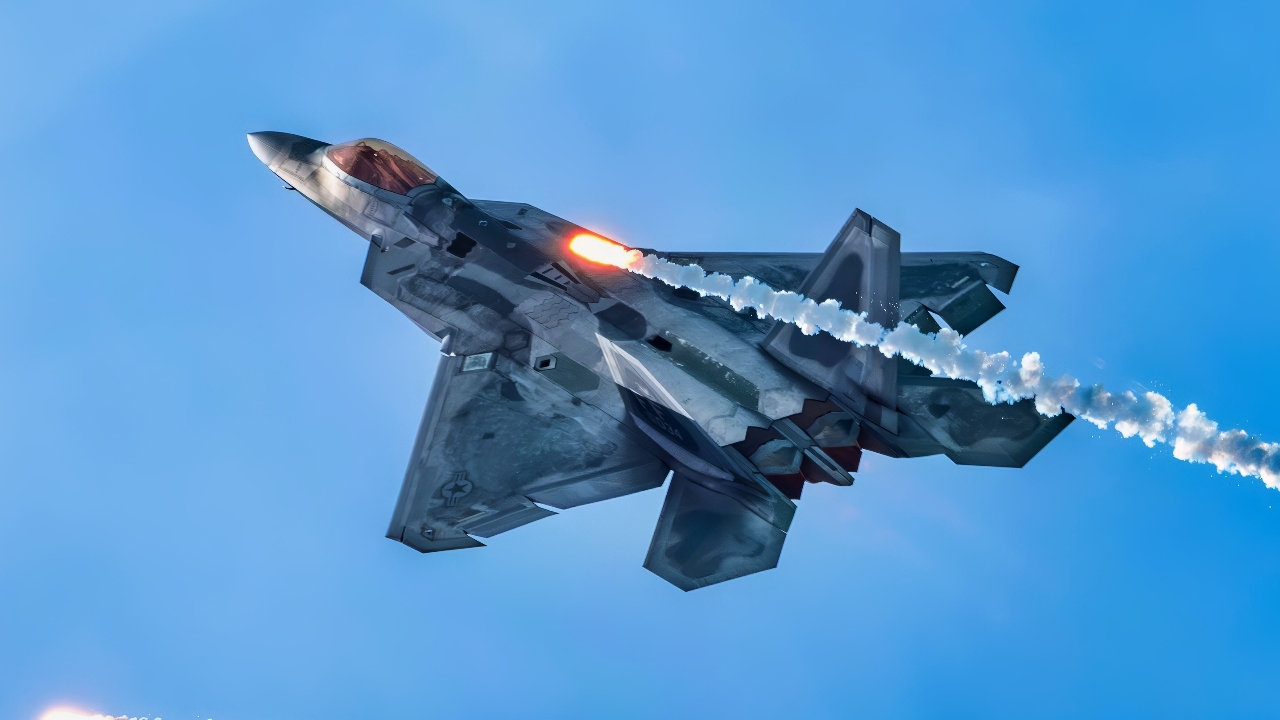
The U.S. Air Force F-22 Raptor Demonstration Team performs during the 2025 Marine Corps Air Station Miramar Air Show in San Diego, Sept. 27, 2025. The F-22 Raptor Demonstration Team performs precision aerial maneuvers at Air Shows across the world to demonstrate the unique capabilities of the world’s premier 5th generation fighter aircraft. America’s Air Show 2025 is a unique and incredible opportunity to witness Marine and joint aviation capabilities, civilian performers and the world-famous Blue Angels; to celebrate the 250th birthday of the Marine Corps alongside Marines and to see first-hand the innovative spirit of the Marine Corps through emerging technologies and forward-thinking. (U.S. Marine Corps photo by Lance Cpl. Jordan Searls)
After defying the ceasefire that the United States and the Islamic Republic of Iran had entered into with each other, the US partner of Israel struck what they claimed were Hezbollah targets in Lebanon.
Tehran cautioned Tel Aviv against striking the Lebanese capital, Beirut.
So, naturally, Israel struck Beirut. What followed was a wave of missiles from Iran directed at targets inside Israel.
President Trump pleaded for an end to the hostilities. His pleas were ignored, first by Israel and then by Iran.
Israel counterattacked Iran, and, in the early hours this morning, Iran seems to have paused any attacks.
Then, President Trump claimed Iran and Israel were returning to the ceasefire. And the markets rallied.
If there was any truth to that, far from being concerned about potential escalations from the Israelis or the Americans, Iran demonstrated it had total escalation dominance.
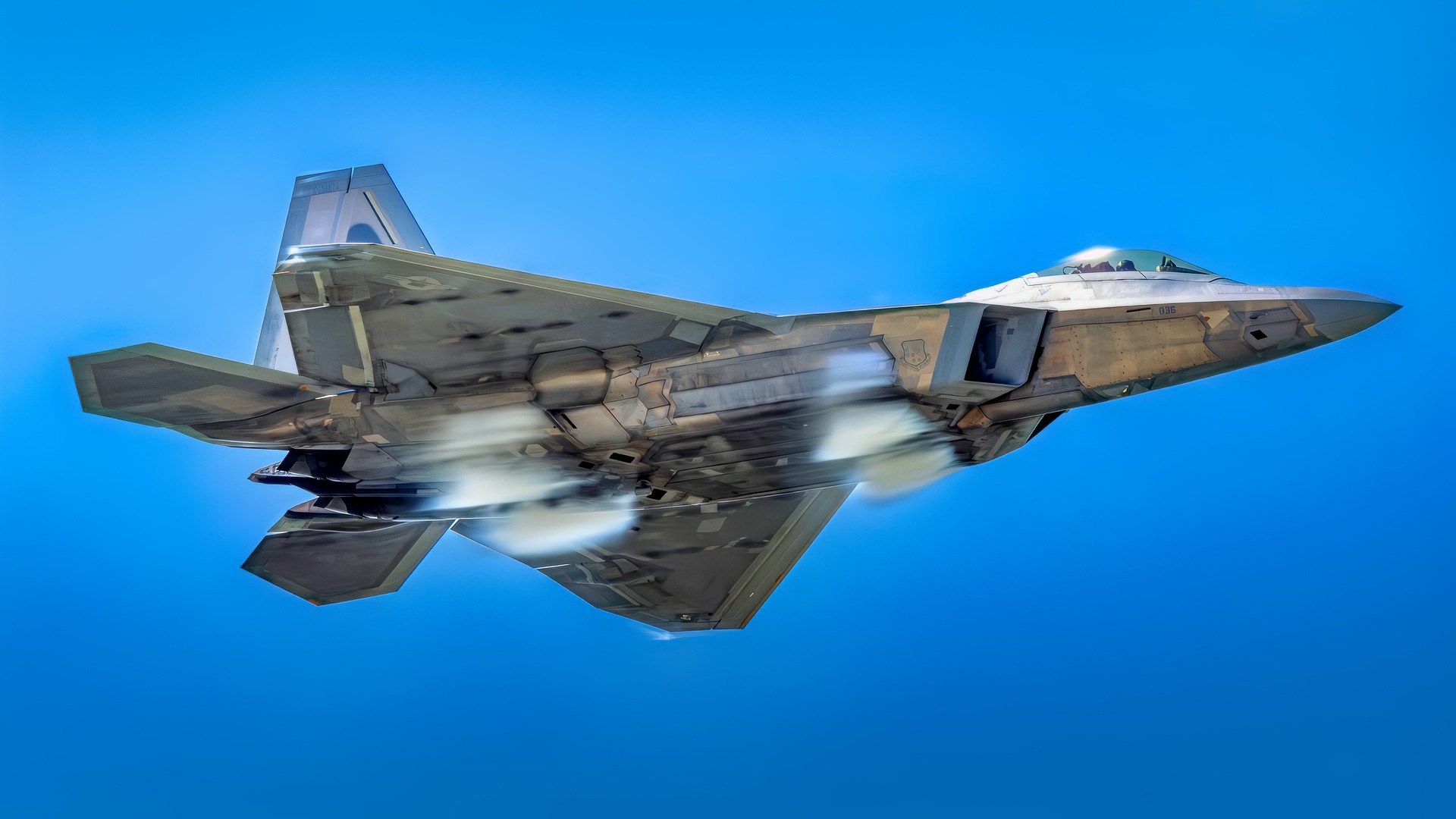
An F-22 Raptor performs an aerial demonstration at Naval Air Station Oceana, Virginia, Sept. 19, 2025. During the demonstration, the aircraft can reach speeds up to 723 miles per hour, showcasing the incredible power and precision of its twin Pratt & Whitney F119 engines. (U.S. Air Force photo by Staff Sgt. Lauren Cobin)
Iran Demonstrates Escalation of Dominance
Should anyone in Israel or the US be sighing in relief at all?
Probably not, because the Iranians just proved that they can–and will–retaliate against any perceived Israeli or US military provocation and can withstand whatever the two military powers throw at the Islamic Republic. And the world is taking notice of these changes.
Iran is clearly dictating events.
Yes, the Israelis are defying their American partners. But Israel is flailing about the place, doing its level best to stymie a ceasefire from taking hold long enough that the US and Iran can get a peace deal of some kind (however unlikely such a deal is even without Israeli meddling).
But in each iteration of violence, the Iranians have benefited strategically. Sure, they’ve taken hits. Big hits. At every turn, though, the Iranians adapted to the environment, escalated accordingly, and stymied heavier potential reprisals from the Americans and Israelis.
In fact, their carefully calibrated violence has ensured that Iran continues to enjoy greater levels of leverage over both the Americans and Israelis. If there are real peace talks, Iran walks into those talks clearly in control.
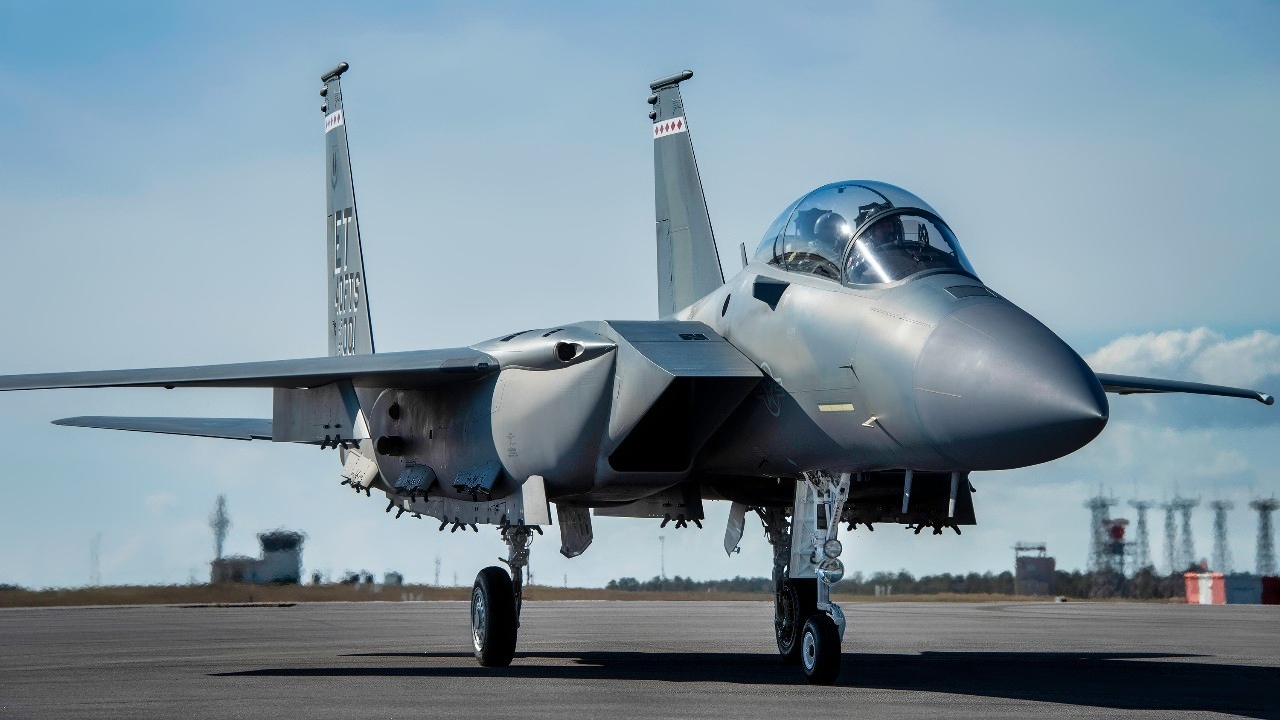
The F-15EX, the Air Force’s newest fighter aircraft, arrives to Eglin Air Force Base, Florida March 11. The aircraft will be the first Air Force aircraft to be tested and fielded from beginning to end through combined developmental and operational tests. The 40th Flight Test Squadron and the 85th Test and Evaluation Squadron personnel are responsible for testing the aircraft. (U.S. Air Force photo/Ilka Cole)

A F-15 Strike Eagle, assigned to the 4th Fighter Wing, approaches a KC-135 Stratotanker, assigned to the 6th Air Refueling Wing, for refueling over the southeastern United States, Aug. 29, 2024. A multi-mission avionics system sets the F-15 apart from other fighter aircraft. It includes a head-up display, advanced radar, inertial navigation system, flight instruments, ultrahigh frequency communications, tactical navigation system and instrument landing system. (U.S. Air Force photo by Staff Sgt. Lauren Cobin)
The Economic Battlefield
Meanwhile, Iranian proxies in Yemen threaten the safe passage of ships through the Red Sea and the Strait of Bab el-Mandeb. That’s the last lifeline for the world economy when it comes to sustaining any semblance of the flow of goods through the Mideast since the Strait of Hormuz has been shut down both by Iran and the United States.
Carnage Rules in the Middle East
Who is benefiting from this, though?
It is not America.
After all, the global instability in world markets caused by the war is massively disrupting the US economy. Israel doesn’t benefit either, as they have lost any credibility in the eyes of the world, at least according to many experts.
The only one that benefits from these rounds of escalation is Iran, which continues demonstrating to the world that it can not only survive these rounds of violence but thrive from them.
A Ceasefire on Iran’s Terms
Even though US President Donald Trump claims that both Israel and Iran are seeking a restoration of the shaky ceasefire, there’s a chance that the ceasefire doesn’t actually hold any longer than the last one did.
Further, Iran walks into the potential ceasefire having complicated the US-Israeli partnership, which supposedly shows signs of cracking under the pressure the war has placed upon the two nations.
With Iran nowhere near as exposed to global volatility as the Americans are, Tehran can simply wait them out until Washington comes to it on more favorable terms. And if things get really bad economically, as the United States enters a contentious midterm election cycle soon, Tehran knows that it will get a better deal from the United States–regardless of what Israel wants.
The War’s Original Assumptions Collapse
America and Israel started the war believing that Iran was weak and ripe for regime change on the cheap. Trump and Netanyahu intended for the war to last 96 hours, not 100 days (and counting).
Specifically, Trump feared the prospect of Iran acquiring nuclear weapons, which is another reason he likely struck Iran when he did. Both Israel and the US opposed the continual expansion of Iran’s ballistic missile, drone, and hypersonic weapons threat.
Because of the war, Iran now has decisive escalation dominance.
Some experts now believe the country is likely closer to a reliable nuclear weapons arsenal than ever before. And the Iranian missile and drone threat is more pronounced than ever. And the regime in Tehran is, unfortunately, stronger than ever. At every turn, then, the US and Israelis have failed in this war.
The Costs of Strategic Miscalculation
There will be prices to pay for this massive miscalculation, both by Trump and Netanyahu in their respective political systems. Sadly, there will be real, painful geopolitical consequences imposed on both the United States and Israel for having started a costly war that both sides lost at the strategic level.
That is why future historians will remember this week as the decisive turning point in the war. There will now be a run on American power, as its credibility as a military power evaporates because of this war. Irrespective of whether Trump can reopen the Strait of Hormuz anytime soon, significant economic damage is already baked into the proverbial cake for the rest of the year from the closure of the Strait of Hormuz and the damage the war has done to key energy production facilities throughout the Mideast.
And Netanyahu’s days as Israeli prime minister have become finite. Whatever happens next for Israel, its days will be darker because of how empowered the failed war against Iran has made the Islamic Republic.
The Checkmate of the West
So, for those worried about whether Iran will again escalate, that’s a far less important question than understanding how Iran has thus far benefited from escalation at every turn in this war and where things are likely to end soon. The war is coming to a close. If it ends now, Iran wins, and the regional order becomes decisively post-American. If it continues, the US and Israel still lose, but at far greater cost.
The Islamic Republic has astonishingly checkmated the West in 100 days of inconclusive warfare.
About the Author: Brandon J. Weichert
Brandon J. Weichert is Senior National Security Editor. He also manages The Weichert Brief on Substack. Weichert hosts “National Security Talk” on Rumble, too. He is the author of four bestselling national security books, the most recent of which is A Disaster of Our Own Making: How the West Lost Ukraine (Encounter Books). Follow him via Twitter/X @WeTheBrandon.


Dr. Hujjatullah M.H.Babu Sahib
June 8, 2026 at 1:11 pm
A rather reasonable write-up that would easily embarrass most devotees of MSM. Though its title loosely approximate the the aerial if not also the ground realities, what the write-up alludes to and implies as the outcome so far representing a “strategic level” victory for I.R. Iran over both Trumpian U.S. and Nutty Israel is quite far watched. Objectively speaking, Iran may have tactically gained the upper hand in theaters-specific geo-political battles with a highly politically polarized U.S. and to a lesser extent a politically fragmenting Israel. But as long as Israel stays as a functional physical entity and a viable polity that is strategically-boosted by its formidable not deterrent but aggressively-poised if not also as yet lethally operationalized, it clearly remains a genuine geo-strategic threat at strategic levels ! Furthermore, the U.S. is portrayed widely as having achieved sanction-dominance against not just Iran but also Russia and to somehow assert that the U.S. has lost escalation-dominance simply because the U.S. deep state is not buying into Trump’s aspired to command flip-flops is too logically tenuous to gain serious acceptance !
Dr Hujjathullah M.H. Babu Sahib
June 9, 2026 at 2:56 am
Actually it was : “…quite far fetched.” and “…operationalized nukes,…”. Sometimes, auto-correction can be a nuisance, Sorry !