

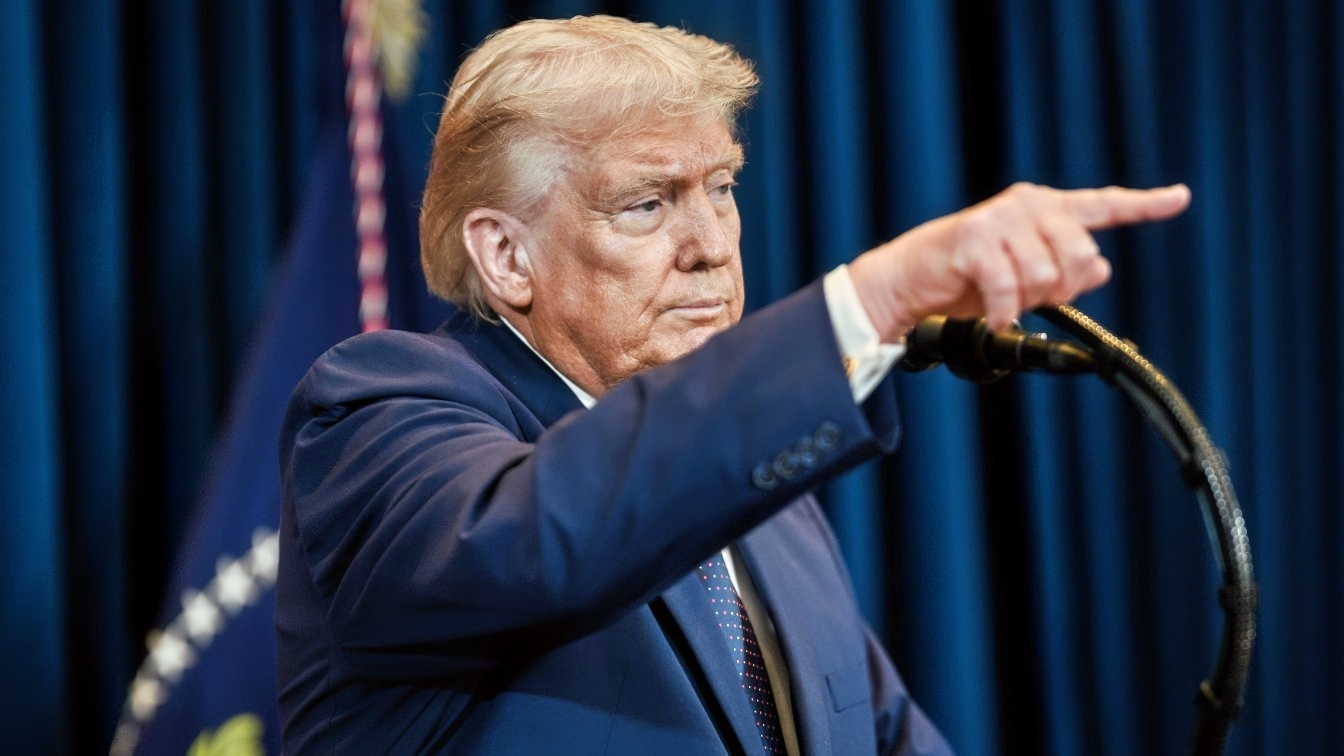
Donald Trump Wanted To End The Iran War. Overnight, Israel Showed Him He Isn’t In Control: By this morning, June 8, 2026, the President of the United States was reduced to posting on Truth Social, looking as if he had lost control of a war he helped start. Overnight, Israel had struck Iran, with blasts reported across Tehran and beyond and a petrochemical site among the targets, in retaliation for the waves of missiles Iran had fired at Israel the day before. Donald Trump, who, according to a US official, had told Benjamin Netanyahu not to do exactly this, responded by demanding on Truth Social that the two countries immediately stop shooting. It was the posture of a man pleading with events he could no longer steer, and it laid bare the central problem with his entire approach to this war: the peace he keeps promising depends on the restraint of two governments that have just demonstrated they will not give it.
What Trump Wanted: A Hormuz Deal And A War He Could End
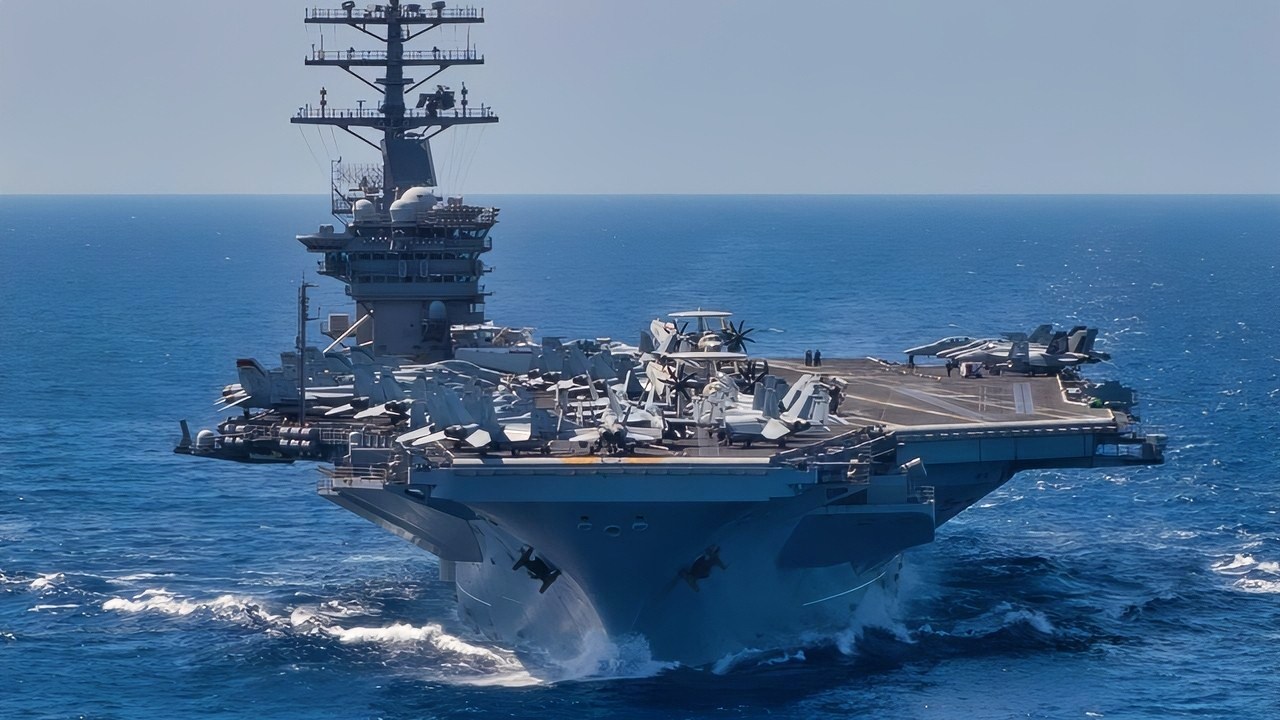
(Feb. 1, 2021) The aircraft carrier USS Nimitz (CVN 68) steams through the Indian Ocean. Nimitz is part of the Nimitz Carrier Strike Group and is deployed conducting maritime security operations and theater security cooperation efforts. (U.S. Navy photo by Mass Communication Specialist Seaman Joseph Calabrese)
Over the last few weeks, at least for me, Trump’s objective has been consistent and, on its own terms, rational. He wants this war over.
He wants the Strait of Hormuz, through which roughly a fifth of the world’s oil moves, reopened to normal traffic.
He wants Israel, Iran, and Iran’s proxies to stop trading blows so the region stops bleeding into global energy markets and his own political ledger.
And he wants to bank all of it as the kind of signature achievement he can point to, a war he ended and a chokepoint he reopened.
He has insisted the finish line is in sight. On the eve of this latest escalation, Trump said the United States and Iran were very close to an agreement that would end the three-month-old war and reopen the strait, with only a few points left to settle.
He has even sketched what comes after a deal, saying he would work with Iran to retrieve and destroy its stockpile of highly enriched uranium if an agreement is reached, and that, absent one, he would degrade the Iranian military far enough that American forces could safely collect the material themselves.
The vision is whole. The trouble is that getting there requires both Jerusalem and Tehran to stop fighting on command, and neither has shown any intention of taking orders.
The Retaliation Trump Told Netanyahu Not To Launch on Iran
The clearest evidence that Trump’s leverage is thinner than he advertises came overnight.
Before the escalation, he had used the bluntest channels available, leaning on Netanyahu directly and, by multiple accounts earlier this month, erupting at the Israeli leader over actions that threatened diplomacy, even reminding Netanyahu of the political protection Washington had extended to him amid a corruption trial.
The message could not have been plainer: do not widen this war.
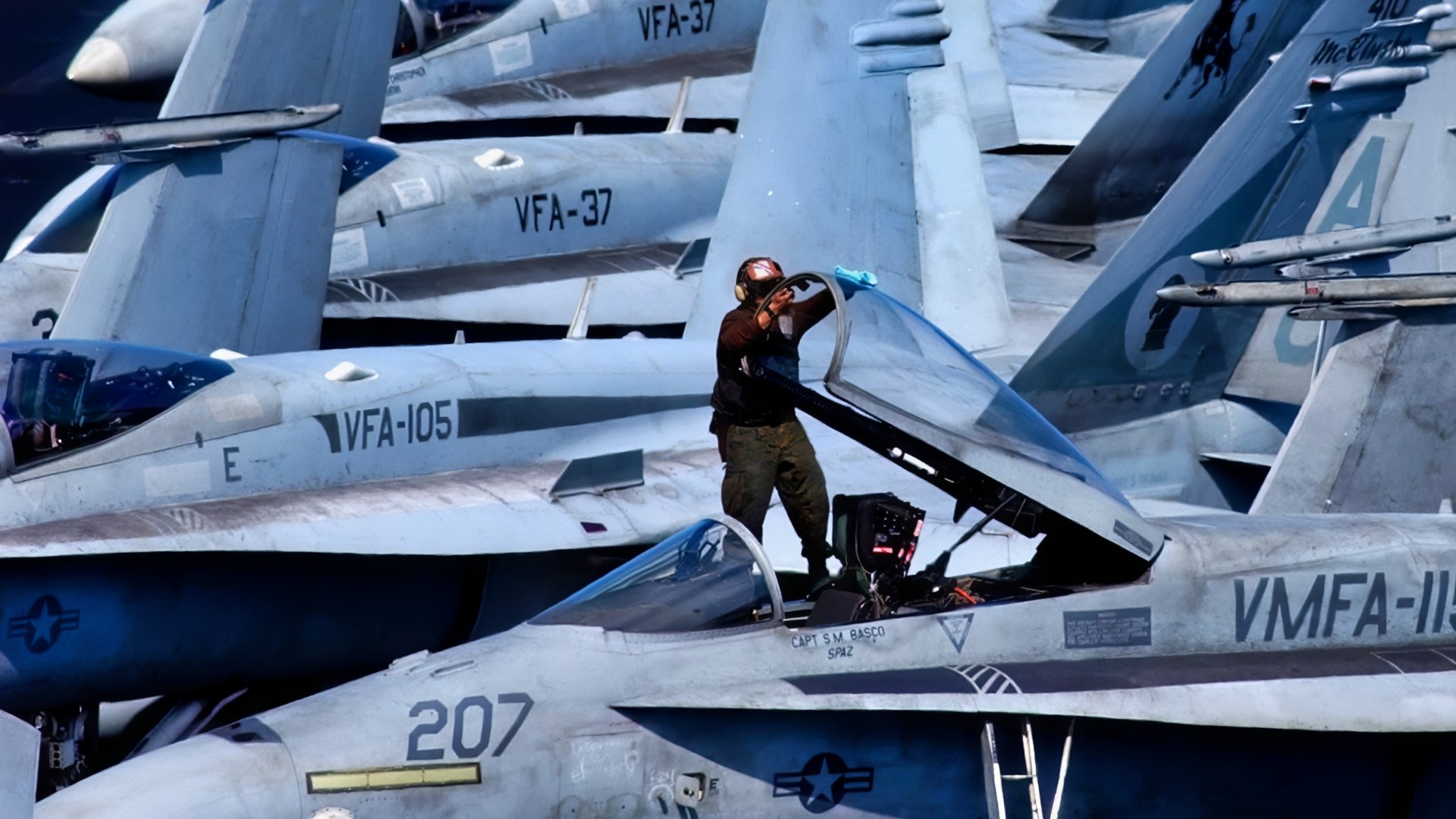
Marine Cpl. Rodger Lagrange cleans the canopy of a Marine F/A-18A+ Hornet onboard the USS Harry S. Truman (CVN 75) while the aircraft carrier operates at sea on Feb. 14, 2005. The Truman Strike Group and Carrier Air Wing 3 are conducting close air support, intelligence, surveillance, and reconnaissance missions over Iraq. Lagrange is attached to Marine Fighter Attack Squadron 115 deployed from Marine Corps Air Station Beaufort, S.C.
(DoD photo by Airman Philip V. Morrill, U.S. Navy. (Released))
Israel struck Iran anyway. The Israeli military’s chief of staff monitored the strikes from the air force’s war room as they hit. For a president whose theory of the case rests on his personal ability to move allies and adversaries alike, the sequence is damning.
He told Netanyahu to hold fire, and Netanyahu calculated that the benefits of hitting back, demonstrating strength to a domestic audience and answering an Iranian barrage, outweighed the cost of defying an American president who has so far refused to actually break with Israel over anything.
Israel bet that Trump’s anger would carry no real penalty and acted accordingly.
Why Trump’s Ceasefires Keep Failing To Hold
The deeper weakness is that Trump’s ceasefires often fail to stop the fighting.
The truce he brokered for Lebanon is the case study. It took effect in mid-April, yet between then and the day before this weekend’s eruption, Israel carried out thousands of airstrikes on Lebanon, by the Lebanese prime minister’s count nearly 3,500 of them, alongside hundreds of controlled demolitions. A ceasefire on paper coexisted with a bombing campaign in practice, and the Beirut strike that triggered this entire cascade happened in that supposedly pacified environment.
The pattern is now repeating on a larger stage. The strikes between Israel and Iran are the worst in months, and the proxy dimension is already reactivating, with Yemen’s Houthis firing a missile toward Israel as the exchange escalated.
Each time Trump announces that calm is at hand, an actor on the ground makes a decision that mocks the announcement. He can declare a ceasefire, but he cannot enforce one because the parties retain their own incentives and grievances, and those have repeatedly proven stronger than his word.
The Next Few Hours Belong To Tehran
Which is why the most powerful man in the world is now, in effect, waiting.

Pacific Ocean, July 25, 2005 – USS Ronald Reagan (CVN 76) performs a high speed run during operations in the Pacifc Ocean. Ronald Reagan and Carrier Air Wing One Four (CVW-14) are currently underway conducting Tailored Ships Training Availability (TSTA). Official US Navy Photo by Photographers Mate 1st Class James Thierry. (RELEASED)
Trump claimed on Monday that both sides are looking to do an immediate ceasefire and that final negotiations on peace are proceeding, subject, in his words, to ignorance or stupidity getting in the way. But the decision that matters in the next several hours is not his to make. It belongs to Tehran, and it comes down to a single question: does Iran absorb the Israeli strike and hold its fire, or does it answer with another barrage?
If Iran holds, Trump gets the outcome he wants and the narrative he craves. He can claim he pulled both sides back from the edge, that his pressure worked, that the deal survived its hardest test. If Iran fires back, the war is effectively rekindled, the diplomatic track he describes as nearly complete collapses, and the Hormuz reopening on which he has staked his energy strategy slides further out of reach. The danger is not only renewed destruction but also the exposure it would bring. A second Iranian salvo would prove that the President of the United States announced peace while the combatants ignored him, and that the leverage he projects over this conflict is largely rhetorical.
There is reason for caution about Iran’s restraint. Its capacity to retaliate has been degraded over months of war, but it is not gone (some experts even say it has been rebuilt), and a leadership that has just been struck on its own soil faces its own domestic pressure to respond. Tehran has also tied the diplomacy explicitly to Lebanon, having suspended talks with Washington unless Israel accepted a ceasefire there, which means the very Beirut strike that started this weekend’s chain sits at the center of Iran’s grievance.
The conditions that produced the barrage have not been resolved. They have been inflamed.
Oil, The Strait Of Hormuz, And Trump’s Bet
The stakes of the next move extend well past the battlefield. Trump’s entire Middle East strategy has been bound up with oil, with reopening the Strait of Hormuz and stabilizing prices that a closed strait keeps elevated. A renewed Israel-Iran war threatens all of it at once. Iran’s most reliable tool for inflicting pain remains the strait and the Gulf’s energy infrastructure, and a wider war invites exactly the disruptions that would spike crude and ripple into American inflation. The president who promised to reopen the world’s most important oil chokepoint could instead preside over its indefinite closure, with his signature economic argument turned against him.
As one former Trump National Security Council senior offical told me this morning: “Trump looks trapped in the Iran war and has no easy way out. He’d better check to see how much oil is left in the SPR (Strategic Petroleum Reserve).” Sounds like a plan to me.
About the Author: Harry J. Kazianis
Harry J. Kazianis (@Grecianformula) is the former Senior Director of National Security Affairs at the Center for the National Interest (CFTNI), a foreign policy think tank founded by Richard Nixon, based in Washington, DC. Harry has over a decade of experience in think tanks and national security publishing. His ideas have been published in the NY Times, The Washington Post, The Wall Street Journal, CNN, and many other outlets worldwide. He has held positions at CSIS, the Heritage Foundation, the University of Nottingham, and several other institutions related to national security research and studies. He is the former Executive Editor of the National Interest and the Diplomat. He holds a Master’s degree focusing on international affairs from Harvard University.


