


Iran’s top military command, Khatam al-Anbiya central headquarters, has declared an end to its military operations against Israel, after the two sides exchanged a wave of attacks that threatened to bring the conflict back into all-out war. Israel has not responded to Tehran’s announcement.
President Trump told Iran and Israel to stop “shooting” and said the two countries were “looking to do an immediate ceasefire.”

Fighters from the Lebanese militant group Hezbollah carried out a training exercise in Aaramta village in the Jezzine District, southern Lebanon, on Sunday, May 21, 2023. The show of force came ahead of “Liberation Day,” the annual celebration of the withdrawal of Israeli forces from south Lebanon on May 25, 2000, and in the wake of a recent escalation of the Israel-Palestine conflict in the Gaza Strip.
There is little doubt, however, that the fighting will continue and that the “ceasefire” will not hold for long.
To drive home that point, Iran warned that “if aggressions and hostile actions continue, including in southern Lebanon, far more severe and crushing measures than before will follow.”
Attacks In Northern Israel And Beirut Sparked The Latest Attacks
This latest round of missile attacks began after Hezbollah, one of Iran’s proxies in the region, launched drone and rocket attacks in northern Israel. The Israelis responded with missile attacks against Hezbollah strongholds in the Dahiyeh suburbs of southern Beirut.
Iran stated, “This rabid dog must be disciplined and put in its place. Watch the sky of the occupied territories tonight,” after Israel’s airstrikes in Beirut.
The ISW reported that Iran responded with a missile attack designed to deter future Israeli attacks against Hezbollah while attempting to present itself as a reasonable party in the most recent escalation, although its proxy, Hezbollah, started the escalation on June 7.
The Iranians targeted Ramat David Airbase in northern Israel because, according to the Islamic Revolutionary Guards Corps (IRGC), the Israeli aircraft that struck Hezbollah sites in Beirut on June 7 flew their mission from Ramat David.
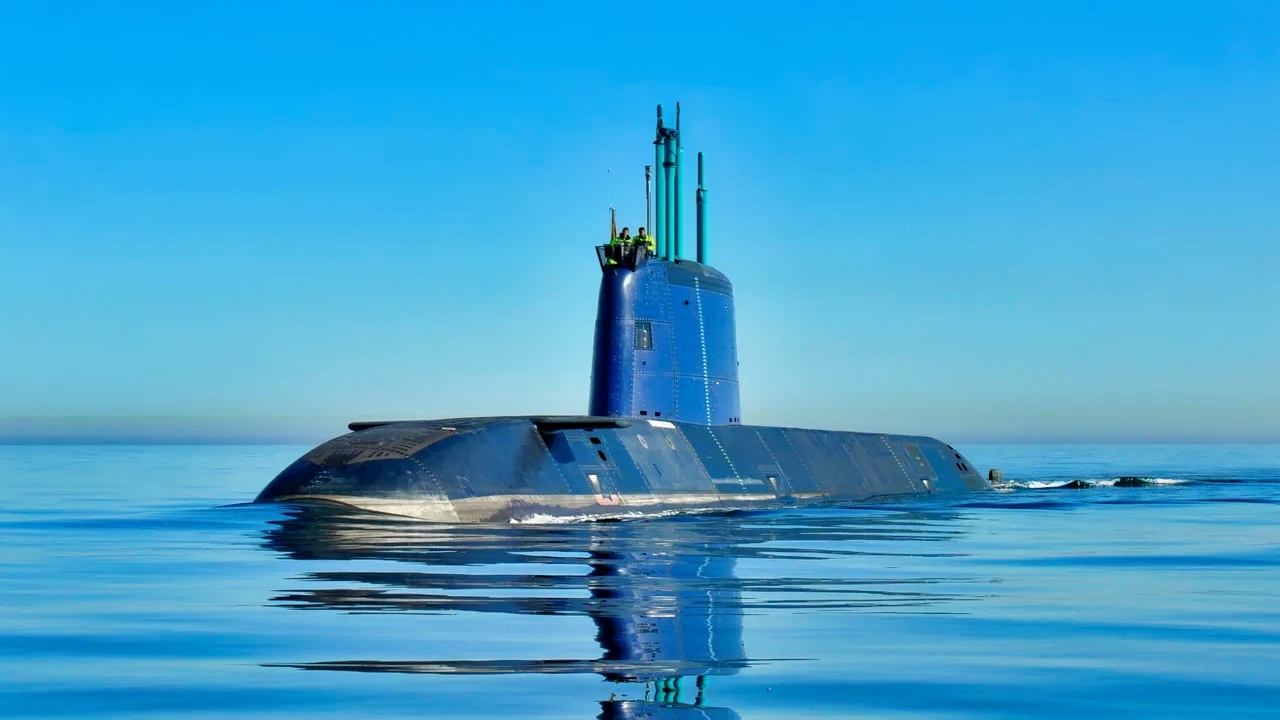
Israel Dolphin-Class Submarine. Image Credit: Creative Commons.
The IRGC fired at least ten missiles. The IDF intercepted all the missiles, and there appear to be no casualties at the time.
Iran’s Houthi Rebel Proxy Forces Also Fire On Israel
Iran-backed Houthi rebels in Yemen have fired ballistic missiles at central Israel, triggering early morning air raid sirens across Tel Aviv and Jerusalem. The attacks coincide with a broader, widening regional conflict.
The Israel Defense Forces (IDF) confirmed incoming missile launches from Yemen and successfully intercepted the threats using aerial defense systems.
The Houthis also said they would prevent Israeli-linked ships from sailing in the Red Sea.
Israel Attacks Iranian Missile and Petrochemical Sites
Israel then responded to Iran’s missile attack by targeting Iranian surface-to-surface missile sites early on Monday morning. The Israeli Defense Forces (IDF) said that dozens of aircraft were used to target Iranian missile launchers that were restored since the American/Israeli ceasefire stopped the air campaign on April 8.
The Israeli military also said it conducted airstrikes on several targets at a huge petrochemical complex in Mahshahr, in southwestern Iran.
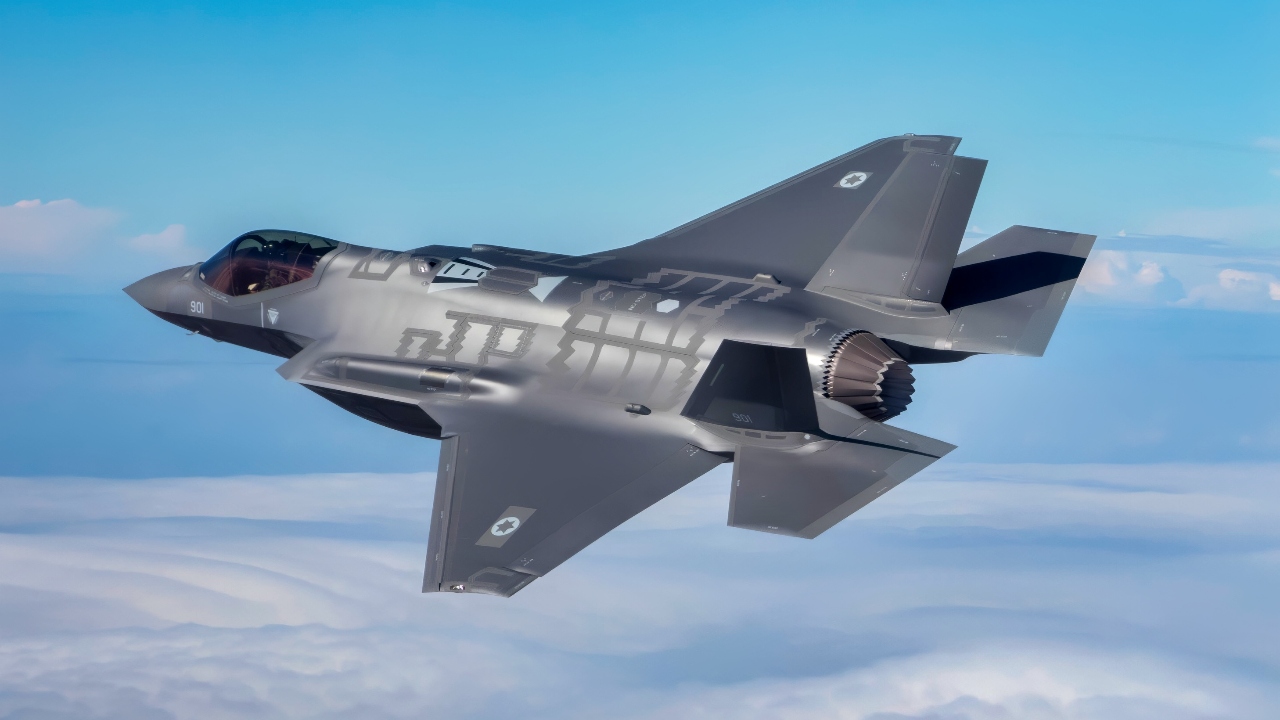
F-35I Fighter from Israel. Image Credit: Creative Commons.
The Iran Airports and Air Navigation Company has said in a released statement that all flights in Iran have been canceled until further notice.
A spokesperson for Iran’s Civil Aviation Organization announced last night that the western part of the country’s airspace had been closed, due to Israeli airstrikes.
There Is Little Hope That This Ceasefire Is Anything But Temporary
The mutual distrust between the two nations leaves little doubt that the current ceasefire is merely temporary. And Israel has stated that it will maintain air superiority over Iran.
The Israelis have long believed Iran’s slogan “Death To Israel” is real.
Iran’s leaders have repeatedly vowed to eradicate Israel and fund a so-called Axis of Resistance of terror proxies in the region that attack Israel.
Despite the Iranians insisting that their nuclear program was strictly for peaceful purposes, Iran had been enriching uranium to 60 percent, a level that has no civilian application, and a short step from the 90 percent needed for a weapon.
After the initial wave of Israeli airstrikes last June, Iran responded by launching over 500 ballistic missiles and about 1,000 drones at Israel, killing 28 people and wounding several thousand, according to Israeli health officials.
The missiles struck apartment buildings, a university, a hospital, and critical infrastructure sites, causing considerable damage.
The Air Campaign Has Stopped … For Now, But What Lays Ahead
Iran and Israel are currently navigating a delicate de-escalation after a brief exchange of strikes shattered a fragile truce.
The immediate next steps hinge on international negotiations and whether Israel will halt its operations in Lebanon, which Iran has set as a strict condition for peace. And as long as Hezbollah keeps attacking northern Israel, those Israeli operations will continue.
But fighting hasn’t been limited to Israel and Lebanon. On June 3, Iran launched a drone attack on the Kuwait International Airport.
Despite President Trump’s constant predictions that a peace deal is near, the prospects for a negotiated deal seem anything but certain. Iran is doing what it has always done: stalling for time, arguing about minutiae, and making ridiculous counterproposals.
All signs point to a resumption of hostilities. A managed stalemate resulting in a hollow deal with compromises would favor Iran and only embolden it in the future.
The US House of Representatives’ vote to invoke the War Powers Act, though symbolic (it can be vetoed by the president), is all the proof that Tehran needs to stall for time and hope that the midterm elections create a power shift in Washington that will favor them in the long term.
About the Author: Steve Balestrieri
Steve Balestrieri is a National Security Columnist. He served as a US Army Special Forces NCO and Warrant Officer. In addition to writing on defense, he covers the NFL for PatsFans.com and is a member of the Pro Football Writers of America (PFWA). His work was regularly featured in many military publications.


