

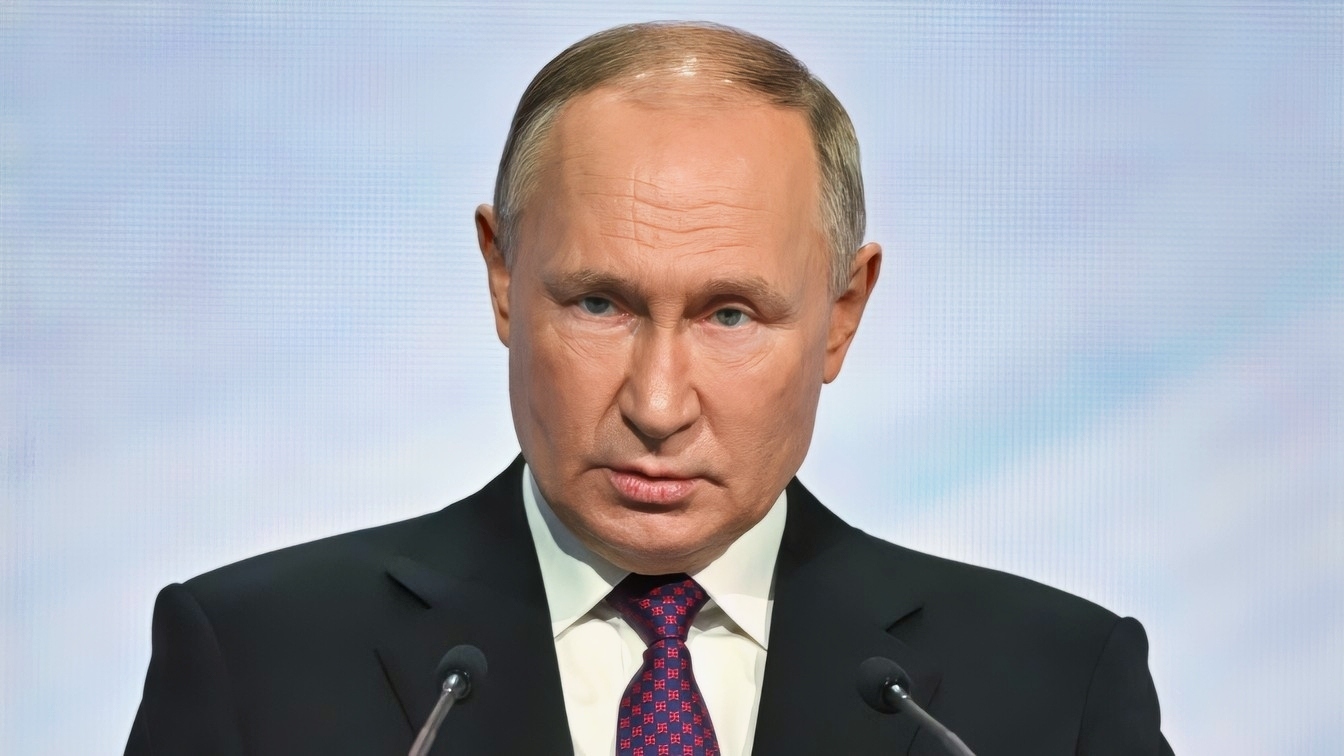
Russia’s energy ministry admitted that Ukrainian drone attacks on oil refineries and energy infrastructure are the cause of fuel shortages in Crimea and parts of southern Russia.
The Moscow Times reported that the country’s energy ministry said fuel and energy facilities have faced an increase in aerial attacks in recent months, leading to disruptions in fuel resupply.
Putin In Airplane Simulator Russian Government Photo
“Recently, fuel and energy sector enterprises have faced an uptick in enemy aerial attacks, leading to temporary difficulties with fuel supplies in several southern regions,” the Energy Ministry said in a released statement on Monday.
The government and industry officials announced that they have established an “industry-wide task force” to ensure the “stable and efficient operation of the country’s entire energy sector.”
Ukraine’s Drone Attacks Hammering Russia’s Energy Infrastructure
Ukraine has increased attacks on Russian energy facilities in recent months to keep Moscow from reaping the benefits of surging gas and oil prices due to the conflict in the Middle East.
Kremlin spokesman Dmitry Peskov said last month that there were no risks to fuel supplies in Russia, after a Reuters report highlighted a decline in oil refining in the central part of the country following Ukrainian drone attacks in recent days.
Despite those comments, Moscow is implementing a comprehensive ban on gas and diesel exports until July 31 and on aviation fuel exports until November 30 following a devastating wave of Ukrainian long-range drone strikes that have knocked out 25 percent of the nation’s total oil refining capacity, effectively paralyzing critical energy infrastructure across central Russia.
Fourteen Russian oblasts and Crimea have begun various rationing measures at local gas stations. However, the full scale of the shortages remains unclear, with some local restrictions limiting residents to purchasing only 20 liters of gasoline, prompting panic buying and hoarding.
Long Lines At Gas Stations, Suspension Of Rail Services
Photos from Crimea last week showed long lines at local gas stations as people waited their turn due to fuel shortages.
On Monday, Russia suspended rail service for Crimea after another Ukrainian drone strike knocked out a locomotive, wounding the engineer and killing his assistant, which has further impacted commerce in the occupied territory.
Vladimir Putin Back in June 2022 Russian Federation Photo.
Ukrainian drones are also hitting fuel trucks on the highway that supplies Crimea. Gasoline shortages are also being reported in Russian-occupied areas of Luhansk and Donetsk. According to the BBC, Ukraine has conducted over 300 drone strikes on fuel trucks.
Russia Is Losing $100 Million A Day Due To Drone Strikes
Ukrainian drone attacks continue to target Moscow’s oil production facilities. Among the oil refineries hit were Ryazan, Moscow, Kirishi, and Nizhny Novgorod, which process roughly 238,000 tons per day (83 million metric tons per year) and account for about 25 percent of Russia’s diesel and 30 percent of its gasoline output.
The Ukrainian military stated that the effects of previous drone strikes had confirmed the shutdown of the Syzran oil refinery in the city of Syzran (Russia’s Samara Oblast), which Ukrainian forces attacked on May 21, 2026.
“The Ukrainian Defense Forces will continue systematically taking measures to force the Russian Federation to stop its armed aggression against Ukraine,” the General Staff said.
Russia’s Black Sea Refineries Hit With New Attacks
Ukrainian drones have targeted Russian oil facilities in the city of Tuapse, the location of a major oil refinery and an oil and products export terminal. The Russians claimed that there were no injuries and no damage to the facilities in Tuapse.
Late last month, Ukrainian drone strikes also hit major oil refineries in Novorossiysk.
Due to the strikes at Novorossiysk, Russian oil refineries have been diverting their oil output to the Baltic Sea ports of Primorsk and Ust-Luga and the port of Murmansk on the Barents Sea.
“According to Moscow-based oil and gas industry monthly journal Infotek, independent assessments based on Novorossiysk tanker arrivals and departures suggest shipments via the port fell to 14.8 million barrels in April compared with 21.2 million barrels in March.”
According to OilPrice.com, Ukrainian long-range drone strikes on Russian energy infrastructure cost Russian oil companies $13 billion in 2025, with continued strikes causing Putin’s government to lose up to $100 million per day in potential earnings.
Russia’s export terminals have been hit by drones, causing production to drop by about 1.75 million barrels a day. According to estimates by OilX, Russia’s average oil refining rate in April fell to 4.69 million barrels per day, the lowest level in more than 16 years. The ongoing attacks threaten to further reduce refining volumes as Ukrainian strikes intensify.
Last month, Ukrainian drones hit 8 of 10 Major Refineries
Since the Russians invaded Ukraine in February 2022, the Ukrainians have conducted at least 158 strikes against Russian oil refineries. And those strikes have been conducted against 24 of 33 major Russian refineries.
Those attacks have intensified in the past year. Up to this point in 2026, Ukrainian drone strikes against oil facilities have already surpassed all of 2024. In just the last month, Ukraine has hit eight of the ten major Russian refineries.
Evgeny Borovikov, deputy CEO of the Russian insurance broker Mains, said that direct damage to oil and gas infrastructure from drone attacks exceeded 100 billion rubles (around $1.1 billion).
He added that when other economic effects are taken into account—including lost production and secondary disruptions—the total impact rises above 1 trillion rubles (approximately $13 billion).
Russia’s economy relies on oil and gas taxes for 25 percent of its budget. It is already stretched tight, and this loss of revenue will stretch it to the breaking point.
Russia Shifts Costs Of Protecting Oil Facilities To Companies
The ravaging Ukrainian drone attacks have taken a toll on Russian energy companies, and the government has proven unable to stop them. Now Moscow has shifted the costs and responsibilities of protecting its oil infrastructure onto the companies themselves.
According to sources, the Russian Defense Ministry will allow businesses to purchase large-caliber air-defense weapons, while keeping the systems under its control and operating them with units of reservists.
Ukraine’s plan is to cripple Russia’s oil refineries and thereby its economy.
And it is succeeding. The fact that Russian energy companies have to purchase their own anti-aircraft defenses illustrates how bad the situation is going for Moscow.
About the Author: Steve Balestrieri
Steve Balestrieri is a National Security Columnist. He served as a US Army Special Forces NCO and Warrant Officer. In addition to writing on defense, he covers the NFL for PatsFans.com and is a member of the Pro Football Writers of America (PFWA). His work was regularly featured in many military publications.


Doug
June 10, 2026 at 9:05 am
Ha !
Britain is aiding and abetting this, Russia knows this, and ALL the UK submarines are in port getting fixed.
Britain deserved a black eye.