

The ongoing conflict in Iran, specifically in the Strait of Hormuz, has been the subject of ongoing debate. Some say that once the Strait completely reopens, the flow of oil will quickly flood the market.
Others believe that the market will take months to recover, as oil wells will have to be restarted and tanker traffic will take time to bring markets back up to meet demand.

(Aug. 22, 2023) Gunner’s Mate 2nd Class Chase Allen maintains the barrel of a Mark 45 5-inch light-weight gun on the fo’c’sle of the Arleigh Burke-class guided-missile destroyer USS Paul Hamilton (DDG 60) in the Pacific Ocean, Aug. 22, 2023. Paul Hamilton is deployed to the U.S. 3rd Fleet area of operations. (U.S. Navy photo by Mass Communication Specialist 2nd Class Elliot Schaudt)
Washington and Tehran have made no progress toward an agreement to end the conflict and open the straits, even after 60+ days of a “ceasefire.”
But one opinion piece in the New York Times argues that the situation in the Strait of Hormuz is becoming less dire every day.
Bear Or Bull Markets?
Depending on whether one is a bear or a bull, the time frame will vary from a matter of days or weeks to several months, perhaps even a year.
One of the more bullish experts, ExxonMobil vice president Neil Chapman, speaking at a conference last week, said that the world is “approaching unheard-of inventory levels” and that crude oil could soon reach $150 to $160 per barrel.
Speaking at the Bernstein Strategic Decisions Conference, Chapman stated that prolonged blockages at the Strait of Hormuz have rapidly drained global inventories, putting the market just weeks away from historically low stockpile levels.
The market, he believes, has been living on borrowed time since the conflict began in late February. The question is not whether prices will rise but when the buffers run out.
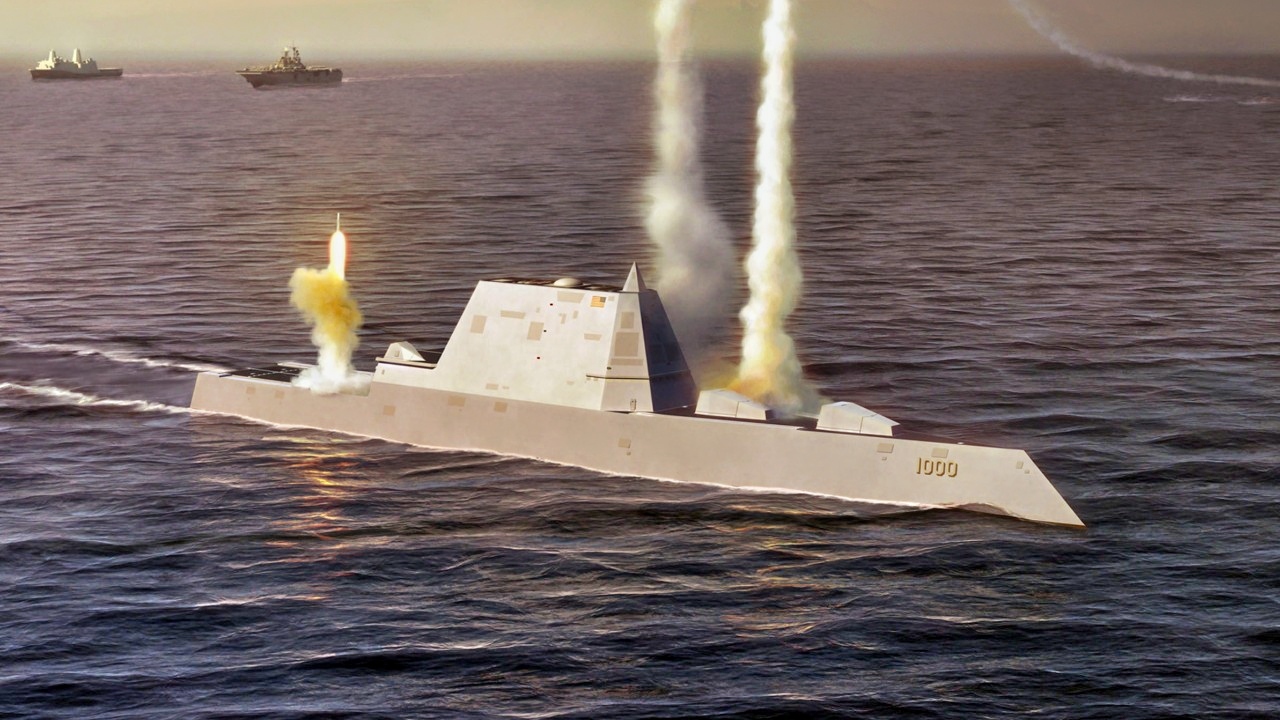
The US Navy’s troubled Zumwalt-class destroyers are being revitalized with the integration of Conventional Prompt Strike (CPS) hypersonic missiles, transforming them into powerful long-range strike platforms. The original class of 32 ships was cut to just three after its Advanced Gun System failed due to exorbitant costs. Now, these stealthy, $8 billion warships are having their defunct guns replaced with vertical launch tubes for hypersonic weapons. This upgrade will dramatically increase their strike range from a mere 63 miles to over 1,700 miles, making the Zumwalts relevant and formidable assets for deterring adversaries like China in the 21st century.
“We’re approaching unheard of inventory levels. I mean, really, really low levels,” Chapman told the conference. “You can debate whether that’s going to hit those really low levels in two weeks or three weeks.”
However, from an opposing viewpoint, an opinion piece in Channel News Asia (CNA) states that markets “should brace for a flood of oil” once the strait opens.
In it, Javier Blas states that oil would start to trickle, but within days or weeks it would transform “into an oil flood.”
As he points out, Greek shipowners have already pre-positioned multiple empty supertankers within only three to five days of navigation from Hormuz to load up once the Strait is reopened.
Will The Straits Be “Open” Without An Iranian Tollbooth?
Much of the future oil and gas trade, along with the associated costs of such, will depend on whether the Straits return to pre-Conflict freedom of navigation passage. However, if Iran and/or Oman decides to charge fees or tolls for passage through the Strait, everything (including any agreement) will change.
The Iranians have continued to demand that any ship passing through the narrow Strait of Hormuz must pay the Iranian government a toll.
The ISW reported that “ Iran continues to try to frame the Islamic Revolutionary Guards Corps (IRGC) ‘management’ of transit through the Strait of Hormuz as the new status quo.”

A joint team consisting of F-35 Patuxent River Integrated Test Force flight test members, U.S. Sailors and Marines, and the crew of the Japan Maritime Self-Defense Force Izumo-class multi-functional destroyer JS Kaga (DDH-184) are executing developmental sea trials in the eastern Pacific Ocean to gather the necessary data to certify F-35B Lightning II short takeoff and vertical landing aircraft operations. While aboard the MSDF’s largest ship, the Pax ITF flight test team has been gathering compatibility data for analysis in order to make recommendations for future F-35B operational envelopes, further enhancing the Japanese navy’s capabilities. The results of the testing will contribute to improved interoperability between Japan and the United States, strengthening the deterrence and response capabilities of the Japan-U.S. alliance and contributing to peace and stability in the Indo-Pacific region. Japan is an F-35 Joint Program Office foreign military sales customer planning to purchase 42 F-35Bs. The F-35 Joint Program Office continues to develop, produce, and sustain the F-35 Air System to fulfill its mandate to deliver a capable, available, and affordable air system with fifth-generation capabilities.
The strait is a vital choke point for roughly 20 percent of global oil and liquefied natural gas. Blocking it caused immediate spikes in global fuel prices, with certain crude grades soaring well over $100 a barrel.
Under international law, nations must permit the peaceful passage of the strait. By refusing to give it up, Iran has sought to establish state agencies that compel commercial ships to navigate designated northern vetting lanes near the Iranian coast, requiring them to pay fees and tax their cargo.
Will The Other Oil-Producing Nations Take Up The Slack
Even if an agreement with the Iranians is reached, will Tehran honor it? A look at the history of the Islamic Republic and at the current ceasefire would suggest that the answer is no.
Even among ordinary Iranian citizens, they are skeptical about any lasting peace agreement with Israel.
About 13 million barrels per day of crude oil transited the Strait of Hormuz in 2025, accounting for roughly 31 percent of global seaborne crude flows, according to data from market intelligence firm Kpler, and reported by CNBC.
The IRGC has regularly harassed ships and forced them into Iranian-controlled territorial waters, as first reported back in June 2025. And have launched attacks on foreign warships and commercial vessels.
Because of this, the other oil-producing countries have been quietly making other arrangements for the energy markets. The world isn’t going to sit idly by while the IRGC and the mullahs in Tehran hold the rest of the world hostage over the oil in the Gulf. Adjustments have been made.
Bypassing The Strait Will Limit Tehran’s Leverage
But countries around the world have tightened their belts and reduced their demand for gas and oil, limiting driving to necessary trips and purchases.
As the piece in the Times states, the United States, Brazil, Canada, Kazakhstan, and Venezuela are already increasing their oil production. Large releases of crude oil from the U.S. Strategic Petroleum Reserve are also helping to cover shortfalls.
South Korea has wasted little time and is already in negotiations with Canada, Malaysia, and Kazakhstan to secure its oil and gas needs. South Koreans and Japanese are already planning to jointly develop oil storage facilities to protect themselves against future shortages.
This will lessen each country’s dependence on oil from the Gulf.
The United Arab Emirates (UAE) has accelerated plans for a second pipeline bypassing the strait, which it hopes to put into service in 2027.
This sends a strong signal that Abu Dhabi believes Iran could threaten closure again in the future. The Saudis also have a pipeline, but it can’t handle the volume of oil that passes through the Strait daily.
However, between the Saudi pipeline and the increasing production of those other nations, the world will eventually become less dependent on shipping through the Gulf and will reduce, if not negate, Tehran’s leverage.
One outlier to this is Qatar, which must ship its liquefied natural gas (LNG) through the Strait. This, according to the International Monetary Fund, will cause its economy to contract by as much as nine percent.
The Oil Markets Are Rebalancing
While consumers must deal with current high prices amid blockages from the Gulf, markets are rebalancing. Inflation may continue to rise, but not for long. The world will work around the Gulf, and the other oil-producing nations will fill the globe’s need for oil and gas without the Gulf.
Iran may have overplayed its hand and will have to watch the world change, as Gulf oil may no longer pass through the Strait at the volumes it has until recently. The world won’t trust Tehran to stop trying to blackmail the market again and will look elsewhere for its oil.
Even if the Strait opens soon, the world markets will begin searching for new suppliers.
About the Author: Steve Balestrieri
Steve Balestrieri is a National Security Columnist. He served as a US Army Special Forces NCO and Warrant Officer. In addition to writing on defense, he covers the NFL for PatsFans.com and is a member of the Pro Football Writers of America (PFWA). His work was regularly featured in many military publications.


