
Europe’s economy depends on middle distillates – refined petroleum products that are obtained in the middle boiling range during crude oil distillation. Diesel, specifically, fuels much of the continent’s trucking industry and manufacturing and agriculture sectors, while jet fuel keeps its aviation market moving. Yet both of these fuels are now becoming increasingly difficult to secure as the war in Iran continues to disrupt global energy markets.
Europe consumes roughly 1.6 million barrels of jet fuel every day, but domestic refineries produce only about 1.1 million barrels. The remaining half-million barrels, therefore, need to be imported – and before the current crisis, roughly three-quarters of those imports came from the Middle East. Diesel is just as important: Europe imported more than 3 million barrels per day of refined petroleum products in 2025, with middle distillates like diesel and jet fuel accounting for the majority of imports.
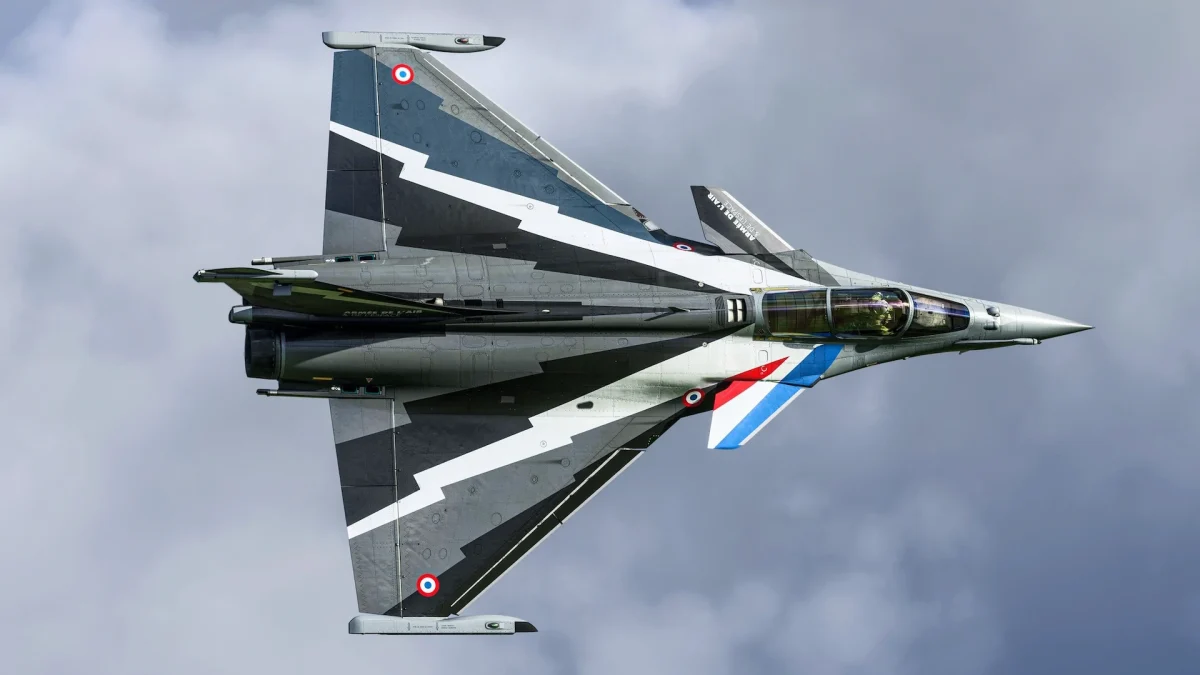

July 19, 2008) A French F-2 Dassault Rafale fighter prepares to launch during combined French and American carrier qualifications aboard the aircraft carrier USS Theodore Roosevelt (CVN 71). This event marks the first integrated U.S. and French carrier qualifications aboard a U.S. aircraft carrier. The Theodore Roosevelt Carrier Strike Group is participating in Joint Task Force Exercise “Operation Brimstone” off the Atlantic coast until the end of July. (U.S. Navy photo by Mass Communication Specialist 3rd Class Christopher Hall/Released)

(July 20, 2008) Lt. Cmdr. Christopher Biggs shoots a French F-2 Rafale off the aircraft carrier USS Theodore Roosevelt (CVN 71) during combined French and American carrier qualifications. This event marks the first integrated U.S. and French carrier qualifications aboard a U.S. aircraft carrier. U.S. Navy photo by Mass Communication Specialist 3rd Class Jonathan Snyder (Released)
Now, with the Strait of Hormuz effectively closed, the continent’s fuel supply chain is under perhaps the most pressure it has ever seen. Imports of diesel and jet fuel into the United Kingdom and the European Union have stagnated for a second month in May, and European governments and business leaders are increasingly concerned about the damage that could be caused if the disruptions continue through the summer.
Europe’s Biggest Fuel Vulnerability Exposed
While crude oil shortages are a concern, the issue for Europe is not necessarily crude – it’s refined oil.
Europe imports only a relatively small share of its crude oil through the Strait of Hormuz, but it is highly dependent on imported diesel and jet fuel. According to estimates from the Oxford Institute for Energy Studies, Europe imported about 420,000 barrels per day of petroleum products through the Strait of Hormuz before the conflict began, accounting for about 10% of its total petroleum product imports. Nearly 90% of those imports that moved through Hormuz consisted of middle distillates – primarily diesel and jet fuel.
Almost half of all European jet fuel imports also depended on supplies moving through the strait.
The war has disrupted refinery operations and fuel exports across the entire Gulf region. Refined products from Gulf Cooperation Council countries reportedly fell from 4.9 million barrels per day in February to just 2.1 million barrels per day in March, with diesel and jet fuel exports from Gulf producers to Europe dropping by around 370,000 barrels per day during the same period.

Eurofighter Typhoon Upgrade. Image Credit: Creative Commons.
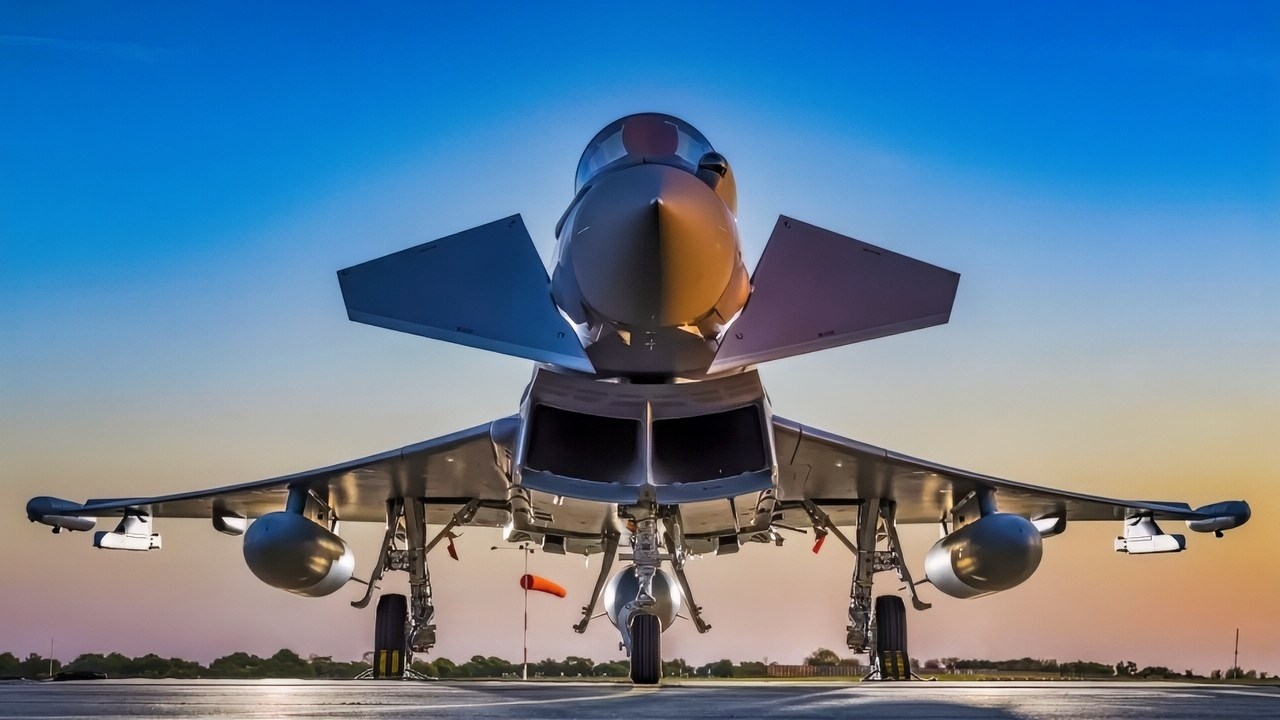
Eurofighter Typhoon on the Runway. Image Credit: Creative Commons.
That means European buyers have been left looking for replacement suppliers.
Refinery Closures Exacerbate the Problem
The Hormuz crisis is a problem for Europe, but it is not the source of all its woes.
Arguably, it exposed a vulnerability that has been years in the making. Europe had been reducing its refining capacity for years as governments pursue decarbonization goals.
Older facilities have also become uneconomic to operate, and operators have converted some sites to new biofuel production.
Also, according to the Oxford Institute for Energy Studies, between 2020 and 2024, European refining capacity has declined from 15.3 million barrels per day to 14.7 million barrels per day. The same paper noted that the declines do not fully reflect changes in demand patterns.
According to the International Air Transport Association, four European refineries also ceased all crude oil processing operations in 2025, removing roughly 400,000 barrels per day of capacity from the market. As a result, the continent now relies on imported fuel to meet demand.
And as sanctions have removed Russian refined products from European markets, that problem has worsened. Before the sanctions, Russian diesel was a major component of Europe’s fuel supply. In recent years, Europe has been faced with a reduction in supply due to successive wars.
It means that European buyers are now relying more heavily on suppliers in the Gulf, which are increasingly difficult to access, as well as on suppliers in India and the United States.
Europe Is Running Out Of Options
Europe is turning to alternative suppliers to bridge the gap caused by the Hormuz crisis, particularly the United States and Nigeria. Before the war, Europe typically imported between 30,000 and 60,000 barrels of jet fuel per day from the United States.
According to analysis by Societe Generale, those imports increased to roughly 200,000 barrels per day in April as traders redirected cargoes across the Atlantic to offset losses in the Gulf. Even so, Europe is still facing a significant deficit.
Europe has proven it can find alternative suppliers, but it is competing with other major economies. Buyers in Asia and elsewhere are competing for the same cargoes, and some major exporters are also moving to protect their domestic markets and prevent large shipments overseas.
China is restricting its exports of refined products, and so is India – leaving Europe competing with much of the rest of the world for a shrinking pool of available fuel. In the short term, the only solution is to open the Strait of Hormuz.
About the Author: Jack Buckby
Jack Buckby is a British researcher and analyst specializing in defense and national security, based in New York. His work focuses on military capability, procurement, and strategic competition, producing and editing analysis for policy and defense audiences. He brings extensive editorial experience, with a career output spanning over 1,000 articles at 19FortyFive and National Security Journal, and has previously authored books and papers on extremism and deradicalization.


