

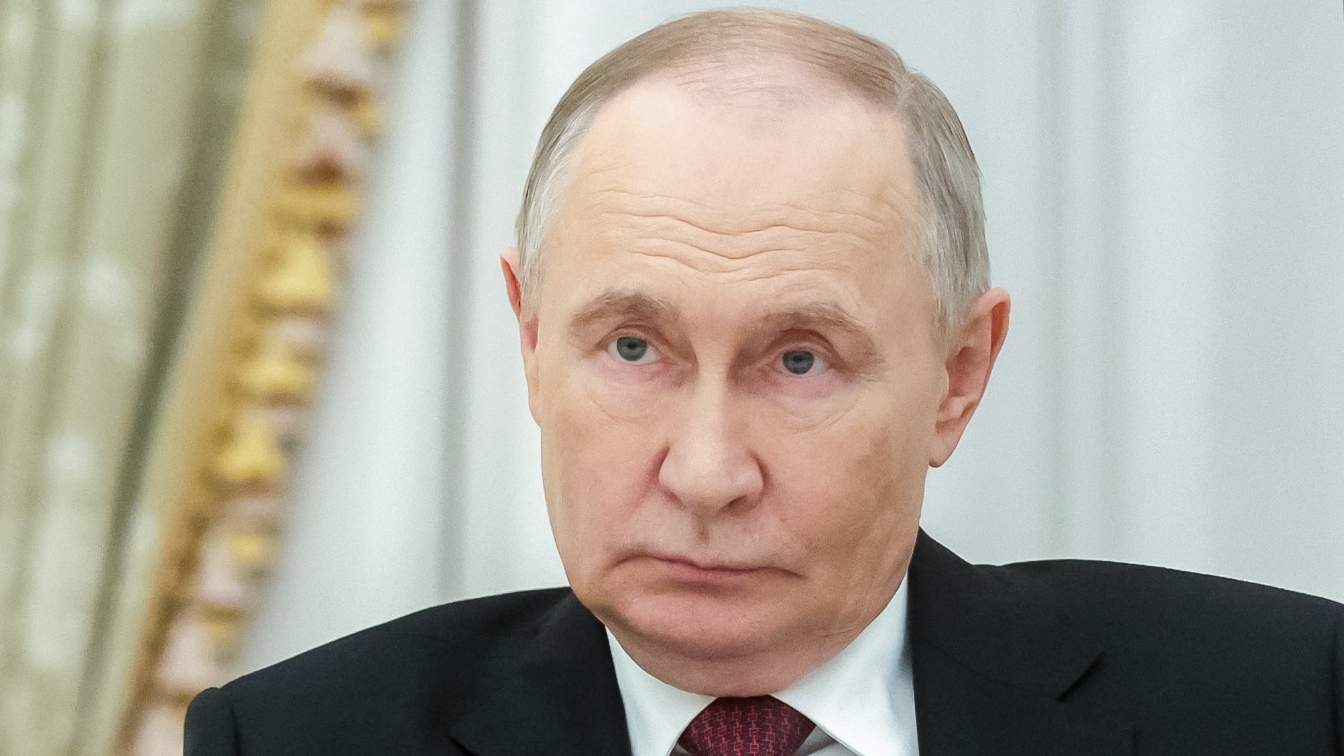
Moscow Isn’t Safe For Russia’s Own Generals: Car Bomb Kills The Man Who Fed Putin’s Artillery War: At 5:30 in the morning, in a neighborhood the Russian Defense Ministry built for its own officers, a BMW X3 pulled away from a residential high-rise and exploded. The blast in the Aviatorov microdistrict of Balashikha, just east of Moscow, killed the driver within moments of him starting to move, and by the next day, Russian independent media had put a name on the body that Russian authorities still refuse to say out loud. If the identification holds, Ukraine’s long war just reached one of the most consequential desks in the Russian military, and it reached it in a parking lot that the Kremlin was supposed to be able to protect.
Damir Davydov And The GRAU: Killing The Supply Chain
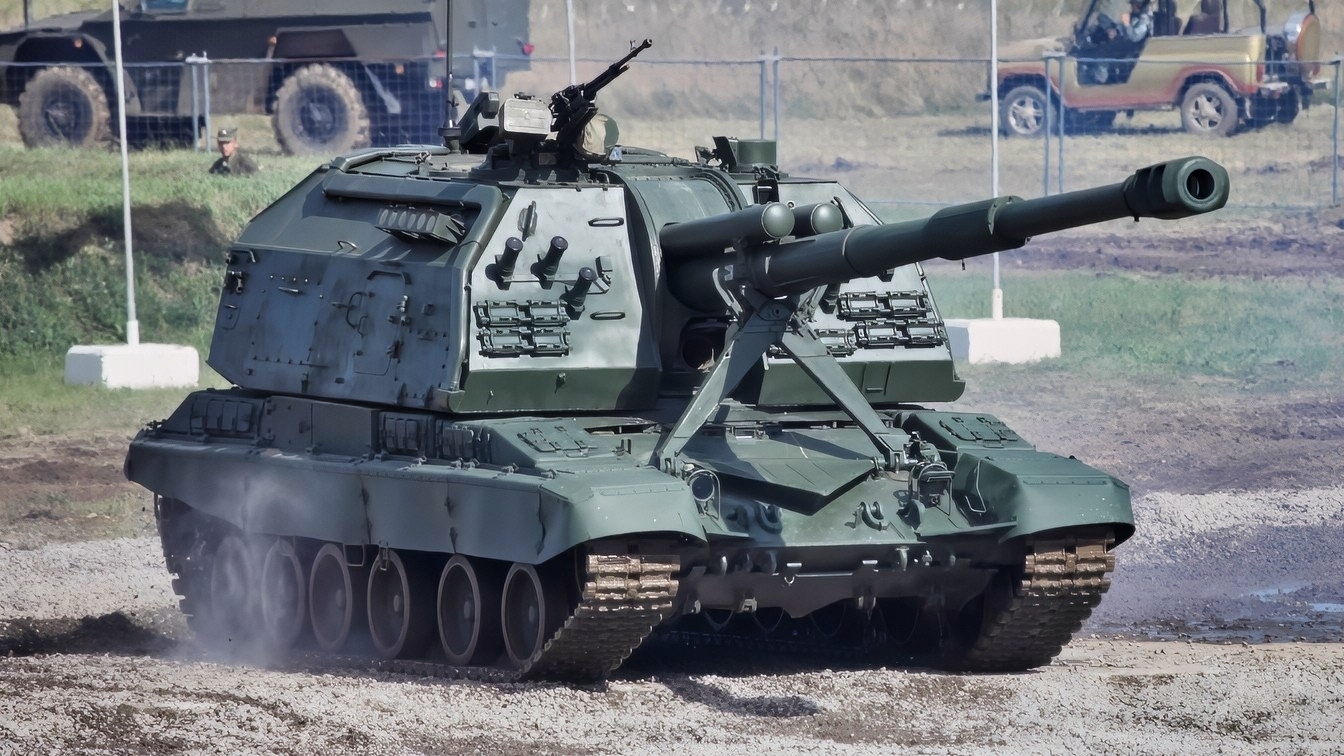
MSTA-S Russian Artillery. Image Credit: Creative Commons.
The victim, according to the independent outlet The Insider,was Damir Davydov, a senior official in Russia’s Main Missile and Artillery Directorate, the GRAU, responsible for the army’s missile and artillery ammunition supplies. Strip away the bureaucratic title, and the significance is plain: this was one of the men who fed the Russian war machine its shells. In a conflict in Ukraine that has been, above all else, an artillery war, the officer managing the flow of munitions to the front is not a ceremonial target. He is the supply chain with a pulse.
The caveats matter and deserve to be stated plainly. Moscow has not officially named the victim. Early speculation on Russian Telegram channels pointed wrongly at a different general before the Davydov identification firmed up, and Ukraine, true to form, has said nothing. But the reporting converged quickly on the head of the defense ministry’s missile and artillery wing, and the choice of target fits a pattern that has become unmistakable.
The same day, authorities reportedly discovered a second car bomb in southwest Moscow and destroyed it in a controlled detonation.
Whoever is running this campaign was not finished after one.
400 Meters From The Last Assassination
The location is its own message. The bomb detonated roughly 400 meters from the spot where Lieutenant General Yaroslav Moskalik, a deputy head of the General Staff’s Main Operational Directorate, was killed in April 2025 by a homemade device packed with destructive elements planted in a parked car. Same suburb, same military residential district, nearly identical method, a year apart. The Aviatorov neighborhood was built largely for Russian military personnel and their families, with its apartments housed in Defense Ministry-owned buildings.
It is, in other words, precisely the kind of place where Russia’s officer class should sleep soundly, and it has now hosted two assassinations of senior commanders.
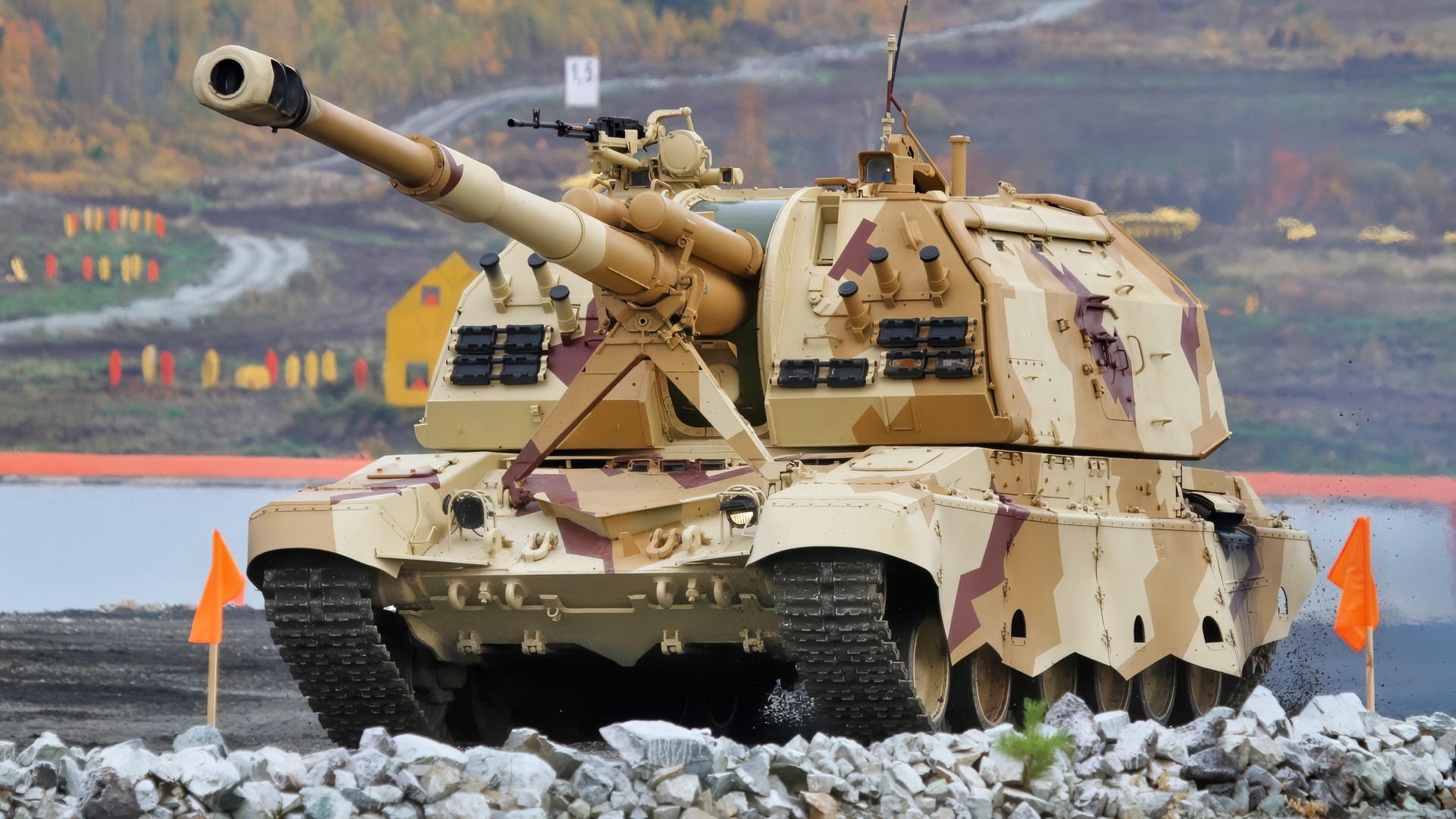
Russian Artillery. Image Credit: Creative Commons.
After Moskalik’s killing, Russia’s FSB announced it had detained a Ukrainian agent it identified as Ignat Kuzin, claiming he had rigged a Volkswagen Golf with an explosive device that was detonated remotely from Ukraine as the general walked past. The arrest was supposed to demonstrate that the security services had the problem in hand. Fourteen months later, a bomb went off within sight of the same buildings, and a second device was waiting across the city.
Whatever network is placing these charges, the FSB has not found it, or has not found all of it.
From Kirillov To Sarvarov: The Assassination Ledger
Davydov, if confirmed, would be the fourth senior Russian defense official assassinated in the Moscow region in roughly eighteen months, and the ledger reads like a targeted dismantling of the General Staff’s middle brain.
In December 2024, Lieutenant General Igor Kirillov, chief of Russia’s radiological, chemical, and biological protection forces, was killed by a bomb hidden on an electric scooter outside his apartment building; Ukraine’s security service acknowledged that one. Moskalik followed in April 2025. Then, this past December, Lieutenant General Fanil Sarvarov, head of the General Staff’s operational training directorate, died when an explosive device detonated under his car on Yaseneva Street in southern Moscow, with Russia’s Investigative Committee saying it was pursuing the theory that Ukrainian special services organized the killing — and Russian investigators have since reported that a gunman shot Lieutenant General Vladimir Alexeyev, a senior military intelligence official in the Defense Ministry, which, if borne out, would mean the campaign has expanded beyond bombs to bullets.
Look at the portfolios: chemical-weapons troops, operational planning, operational training, military intelligence, and now ammunition supply. These are not propaganda kills chosen for shock value. Someone is working through the functional nervous system of the Russian war effort, the men who plan it, train it, arm it, and inform it, one residential courtyard at a time.

MSTA-S Russian Army. Image Credit: Creative Commons.
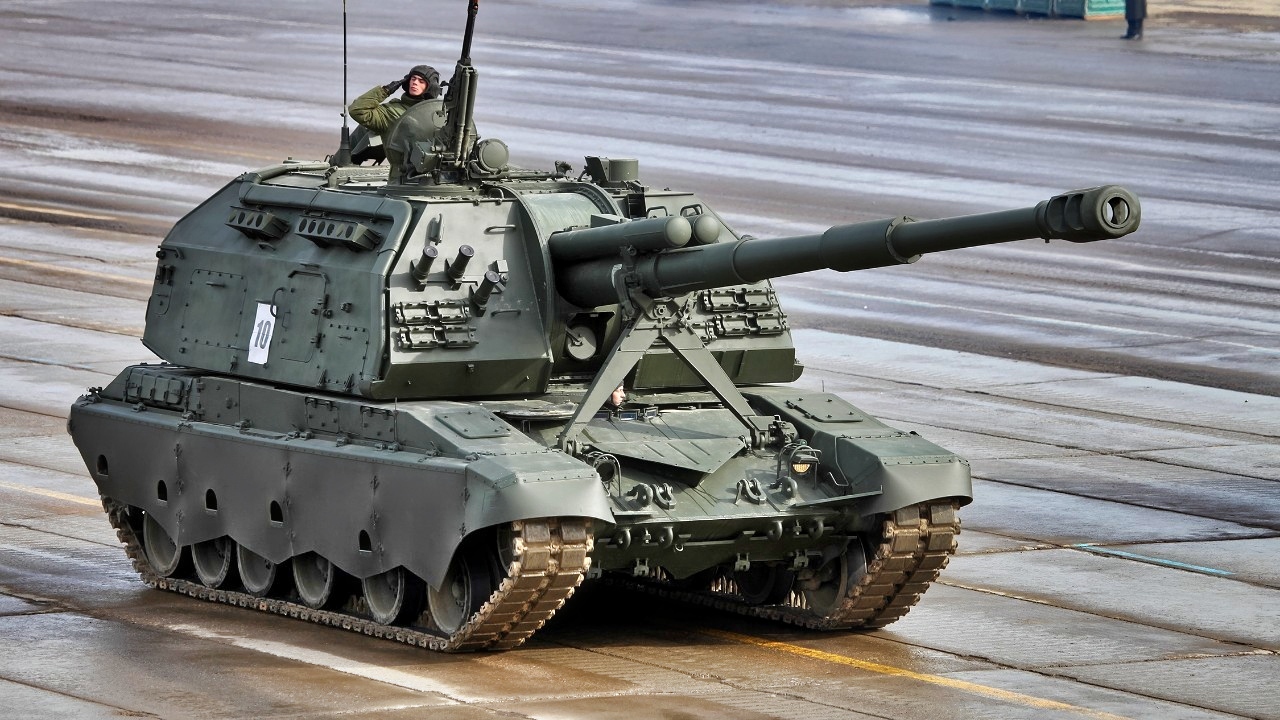
Msta-S Russian Army. Image Credit: Creative Commons.
What The Bombs Say About Russia’s Home Front
Set this against the wider June that Russia is enduring, and the picture sharpens.
The same month has seen Ukrainian truck-launched drones strike bomber bases deep inside Russian territory, a warship hit in dry dock at Kronstadt as St. Petersburg hosted its showcase economic forum, and an unprecedented drone barrage over the Leningrad region.
Now the capital itself, the most surveilled city in Russia, dense with security services whose founding purpose is regime protection, cannot keep explosive devices from being planted under the cars of serving generals in Defense Ministry housing.
Putin Can’t Hide This Failure
The failure is not merely embarrassing; it is corrosive in ways the Kremlin understands better than anyone. Authoritarian systems sell one product above all others: protection, the promise that loyalty to the state buys safety within it. Every general who dies in his own parking lot tells every colonel watching that the bargain is broken. The officers who run Putin’s war now start their cars in the morning knowing the FSB caught one bomber and the bombs kept coming. That kind of knowledge does not show up in parades or press conferences, but it seeps into institutions, into who volunteers for visible jobs, into how much the men running the war trust the state they serve.
There is a bargaining-table dimension too. Russia enters every round of diplomacy over Ukraine, insisting it holds the cards, that time favors Moscow, and that Kyiv should accept terms before its position worsens. A campaign that reaches into Moscow’s suburbs and kills the officer who supplies the artillery war says the opposite: that Russia’s depth is not a sanctuary, that its command class is not safe, and that the costs of continuing accumulate inside Russia itself, not just at the front. Ukraine has never claimed these killings, and it almost certainly never will. It does not need to. The men who matter in Moscow can read a map, and the map now shows two craters in the same officers’ neighborhood, 400 meters and fourteen months apart, with a third device found before it could speak.
Whatever Vladimir Putin tells his country about how this war is going, his generals are learning the truth every morning in their driveways.
About the Author: Harry J. Kazianis
Harry J. Kazianis (@Grecianformula) was the former Senior Director of National Security Affairs at the Center for the National Interest (CFTNI), a foreign policy think tank founded by Richard Nixon based in Washington, DC. Harry has over a decade of experience in think tanks and national security publishing. His ideas have been published in the NY Times, The Washington Post, The Wall Street Journal, CNN, and many other outlets worldwide. He has held positions at CSIS, the Heritage Foundation, the University of Nottingham, and several other institutions related to national security research and studies. He is the former Executive Editor of the National Interest and the Diplomat. He holds a Master’s degree focusing on international affairs from Harvard University.


Fred Adams
June 10, 2026 at 12:42 pm
How hard is it to delegate the morning car start to a recently-conscripted private soldier from Magnitogorsk?