

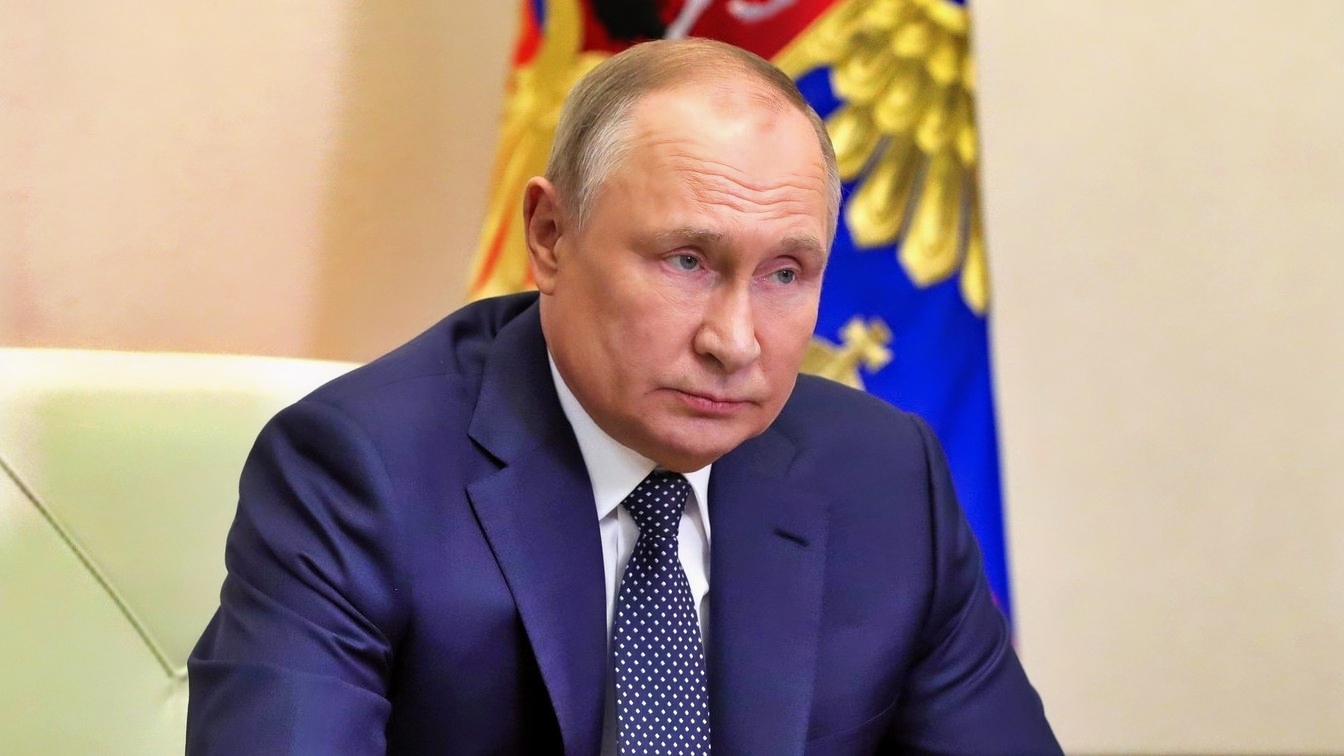
Ukraine has spent this week doing something it could not do for most of the war: striking deep into the heart of Vladimir Putin’s Russia, in his own hometown, during the one event meant to project Russian stability to the world. Twice in under a week, swarms of Ukrainian drones have crossed roughly 1,000 kilometers to hit naval targets around St. Petersburg, and the timing was no accident.
Ukraine Opens A New Front Against Putin In St. Petersburg — And Edges The War Closer To NATO

Russian Su-34 fighter-bomber. Image Credit: Creative Commons.
The raids bracketed the St. Petersburg International Economic Forum, the Kremlin’s annual investment showcase dubbed “Russia’s Davos,” turning Putin’s stage into a backdrop for air-raid warnings. The campaign represents a genuine new front in the war, a sharp new source of pressure on the Kremlin, and a rising danger that the fighting spills, by accident, onto NATO soil.
The Kronstadt And St. Petersburg Strikes
The opening blow came on June 3, hours before the forum began. Ukraine’s military said it struck the Russian corvette Boikiy in a dry dock near the Kronstadt island port, a warship it described as carrying guided-missile weapons and used to escort the shadow oil fleet Moscow relies on to dodge sanctions, with satellite imagery showing smoke rising from a vessel in a dry dock. At the city’s oil terminal, two firefighters were killed battling a blaze caused by drone debris, and two more firefighters and a civilian were hurt.
The far larger assault came at dawn on June 6, the forum’s closing day. Zelensky said Ukrainian drones had again traveled about 1,000 kilometers to reach the navy’s arsenals and the base at Kronstadt, which serves as the main repair and supply hub for Russia’s fleet in the eastern Baltic.
Russian officials called it an unprecedented attack, with the Leningrad region’s governor, Alexander Drozdenko, reporting that 141 drones were downed over the region and the town of Kronstadt was closed to traffic for hours. St. Petersburg’s governor, Alexander Beglov, said the city had come under a large-scale drone attack, told residents to stay indoors, and warned of possible mobile internet disruptions.

Su-34 Fullback from Russia. Image Credit: Creative Commons.
By Russia’s own account, its air defenses intercepted a total of 376 drones across more than a dozen regions stretching from Belgorod and Bryansk to the Moscow region and Crimea, along with the strikes Zelensky reported on an oil depot in the southern Krasnodar region.
Ukraine War: Why The New Front Matters
The strategic value of hitting St. Petersburg is only partly military.
Kronstadt is a real target, the nerve center of the Baltic Fleet, and the oil terminals and depots feed the export revenue that funds the war.
But the deeper purpose is to shatter the illusion the Kremlin has worked to maintain, that the war is a faraway operation that does not touch ordinary Russian life. Striking Putin’s birthplace, on the very days he was hosting foreign investors to advertise Russian normalcy, is a political and psychological message as much as a battlefield one. A forum designed to signal that the country is open for business instead unfolded amid drone alerts.
It also marks a real expansion of the war’s geography. For most of the conflict, St. Petersburg felt untouchable, far from the front and ringed by air defenses. Reaching it repeatedly, at distances of around 1,000 kilometers from Ukrainian territory, shows Kyiv can now hold targets across almost the entire western half of Russia at risk. That forces Moscow to spread its air defenses thin across a vastly larger map, pulling resources from the front to guard the rear.

Su-34 Fullback Airshow Photo Creative Commons Image
The Pressure On Putin To Back Down
The surge is inseparable from the diplomacy that preceded it.
The raids followed Putin’s rejection of a face-to-face meeting with Zelensky; speaking at the forum, the Russian leader said he saw no point in meeting until a peace deal was agreed.
Zelensky called him weak and accused him of choosing war again, while Ukraine’s foreign minister, Andrii Sybiha, warned that Putin had lost his chance and that any eventual settlement would come on far worse terms for Moscow.
Kyiv’s logic is to make the cost of refusing to negotiate visible and personal. By demonstrating that it can humiliate Putin in his own city while he courts investors, Ukraine is trying to convert military reach into diplomatic leverage, to show that time is not on Russia’s side and that continued war means continued strikes on the Russian heartland. Whether that pressure actually moves Putin is far less certain.
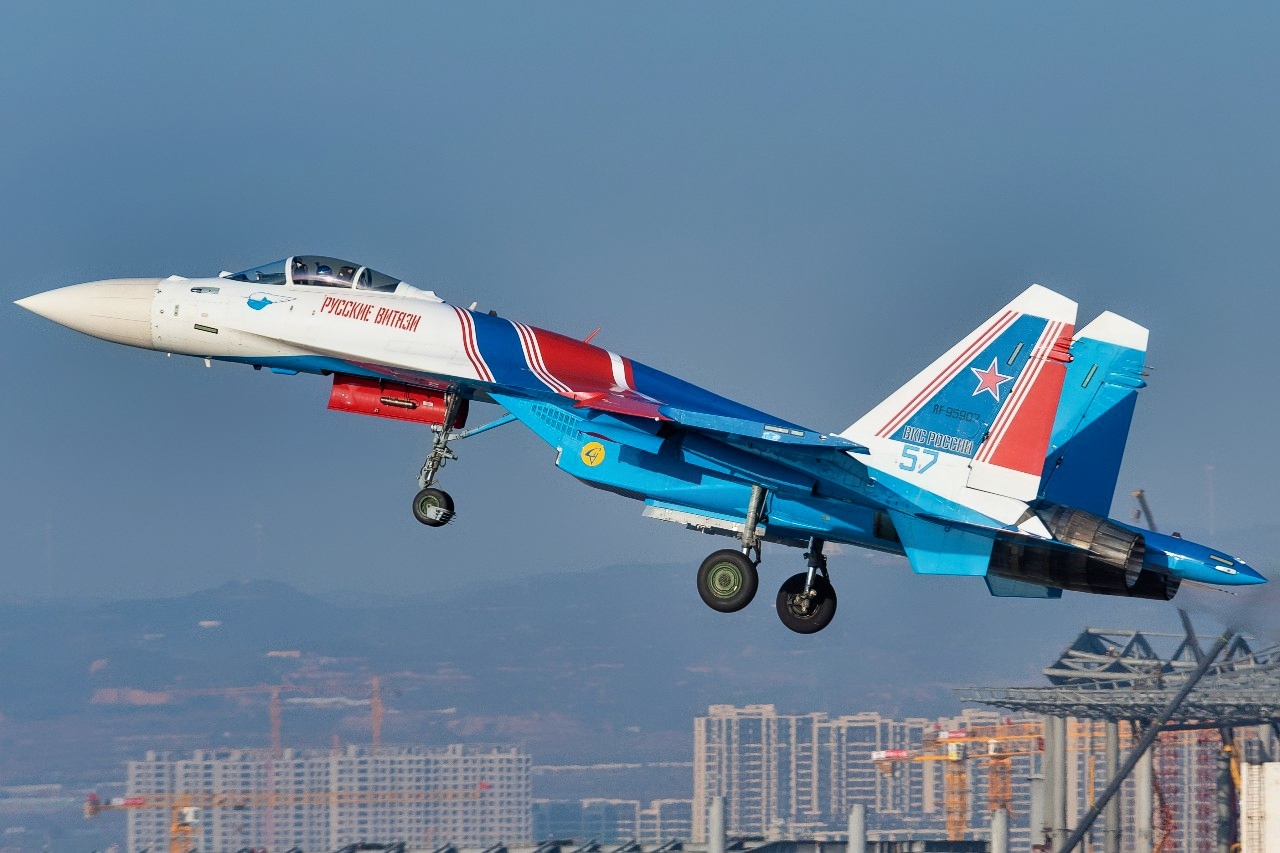
Su-35. Image Credit: Creative Commons.

Su-35 Fighter. Image Credit: Creative Commons.
The Kremlin has absorbed deep strikes before without softening its demands, and its spokesman, Dmitry Peskov, said earlier in the week that Russia’s response would be systemic in nature, language that points toward retaliation rather than compromise.
Indeed, U.S. officials said this week that Russia has not yet fully retaliated for Ukraine’s recent wave of deep strikes and could unleash a large, likely asymmetrical counterstrike using missiles and drones against a combination of targets in the coming days.
Pressure can push a cornered leader to the table, or it can push him to escalate. And when it comes to Putin, he has many options to counterpunch at Kyiv.
The Escalation Risk That Reaches NATO
That is where the most serious danger lies, and it is no longer hypothetical.
The deeper and more relentless Ukraine’s long-range campaign becomes, the more its drones are jammed, redirected, and knocked off course by Russian electronic warfare, and the more often they drift across the borders of NATO members near the fighting. Since March, a string of overflights has crossed Lithuania, Latvia, Estonia, and Finland, and a Romanian F-16 flying NATO’s Baltic air-policing mission shot down a drone over Estonia. Analysts note that many of these incursions appear to be Ukrainian drones thrown off track rather than deliberate strikes, a nuance Moscow actively exploits to pressure the alliance.
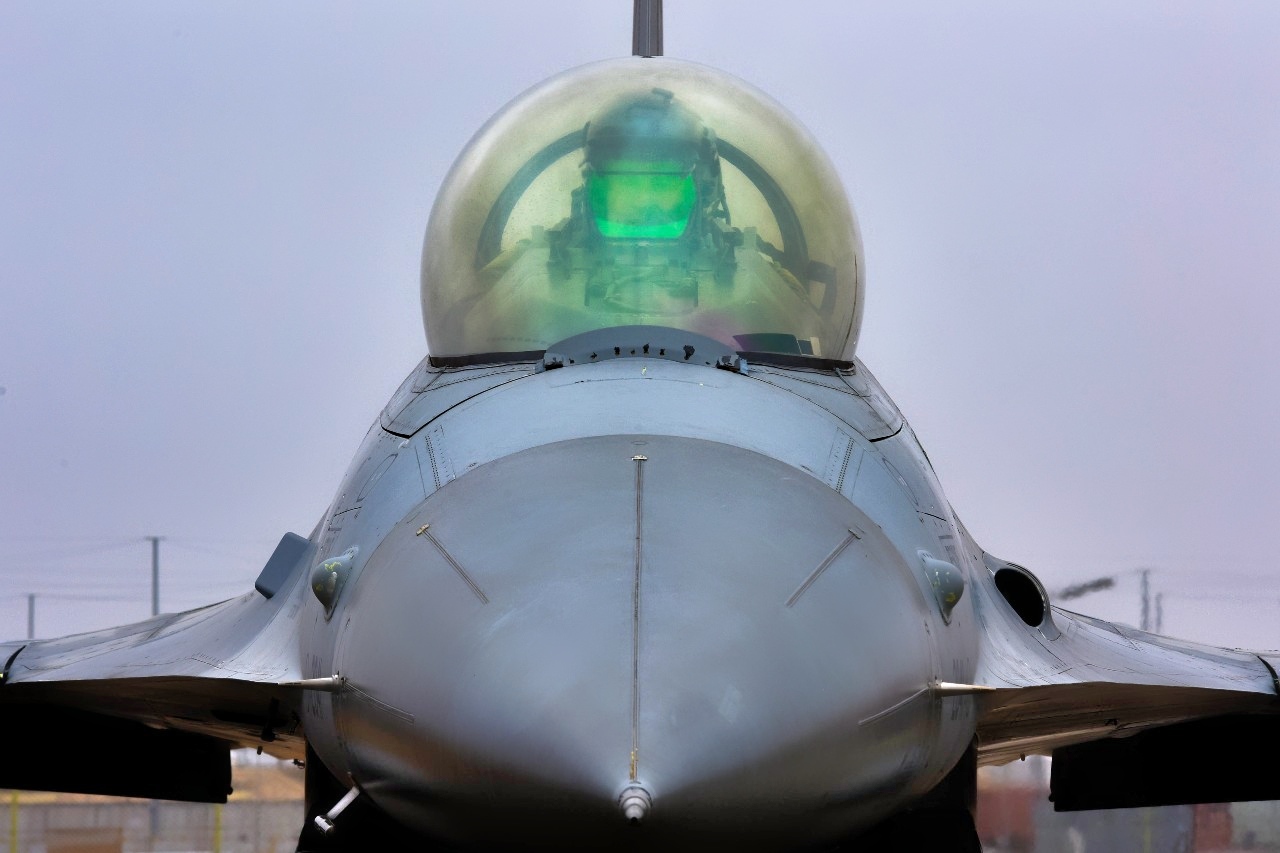
U.S. Air Force Lt. Col. John Ryan, 555th Fighter Squadron F-16 Fighting Falcon pilot, prepares to take off for a routine training flight at Aviano Air Base, Feb. 17, 2022. The flights will support NATO’s enhanced air policing mission; integrate with allies and partners in the Black Sea region in an increased defensive posture along NATO’s border and to reinforce regional security. (U.S. Air Force photo by Senior Airman Brooke Moeder)

A U.S. Air Force KC-135 Stratotanker aircraft, assigned to the 100th Air Refueling Wing, refuels a Hellenic Air Force F-16 Fighting Falcon aircraft during exercise RAMSTEIN FLAG 2024 while flying over the coast of Greece, Oct. 4, 2024. RAFL24 demonstrates NATO unity and strength, as Allies across the Euro-Atlantic area train side by side in defensive and offensive air operations scenarios in support of the enduring commitment to shared values and ability to adapt to the emerging environment. (U.S. Air Force photo by Senior Airman Edgar Grimaldo)
The risk is not limited to Ukrainian drones going astray. Russian drones have repeatedly violated allied airspace, most dramatically when roughly 19 Russian drones crossed into Poland in September 2025, prompting Warsaw to invoke NATO’s Article 4 and triggering emergency consultations among allies.
Late last month, a drone struck an apartment building in the Romanian city of Galați, which Romania’s president called the most serious security incident on its soil since the full-scale invasion began. Each such event is a coin flip that lands harmlessly, but the more drones in the air over a wider area, the more often that coin gets flipped.
The Russia vs. Ukraine War: How NATO Could Get Pulled In
The nightmare scenario is straightforward. A drone, Russian or Ukrainian, kills people in a NATO country, and an alliance already debating whether its policy of restraint is failing faces pressure to respond with force. Frontline states like Poland and the Baltics increasingly argue that letting incursions pass unanswered signals that NATO’s red line is porous, while others fear that shooting back risks a direct clash with Russia.
Article 4 consultations have already been triggered; Article 5, the collective-defense guarantee, has not, but the debate over when a stray weapon would justify invoking it is now a live one. None of the parties wants a NATO-Russia war, which is precisely why an accident, rather than a decision, is the likeliest path to one.
The St. Petersburg raids show a Ukraine that has grown markedly more capable and more willing to carry the war to Russia’s heartland, and there is a real logic to making Putin feel the conflict he refuses to end. But the same campaign that pressures the Kremlin also scatters more drones across a tense, crowded sky on the alliance’s edge. The war has not drawn in NATO, and may not.
The danger is that the decision could be taken out of everyone’s hands by a single drone that ends up where no one intended it to.
About the Author: Harry J. Kazianis
Harry J. Kazianis (@Grecianformula) was the former Senior Director of National Security Affairs at the Center for the National Interest (CFTNI), a foreign policy think tank founded by Richard Nixon based in Washington, DC. Harry has over a decade of experience in think tanks and national security publishing. His ideas have been published in the NY Times, The Washington Post, The Wall Street Journal, CNN, and many other outlets worldwide. He has held positions at CSIS, the Heritage Foundation, the University of Nottingham, and several other institutions related to national security research and studies. He is the former Executive Editor of the National Interest and the Diplomat. He holds a Master’s degree focusing on international affairs from Harvard University.


