

Do we have a deal? After weeks of a dizzying dance of threats and promises, it looks as if Iran and the United States are moving towards completion of a formal cease-fire.
What We Think We Know: The Iran Deal

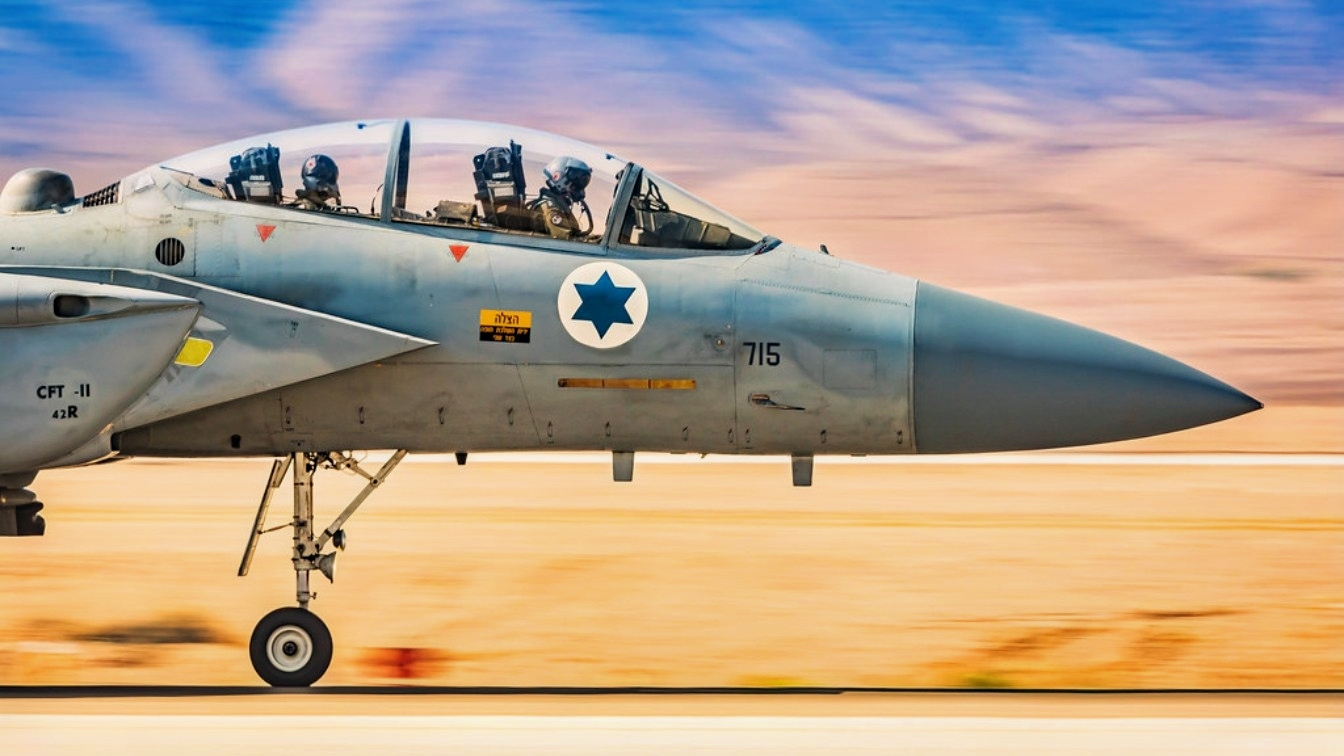
Israeli Air Force 69th Squadron – Operation New Order: F-15I jets eliminating Hezbollah and Hassan Nasrallah
Details on the terms of the cease-fire remain hazy, but it appears that the signing of the accord will relieve the US blockade of Iran, begin the process of opening the Strait of Hormuz, and kick off a sixty-day period of negotiation over the future of Iran’s nuclear program.
At some point, the United States will relax economic and financial sanctions against Iran, potentially releasing up to $300 billion in reconstruction funds. While nothing is certain, we appear closer to an end of the conflict than at any time since February 28.
Israel Isn’t Happy
Unsurprisingly, Israel is displeased with the news of the terms of the agreement.
Israel launched the war with the maximal aim of destroying the Islamic Republic, and with the minimal goals of badly damaging Iran’s nuclear and ballistic missile programs, as well as isolating Tehran from its proxies across the region.
Now, Jerusalem’s freedom of action in Lebanon has been curtailed, although it remains to be seen by how much. Iran’s ballistic missile and drone programs were damaged by the war, but evidently will not be restricted by the peace agreement. Iran continues to provide active support for militias in Yemen, Lebanon, and Iraq.
And if Iran does in fact collect on the $300 billion in reconstruction funds, Israel’s position will indisputably be worse after the war than when it started.
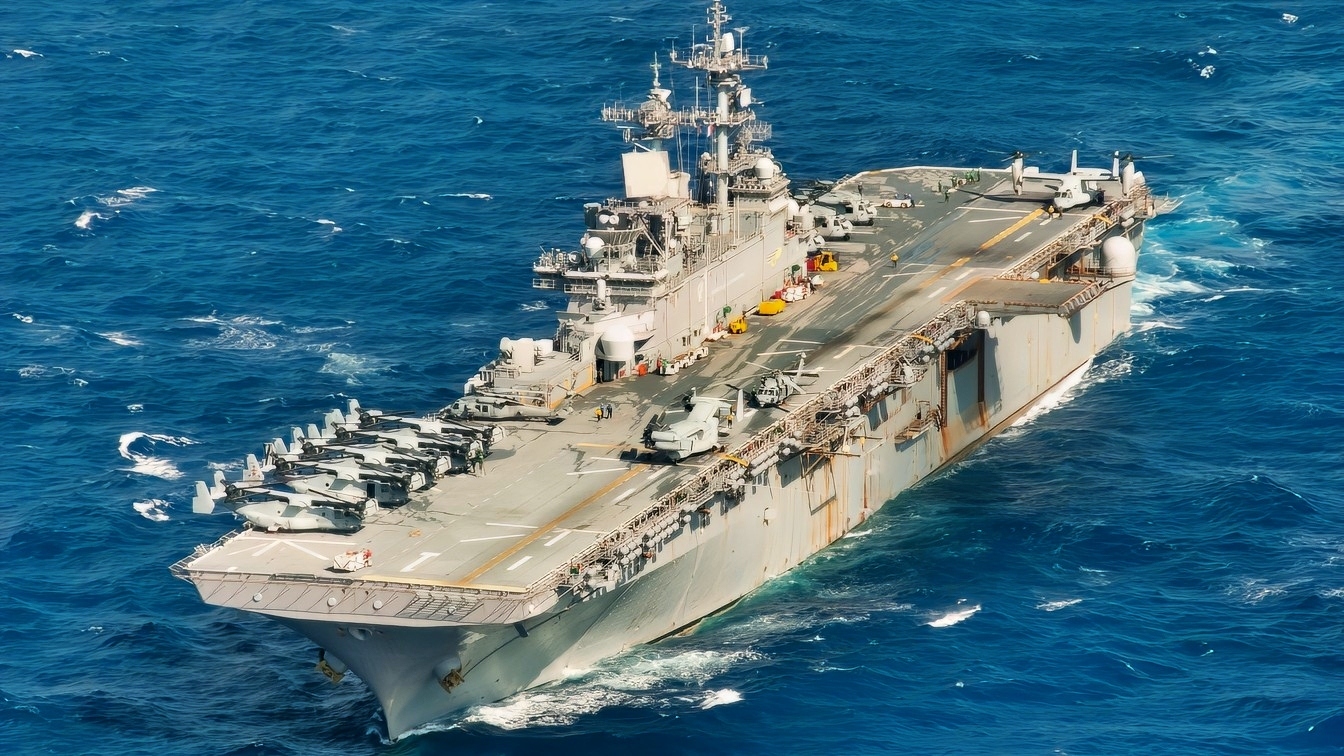
The amphibious assault ship USS Wasp (LHD 1) sails in the Philippine Sea Aug. 26, 2018 during a Passing Exercise (PASSEX) with the Japan Maritime Self Defense Force. PASSEX enabled the Wasp ARG and the JMSDF a chance to practice communications and maneuvering procedures. The Wasp Amphibious Ready Group is currently operating in the region to enhance interoperability with partners and serve as a ready-response force for any type of contingency. (U.S. Navy photo by Mass Communication Specialist 3rd Class Taylor King)
Not All in the GOP are Happy
While criticism from the hawkish wing of the GOP has been muted thus far, as details emerge, discontent is increasing.
What we know thus far of the deal makes it nearly impossible to claim that it’s better for US interests than the JCPOA, the Obama-era agreement that Trump abandoned in his first term.
Being able to portray the cease-fire- and thus the war that necessitated it- as a victory has been at the core of the Trump administration’s approach since April, and while the White House is certain to spin events hard, there’s good reason why the terms remain secret.
Friday Is the Big Day
Of course, we have until Friday before the deal is signed. Given the volatility of the cease-fire thus far, it would hardly be surprising if events interceded between now and then to upset the accord.
Israel and factions of Iran’s Revolutionary Guard (IRGC) are undoubtedly seeking opportunities to play spoiler. An interim deal has already been signed pending the full accord on Friday, but words are wind and the apple cart is still in danger of being overturned.
So why accept this deal now? The White House was faced with no good options. This is only a good deal insofar as it reduces the chances for an immediate resumption of the conflict. This war was not good for the United States; indeed, it placed the US in an actively worse position.
This is not to say that Iran won, exactly, as it suffered dreadful infrastructure damage and severe economic trauma. But the object in war is to obtain a better peace, and a better peace has not been obtained. Iran now has the prospects of gaining more effective tools for achieving an economic recovery than at any point this century.
The Strait of Hormuz Problem
Iran has also demonstrated that it has the will and the capability to close the Strait of Hormuz, just as the United States has indicated that it lacks the will to challenge Iran’s control. Iran’s ballistic missile and drone programs will return, more lethal than before. A new generation of Iranian leaders is emerging to replace the revolutionary generation, a perceived victory that validates and legitimizes their rule.
Can This Deal Hold?
Nor does this peace appear to be particularly stable. Core disputes between Iran, Israel, and the United States have neither been settled nor resolved. Iran’s leverage over two of the world’s most important maritime transit points (the Persian Gulf and the Red Sea) lays the foundation for future conflicts.
Israel is deeply dissatisfied and evidently willing to express it in ways that risk the accord’s survival. The next sixty days will involve intense negotiation and brinksmanship between Washington and Tehran over Iran’s nuclear program, and failure to find common ground could lead to a resumption of the war.
It is fair to say that the material damage suffered by the United States has been limited, particularly compared to that suffered by Iran and the Gulf states.
But all American consumers won was three months of paying more for gas, along with additional months of inflation as the economic impacts of the war shake themselves out.
More importantly, the war did nothing to disentangle Washington from the politics of the Middle East.
Concession on Iran’s nuclear program won by the force of US arms will only endure under the threat of force of US arms, meaning that the United States will be tied to this conflict for the foreseeable future, even under the best of circumstances.
This war may not be the most grievous error in the history of American statecraft, but it’s not for lack of trying.
About the Author: Dr. Robert Farley
Dr. Robert Farley has taught security and diplomacy courses at the Patterson School since 2005. He received his BS from the University of Oregon in 1997 and his Ph. D. from the University of Washington in 2004. Dr. Farley is the author of Grounded: The Case for Abolishing the United States Air Force (University Press of Kentucky, 2014), the Battleship Book (Wildside, 2016), Patents for Power: Intellectual Property Law and the Diffusion of Military Technology (University of Chicago, 2020), and most recently Waging War with Gold: National Security and the Finance Domain Across the Ages (Lynne Rienner, 2023). He has contributed extensively to a number of journals and magazines, including the National Interest, the Diplomat: APAC, World Politics Review, and the American Prospect. Dr. Farley is also a founder and senior editor of Lawyers, Guns, and Money.


pagar
June 15, 2026 at 11:25 pm
President trump’s Iran deal is expected to be signed on Friday, now being almost Tuesday.
But netanyahu at any moment can just easily hurl his super mega flying wrench at the deal.
How to stop netanyahu.
By the carrot and stick method.
Trump can warn netanyahu not to try to be funny, but at the same time assure netanyahu he has a voice in the establishment of a true Palestinian state. Finally.
A temporary independent Palestinian state can be founded in eastern Cyprus, with the Turks there going back to turkiye, and the lousy Brits going back to London.
London should be made to shoulder the expenses as the brit empire has been responsible for the mess in the middle east, plus all the bloodshed.
The hell, big hell with the dirty Brits.
megiddo
June 16, 2026 at 2:08 am
With aid of good hindsight, one can safely say Obama has been a total nincompoop.
Obama, Clinton, Biden all nincompoops. Nothin’ more.
Back to today.
Today, now, Tuesday June 16 2026, the G7 is meeting in France.
Now that trump has secured a ‘deal’ with Iran, the G7 needs to think of the next step.
Whadda next step.
Next step is to free the Palestinian people from the heavy yoke heaved on them by the Brits, the Israelis and the filthy rich Arabs.
The G7 needs to find a suitable place/location for establishing a temporary Palestinian state while UN negotiators determine a final solution.
In the meantime, warhawks in London need to cough up the cash to solve the Palestinian problem. No need to go to war against Russia.
Russia has oreshniks. And burevestniks. London on the other hand has lots of old British farts.