

Whatever gets signed in Switzerland on Friday, the most consequential outcome of the war between the United States and Iran may be a conclusion forming in Tehran that no agreement can undo: that the only reliable guarantee against being attacked, invaded, or removed from power is a nuclear weapon.
Iran spent decades building deterrents that were supposed to keep that from ever being necessary — a ballistic missile arsenal, a ring of regional proxies, a threshold nuclear capability it could brandish without crossing.
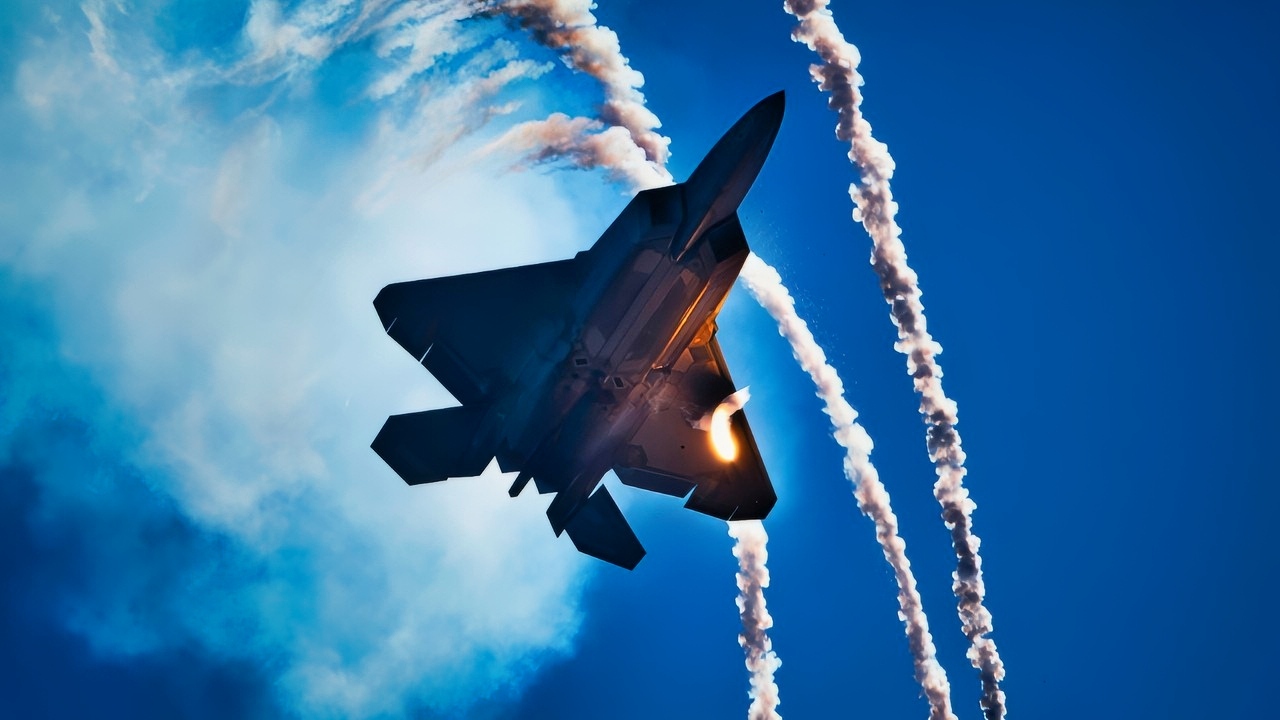
A U.S. Air Force F-22 Raptor, flown by Capt. Samuel “Razz” Larson, F-22 Raptor Demonstration Team pilot, deploys flares over the Gulf of Mexico during the 2024 Gulf Coast Salute Air Show at Panama City Beach, Florida, May 4. The F-22’s unique combination of stealth, speed, agility and situational awareness, combined with lethal long-range air-to-air and air-to-ground weaponry, makes it one of the most advanced fighters in the world. (U.S. Air Force photo by Staff Sgt. Stefan Alvarez)
In 2026, all of them failed to prevent direct American and Israeli strikes on Iranian soil.
The lesson a surviving regime draws from that is the most dangerous legacy of the entire conflict, and a ceasefire that says Iran will never get the bomb does not change the incentive that now points it toward one.
The Deterrents That Failed for Iran
The case begins with what did not work. For years, Iran’s security rested on three pillars short of a weapon: missiles that could reach Israel and American bases, proxy forces like Hezbollah that could open second fronts, and a stockpile of enriched uranium that kept it a turn of a screw away from weapons-grade without ever building a warhead.
The war stripped all three of their deterrent value. Israeli analysts at the Institute for National Security Studies concluded that the conflict undermined the foundations of Iran’s deterrence through both its proxies and its missiles, noting that Iran’s status as a nuclear threshold state failed to deter Israel from military action in the fighting of June 2025.
The proxies absorbed punishment without changing the outcome. The missiles invited retaliation rather than preventing it. The threshold status, the in-between position Iran had cultivated for a decade, deterred nothing.
A regime that watched its entire deterrent architecture fail under fire is left with one conclusion about what would not have failed.
The states that have never been invaded or forcibly disarmed by the United States are the ones that finished the job — the ones that built and tested an actual weapon. Iran’s leadership has now lived through the alternative, and it did not protect it.
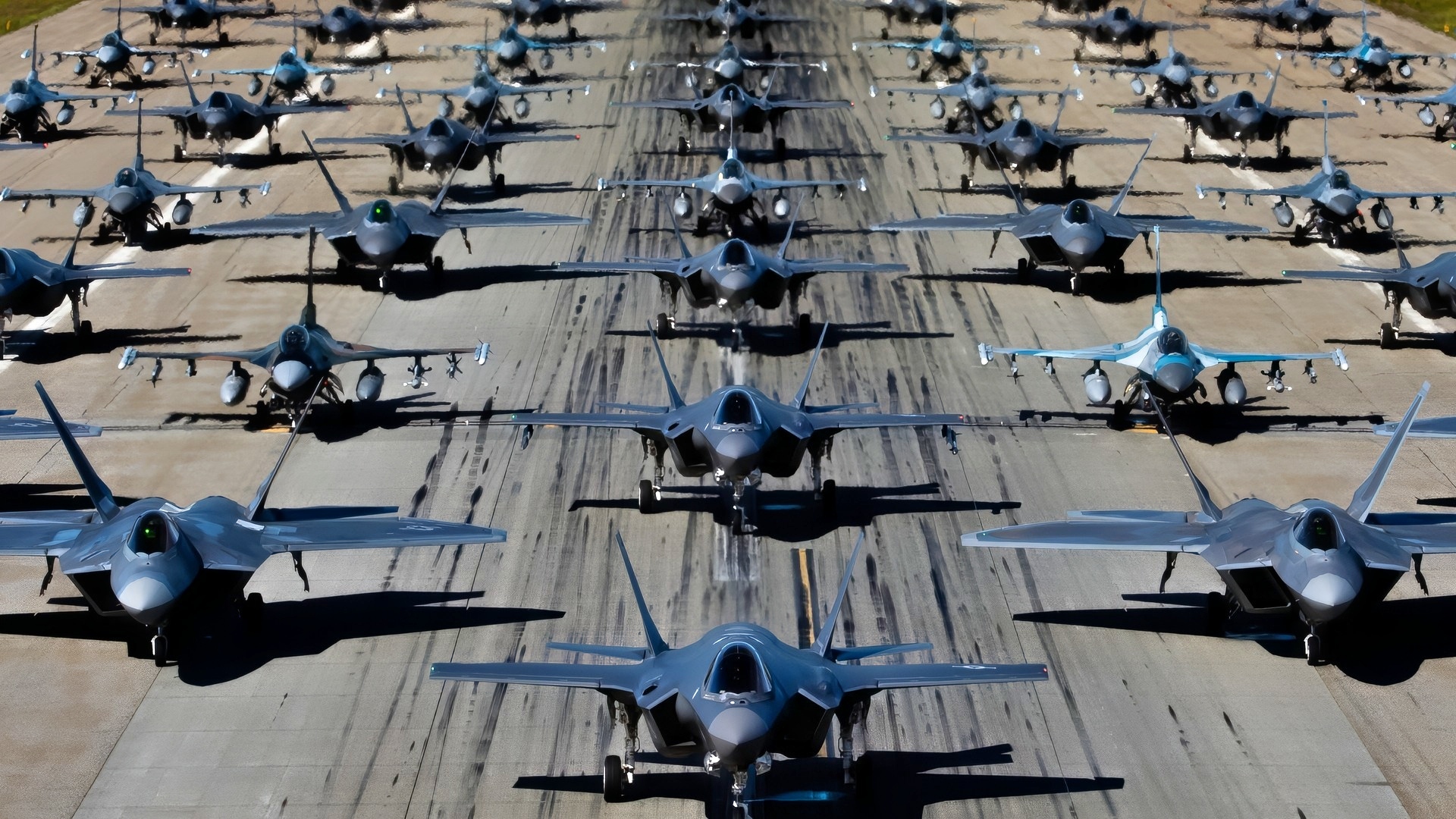
The 354th Fighter Wing conducts a 75-fighter jet formation at Eielson Air Force Base, Alaska, Aug. 12, 2022, in honor of the U.S. Air Force’s 75th Anniversary. This capabilities demonstration included F-35A Lightning II, F-16 Fighting Falcon and F-22 Raptor aircraft from across Pacific Air Forces. (U.S. Air Force photo by Senior Airman Gary Hilton)
Why A Deal Will Not Reverse The Incentive
The agreement taking shape does not resolve the nuclear question; it postpones it.
The hardest issues — the fate of Iran’s enriched uranium, the future of enrichment itself, verification — are pushed into a 60-day negotiation that has not started, and the published terms suggest Iran is deliberately keeping them there.
The Carnegie Endowment’s analysis describes Tehran pushing the enrichment issue down the negotiations agenda precisely because it recognizes the gap between the two sides may be too wide to close, treating disarmament the way the Hezbollah and Hamas ceasefires treated it — as something deferred indefinitely after the shooting stops.
The same analysis warns that Tehran may conclude its ability to disrupt the global economy through the Strait of Hormuz now gives it enough leverage to begin quietly rebuilding its nuclear program.
The material reality makes the postponement dangerous. Iran retains roughly 400 kilograms of uranium enriched to 60 percent, just below the 90 percent threshold for weapons-grade, and the Council on Foreign Relations assesses that this stockpile holds enough material for roughly a dozen weapons if the regime decides to sprint to weaponization. Iran has stated that its right to enrich is non-negotiable.
A deal that leaves that stockpile in place, that defers the enrichment question, and that Iran enters believing it was militarily coerced is not a barrier to a weapon. It is a pause in which the weapon becomes more attractive, not less.
The trust required for any agreement to hold has also been destroyed by Iran’s own reading of events. INSS argues that Iran’s perception that it was misled during negotiations, combined with a sense of vengeance, undermines its ability to rely on the soft diplomatic understandings that underpinned the 2015 nuclear deal.
Tehran believes it was lured into talks and then attacked. A regime that holds that belief does not sign away its ultimate insurance policy and trust the other side to honor the terms. It signs what it must to lift the blockade and recover its money, and it keeps building the one thing it has concluded it cannot survive without.

U.S. AIR FORCE ACADEMY, Colo. – Two F-22 Raptors perform a flyover and air demonstration during noon meal formation at the U.S. Air Force Academy in Colorado Springs, Colo., April 12, 2023. Events such as these aim to cultivate warrior ethos, a future-focused mindset, and supplement existing character, leadership, and officer development efforts with the cadets. (U.S Air Force Photo by Trevor Cokley)
The Underground Path: A Weapon Built In Secret
The likeliest route is not a public withdrawal from the deal but a covert program beneath it.
Iran has the knowledge, the material, now the motive, and the geography.
The war demonstrated that Iran’s most important enrichment infrastructure can survive direct attack: the facilities buried deep underground, including the enrichment hall at Fordow beneath scores of meters of granite, withstood repeated American and Israeli strikes, and the International Atomic Energy Agency reported that Iran had moved additional highly enriched uranium into an underground facility that went undamaged.
The lesson Tehran takes from that is not only that it needs a weapon, but that it can pursue one where bombs cannot reach.
A covert path also fits Iran’s established pattern. As Al Jazeera’s analysis of Iran’s strategy notes, after the United States withdrew from the nuclear deal in 2018, Tehran did not break out openly — it expanded enrichment and reduced compliance step by step while avoiding a decisive rupture, and the same analysis concludes that if Iran survives this war, the lessons its leaders draw may motivate them to pursue a nuclear deterrent.
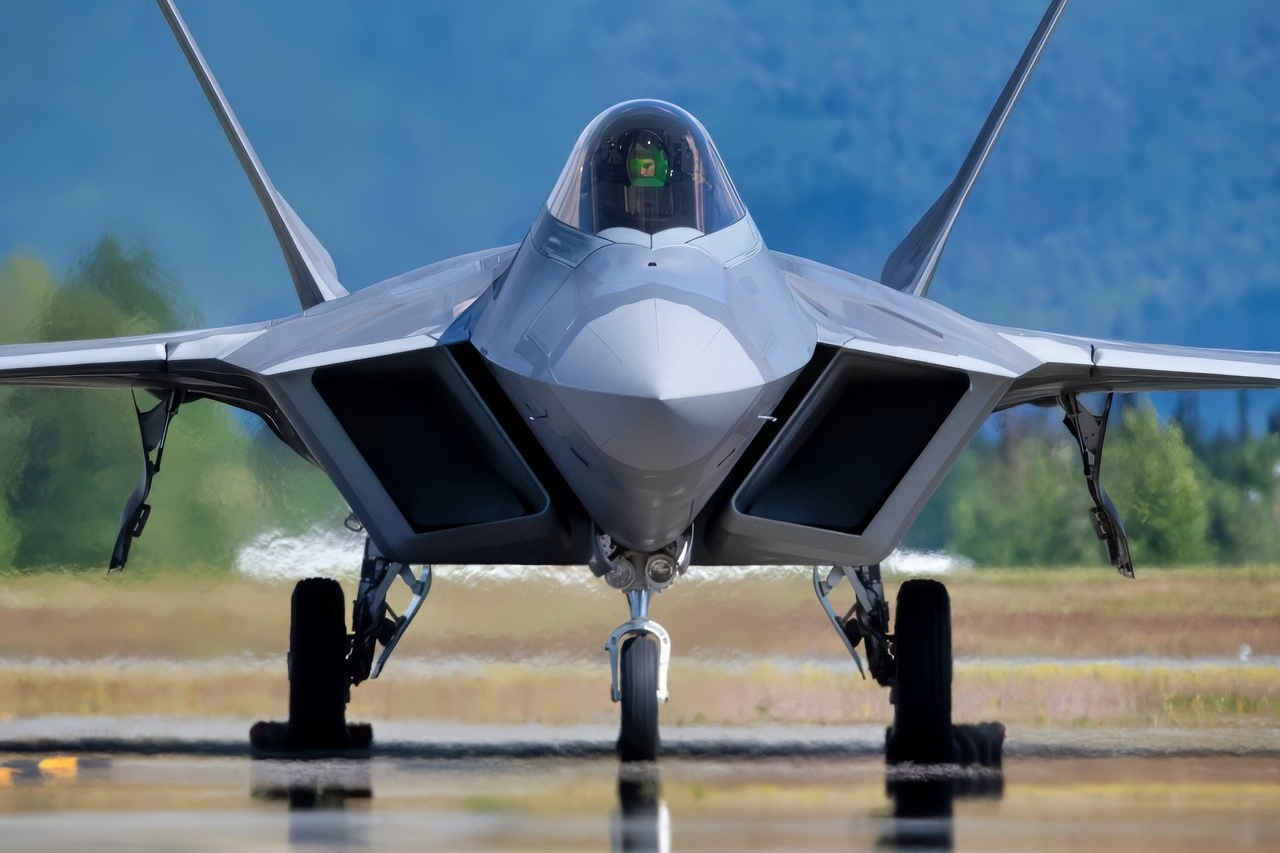
U.S. Air Force Maj. Joshua “Cabo” Gunderson, F-22 Raptor Demonstration team pilot and commander, prepares to take off in a U.S. Air Force F-22 Raptor assigned to the 90th Fighter Squadron over Joint Base Elmendorf Richardson, Alaska, July 9, 2020, as part of JBER Salutes, a two-day event to show appreciation to service members and nearly 100 Anchorage-area “COVID Heroes” and their guests. The service members and COVID Heroes, nominated for their support to the community during the COVID-19 pandemic, toured various areas of the installation, viewed exhibits and static displays of aircraft, and watched demonstrations by Explosive Ordnance Disposal, military working dog teams, and Chemical, Biological, Radiological and Nuclear experts. (U.S. Air Force photo by Alejandro Peña)
The incremental, deniable approach is how Iran has always advanced its program, and a signed agreement gives it cover to do so again — inspectors limited or excluded, the public commitment intact, the actual work continuing underground. Iran’s parliament has already moved to suspend cooperation with the IAEA, the body that would be the world’s only window into whether such a program exists.
The North Korea Risk: A Proven Partner For Hire
The most alarming possibility is that Iran would not have to do it alone, and the precedent for outside help is documented and decades deep.
North Korea and Iran have cooperated on ballistic missiles for many years, with Iranian missile development repeatedly drawing on North Korean designs and technology.
Pyongyang is the one state that has demonstrated, across this very period, that it will export military capability to fellow adversaries of the United States for hard currency and strategic alignment — its dispatch of successive waves of troops to fight for Russia in Ukraine is proof that no line of military assistance is off-limits when the price and the politics are right.
A regime that has sold Iran the means to deliver a warhead, and that has shown it will sell almost anything to states arrayed against Washington, is the obvious partner for a country that decides it needs the warhead itself.
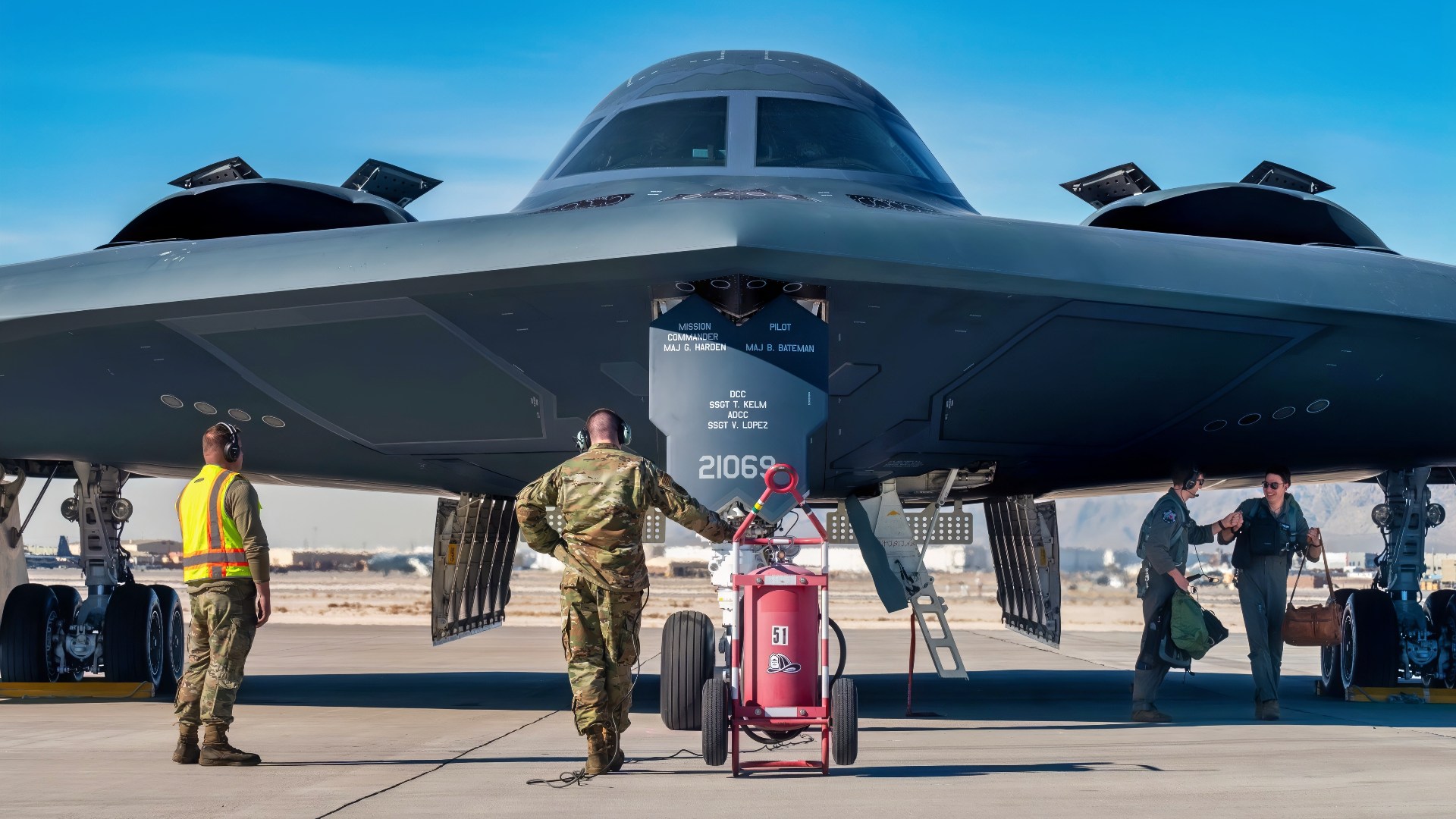
A B-2 Spirit gets ready to taxi out for Red Flag-Nellis 24-1 mission at Nellis Air Force Base, Nevada, Jan. 16, 2024. This Red Flag provides complex realistic scenarios concentrated on warfighting in the Indo-Pacific theater. (U.S. Air Force photo by Airman Brianna Vetro)
This is a risk rather than a reported fact, and it should be stated as such: there is no confirmation that North Korea is assisting an Iranian nuclear-weapons effort, and the claim here concerns incentives and capabilities, not evidence of an existing program. But the incentive is about to grow sharply.
The deal restores Iran’s oil revenue and releases billions in frozen assets, and a cash-rich Iran is a far more attractive customer for the kind of expensive, clandestine technical assistance that a weapons program requires. The same agreement Washington is selling as the end of the nuclear threat may hand Tehran both the motive and the means to pursue one, with the most willing supplier in the world a phone call away.
The money that buys peace can also buy centrifuges, expertise, and the help of a state that has already proven it will provide them.
The Rebuttal Matters
The argument has real limits, and we must bring them forward if we are to be honest. A deal with genuine verification — intrusive inspections, removal of the enriched stockpile, monitored dismantlement — could meaningfully constrain Iran, and the threat of renewed strikes remains a powerful deterrent against any detected weaponization; Trump has said repeatedly that Iran will never be permitted a weapon, and Iran has just experienced what American firepower can do.
Some analysts also judge that Tehran has not actually made the political decision to weaponize, and may still prefer the leverage of remaining a threshold state to the enormous risk of crossing the line, which would invite exactly the attack the regime most fears. There is even an argument that Iran’s discovery of Hormuz as an economic chokepoint — what one Iranian official called the country’s nuclear weapon — could substitute for an actual bomb as a deterrent rather than supplementing it.
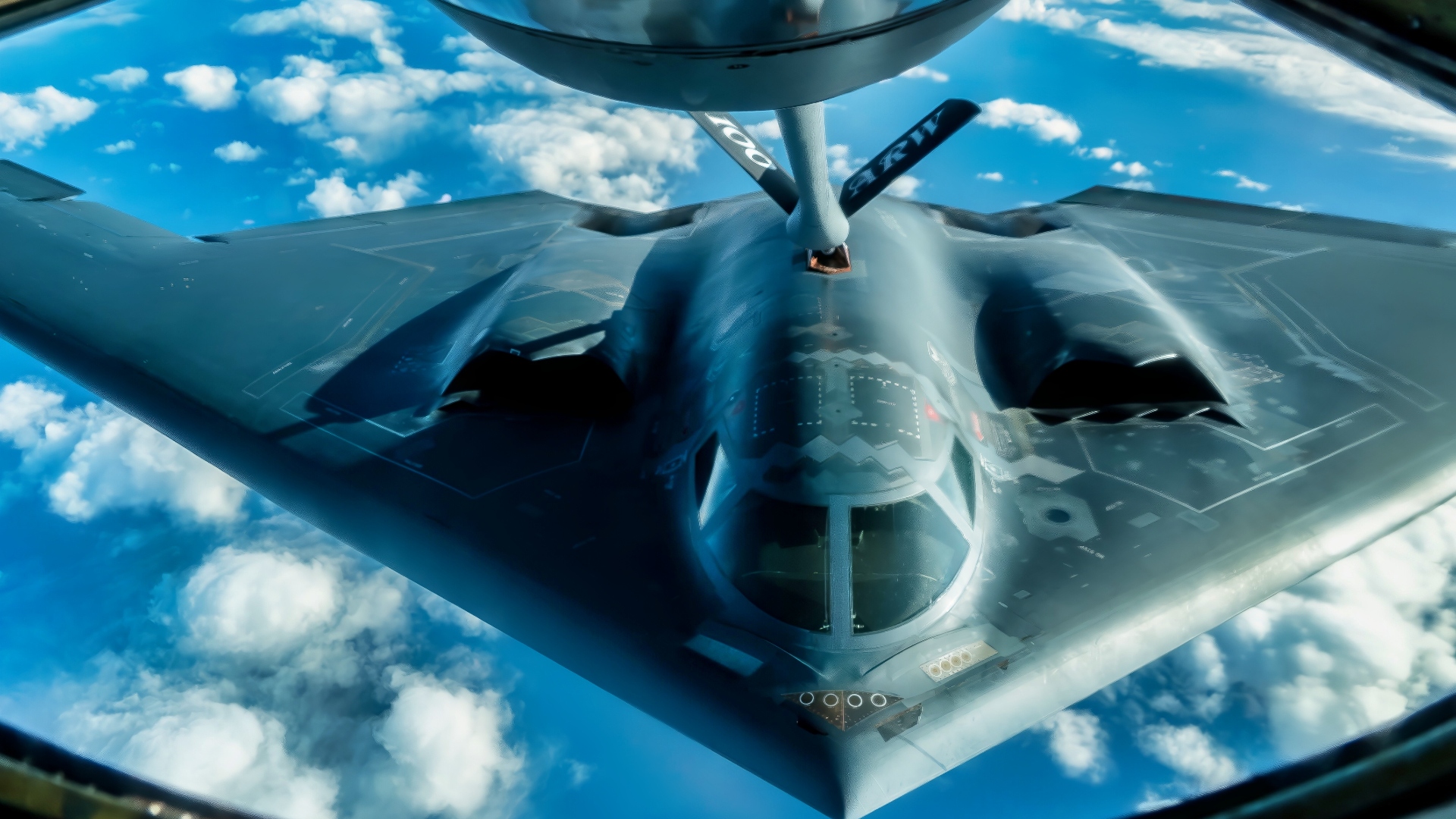
A U.S. Air Force B-2 Spirit assigned to the 509th Bomb Wing from Whiteman Air Force Base, Missouri, receives fuel from a 100th Air Refueling Wing KC-135 Stratotanker during Global Thunder 20, Oct. 28, 2019. Global Thunder is an annual command and control exercise that provides training opportunities for all of U.S. Strategic Command’s mission areas, tests joint and field training operations, and has a specific focus on nuclear readiness. (U.S. Air Force photo by Staff Sgt. Trevor T. McBride)
None of those caveats neutralizes the core problem. Verification in the emerging deal appears weak, the stockpile remains in place, and the enrichment question is being deferred rather than resolved. The deterrent value of renewed strikes is precisely what a buried, secret program is designed to evade. And a regime whose survival is at stake does not make the most consequential decision in its history on a cost-benefit basis that outsiders would recognize.
The counterweights describe reasons Iran might hold back. The war supplied a stronger reason to go forward.
The Verdict: The Bomb Became The Lesson
The war that was meant to end Iran’s nuclear ambitions may have guaranteed them. Tehran entered the conflict with deterrents short of a weapon and watched every one of them fail to prevent attacks on its own territory, and the conclusion a surviving regime draws is the simplest and most dangerous one available: that only a nuclear weapon would have worked, and that only a nuclear weapon will work next time.
A ceasefire that defers the nuclear question, leaves the enriched uranium in place, and is entered by a government that believes it was deceived does not reverse that conclusion. It buys the time and, through restored oil revenue and released funds, the money to act on it.
About the Author: Harry J. Kazianis
Harry J. Kazianis (@Grecianformula) was the former Senior Director of National Security Affairs at the Center for the National Interest (CFTNI), a foreign policy think tank founded by Richard Nixon based in Washington, DC. Harry has over a decade of experience in think tanks and national security publishing. His ideas have been published in the NY Times, The Washington Post, The Wall Street Journal, CNN, and many other outlets worldwide. He has held positions at CSIS, the Heritage Foundation, the University of Nottingham, and several other institutions related to national security research and studies. He is the former Executive Editor of the National Interest and the Diplomat. He holds a Master’s degree focusing on international affairs from Harvard University.


