


The rapid rise in gas prices in the early days of the conflict in Iran led Americans to drive less and buy less gas to stay within their budgets.
It also fueled sales and popularity of more fuel-efficient vehicles, hybrids, and all-electric vehicles, including Tesla models.

A B-1 Bomber, 77th Weapons Squadron, Dyess Air Force Base, Texas, performs a fly by for the crowd during an Air Force Firepower Demonstration at Indian Springs Air Force Auxiliary Field, Nev., Oct 8. The Firepower Demonstration is held twice a year and gives the general public a glimpse into the Air Force’s ability to perform its wartime mission.
USAF Photo by MSgt Robert W. Valenca (Released)
Other Americans who live in or near major urban areas began taking buses and other public transportation more often.
As the New York Times pointed out, while energy consumption skyrocketed 21 percent between February and May, Dow Jones Energy reported that consumption dropped 6.1 percent in May from a year ago.
And much of that has to do with higher prices causing consumers to cut out discretionary driving, like road trips or shopping trips, except for what was absolutely necessary.
For The Past Two Decades, Americans have been driving less
Americans are driving less per person than they did two decades ago, with vehicle miles traveled per capita down about 5 percent in the past 20 years.
The average amount of time people drive has dropped by 2.3 percent since 2019.
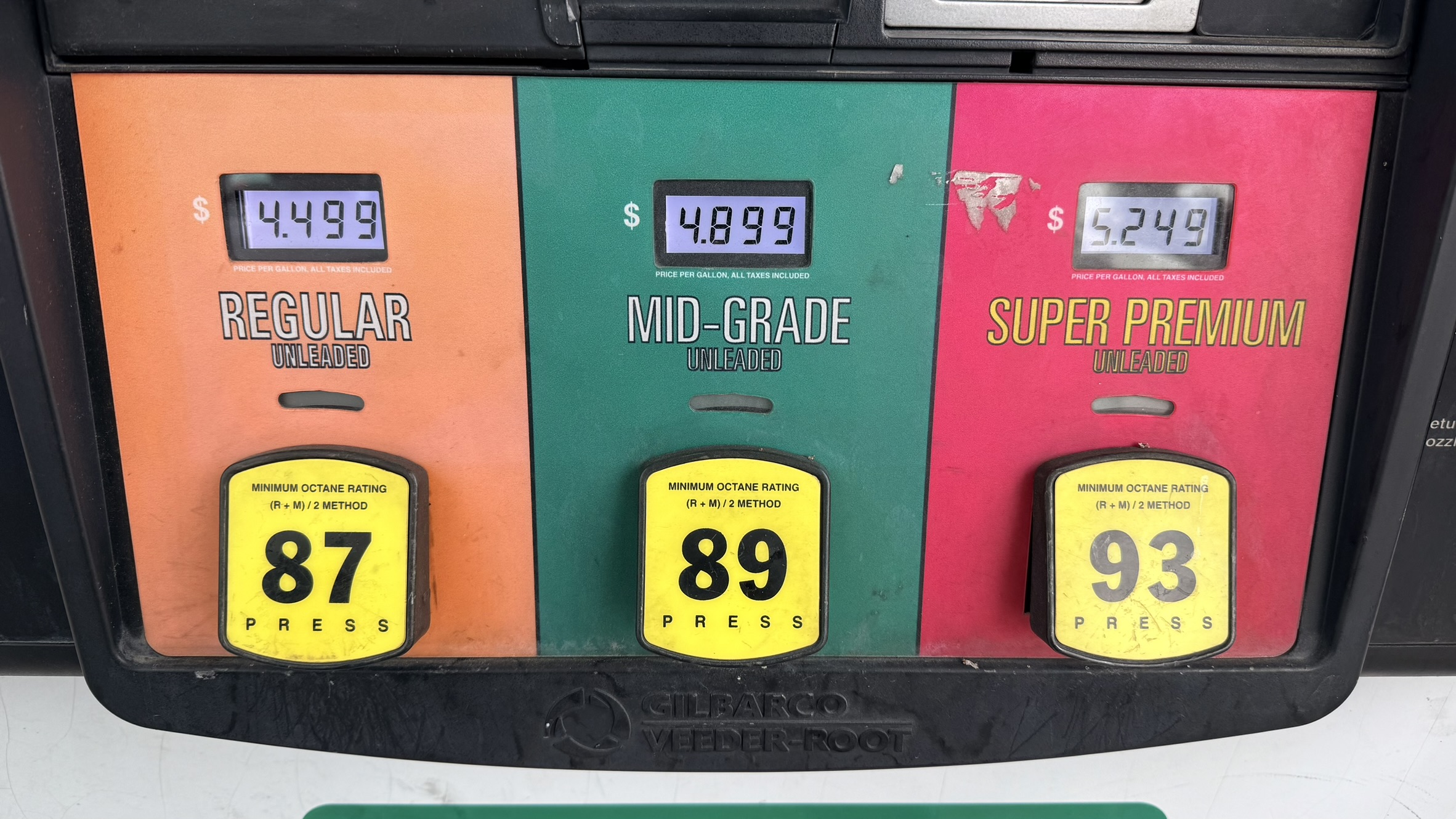
Gas Prices on May 9 outside of Orlando, Florida. Image Credit: Harry J. Kazianis for National Security Journal.
Young adults are leading this trend, significantly reducing their daily driving trips in favor of rideshares, transit, and alternative modes of transportation.
Part of the reason is that major urban areas are designing cities that highlight foot traffic.
Factors That Influence Less Driving For Americans
Fewer people, especially younger generations, are driving today due to several factors, including soaring energy costs, remote work, and the convenience of other alternatives. Some of the key factors include:
The high cost of driving is making it difficult for lower-income families to afford it.
Skyrocketing car prices, fuel costs, insurance premiums, and maintenance expenses make vehicle ownership more of a burden than ever before.
Remote workplaces have reduced the need to commute to work.
The widespread adoption of remote and hybrid work schedules has eliminated many daily commutes. This has saved consumers the costs of gas, tolls, parking, and vehicle wear and tear.
It has saved companies cash by cutting the need for office space, and remote working increases productivity.
Digital online shopping, streaming, and food delivery apps mean fewer errands require a physical trip to the store. Amazon.com is now the largest online retailer in the world.
In the United States alone, the company commands over 40 percent of all online retail sales. On a global scale, it also recently surpassed Walmart as the world’s largest company by total revenue.
Alternative Mass Transit and technology cut driving time, while rideshares (like Uber and Lyft), public transportation, and the ability to socialize online have reduced the need to drive for independence.
Part of this has been driven by increasing gridlock in cities.
Boston, Massachusetts, my former home, is often considered one of the worst in the U.S.; drivers there lose up to 164 hours annually to traffic congestion.
It frequently takes over 20 minutes to drive just 5 miles during peak evening rush hours.
The US Still Loves The Freedom of Cars Despite Gas Prices
Despite these factors, the automobile remains king. Other than housing, Americans spend most of their post-tax income ($12,295) on transportation. The United States remains fundamentally car-dependent, with roughly 90 percent of suburban trips taken by private vehicle.
Urban sprawl, widespread zoning laws, and infrastructure investments heavily favor automobiles, often pricing out alternatives and limiting public transit options.
While 92 percent of American households have access to a car, only 55 percent of them have access to public transportation, according to CNBC. And only 3.5 percent of Americans take advantage of other options.
Americans fell in love with the freedom of the open road and their cars, which are…much larger and more luxurious than those in Europe. The sheer size of the United States is a factor.
For instance, driving from one end of England to the other (Cornwall to Scotland) is 556 miles and takes about 10 hours. Driving across just Texas is 800 miles and takes 12 hours or more (less if I’m driving).
Gas Consumption Will Dip, But Not For Long
Although oil consumption per person in the United States fell after the 1970s OPEC oil embargo, it returned to new levels as consumers adjusted to higher pump prices.
Battery-powered vehicle usage rose quickly during the sticker shock at the pumps in the early days of the current conflict, but those numbers will tail off. There simply aren’t enough battery charging stations in the US to support a massive influx of battery-powered cars.
The United States currently has about 80,000 public EV charging stations with nearly 250,000 ports. And 25 percent of those are in California. And most charging stations are located in major urban centers such as Los Angeles, San Diego, Atlanta, and Boston. Not nearly enough are available for long-distance travel.
Experts estimate the U.S. will need over 1 million public chargers by 2030 to keep pace with EV adoption.
This translates to significant infrastructure challenges in placing enough stations to meet demand.
Overall, U.S. gas and oil demand continues to rise, especially for jet fuel and diesel, keeping U.S. net crude and petroleum exports at record highs.
The International Energy Agency also notes that the petrochemical industry is a major driver of future consumption.
Once the markets settle and reach a consistent average price, demand will increase again.
About the Author: Steve Balestrieri
Steve Balestrieri is a National Security Columnist. He served as a US Army Special Forces NCO and Warrant Officer. In addition to writing on defense, he covers the NFL for PatsFans.com and is a member of the Pro Football Writers of America (PFWA). His work was regularly featured in many military publications.


