

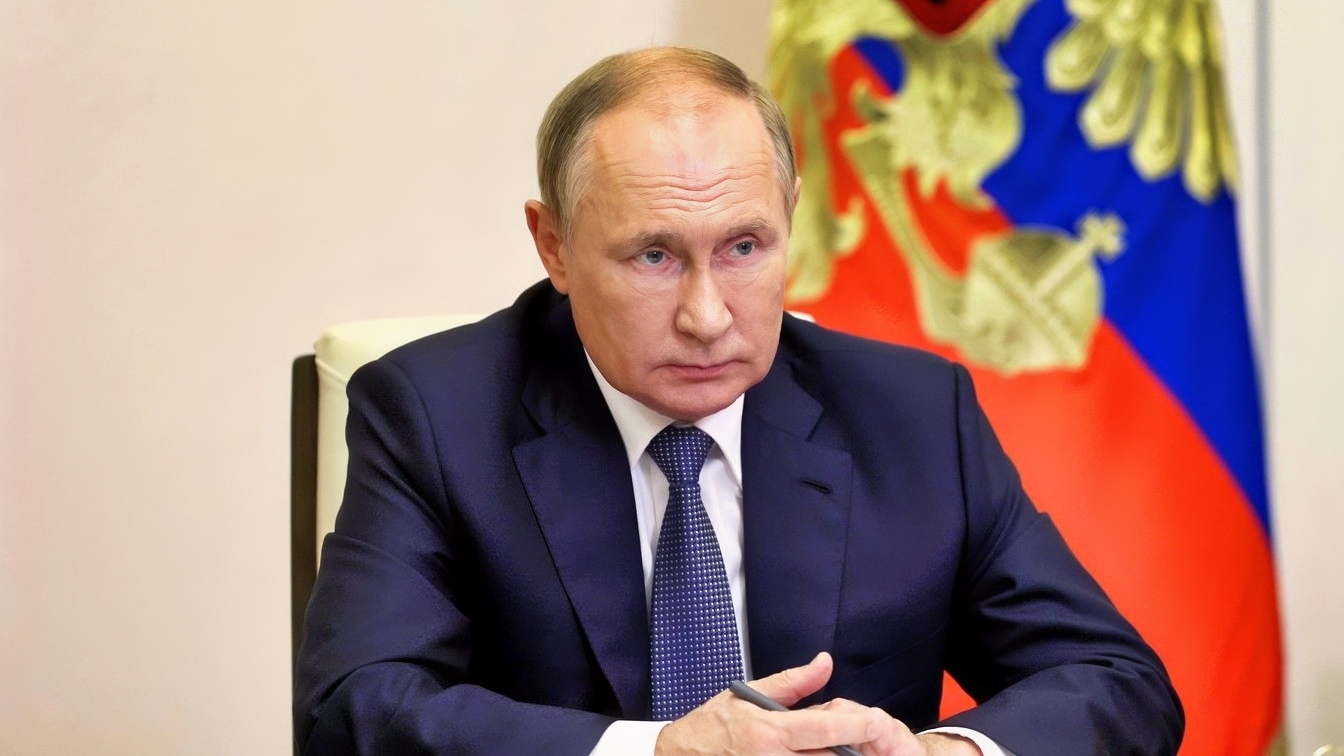
Warsaw, Poland – On Wednesday, the Polish Foreign Minister Radosław Sikorski said that there were indications Russia could be preparing a “false-flag” operation to provide Moscow the ability to claim it had been attacked by NATO.
His warning came following threats issued by Russian President Vladimir Putin in the wake of repeated drone attacks on Moscow and other major cities.
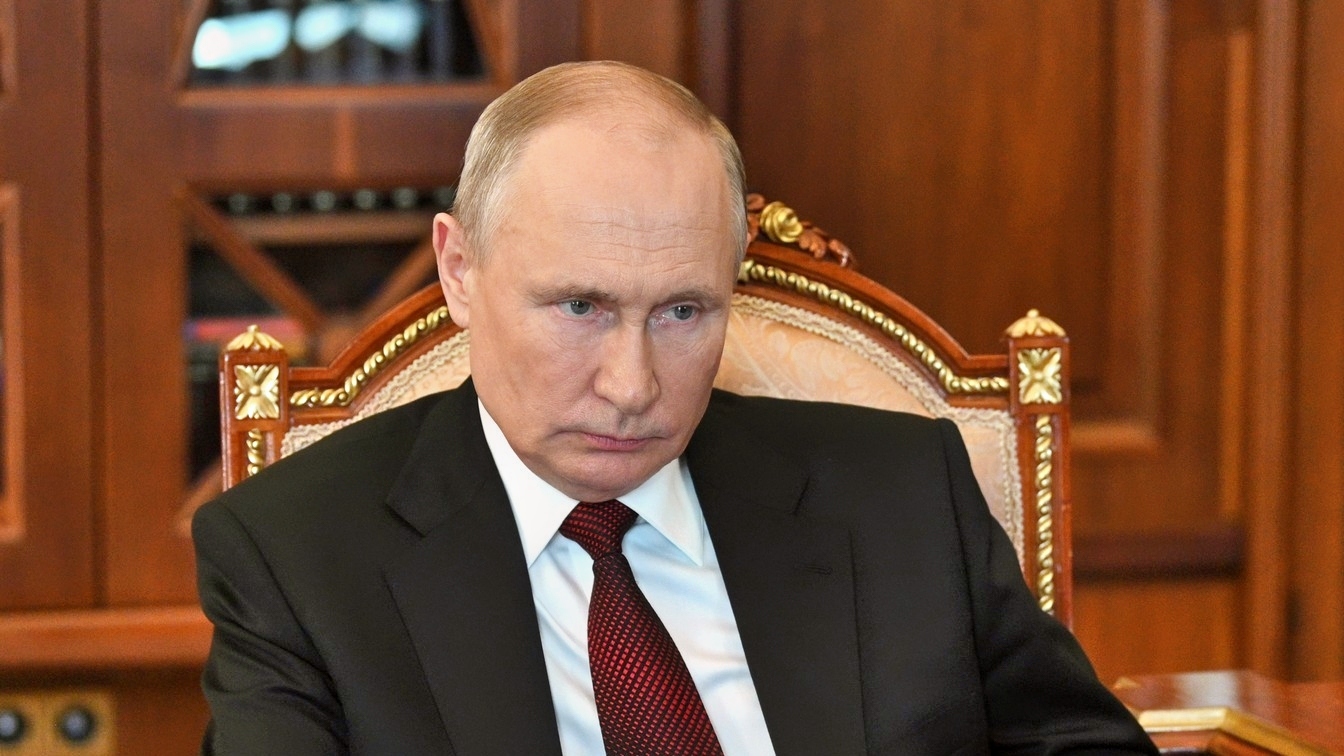
Putin in a meeting. Image Credit: Kremlin.
The former KGB Lt. Col., who is now Russia’s president, is seeing his “Special Military Operation,” launched in February 2022, shift from a long-running stalemate into an increasingly disastrous conflict. Disastrous for his own military, as well as for his own personal popularity.
Among other difficulties that the Russian population is facing, the Ukrainian drone and missile bombardments of refineries and other facilities connected to Russia’s sprawling oil industry have created shortages of petrol that are being experienced in 22 of Russia’s different regions – and impacting at least 25 percent of Russia’s entire population.
According to various news reports, the Russian regions most affected include: Bryansk, Kursk, Belgorod, and Voronezh, located near the Ukrainian border, as well as several central Russian regions, including Lipetsk, Saratov, Penza, and Nizhny Novgorod.
What has amplified the concern of Sikorski and others is the only slightly veiled threats by Putin aimed at European countries, he claims, are complicit in these drone attacks on Russian territory. In what is being interpreted as a threat of retaliation, Putin said Moscow would respond if drones were launched against Russian targets from European countries instead of only from Ukrainian territory.
“They understand that retaliation will follow. I think everyone understands this, or should understand it,” Putin said on Tuesday of this week.
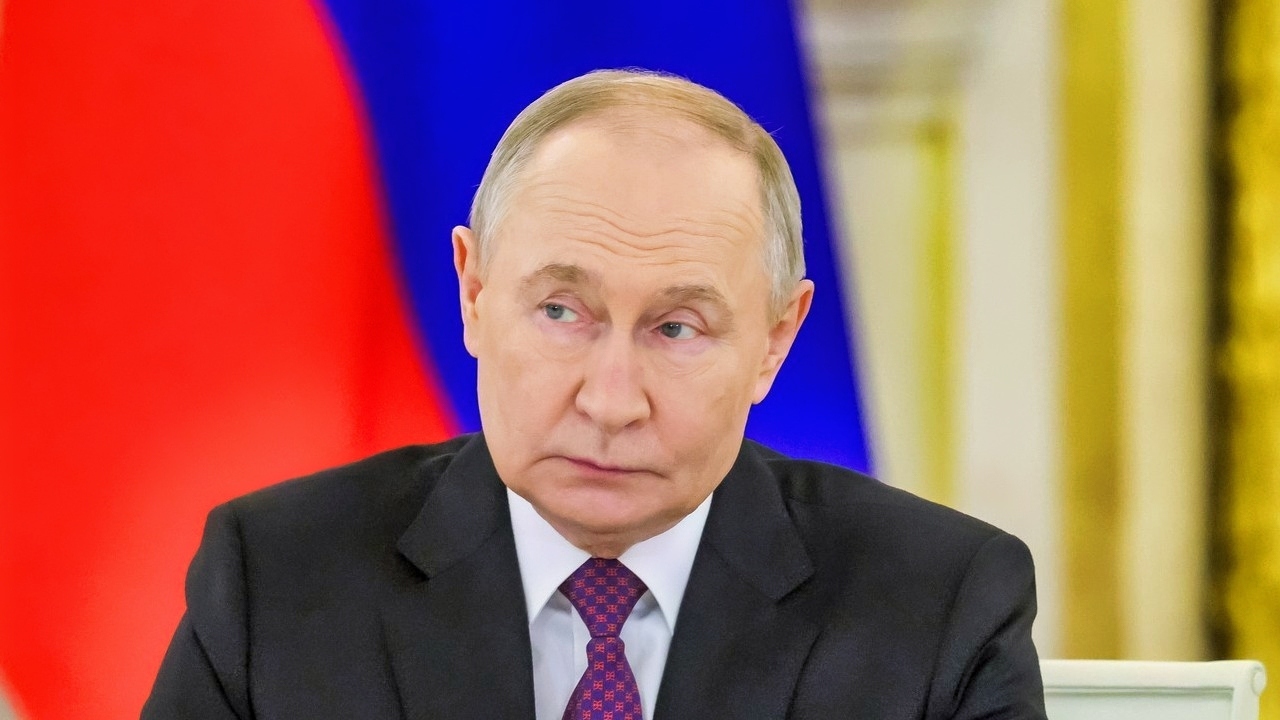
Putin in Early 2026 Russian Federation Photo
Back to the 1939 Future
Sikorski’s response was to point out the parallels between Putin’s rhetoric and that of the Nazi German dictator Adolf Hitler before the latter launched one of the most notorious false-flag operations in European history. An operation that provided the German justification for the September 1939 invasion of Poland, kicking off what became the Second World War.
“This sounds like an announcement of a provocation. I expect an attack on Russian territory under a false flag, to which Putin will then respond,” Sikorski wrote on the US social media platform X. “I would remind you that in August 1939, the Abwehr [Nazi German’s military intelligence organization] staged a Polish attack on the radio station in Gleiwitz in order to create a pretext for war,” he added.
His remarks regarding the Gleiwitz incident were in reference to an Abwehr operation in which German agents posed as Polish armed operatives who carried out a pre-staged attack shortly before the outbreak of WWII. That event was used by Hitler as one in a list of justifications for the 1 September 1939 invasion of Poland.
“You look at this historical record, and then you hear what Putin is now saying, and the parallels are very uncomfortable – if not alarming,” said a senior researcher at a foreign policy think-tank in Poland. “You almost have to wonder if they – Putin and the Fuhrer – if maybe they had the same speechwriter.”
Putin’s External and Internal Woes
Officials in Warsaw have also repeatedly warned about the possibility of a continuation and intensification of Russian sabotage, hybrid warfare, and disinformation operations being carried out against NATO members.
Putin’s latest threat is amplifying increasing fears that the confrontation between Russia and the West could grow in both scope and intensity as his increasingly unsuccessful and costly war in Ukraine is almost halfway into its 5th year.
This situation illustrates just how often we see dictatorships looking for a way out of an internal crisis, said another Polish defense analyst. “When the war has already begun to go in the wrong direction and then creates dissatisfaction among the population, the answer of most dictators is not to look for a way to dial down the conflict. Their answer is instead to double down on the military conflict that is already not working for them.”
What Putin could be facing, however, is an internal situation that has passed the point where it can be tamped down with the usual political trickery.
Herman Pirchner, Jr., President of the US Foreign Policy Council, wrote in The Hill earlier this month about the potential destabilizing effects that the war could have on Russia and its president-for-life.
“Back in December 2010, when Tunisian street vendor Mohamed Bouazizi set himself on fire to protest restrictive government regulations, it touched off a political cascade that resulted in the removal of longtime regional leaders like Tunisia’s Zine Abidine Ben Ali, Egypt’s Hosni Mubarak and, eventually, Libya’s Muammar Gaddafi. A similar cascade is now possible in Russia’s current, fraught political environment,” he concluded.
It is that situation that Putin now looks for a solution to, but launching just such a false-flag maneuver would not just give him the excuse to widen the war. At the same time, he may also be trying to have his own – just like Hitler – “Reichstag moment” that would also produce the rationale for a new round of restrictions that would tighten his already ultra-repressive governance.
The parallels are more disturbing by the day.
About the Author: Reuben F. Johnson
Reuben F. Johnson has thirty-six years of experience analyzing and reporting on foreign weapons systems, defense technologies, and international arms export policy. Johnson is the Director of Research at the Casimir Pulaski Foundation. He is also a survivor of the Russian invasion of Ukraine in February 2022. He worked for years in the American defense industry as a foreign technology analyst and later as a consultant for the U.S. Department of Defense, the Departments of the Navy and Air Force, and the governments of the United Kingdom and Australia. In 2022-2023, he won two awards in a row for his defense reporting. He holds a bachelor’s degree from DePauw University and a master’s degree from Miami University in Ohio, specializing in Soviet and Russian studies. He lives in Warsaw.


