
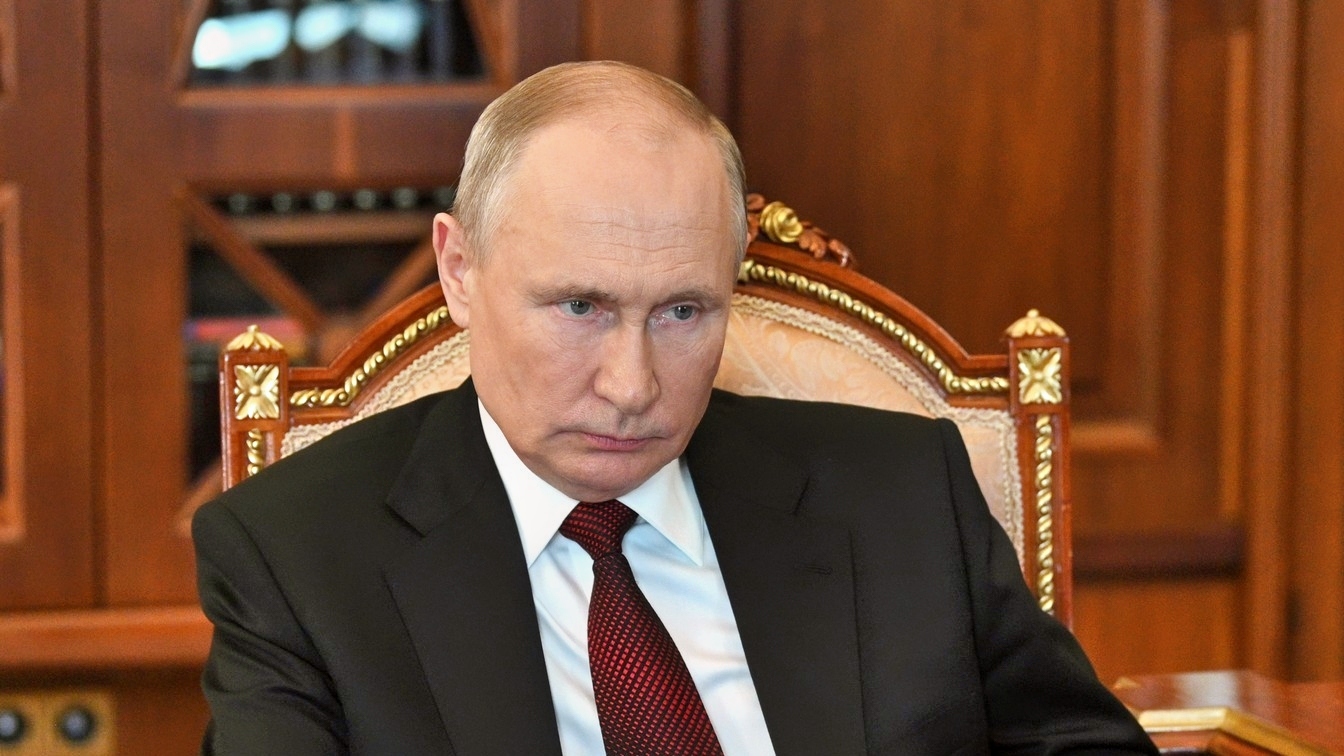
Russia’s annexation of Crimea in 2014 was meant to be one of Vladimir Putin’s greatest achievements – despite the geopolitical chaos and condemnation it attracted.
But more than a decade later, the peninsula is now becoming a symbol of how badly Moscow’s war effort in Ukraine is going. This isn’t what Putin planned.
Putin in Red Square in 2017 Creative Commons Image.
Overnight on June 22-23, Ukrainian forces launched another wave of long-range strikes against Russian infrastructure and logistics in and around Crimea.
The goal was to cut off fuel infrastructure and logistics facilities that support military operations in Ukraine – and Kyiv seems to have done it. On Sunday, Crimean authorities suspended fuel sales to civilians entirely and restricted supplies to government agencies and emergency services.
The restrictions came after weeks of rationing measures and fuel coupon limits designed to protect remaining fuel supplies as Russian services attempted to rebuild and mitigate the damage done.
And, Monday’s overnight strikes worsened the situation, leaving roughly half of Crimea’s civilian population without electricity after Ukrainian strikes knocked out energy infrastructure.
Those shortages and the ongoing strikes have forced Russian authorities to halt children’s summer campaigns and to prevent tourists with children from entering the region.
When Putin seized Crimea in 2014, he did so with a plan to showcase the peninsula as a symbol of Russian power in the Black Sea.
Today, with Ukrainian drones reaching deeper into the Russian mainland every week and Crimea teetering on the edge of disaster, it’s hard to see where Putin goes next.
Putin in 2024 Creative Commons Image
Putin’s 2014 Invasion
Seizing Crimea was comparatively easy for Russia in 2014.
It occurred during the political turmoil that followed the removal of Ukrainian President Viktor Yanukovych, which Putin this week again described as a “coup d’état.”
On February 27, armed men wearing unmarked uniforms, who were later identified as Russian troops, occupied the Crimean parliament and government buildings in Simferopol.
It took only days before Russian forces had taken control of the airports and military installations, as well as critical infrastructure throughout the peninsula.
At first, Moscow denied any direct involvement and described the troops as self-defense forces from the local region.
But the truth was that Russian special operations units and conventional military personnel had coordinated with the operation while additional troops flowed into Crimea from Russia and from the Black Sea Fleet in Sevastopol.
After successfully taking control, occupying groups organized a referendum in March, with the vote being conducted under military control.
Ukraine, unsurprisingly, considered the referendum illegitimate, as did the United States, the European Union, and much of the rest of the world. But by March 18, Putin had formally signed a treaty
incorporating Crimea into the Russian Federation. And while Ukraine continues to insist the move was illegitimate, the West held back from encouraging military action to retake the territory.
It was a shocking decision, and the first forcible seizure of European territory since the end of World War II. It resulted in sanctions from Western governments and served to isolate Russia on the world stage. But for Putin, Crimea was worth it.
What Putin Had Planned
When Putin announced the annexation to the Russian Federal Assembly on March 18, 2014, he described Crimea as having a “sacred significance” for Russia and compared its importance to that of the Temple Mount for Jews.
As he does to this day, he also argued that Crimea is historically Russian territory and promised that reunification would be a source of national pride and a restoration of justice.
The Kremlin has invested heavily in Crimea, spending billions of dollars on infrastructure, including the 12-mile-long Crimean Bridge linking the peninsula to the Russian mainland.
There were new highways, Russia expanded its military bases, and it upgraded its ports and tourism facilities. It was a huge success for Russia – until now.
How Crimea Has Been Used in the War
Crimea was also strategically and militarily useful for Russia. In fact, it has been one of the most important military assets for Russia since the full-scale invasion of Ukraine began in February 2022.
Russian forces used the peninsula as a staging ground for troops advancing into southern Ukraine, with units crossing north through the Perekop Isthmus toward Kherson and Zaporizhzhia.
Without it, many of the successes seen on the battlefield would have been difficult to achieve, not just because of geography, but because of how Crimea facilitated the movement of supplies and military hardware.
Crimea has effectively been a logistics hub throughout the war, sending reinforcements directly to forces on the southern front.
The Black Sea Fleet, headquartered in Sevastopol, also played a major role in the early stages of the war, with Russian warships launching Kalibr cruise missiles against targets across Ukraine.
And for much of the war, Crimea seemed untouchable.
When Zelenskyy talked about Ukraine taking back control of the region, it was widely dismissed by analysts and even government figures as a pipe dream that went beyond the scope of Western financial and military support.
But now, after repeated attacks on the Crimean Bridge and fuel depots, the peninsula is at risk of being isolated from the Russian mainland.
About the author: Jack Buckby
Jack Buckby is a British researcher and analyst specializing in defense and national security, based in New York. His work focuses on military capability, procurement, and strategic competition, producing and editing analysis for policy and defense audiences. He brings extensive editorial experience, with a career output spanning over 1,000 articles at 19FortyFive and National Security Journal, and has previously authored books and papers on extremism and deradicalization.


