

WARSAW, POLAND – Those watching the war between Ukraine and Russia have by now come to expect regular attacks on Moscow’s oil industry – hitting refineries, storage facilities, oil terminals for loading into tankers, etc.
The purpose of these attacks, as Ukrainian President Volodymyr Zelenskiy has said on multiple occasions, is to enact what he calls “long-range sanctions” that would deprive Moscow of the oil export revenue it needs to keep funding Russian President Vladimir Putin’s war machine.
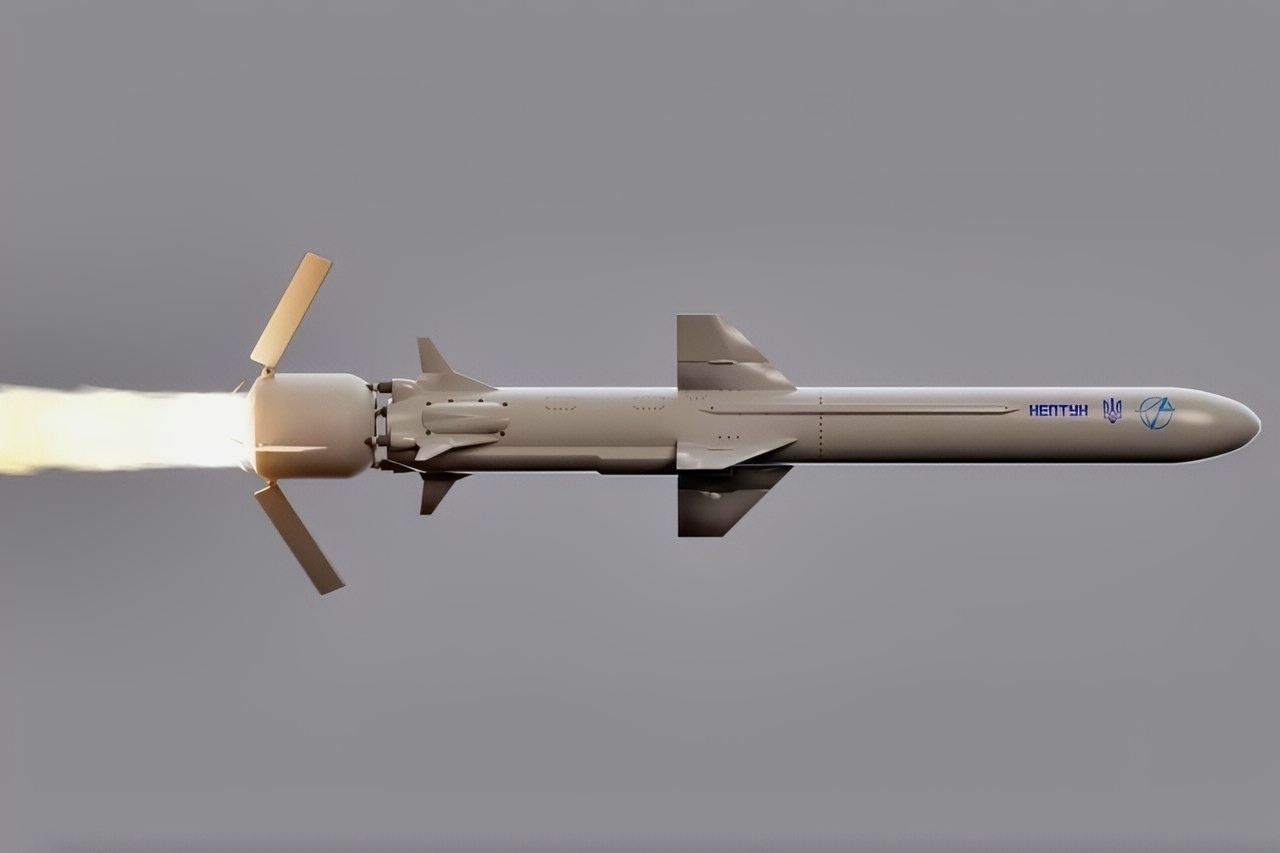
Neptune Missile. Image Credit: Government of Ukraine.
But less reported is the growing number of strikes against Russian defense-industrial enterprises. These are facilities that manufacture items integral to missile and other weapons production.
These are the weapons that have done the most damage to Ukraine’s military sites and critical infrastructure.
“What Ukraine is proving to be increasingly capable of is hitting those entities that represent single points of failure for the production of some of Moscow’s long-range missiles,” said a Ukrainian defense enterprise director who spoke to National Security Journal.
“These are high-priority targets, which you can tell by the fact that some of the most highly valued weapons in our arsenal, the [MBDA] Storm Shadow missiles, were used in these attacks.”
On this particular day, the Storm Shadow missiles, Ukraine’s military announced, were used in a missile attack against a manufacturing plant in the city of Voronezh.
The facility, the Voronezh Semiconductor Plant, is reportedly a manufacturer of electronic systems and components for Russia’s 9K720 Iskander Intermediate Range Ballistic Missile (IRBM) and Kh-101 cruise missiles, as well as for the Pantsir S-1 Short-Range Air Defense (SHORAD) system.
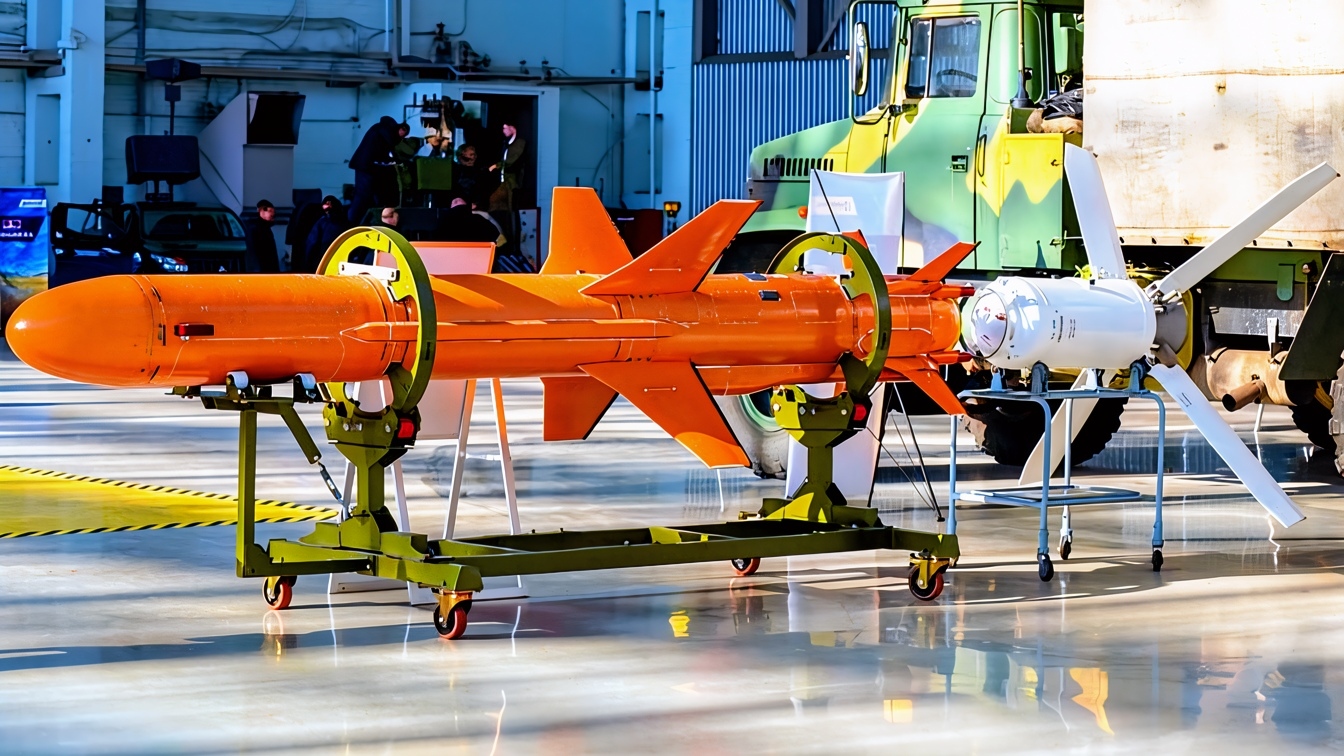
Neptune Cruise Missile Ukraine Government Photo
Shutting Down Major On-Board System Production
This production site was the main target of the strike in Ukraine, the General Staff in Kyiv stated in an online posting.
The General Staff also reported a successful hit on a Dubna Space Communications Center in the Moscow Oblast, less than a week after two Ukrainian drone strikes in three days set the capital’s main oil refinery on fire and left the skies over Moscow filled with black smoke.
The Ukrainian General Staff also said it had used air-launched cruise missiles to hit the plant in Voronezh.
It described the facility as a “critical component” in Russia’s defense production.
Some of these components, which were produced in Voronezh, include the guidance modules and onboard computer systems for these Russian missiles.
Some of the individual subassemblies produced at the plant that are used to produce these critical on-board systems are transistor assemblies and matrices used in the Kh-101 cruise missiles, semiconductor components for the “Zarya-61M” onboard digital computer used in Iskander-K missiles, and the diodes and transistor modules used in “Pantsir-S1” air defense systems.
The Voronezh region Governor, Alexander Gusev, confirmed that significant damage was done to what he called a local “production facility.”
He also said at least three people were wounded, but provided no other details about the extent of the damage.
Numerous videos and images have since been circulating on social media showing smoke and fires billowing from the plant, which Russian media outlets identified as the Voronezh plant.
Degrading Russia’s Missile Industry
The system in place in Russia is the one inherited from the Soviet period, which often includes several enterprises responsible for producing major weapons systems in the same region, sometimes even in the same city.
This simplifies production by not requiring large deliveries of major “blocks” of missiles or other weapons to be shipped long distances to a final assembly plant several time zones away.
The Voronezh plant fits this pattern, and as such, it is reasonable to expect that this is not the last attack on this city’s military enterprises.
Nearby the semiconductor plant are the Voronezh Mechanical Plant (VMZ) and the Chemical Automation Design Bureau (KBKhA), which develops rocket engines.
These two enterprises are located approximately less than a mile from the semiconductor facility.
The connection of the plant to Kh-101 missile production is the most strategically significant for Russia’s campaign against Ukraine’s cities.
The Kh-101 is a long-range air-launched cruise missile capable of striking targets up to 3,400 miles from launch. Is it one of the longest-range cruise missiles in any air force’s inventory?
The missile’s guidance package is a combination of inertial guidance, terrain-following radar, and optical terminal homing.
Its altitude is controlled by what Russian technical descriptions refer to as the UVK-208 block, which is a coded altimeter unit.
Russia has typically launched the Kh-101 from the Tupolev Tu-95MS strategic bomber while the aircraft is still flying in Russian airspace – sometimes deep inside the Caspian Sea region or over the Volga River basin.
This puts the aircraft well beyond the range of Ukrainian air defense units.
About the Author: Reuben F. Johnson
Reuben F. Johnson has thirty-six years of experience analyzing and reporting on foreign weapons systems, defense technologies, and international arms export policy. Johnson is the Director of Research at the Casimir Pulaski Foundation. He is also a survivor of the Russian invasion of Ukraine in February 2022. He worked for years in the American defense industry as a foreign technology analyst and later as a consultant for the U.S. Department of Defense, the Departments of the Navy and Air Force, and the governments of the United Kingdom and Australia. In 2022-2023, he won two awards in a row for his defense reporting. He holds a bachelor’s degree from DePauw University and a master’s degree from Miami University in Ohio, with a specialization in Soviet and Russian studies. He lives in Warsaw.


Billy W Gray
June 23, 2026 at 8:28 pm
Russia will do as Israel did, when it looks like the Russian State is going to lose the gloves will come off and pandoras box will be opened. Europe will once again have plunged the world into an all-out war. Some may laugh at this, but I intend to view this as the end of our way of life.