

Seoul is moving forward with plans to deploy nuclear-powered attack submarines, marking a stark shift in defense posture for one of Asia’s leading submarine builders. The class, which will be the first of its kind for South Korea, is slated to enter service sometime during the end of the next decade.
Speaking at a naval base last month, South Korean President Lee Jae Myung voiced strong approbation for the initiative, affirming that the country’s boat-builders “will work to launch the first nuclear-powered submarine in the mid-2030s and push ahead with development to enter operational service in the latter half of the 2030s or later,” according to local media.

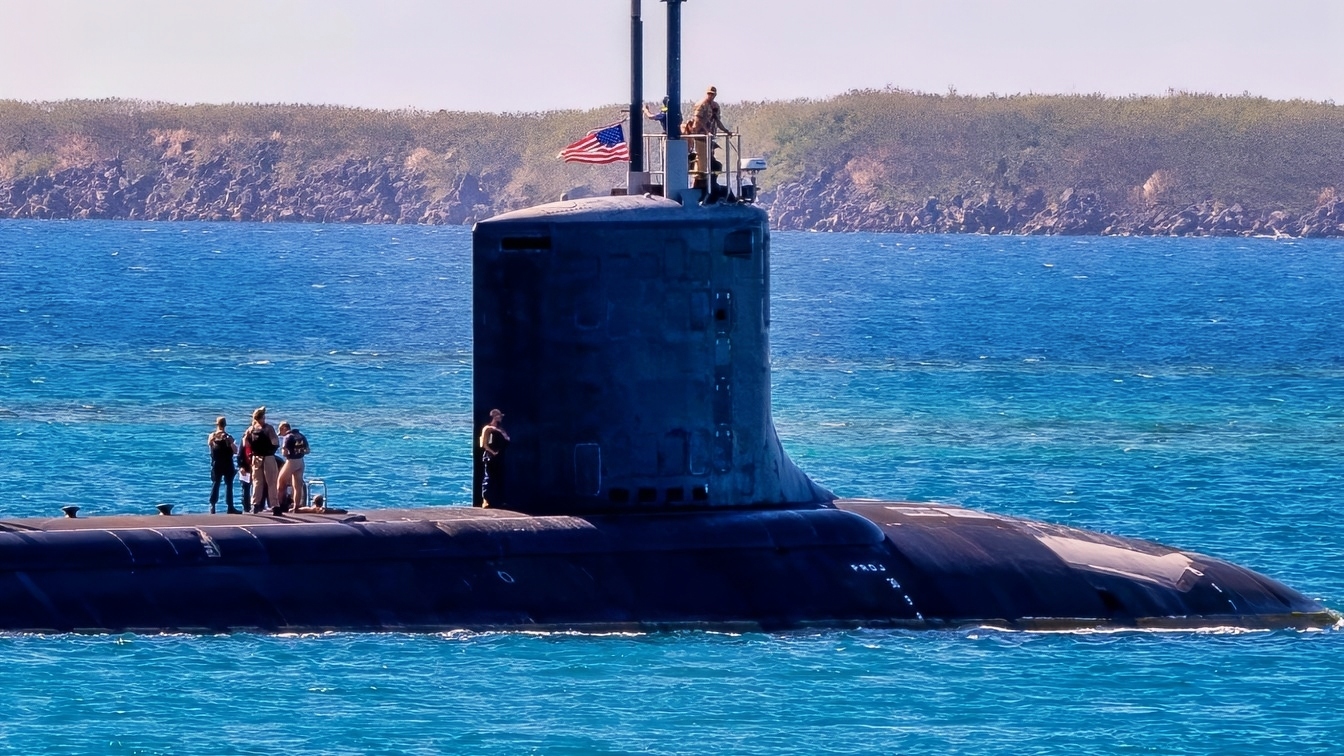
(Mar. 21, 2025) – The Los Angeles-class fast-attack submarine, USS Santa Fe (SSN 763), transits the Pacific Ocean, March 21, 2025. Santa Fe is one of four Los Angeles-class fast-attack submarines assigned to Commander, Submarine Squadron 11. Santa Fe is part of Commander Submarine Squadron 11, home to four Los Angeles-class fast-attack submarines, which are capable of supporting various missions, including anti-submarine warfare, anti-ship warfare, strike warfare and intelligence, surveillance and reconnaissance. (U.S. Navy photo by Mass Communication Specialist 1st Class Keenan Daniels)
South Korea’s SSNs
The new-build nuclear submarines will be a first for the country, which already has had a handful of submarine classes in service, all of which were conventionally rather than nuclear-powered. Tentatively called the Jang Bogo N Project, the boats will prioritize domestic designs and technologies.
A copy of the South Korean plan, called the “Basic Plan for the Development of the Republic of Korea Nuclear-Powered Submarine,” has been helpfully translated from Korean by Naval News, a maritime-focused outlet.
Though not yet laid down, parsing the translation of the South Korean text indicates a strong preference for nuclear propulsion, given the endurance advantages and water desalination potential of such vessels.
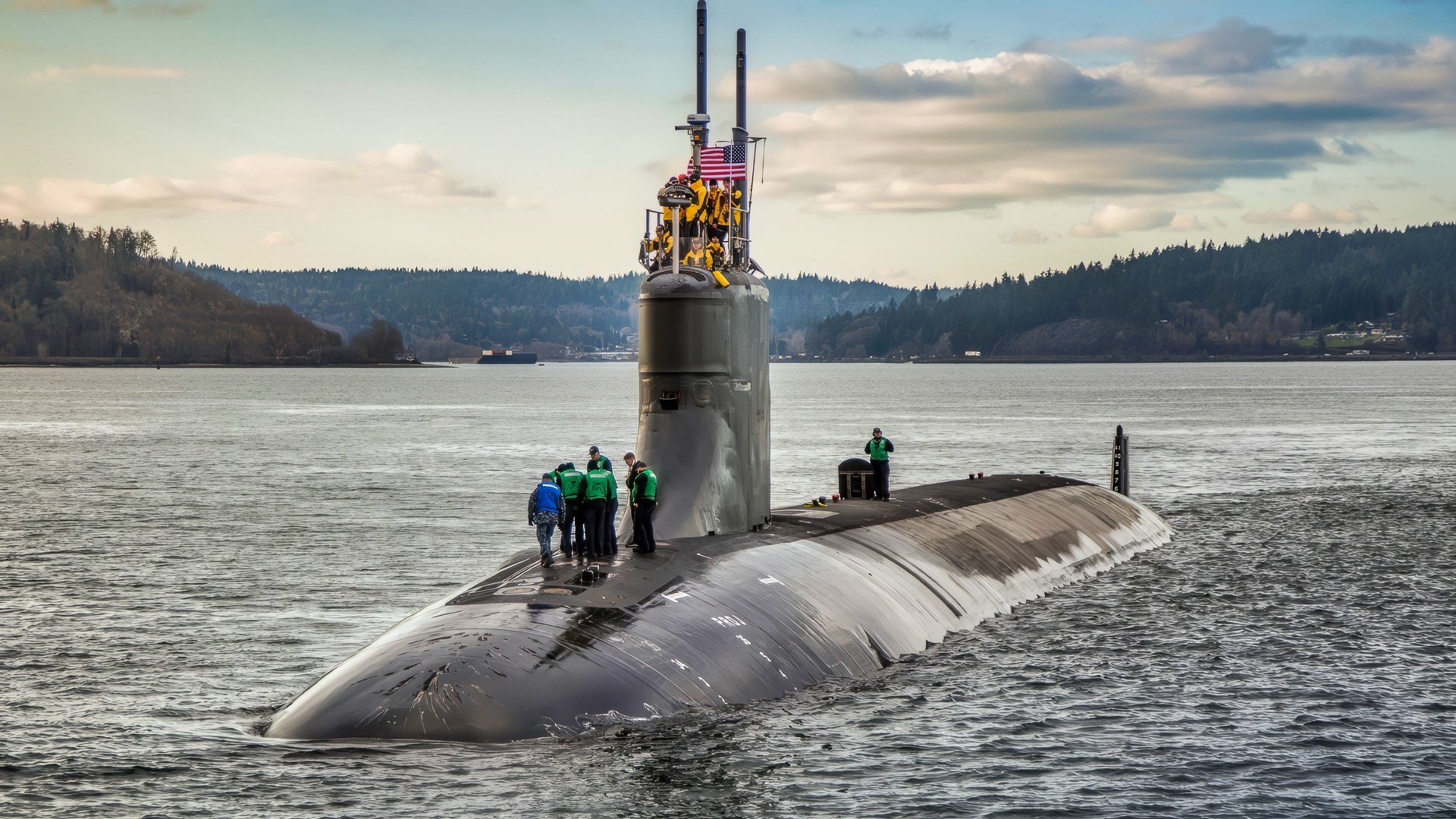
(Dec. 15, 2016) – The Seawolf-class fast-attack submarine USS Connecticut (SSN 22) departs Puget Sound Naval Shipyard for sea trials following a maintenance availability. (U.S. Navy photo by Thiep Van Nguyen II/released)
South Korea indicated it would have an operational need for four of the new submarines, each of which is anticipated to displace around 8,000 tons.
Why Nuclear?
The Republic of Korea Navy would certainly like to hedge against North Korea’s growing operational capacity. But Seoul also would like to balance itself against another increasingly powerful and at times adversarial neighbor to the north: China.
Late last year, Pyongyang revealed a new submarine — claimed to be nuclear-powered and armed with submarine-launched missiles. But Seoul would also like to be more involved in the burgeoning AUKUS partnership, the admittedly somewhat awkwardly-named nuclear submarine project between Australia, the United States, and the United Kingdom.
That agreement marked just the second time that Washington has shared the crown jewel of its nuclear deterrence regime with an ally: underwater nuclear propulsion. First shared with the United Kingdom during the early years of the Cold War, American nuclear submarine technology has been a tightly guarded secret.
Lastly, nuclear propulsion offers tangible operational advantages, despite the complexity of handling and harnessing nuclear energy. But unlike the highly enriched fuel that powers American nuclear submarines, the new class of Korean submarines will utilize low-enriched uranium, which aids time between reactor refueling.
Jang Bogo-N
What Seoul’s new submarines will look like exactly is still very much a matter of speculation. While Hanwha Ocean, the country’s leading ship and submarine builder, did display a model of the Jang Bogo-N submarine, and featured an X-shaped rudder, an electro-optical mast, facilities for diver ingress and egress, as well as what will likely be a vertical-launch missile area.
While Seoul has eschewed the development of nuclear weapons, opting instead to find safety underneath the American nuclear umbrella, the new submarine’s propulsion will be a first for the country. But Seoul will also join what has, up to now, been a very exclusive club of countries that operate nuclear-powered submarines.
Only the United States, Russia, China, the United Kingdom, France, and India are members of that club — though Japan has indicated it too would like to eventually count nuclear-powered, but importantly, conventionally-armed submarines.
According to Seoul’s overview of the program, South Korea will adhere to its nuclear non-proliferation obligations in acquiring low-enriched uranium from its partner, the United States, and will work with the International Atomic Energy Agency to ensure that proper nuclear material standards are followed.
Jobs and Economic Growth
Though it will be at least a decade before the Republic of Korea Navy has the new submarines in service, the project will likely be an economic boon for the country. Estimates place job growth at around 40,000, particularly in highly skilled jobs related to submarine construction, as well as nuclear material handling, processing, and storage. Once in service, the Jang Bogo-N submarines will have a 30-year service life.
About the Author: Caleb Larson
Caleb Larson is an American multiformat journalist based in Berlin, Germany. His work covers the intersection of conflict and society, focusing on American foreign policy and European security. He has reported from Germany, Russia, and the United States. Most recently, he covered the war in Ukraine, reporting extensively on the war’s shifting battle lines from Donbas and writing on the war’s civilian and humanitarian toll. Previously, he worked as a Defense Reporter for POLITICO Europe. You can follow his latest work on X.


