

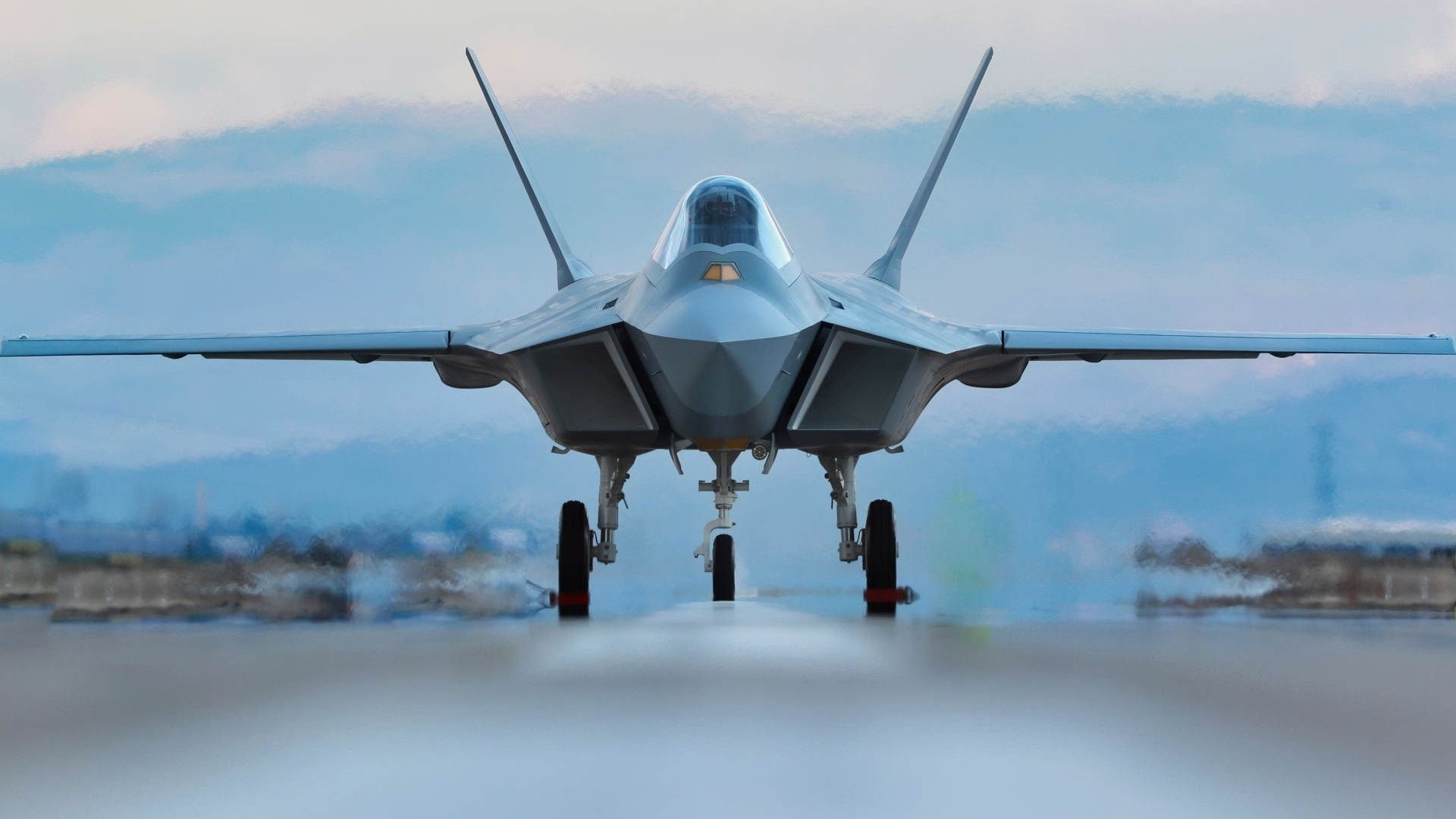
American President Donald Trump and the United States Department of Defense appear poised to approve the sale of fighter jet engines to Turkey, a sale that could run into the hundreds of millions of dollars. According to at least one report, the sale could total more than $700 million.
While the United States routinely sells military kit to close allies around the globe, this sale to Ankara is more unusual.
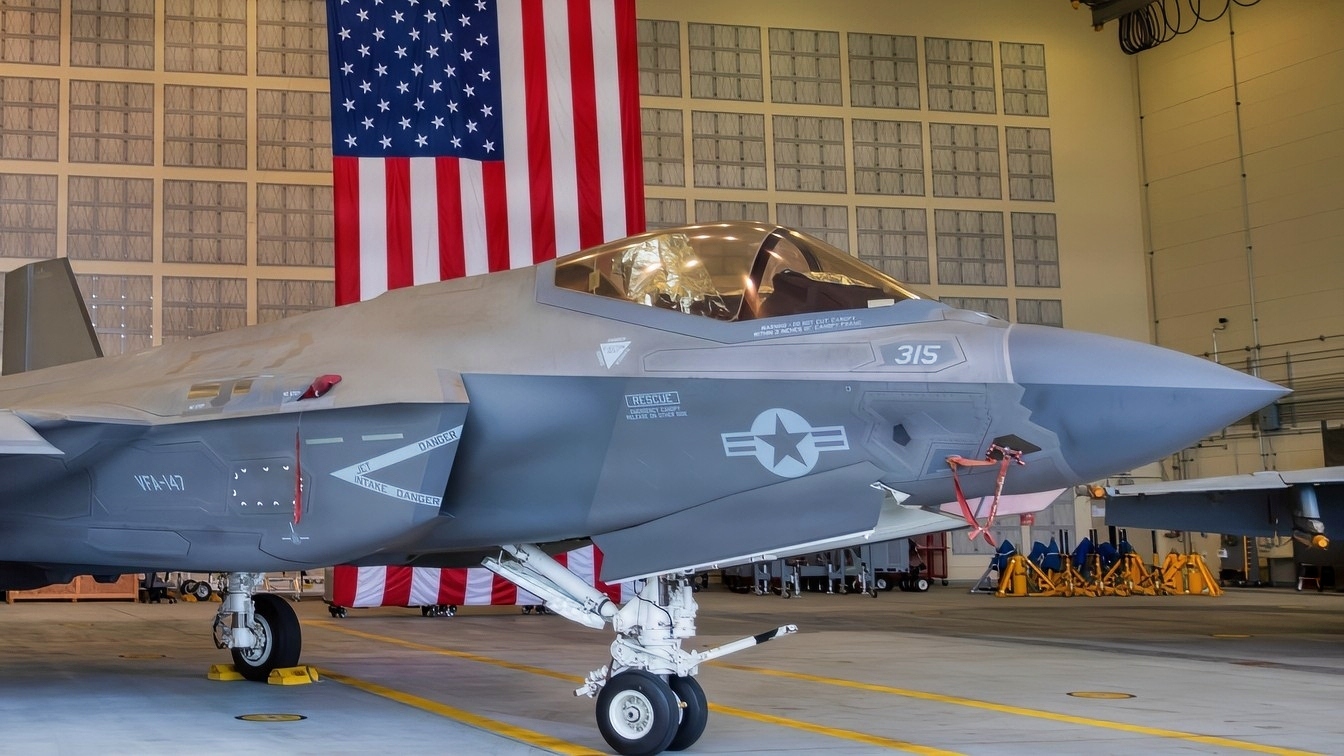
A U.S. Navy F-35C Lightning II static display from Strike Fighter Squadron (VFA) 102, Carrier Air Wing (CVW) 5 inside of Hangar 5300 during Friendship Day at MCAS Iwakuni, May 3, 2026. Since 1973, MCAS Iwakuni has held an air show designed to foster positive relationships and offer an exciting experience that displays the communal support between the U.S. and Japan. The air show encompassed various U.S. and Japanese static display aircraft, aerial performances, food and entertainment. (U.S. Marine Corps photo by Lance Cpl. Isaac De Leon)
If the sale goes through, the engines will be leveraged by Turkey for its own KAAN fighter jet program, Ankara’s indigenous fifth-generation fighter program.
Turkey, a member of the NATO alliance, was excluded from the F-35 program after it decided to purchase a powerful Russian air defense system.
Critics of the move said that the Russian equipment could be leveraged by Moscow to glean vital information about the F-35, a stealth fighter, which could be used against countries that fly F-35s in a future conflict.
But the current administration has seemingly swallowed its qualms about potential security issues related to the current crop of fifth-generation fighters, Turkey, and Russia, perhaps tempted by the enormous price tag related to this latest proposed engine sale.
President Trump hinted earlier this week at what could be in store for Ankara when queried, saying, “I’m going to probably do something that will make them very happy.”
Why Turkey’s F-35 Bid was Torpedoed
In 2019, Turkey acquired the S-400 air defense system, one of Russia’s leading air defense technologies, despite objections from both Washington and several other NATO members.
Though frozen out of the F-35 program, Ankara has managed to secure other, albeit less capable, fighter jets from the United States, securing F-16 fighters in 2024. Ankara, however, decided to curtail that order somewhat, opting for some domestic options instead.
Turkey’s KAAN
Frozen out of the American-led F-35 program, Turkey has attempted to fill that gap with an entirely made-in-Turkey solution. While still a fledgling aerospace program, the Turkish Air Force placed an order in May — its first — for 20 KAAN fighter jets from Turkish Aerospace Industries, and came on the heels of a prior order last year for 48 of the fighters from Indonesia.
But as the recent proposed sale of jet engines shows, building a cutting-edge stealth fighter at scale is an incredibly difficult — and costly — challenge. Should the KAAN be successful, it would likely supplant Turkey’s F-16s, currently the central pillar of the Turkish Air Force.
General Electric
General Electric is reportedly the manufacturer that will supply Ankara with the jet engines it wants for the KAAN fighter, and its F110 engines are already the power plant for the KAAN. Which new engine will be provided for the Turkish program is not known. But one potentiality could be GE’s XA100.
An adaptive-cycle engine, the XA100 can, as its descriptor implies, adapt to desired characteristics. During combat, GE’s XA100 can be turned for performance. In other situations, fuel efficiency can be prioritized over performance.
Those fuel savings can translate into improved combat capabilities.
American Objections and Thorny Issues
American Vice President J.D. Vance indicated that a review is underway to determine whether Turkey could be given the green light to rejoin the F-35 program, despite the strenuous objections of several lawmakers. It is unclear, however, what has changed, or why Ankara would be given the go-ahead now, given that Turkey still has Russia’s S-400 in service.
Several options are reportedly on the table, and include the transfer, resale, or mothballing of the Russian air defense system. Washington and Ankara have been discussing the removal of the F-35-related sanctions imposed under the Countering America’s Adversaries Through Sanctions Act since 2024, though a deal has remained elusive.
In theory, Turkey’s S-400 batteries could be dismantled and moved abroad, or Russia could buy them back. But both options have seemingly been difficult to bring across the finish line.
The Future of Turkey’s KAAN Program
Should Turkey and the United States reach an understanding on the S-400, the path forward for the Turkish Air Force would seemingly be clear. Access to the F-35 stealth fighter program — the world’s leading fifth-generation fighter jet — would be very tempting.
But it raises an important question about the KAAN program: would Ankara eschew the time and effort that has been invested in that fighter for a much more mature but foreign alternative?
It raises the prospect of flying a two-plane stealth fighter fleet, a move that has been criticized in the past as adding unnecessary logistical burdens.
For now, these questions remain particularly murky, but more information may emerge about the S-400, the F-35 fighter, and the KAAN jet.
About the Author: Caleb Larson
Caleb Larson is an American multiformat journalist based in Berlin, Germany. His work covers the intersection of conflict and society, focusing on American foreign policy and European security. He has reported from Germany, Russia, and the United States. Most recently, he covered the war in Ukraine, reporting extensively on the war’s shifting battle lines from Donbas and writing on the war’s civilian and humanitarian toll. Previously, he worked as a Defense Reporter for POLITICO Europe. You can follow his latest work on X.


