

Russian President Vladimir Putin admitted on Sunday that Ukrainian long-range strikes are wreaking havoc on his country’s energy industry, publicly acknowledging domestic fuel supply shortages.
The news comes as Ukraine begins its 40-day campaign to pressure Moscow to end the war.
What Putin Said about the Ukraine War
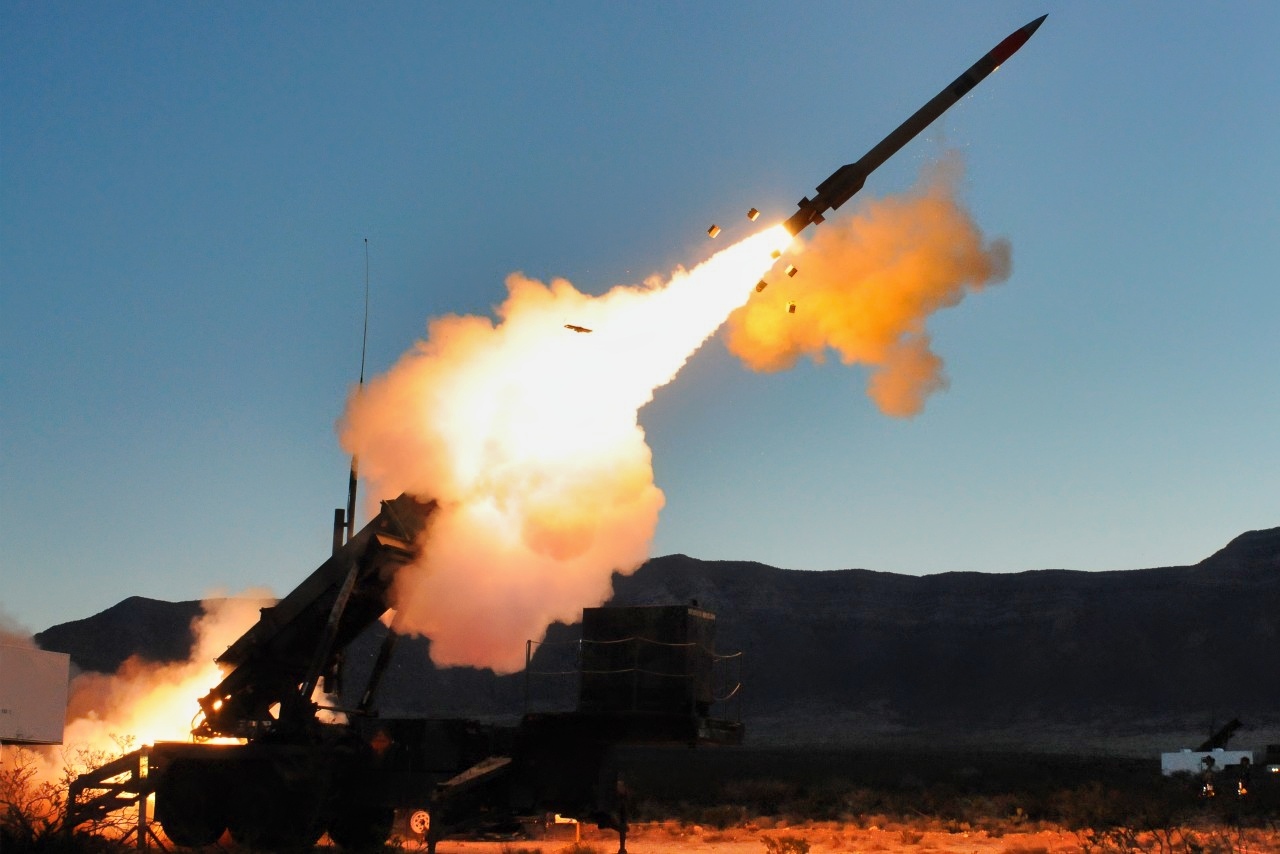
The PAC-3 MSE is a highly sought-after air defense munition due to its advanced capabilities and versatility. As a next-generation interceptor, it offers improved range, speed, and maneuverability, making it an effective counter to a wide range of threats, including tactical ballistic missiles, cruise missiles, and aircraft. (Official U.S. Army photo)
For the second time in recent weeks, the Russian president appeared to publicly acknowledge the success of recent Ukrainian escalation, telling state television that Ukrainian strikes are causing a shortage of fuel.
“As for strikes against critical infrastructure in general, and energy infrastructure in particular, of course, these attacks on our infrastructure facilities create problems,” Putin said. “Right now we’re observing a certain shortage, but it’s not critical.”
Putin sought to downplay the damage being done, but also revealed measures being taken to prevent further strikes on its oil infrastructure. To date, the strikes have cut Russian oil refining capacity by around 25%, putting huge strain on the domestic fuel market and cutting Russia’s ability to refine and export petroleum products – a crucial element of its wartime economy.
Russia is now reportedly facing a supply shortfall of 15%, and with more than a month of Ukrainian strikes to go, that figure could rise dramatically in the coming weeks depending on how capable Russian forces prove to be at defending critical infrastructure.
During the same interview, the Russian president announced that the government’s primary focus is now on improving Russian air defense capabilities to protect critical infrastructure and ensure that fuel supplies reach consumers.

German soldiers assigned to Surface Air and Missile Defense Wing 1 fire the Patriot weapons system at the NATO Missile Firing Installation (NAMFI) during Artemis Strike Nov. 7 in Chania, Greece. Artemis Strike is a German-led multinational air defense exercise. German soldiers, over 200 U.S. soldiers, and approximately 650 German airmen will be participating in the realistic training within a combined construct, exercising the rigors associated with force projection, and educating operators on their air missile defense systems. (Photo By Officer Candidate Sebastian Apel, Air Defense Missile Group 24)
Putin said that there was a particular focus on Crimea, the annexed peninsula that now faces critical fuel shortages and electricity blackouts caused by Ukrainian drone and missile bombardments. Crimean authorities also declared a state of emergency last week.
Putin Vows to Restore Security
Only hours before the interview, the Russian president sought to reassure the Russian public that he was doing all he could to protect against Ukrainian escalation. Putin addressed a crowd of United Russia party members and insisted that Russia can overcome the worsening Ukrainian strikes.
“Yes, we see the problems, we are aware of them and are responding to them, but we will certainly ensure the security of both the country and our citizens, as well as the inviolability of Russia’s borders,” Putin said.
“We will undoubtedly overcome all the challenges facing us today, including terrorist attacks on our territory and infrastructure facilities,” he continued.
A Return to Talks
Putin also used the interview to signal what may come next. The Russian president hinted that once U.S. military operations in the Middle East end, negotiations with Ukraine may resume with Washington’s participation.
Putin said that he expects White House special envoy Steve Witkoff and President Donald Trump’s son-in-law Jared Kushner to return to Moscow after the “active phase” of the Middle East conflict has passed. He also said that Russia is ready to continue discussions – a comment he made earlier this month when he indicated that discussions could continue based on the conditions outlined during the last round of talks in Istanbul.
On Monday, June 29, the Kremlin once again said that Russia has not changed its stance on the conditions required for a peace deal in Ukraine. Speaking to reporters, Kremlin spokesman Dmitry Peskov said that Russia’s position is “well known.”
“In fact, our position has not changed. It was set out two years ago by our Head of State in a speech at the Ministry of Foreign Affairs. It is well known to the Kyiv regime, it is well known to the American negotiators, and it is entirely consistent,” Peskov said.
Washington May Be the Preferred Option
Facing the prospect of losing yet more energy infrastructure to Ukrainian strikes, now would be the time for the Russian president to come back to the negotiating table and make concessions – but Putin and the Kremlin have made it clear that won’t happen.
Something, however, still needs to change – and talks with Washington may be the only way to achieve a deal. The Trump administration, per Putin’s remarks, appears to be the preferred route toward a negotiated settlement.
Negotiating via Washington would offer major political advantages for Putin, because direct negotiations that require Russia to scale back its ambitions in Ukraine could be seen domestically as Moscow yielding to a smaller adversary after more than four years of war. A settlement negotiated through Washington, however, allows the Kremlin to present compromise as pragmatism and an example of working with the international community to secure the interests of the Russian people and bring about peace.
Putin specifically referred to last year’s talks in Anchorage, Alaska, stating that Russia was prepared to continue discussions on the topics discussed there. But if that really is the way to bring the conflict to an end, it makes the war in Iran even more consequential – because a deal may not be possible until Iran has agreed to a similarly hard-to-negotiate deal with the U.S.
About the Author: Jack Buckby
Jack Buckby is a British researcher and analyst specializing in defense and national security, based in New York. His work focuses on military capability, procurement, and strategic competition, producing and editing analysis for policy and defense audiences. He brings extensive editorial experience, with a career output spanning over 1,000 articles at 19FortyFive and National Security Journal, and has previously authored books and papers on extremism and deradicalization.


