

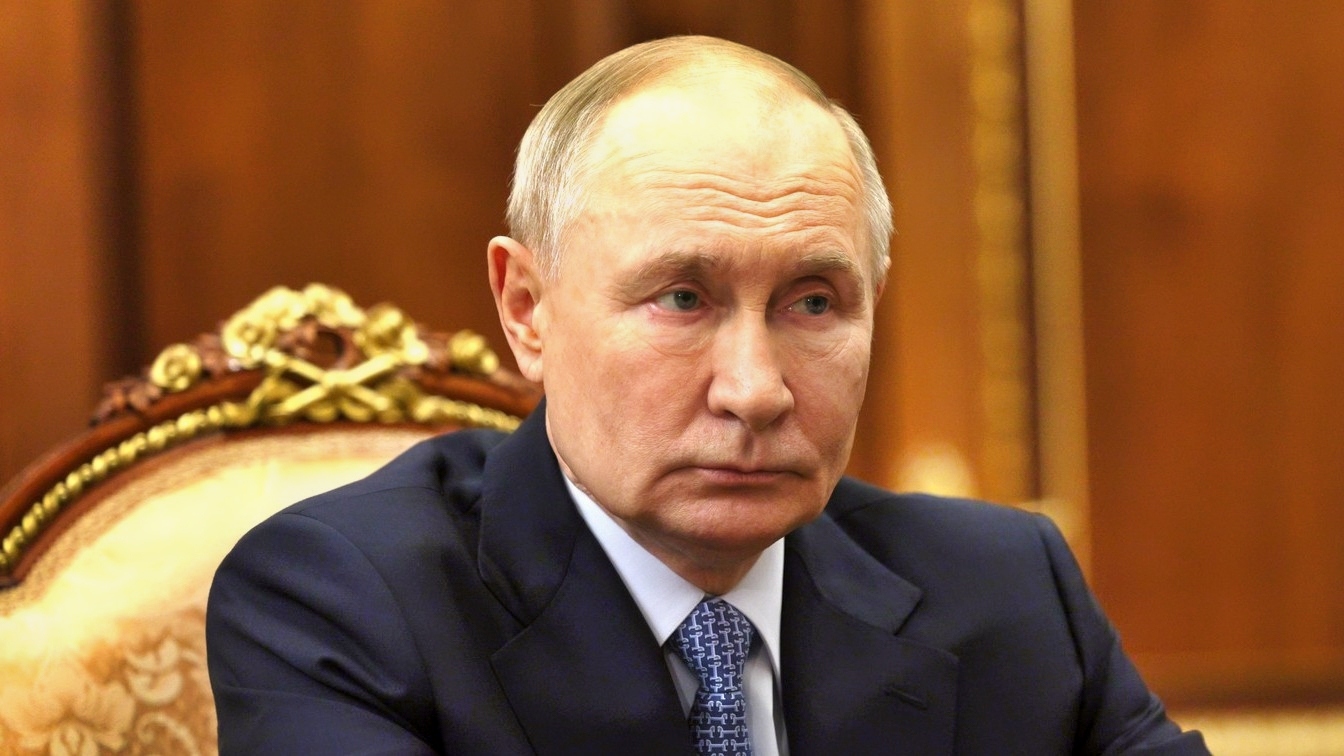
Russian President Vladimir Putin has finally admitted on Sunday that Russia is facing fuel shortages due to waves of Ukrainian drone attacks deep inside the country.
However, it was three weeks ago that Russia’s energy ministry stated that Ukrainian drone attacks on oil refineries and energy infrastructure are the cause of fuel shortages in Crimea and parts of southern Russia.

T-84 Tank Ukraine. Image Credit: Creative Commons.
The Moscow Times reported that the country’s energy ministry said fuel and energy facilities have faced an increase in aerial attacks in recent months, leading to disruptions in fuel resupply.
“Recently, fuel and energy sector enterprises have faced an uptick in enemy aerial attacks, leading to temporary difficulties with fuel supplies in several southern regions,” the Energy Ministry said in a released statement.
Putin Claims Energy Shortage, “Not Of A Critical Nature”
Speaking on Russian state television late on Sunday, Putin acknowledged for the first time that Ukrainian attacks on energy infrastructure were the cause of domestic fuel shortages. “Of course, they create problems; that’s obvious,” Putin said. “Right now we’re observing a certain shortage, but the problems that have arisen are not of a critical nature.”
This television appearance came on the heels of a meeting Putin chaired with members of the energy ministry, where he discussed the fuel distribution situation and said a ban on diesel exports was under consideration.
Putin said that to ease the shortages, Russia would boost foreign fuel imports, while redoubling efforts to protect refineries from Ukrainian drone strikes and restore damaged infrastructure as quickly as possible.
Due to the increased drone attacks by Ukraine, which are growing in both intensity and success, Russia is redeploying air defense systems from frontline units to protect Moscow and its oil and gas refineries.
Russia’s Priorities Are Protecting Fuel, And Crimea’s Bridges
During the interview with Russian state-run television, Putin said that Russia’s immediate priorities were strengthening air defenses and maintaining fuel supplies, particularly to Crimea, which declared a state of emergency on Friday.
Sergei Aksyonov, the Russian-installed governor of the annexed region, announced the emergency declaration on social media, acknowledging that Crimea’s energy supply “remains difficult” and that he hoped Sevastopol’s supply would be fully restored.
“We are going through a difficult period, but this has taught us a great deal and allowed us to grasp the very essence of what it means to be a Russian citizen,” Putin said to the United Russia party congress in a speech earlier on Sunday.
“Yes, we see the problems; we are aware of them and are responding to them, but we will certainly ensure the security of both the country and our citizens, as well as the inviolability of Russia’s borders,” Putin added.
“We will undoubtedly overcome all the challenges facing us today, including terrorist attacks on our territory and infrastructure facilities,” he said.
Ukraine’s Drone Strikes On Russia’s Energy Infrastructure
Ukrainian long-range drone strikes on Russian oil and gas facilities have intensified significantly, targeting key energy infrastructure and forcing production halts across the country.
These coordinated attacks, aimed at crippling Moscow’s war economy, have become a near-daily occurrence, resulting in widespread domestic fuel shortages and forcing the Kremlin to implement rationing.
On Sunday, a Ukrainian drone attack set fire to another major Russian oil refinery in Slavyansk-na-Kubani, a town in Russia’s Krasnodar region, east of occupied Crimea, according to regional Governor Veniamin Kondratyev.
The refinery processes more than four million tons of crude oil every year, and It is also a key source of petroleum products intended for export through Russia’s Black Sea ports, including fuel oil, naphtha, and marine fuel.
Long Lines At Gas Stations, Suspension Of Rail Services
Photos from Crimea last week showed long lines at local gas stations as people waited their turn due to fuel shortages.
On Monday, Russia suspended rail service for Crimea after another Ukrainian drone strike knocked out a locomotive, wounding the engineer and killing his assistant, which has further impacted commerce in the occupied territory.
Ukrainian drones are also hitting fuel trucks on the highway that supplies Crimea. Gasoline shortages are also being reported in Russian-occupied areas of Luhansk and Donetsk. According to the BBC, Ukraine has conducted over 300 drone strikes on fuel trucks.
Zelenskyy’s 40-Day Influence Operation
A few days ago, Ukraine’s President Volodymyr Zelenskyy said he approved a plan for Ukraine’s State Security Service (SBU) to launch a 40-day operation aimed at “pressuring Russia to end the war.”
“For several months in a row, the SBU has demonstrated the highest performance in defending Ukraine’s positions on the front lines through the use of various types of drones,” Zelensky said on Thursday.
”In practice, these are the two areas the Russians have been ordered to defend at the expense of weakening other sectors of their territory and the temporarily occupied territories of Ukraine,” Zelenskyy added, as Russian forces were redeploying air defenses to protect critical infrastructure by weakening their frontline positions.
Putin Expects US Envoys To Travel To Moscow Soon
Putin also broached the subject of renewed peace negotiations with the United States acting as a mediator between Russia and Ukraine.
In the television interview, Putin said he expects White House special envoy Steve Witkoff and Jared Kushner to visit Moscow after the “active phase” of the war in the Middle East has passed.
Witkoff and Kushner have traveled to Russia several times over the past year as part of U.S.-mediated talks to end the war in Ukraine.
“We are ready to continue negotiations… and discuss all the details,” Putin said in response to a question about the trajectory of U.S.-Russia relations following the G7 summit in France, where Trump called on Russia to “make a deal with Ukraine.”
However, he continues to insist that the Russian invasion is going well, adding that Russian forces were “achieving the main task at hand – the final liberation of Donbas and Novorossiya,” the Russian traditional term for southern Ukrainian regions of Zaporizhzhia oblast and Kherson oblast.
About the Author: Steve Balestrieri
Steve Balestrieri is a National Security Columnist. He served as a US Army Special Forces NCO and Warrant Officer. In addition to writing on defense, he covers the NFL for PatsFans.com and is a member of the Pro Football Writers of America (PFWA). His work was regularly featured in many military publications.


