

Ukraine’s long-range strike campaign against Russia is not only hitting the headlines and introducing Russian citizens to the economic consequences of the war – it’s also beginning to reshape the behavior of some of Moscow’s closest partners.
Overnight on June 28, Ukrainian forces launched a barrage of long-range missile and drone strikes against Russia, targeting two oil refineries hundreds of kilometers from the front lines. Ukrainian President Volodymyr Zelenskyy confirmed that the Sloviansk oil refinery in Krasnodar and another refinery in the Yaroslavl region were hit, describing it as a continuation of Ukraine’s “long-range sanctions” campaign.
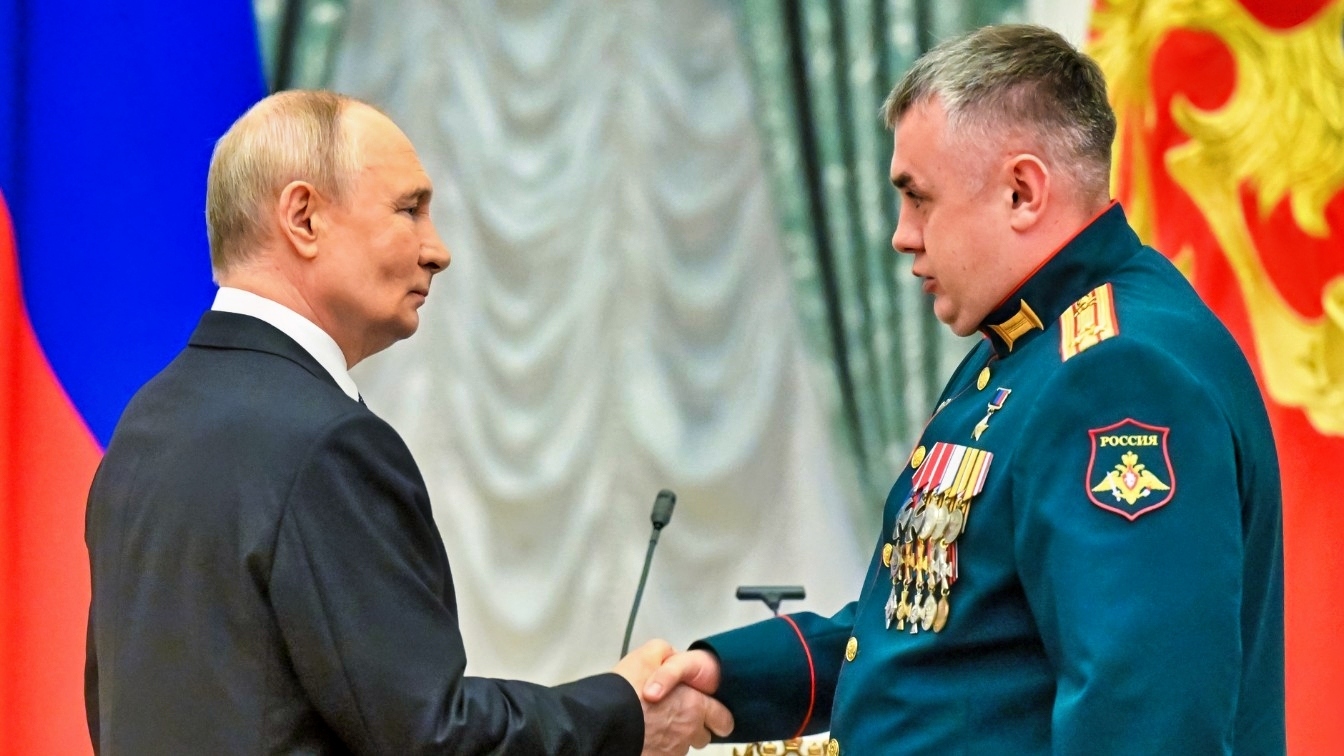
Putin and Russian Military Creative Commons Image
Russian authorities not only acknowledged the damage at the facilities, but President Vladimir Putin also acknowledged the strikes are causing “problems” in comments to state media over the weekend.
With Ukraine’s domestically produced long-range missiles and drones now threatening targets deep inside Russia, it is perhaps not surprising that Russia’s allies are looking at the war in a different light. What once seemed like an almost certain victory could soon prove an enormous embarrassment for Russia – and perhaps the biggest military miscalculation in modern history.
Russia’s Partners Face Difficult Choices
As Ukraine poses a greater threat to Russia’s energy infrastructure, Moscow has turned to friendly governments for support. One such request went to Kazakhstan after Ukrainian attacks significantly degraded Russian gasoline production.
Reports revealed that Moscow was seeking 50,000 metric tons of AI-92 gasoline to help offset domestic shortages. And at the same time, Belarus has continued to provide Russia with important strategic support throughout the war despite its leader, Alexander Lukashenko, insisting his country is generally neutral.
For years, the Kremlin has hoped that Belarus would play a more direct military role in the conflict – much in the same way it thought China might provide more support than it (officially) has. But Lukashenko stopped short of committing Belarusian troops.
That being said, military communications infrastructure was positioned north of Ukraine inside Belarusian territory – and that arrangement only came to an end in recent days after Kyiv publicly warned it would no longer tolerate it.
Zelenskyy’s Ultimatum
Speaking on June 19, Zelenskyy accused Belarus of permitting Russia to operate equipment on its territory that “corrects fire on Ukrainian civilians, specifically civilians.” Zelenskyy gave Minsk a deadline to remove the equipment, stating, “I think one week will be enough.”
“If he doesn’t do that, we will,” he also said – a comment that was widely interpreted as a warning that Ukraine may launch military strikes against the assets on Belarusian territory.
Zelenskyy was referring to relay stations installed on Belarusian soil that Ukraine says have helped Russian drone operators to communicate with aircraft flying deep into Western Ukraine.
Lukashenko initially responded defiantly, warning that any Ukrainian strike on Belarusian territory would change the nature of the conflict. Speaking about a call with Ukrainian officials, Lukashenko claimed that he told officials, “Boys, you go tell your president that if he thinks he can talk to us this way and force us into the war, then he has to understand that the quality of the war will change momentarily. It will be an absolutely different war.”
Lukashenko also said that “in any situation, we will be next to Russia.”
Days later, Zelenskyy announced that the relay stations were no longer functioning. The Ukrainian president did not indicate whether the stations had been destroyed, switched off, or moved.
“Based on the available information reported to me by the Commander-in-Chief [of the Armed Forces of Ukraine, Oleksandr Syrskyi] and intelligence services, the relevant signal repeaters stopped operating on the territory of Belarus on 22 June,” Zelenskyy said at a press conference.
“I don’t know yet whether they have been dismantled, to be honest. But we are working on this, and I am keeping a very close eye on the situation and receiving daily reports. It is a fact that the signal repeaters are not operating today.”
Kazakhstan Is Hesitant
Belarus isn’t the only Russian partner facing difficult decisions.
When Ukrainian strikes damaged multiple Russian refineries and cut refining capacity by roughly one-quarter, Russia reportedly approached Kazakhstan to seek emergency fuel supplies to help stabilize the domestic market. Moscow is said to have requested around 50,000 metric tons of AI-92 gasoline.
As of June 29, Kazakhstan has not rejected the request outright, but it has also not committed to supplying the fuel. The hesitation is perhaps not surprising: supporting Russia at this stage may risk escalation.
Only days ago, Kyiv was threatening Belarus with military strikes unless it stopped assisting Russia.
Ukraine Is Changing the Game
Ukraine’s long-range strike campaign is far from over and could well force Russia into a position where it needs greater support from its allies.
But in raising the stakes of the war and imposing costs on Russia and those willing to assist it, Ukraine is reshaping the strategic calculations of some of Russia’s closest partners – and, in turn, making its long-range strikes even more effective in the long term.
About the Author: Jack Buckby
Jack Buckby is a British researcher and analyst specializing in defense and national security, based in New York. His work focuses on military capability, procurement, and strategic competition, producing and editing analysis for policy and defense audiences. He brings extensive editorial experience, with a career output spanning over 1,000 articles at 19FortyFive and National Security Journal, and has previously authored books and papers on extremism and deradicalization.


