


Iran’s parliament speaker and chief negotiator, Mohammad Bagher Ghalibaf, told state television on Tuesday that Tehran is prioritizing diplomacy with the United States while remaining, in his words, “prepared for war and will respond accordingly.”
He framed it as a dual track, dialogue first and force if the talks collapse, and he delivered it as Iranian and American delegations arrived in Doha for the latest round aimed at salvaging the agreement that paused nearly four months of fighting.
The warning was not abstract.
US Central Command struck Iran on Friday and Saturday over Iranian attacks on two commercial vessels in the Strait of Hormuz, and Iran answered with missiles and drones aimed at US forces in Bahrain and Kuwait before both sides agreed to stand down.
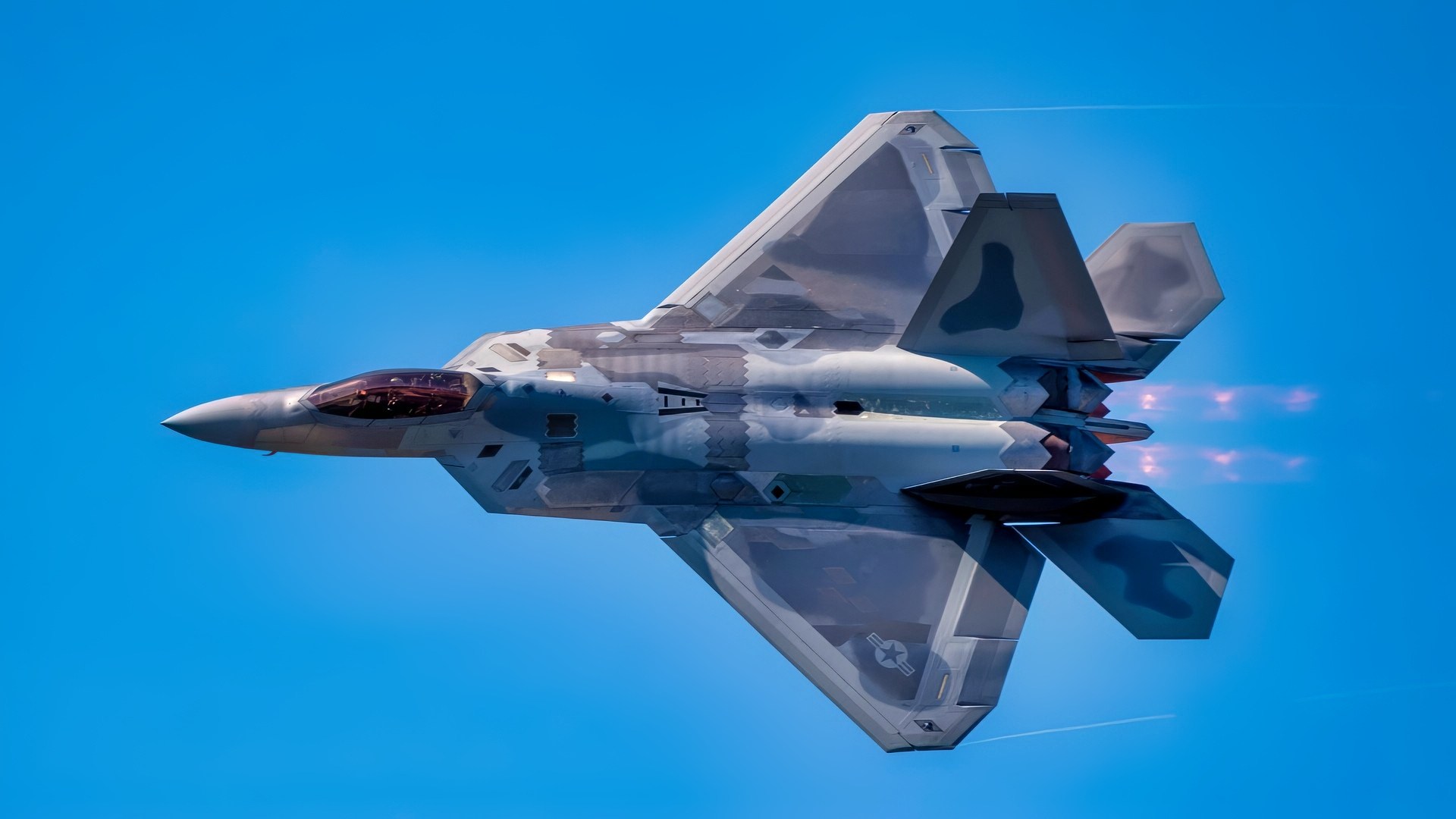
VIRGINIA BEACH, Va. (Sept. 20, 2025) The United States Air Force F-22 Demo Team performs at the 2025 Naval Air Station (NAS) Oceana Air Show aboard NAS Oceana, Sept. 20, 2025. The show’s theme celebrated 250 years of America’s navy and featured performances highlighting the precision, power, and innovation of naval aviation. (U.S. Navy photo by Mass Communication Specialist Seaman Apprentice Oliver McCain Vieira)
That exchange, one of several since the April ceasefire, is the backdrop to Ghalibaf’s message.
The guns have gone quiet again, but the peace is thin, and what keeps both governments at the table is oil, not trust.
Why Iran and the United States Both Need the Oil Flowing
For Iran, the calculation is direct.
Ghalibaf said the country could not ship a single barrel during the US naval blockade of its ports, and that exports have surged since it ended, claiming Iran has moved more than 40 million barrels in the weeks since.
Oil revenue is the lifeline of an economy ground down by war and sanctions, and relief from US sanctions on Iranian crude, along with the release of billions in frozen assets, sits at the center of what Tehran wants before it agrees to anything final. The June 17 memorandum that paused the war opened a 60-day window to reach a settlement, and that clock is running against a steady drip of strikes.
Washington’s stake runs the other way, but it matters just as much. The United States is a net oil exporter and buys none of Iran’s crude, so its worry is not Iranian supply but the global price.

A U.S. Air Force F-22A Raptor aircraft assigned to the 27th Expeditionary Fighter Squadron flies above the guided missile destroyer USS Preble (DDG 88), not pictured, during an air defense exercise in the Philippine Sea Sept. 24, 2013. The Preble was part of the George Washington Carrier Strike Group and was underway in the U.S. 7th Fleet area of responsibility supporting maritime security operations and theater security cooperation efforts. (U.S. Navy photo by Mass Communication Specialist 3rd Class Paul Kelly/Released)
About a fifth of the world’s seaborne oil moves through the Strait of Hormuz, and the war pushed crude sharply higher this spring, feeding inflation and weakening US consumer confidence at home.
The memorandum answered both needs at once, suspending US sanctions on Iranian oil while reopening the strait and lifting the American blockade.
Each side got something it needed on oil, which is the main reason neither has walked away from the deal despite the strikes.
The Strait of Hormuz and the Price of the War
The strait is why a Gulf war shows up at gas pumps worldwide.
The Congressional Research Service estimates that roughly 27% of the world’s seaborne crude and petroleum trade passes through the narrow strait between Iran and Oman, with no pipeline network capable of replacing it at scale. Markets have moved on every headline.
Brent crude rose to about $73 a barrel on Monday after the weekend strikes revived doubts about shipping returning to normal, nearly erasing the entire premium it had built up during the war.
Prices now sit only modestly above where they were before the fighting, though analysts caution they may not fully recover this year, because damaged energy infrastructure needs repair and getting tankers back through the strait at full volume will take months.
A Fragile Ceasefire Neither Side Fully Trusts
The stand-down has not settled the core fight. Iran still insists the strait is under its control and is pressing a demand that passing ships follow Iranian instructions and pay tolls, which Washington rejects outright.
Trump warned that Iran “will no longer exist” if the strikes resume, and Tehran has threatened to halt the diplomatic process entirely over any ceasefire violation.
The Doha session itself is a lower-level technical round led by US envoy Steve Witkoff and Iran’s deputy foreign minister, not the senior talks, and Iran has played it down publicly, denying that formal negotiations were even scheduled and insisting its delegation is there only to discuss the return of its frozen funds.
The cost has kept rising while the diplomacy stalls, with 13 civilian mariners killed in Hormuz-area incidents since the April ceasefire.
Former US energy adviser Amos Hochstein has argued that Iran will effectively control the strait for the foreseeable future, no matter what any agreement says, a judgment Gulf governments and oil traders have already absorbed.
For now, the crude is moving, and the missiles are holstered, and both Tehran and Washington have reason to keep it that way, at least until the next incident in the strait tests how much either side means what it says.
About the Author: Harry J. Kazianis
Harry J. Kazianis (@Grecianformula) was the former Senior Director of National Security Affairs at the Center for the National Interest (CFTNI), a foreign policy think tank founded by Richard Nixon based in Washington, DC. Harry has over a decade of experience in think tanks and national security publishing. His ideas have been published in the NY Times, The Washington Post, The Wall Street Journal, CNN, and many other outlets worldwide. He has held positions at CSIS, the Heritage Foundation, the University of Nottingham, and several other institutions related to national security research and studies. He is the former Executive Editor of the National Interest and the Diplomat. He holds a Master’s degree focusing on international affairs from Harvard University.


