

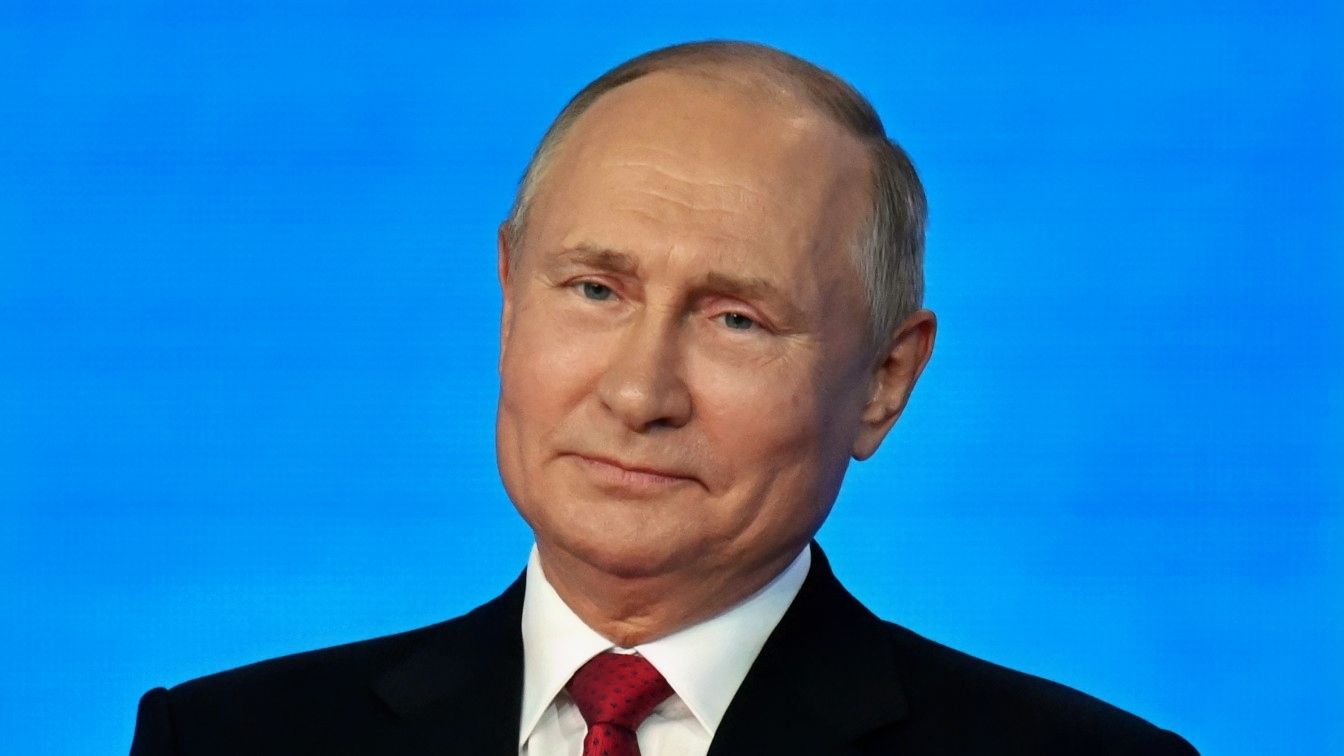
Ukraine’s top general says Vladimir Putin has ordered the Russian General Staff to draw up plans for a new offensive that includes capturing Kyiv. Speaking on the TSN telethon on June 30, Commander-in-Chief Oleksandr Syrskyi said Putin tasked his General Staff with calculating several options for a renewed assault, one of them launched from Belarusian territory and aimed at the Ukrainian capital.
The claim is real and alarming on its face. It is also, read in full, a warning about contingency plans on paper rather than an army massing to march on Kyiv, and the general who disclosed it spent most of the same interview explaining why the capital is not the likely target.
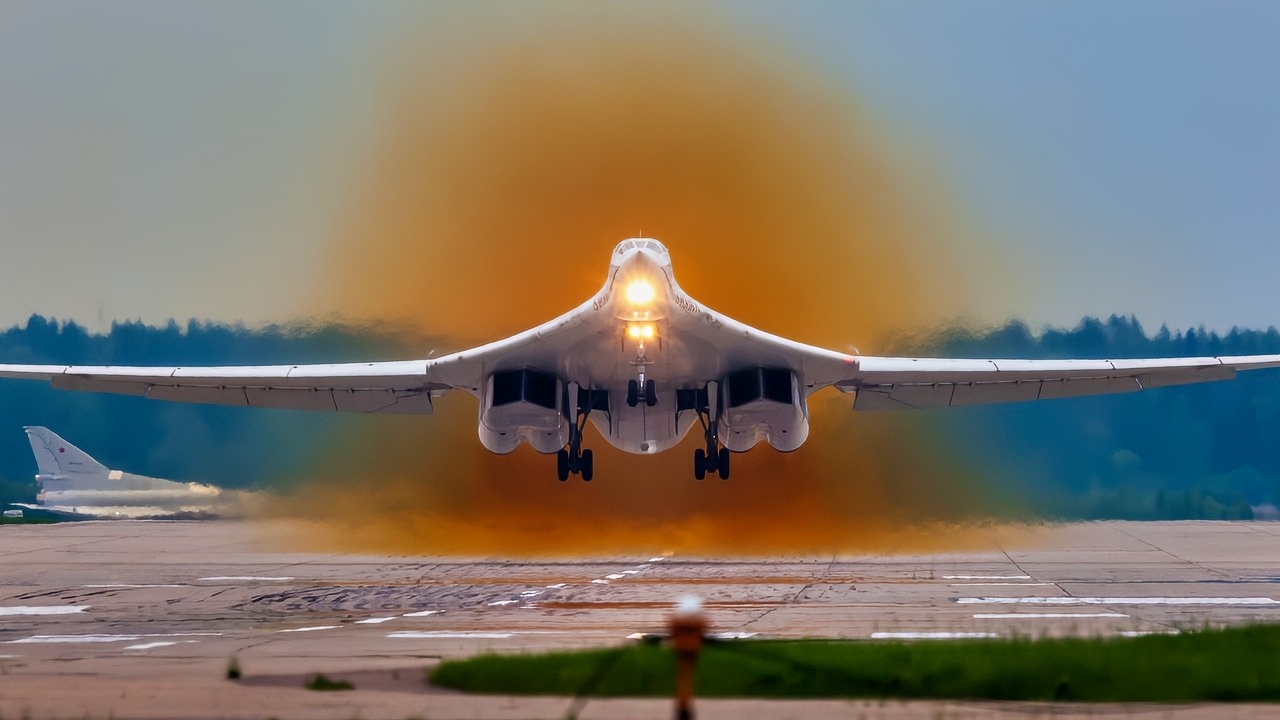
Tu-160 Bomber from Russia. Image Credit: Creative Commons.
What Syrskyi Actually Said About Russia’s Offensive Plans
Syrskyi laid out a layered picture rather than a simple alarm.
He confirmed the General Staff had prepared several courses of action for a northern offensive, including the Belarus route toward Kyiv, and then qualified it at once. “How realistic they are is another matter,” he said.
He does not expect Belarus to take part, judging that its leadership would not risk allowing Russia to use its territory as a springboard again, and he noted that no buildup capable of actually launching an invasion has been observed on the Belarusian border.
Instead, he pointed to a far narrower scenario as the probable one: an offensive from Russia’s Bryansk region into the Chernihiv region, not a march on the capital, aimed at stretching the front line and forcing Ukraine to pull reserves away from the sectors where its own troops are on the attack.
The purpose would be to seize border ground and thin Ukrainian defenses elsewhere, which is a very different operation from taking Kyiv.
Why a New Russian Drive on Kyiv Is Hard to Credit
The gap between the plan and Russia’s capacity is the heart of the story. After more than four years of war, Russian forces cannot close out the objective they have been grinding at for a year. President Volodymyr Zelensky said this week that Russia has now set its fifteenth deadline to fully capture Donetsk, pushing the target to December 31. Independent analysts describe a force that can still attack but can no longer convert tactical gains into operational breakthroughs.
One June assessment of the roughly 1,200-kilometer front found Russian momentum increasingly constrained, with the war settled into a strategic stalemate. Ukraine is also degrading Russia’s ability to concentrate forces in the first place.

Tu-160 Bomber. Image Credit: Creative Commons.
The Institute for the Study of War reported that Ukrainian drone strikes in the Pokrovsk direction are blocking Russian troop rotations and hindering Moscow’s ability to accumulate personnel and equipment, while long-range Ukrainian strikes on refineries have driven gasoline shortages inside Russia.
ISW has also assessed that Russian gains around Kostyantynivka remain limited to small-group infiltrations that do not yield consolidated control. A military that cannot reliably rotate troops into a single contested town, and cannot finish off Donetsk after fifteen self-imposed deadlines, is not positioned to open a second front against a capital defended by hundreds of thousands of troops.
The Belarus Standoff and the Real Threat to Chernihiv
The Belarus question is where the Kyiv scenario lives or dies, and the signals there run counter to Moscow. ISW assessed that the Kremlin may seek to invoke the Union State collective security treaty to draw Belarus into the war and tap its manpower, but Minsk has held back.
Belarusian leader Alexander Lukashenko has said he does not want to fight Ukraine, and Ukrainian intelligence reported that Belarus switched off the signal repeaters on its territory that Kyiv says had helped guide Russian drone attacks.
Terrain adds another obstacle, with marshland along the border and dismantled bridges making a heavy mechanized push from the north difficult. What is not in doubt is the near-term danger to Chernihiv.
Ukrainian authorities ordered a mandatory evacuation of the roughly 1,000 residents still in the border zone beginning today, July 1, and U24 reported the order covers 12 settlements, with evacuation extended for seven more that had been cleared during the winter. That tracks the pattern already visible farther east in Sumy, where Russia has pressed a costly buffer-zone push aimed at diverting Ukrainian reserves rather than breaking through.
The distance between a war plan and the means to execute it is the whole point here. Putin can order the General Staff to keep a Kyiv scenario ready on paper, and Russia can probe northern Ukraine to force Syrskyi to spend reserves he would rather hold in the Donbas.
Neither is the same as assembling the force needed to take a city that Russia failed to seize in 2022 with a larger, fresher army.
For the civilians in Chernihiv’s border villages being moved out this week, the threat is real, whatever the plan is called, and the coming weeks along the Bryansk and Belarusian frontiers will show whether Moscow is preparing a limited land grab or working to make Ukraine believe a larger one is coming.
About the Author: Harry J. Kazianis
Harry J. Kazianis (@Grecianformula) was the former Senior Director of National Security Affairs at the Center for the National Interest (CFTNI), a foreign policy think tank founded by Richard Nixon based in Washington, DC. Harry has over a decade of experience in think tanks and national security publishing. His ideas have been published in the NY Times, The Washington Post, The Wall Street Journal, CNN, and many other outlets worldwide. He has held positions at CSIS, the Heritage Foundation, the University of Nottingham, and several other institutions related to national security research and studies. He is the former Executive Editor of the National Interest and the Diplomat. He holds a Master’s degree focusing on international affairs from Harvard University.


high-end faight
July 2, 2026 at 2:32 am
Nowadays, as kyiv’s nazi troopers at the eastern front frontlines are seen busily backpedaling, western reports about Putin doing this and that, and also suffering from this and that, circulate most furiously.
Putin today is a large massive anchor hanging around Russia’s neck, and he needs to go. ASAP.
However, any plan to take kyiv needs the use of tactical nukes, and this is the one thing Putin is very extremely scared of.
A plan to take Kyiv and crush Ukraine, is exactly what pacom would plan to do in the western Pacific. Tomorrow, or maybe, starting tonight.
But both plans require the use of tactical nukes.
In the western Pacific, the pacom plan is called ‘the high-end fight’, a plan that entails crushing the PLA plus crushing the morale of the Chinese masses. By use of tactical nukes.
The big question here now is – Putin now today has become as resolute as pacom is.
UNLIKELY.