

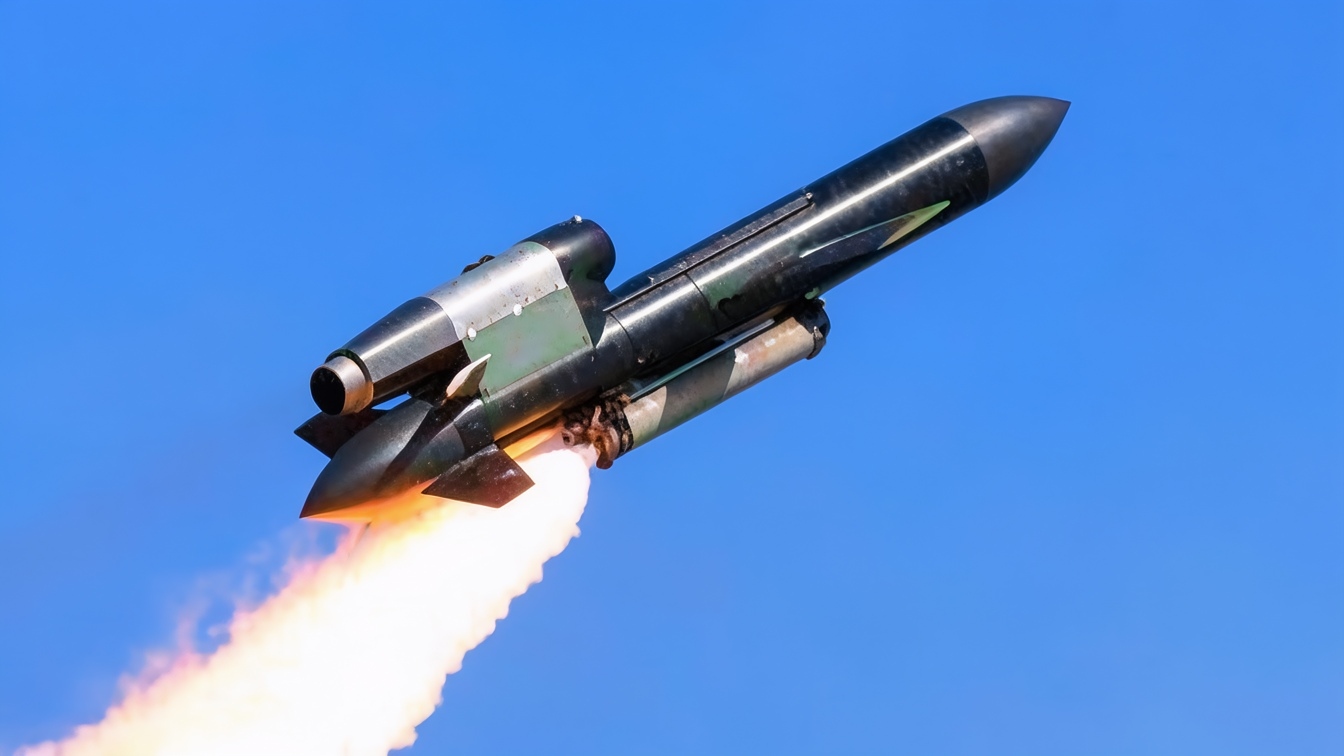
Pro-Russian milbloggers have reported on the Telegram app that its air defenses may have intercepted a “long-range operational-tactical missile” launched by Ukraine.
While Russian and Ukrainian authorities have not publicly confirmed any such launch, what is known is that Russian air defense systems engaged and intercepted a target at an unusually high altitude during an alert on June 30.
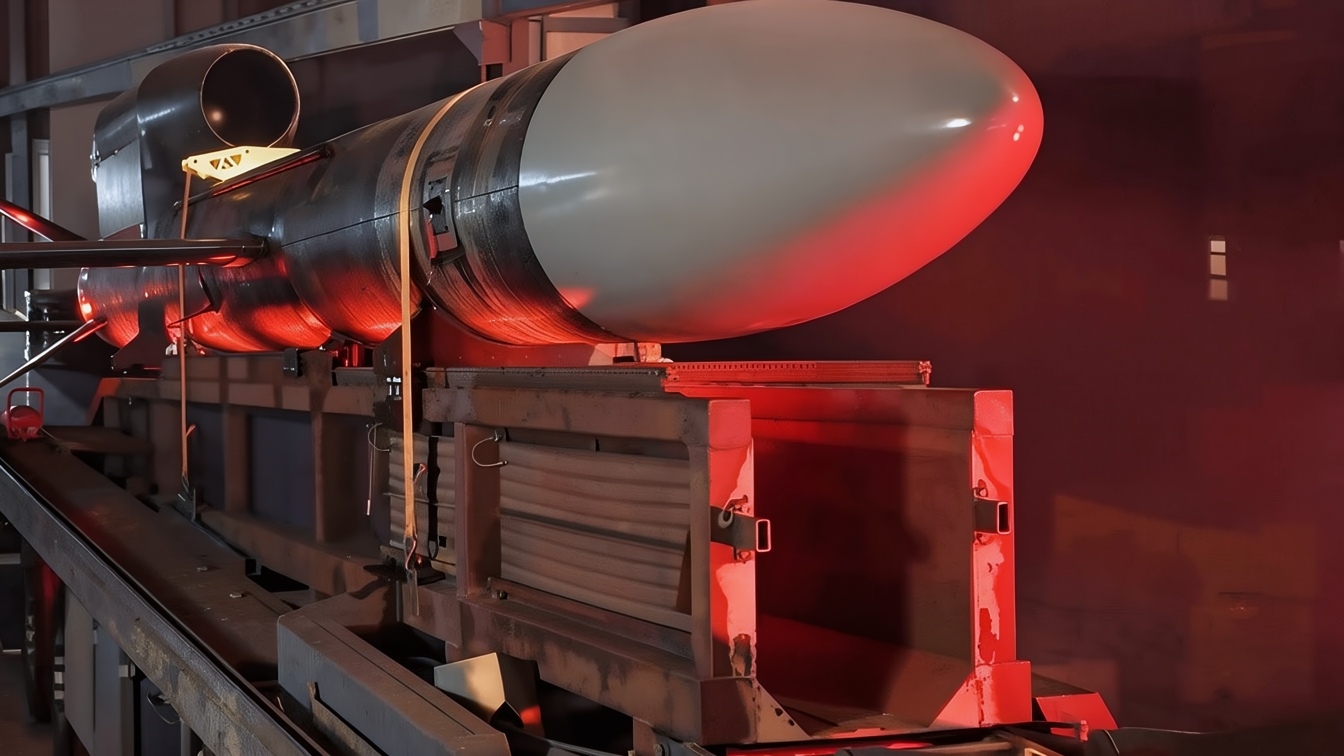
Ukraine Cruise Missile 2026. Image Credit: Creative Commons.
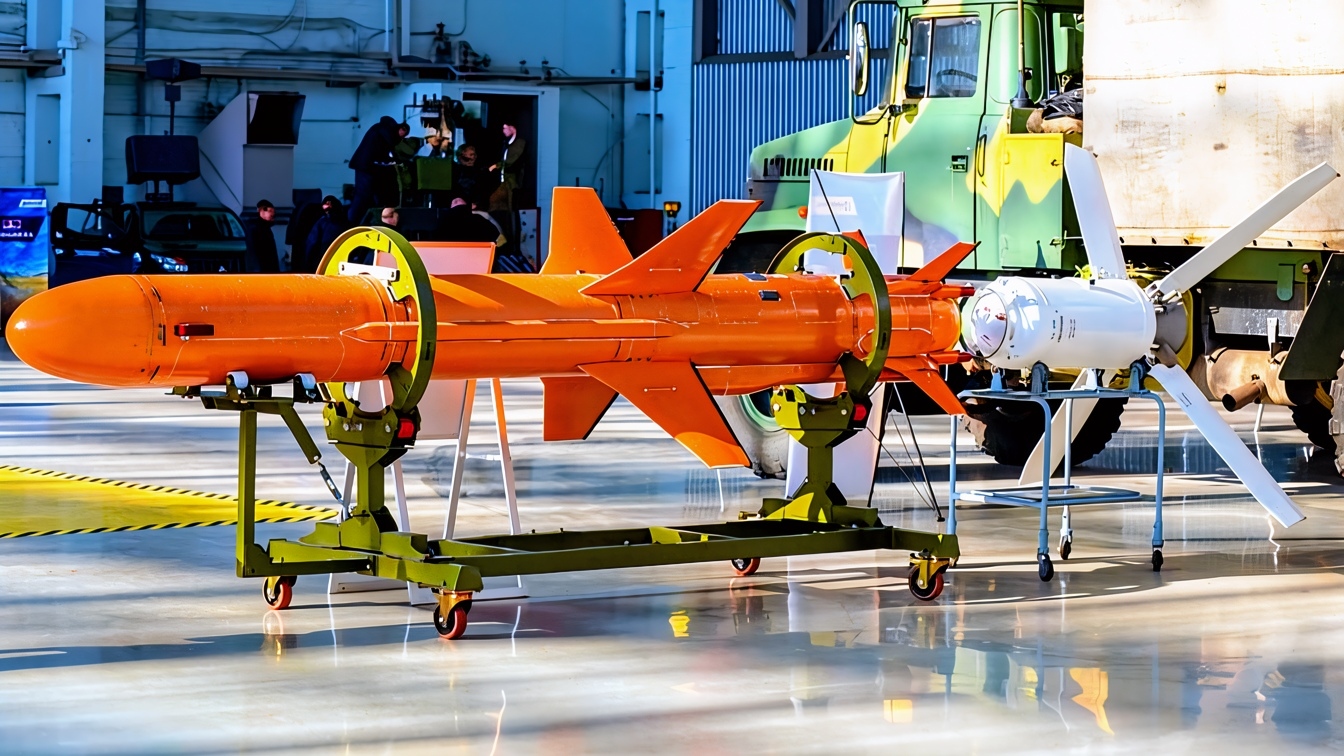
Neptune Cruise Missile Ukraine Government Photo
If true, the introduction of medium-range ballistic missiles would be a significant factor in the ongoing war with Russia.
However, Ukraine has been making significant strides in its domestic missile industry, including the development of the R-360 Neptune and FP-5 Flamingo cruise missiles.
What Is Known About The Incident Thus Far
United 24 media reported that a pro-Russian Telegram channel, Voyennyy Osvedomitel, reported that Russian S-300 and S-400 air defense systems engaged a target at high altitude, shooting it down.
Voyennyy Osvedomitel (Military Informant) is a prominent, pro-Russian military news and analysis channel. It primarily operates on Telegram, offering detailed commentary, imagery, and tactical updates on the ongoing war in Ukraine, Russian defense procurement, and global military operations.
The site acts as a major “milblogger” channel with an audience of over 600,000 subscribers, serving as a primary voice for Russian military watchers.
While it is staunchly pro-Russian and supports the war effort, the channel frequently offers objective—and occasionally critical—assessments of Russian military command, strategy blunders, and equipment failures.
The pro-Russian milblogger site reported that a large impact crater was discovered: “It is not excluded that this could be an intercept of a Ukrainian ballistic missile, but so far there is little information for unambiguous conclusions — only indirect signs.”
Footage showing a smoke plume and a column of smoke near the presumed crash site was also published by the Ukrainian monitoring channel Exilenova+.
The Defence Blog reported that Russia’s Ministry of Defense confirmed that its air defenses intercepted a long-range operational-tactical missile but did not specify where the intercept took place or identify the missile type.
The Ukrainian OSINT group CyberBoroshno later geolocated the crater near the village of Yudanovka in Moscow Oblast, along the Warsaw Highway corridor southwest of Moscow.
Was The Intercepted Weapon An FP-9 Ballistic Missile?
Bloomberg also reported that the Russian Defense Ministry, in its Thursday daily briefing, said its air defenses intercepted a “long-range operational-tactical missile” within the past 24 hours, along with 7 guided aerial bombs and 602 fixed-wing drones.
The FP-7 and FP-9 ballistic missile concepts were both unveiled in 2025.
The long-range FP-9 is reported to be capable of striking targets approximately 850 kilometers (528 miles) away with high accuracy when launched from a ground-based platform, using an 800 kg payload. It reportedly travels at speeds greater than Mach 7.
Israel Hayom reported that the long-range strike on Tuesday inside the Russian capital was caused by an FP-9 ballistic missile, after no air raid siren was heard and interceptions were observed at high altitude.
The report added that Firepoint’s chief designer and co-founder, Denys Shtilerman, who manufactures the FP-9, said the missile was undergoing final engine tests and that it was planning to test it against Moscow soon.
“We have everything for the FP-9, which can reach Moscow, except the engine,” Shtilerman said. “We will test the engine this month and expect to begin test flights soon. As soon as a test flight shows that everything is working properly, the next flight should be launched toward Moscow.”
Other pro-Russian Telegram channels, including Pora Domoj and Pozuvnoy OSETIN, also speculated that the weapon was an FP-9 ballistic missile.
“Nobody has transferred such missiles to Kyiv and is unlikely to do so. At the very least, there would have been rumors about it. The only missile they could have used is the FP-9, which is still under development,” one site, a Belarusian Security Officer, said.
Again, there hasn’t been any confirmation from Kyiv about what the weapon was or whether the FP-9 has been tested yet.
However, since Ukraine has used drones and imported cruise missiles in its attacks against Moscow in the past, this could be a significant development. The FP-9 represents a big leap in Ukraine’s domestic military defense manufacturing.
This incident and its subsequent developments will be closely watched in the future.
About the Author: Stevve Balestrieri
Steve Balestrieri is a National Security Columnist. He served as a US Army Special Forces NCO and Warrant Officer. In addition to writing on defense, he covers the NFL for PatsFans.com and is a member of the Pro Football Writers of America (PFWA). His work was regularly featured in many military publications.


