

On the occasion of its founding, the first NATO Secretary General, Lord Hastings Ismay, summarized the alliance’s Cold War mission as having three primary objectives: 1) keep the Russians out, which meant deterring Soviet (and today Russian) expansionism and aggression, 2) keep the Americans in by securing a permanent US presence in Europe, and 3) keep the Germans down. This meant binding them to democratic Western values and preventing a resurgence of militant nationalism or an independent German rearmament in the post-World War II era.
The third of these has been secured long ago and remains a stable and secure feature of the European security balance. But since the 2022 invasion of Ukraine, the first two have been definitely in flux.

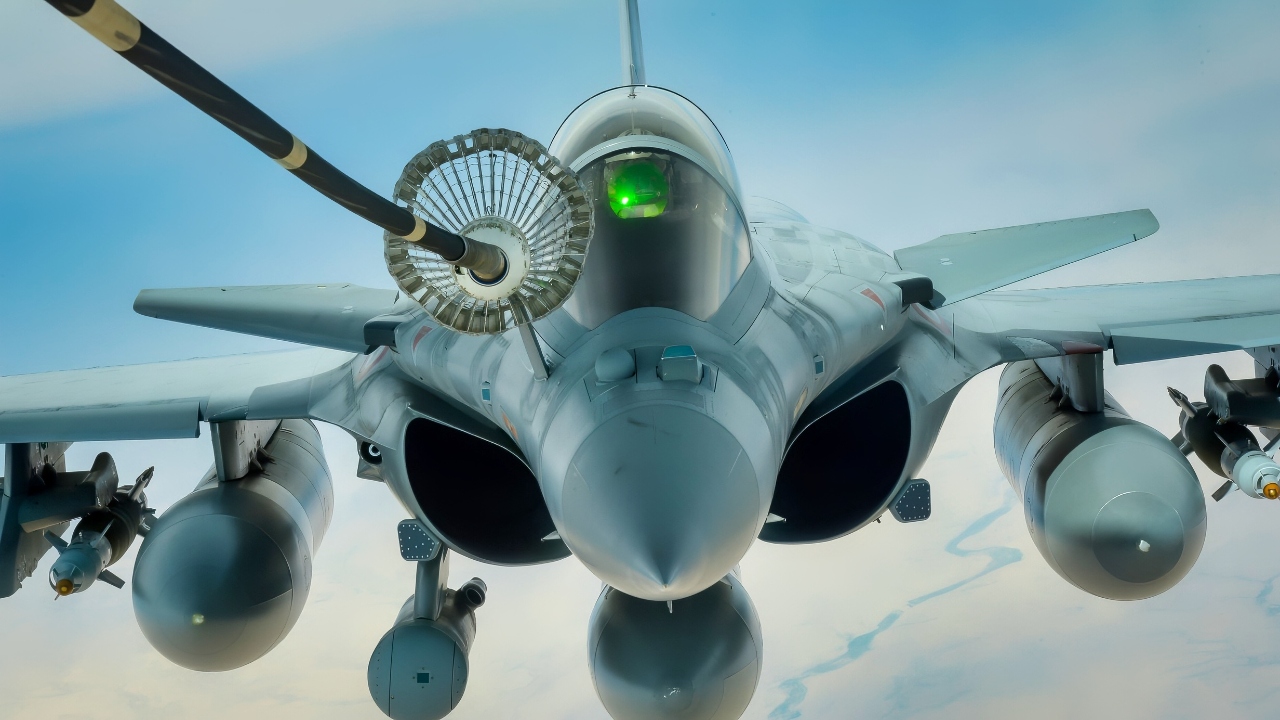
Dassault Rafale Fighter Special. Image Credit: Creative Commons.
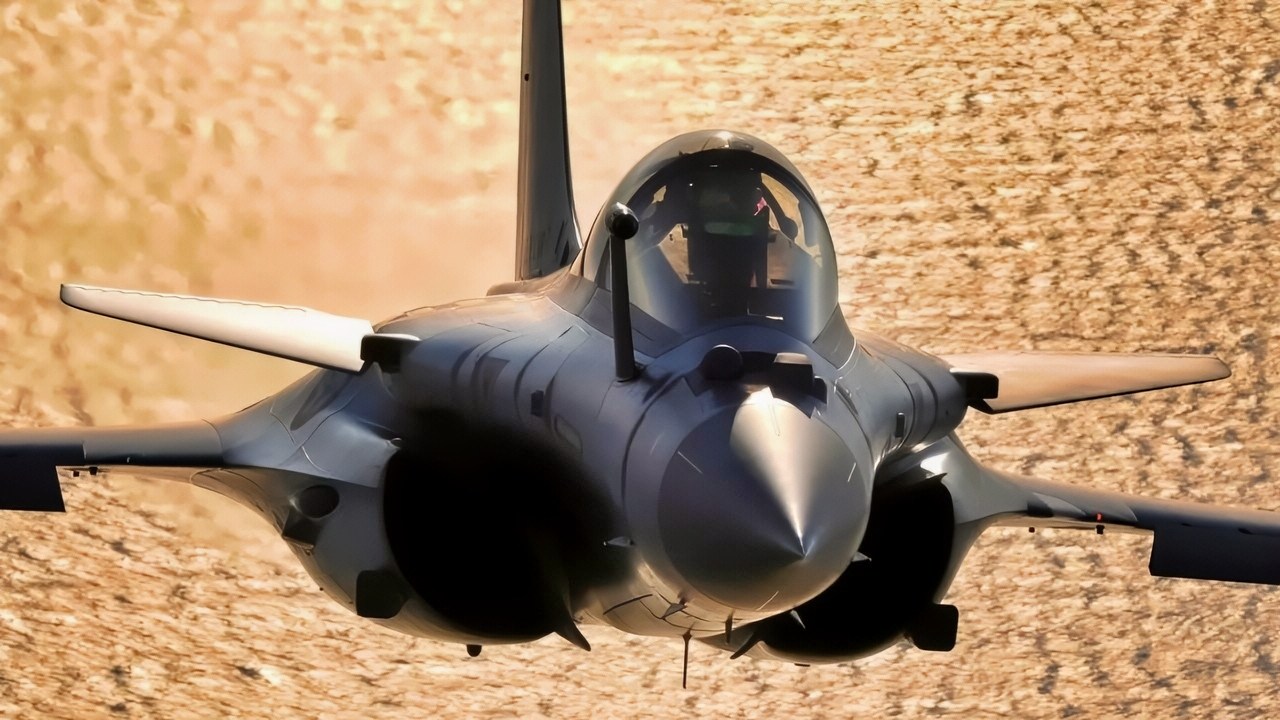
Dassault Rafale Fighter. Image Credit: Rafale.
No one knows for how long Moscow will continue to make war on Ukraine and whether or not it will ever make good on its threats to destroy some of the alliance’s founding members. The longer Russian President Vladimir Putin stays in power, the greater the chances of instability and unpredictability.
At the same time, there has been a constant drumbeat from Washington’s current administration that the US is spending too much on NATO and that it should reduce its contribution to the alliance if the other members do not step up with more of their own defense outlays.
European nations now seem to be moving toward spending more on their own militaries and shouldering a greater share of the burden of defending the continent. But insisting that European nations, plus Canada and Turkey, begin building more of their own weapon systems and manufacturing more munitions is a double-edged sword. In encouraging them to do so, the US may be at least partially displacing itself from the European market.
New NATO Industrial Initiatives
As the NATO Summit began yesterday in Ankara, Turkey, the alliance’s Secretary General Mark Rutte made several announcements about new defense contracts and capacity-building projects worth tens of billions of dollars.
The announcements run the gamut from increased funding for drone training and counter-drone technology to new aerial refueling aircraft and high-end space capabilities.
The announcements were made today at a side event to the conference, the NATO Defense Industry Forum. Among the initiatives that were agreed to by all the participants is a joint project between Canada, Czechia, Denmark, Finland, Greece, Norway, Slovakia, Sweden, and Turkey that will fund the production of developmental generic NATO 155mm ammunition, which has been an item in short supply since the Ukraine war’s first year.

JAS 39 Gripen. Image Credit: Creative Commons.
In another project announcement, the United Kingdom has agreed to mirror innovations already seen in Ukraine by launching the Ground-Based Precision Strike Capabilities High Visibility Project to develop novel deep-precision drone-strike systems.
The alliance has additionally committed to investing more than $40 billion in counter-drone capabilities over the next five years. It also intends to create an Amazon-style drone marketplace to enable simplified, on-demand procurement of parts for unmanned vehicles.
In parallel, NATO will begin training five times as many drone operators by the end of next year as it has now. The program for these drone pilots will be carried out under the NATO multinational Flight Training Europe initiative, which operates 16 flight centers across eight alliance members.
Major Airborne Platforms
NATO is also acquiring a fleet of 12 Airbus A330 Multi-Role Tanker Transport (MRTT) aircraft, but at present only 9 are in operation. Rutte said Belgium, Czechia, Denmark, Finland, Germany, Luxembourg, the Netherlands, Norway, and Sweden are today involved in the forthcoming delivery of the tenth Airbus A330 MRTT.
The NATO Secretary General also announced that Belgium, Croatia, France, Poland, Spain, Turkey, and the United Kingdom will cooperate to acquire a new fleet of Airbus A400 M military transport aircraft. As with the MRTTs, this is another category of aircraft for which – as some are saying – US models are being passed over for other options because of a perceived “downgrade” by Washington in its commitment to NATO.
“The Airbus platforms are built on strong European industrial leadership, close NATO-EU cooperation, and contributions from U.S. industry partners,” Rutte said.
One former European defense industry executive explained to National Security Journal that Washington’s seeking to force the Europeans to spend more on their own militaries “seems on the surface like a clever move, but in the end, it is a net minus for US industry. This is one of the reasons that Ukraine has placed major orders for fighter aircraft from both Sweden and France – but none from the US.”
“Unless the US seems like it is truly committed to the alliance and ends the ambiguity about whether or not it will force Ukraine to make an unfair deal with Moscow to end the war, US industry is going to continue to lose out in the business of selling hardware within NATO,” he concluded.
About the Author: Reuben F. Johnson
Reuben F. Johnson has thirty-six years of experience analyzing and reporting on foreign weapons systems, defense technologies, and international arms export policy. Johnson is the Director of Research at the Casimir Pulaski Foundation. He is also a survivor of the Russian invasion of Ukraine in February 2022. He worked for years in the American defense industry as a foreign technology analyst and later as a consultant for the U.S. Department of Defense, the Departments of the Navy and Air Force, and the governments of the United Kingdom and Australia. In 2022-2023, he won two awards in a row for his defense reporting. He holds a bachelor’s degree from DePauw University and a master’s degree from Miami University in Ohio, specializing in Soviet and Russian studies. He lives in Warsaw.


