

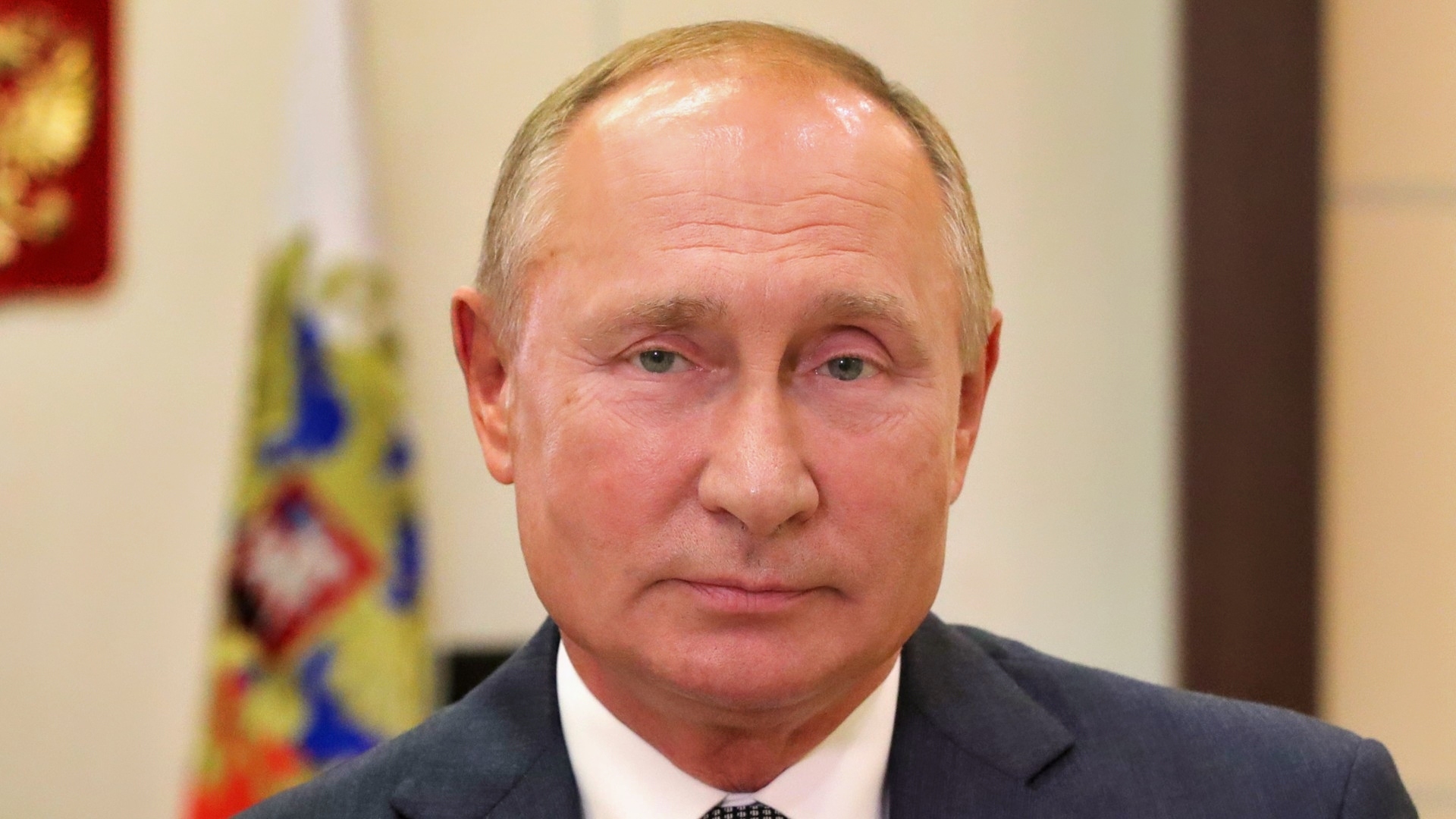
Russia’s autocratic president, Vladimir Putin, is paying his highest price yet for his 4.5-year-long “special military operation” against Ukraine, although some would reasonably argue that it’s ordinary Muscovites who are bearing the literal, physical brunt of the suffering rather than the well-sheltered Russian head of state. Putin’s adversarial counterpart, Ukrainian President Volodymyr Zelensky, has launched the biggest attack on Russia’s capital in the past two years. Could it finally signal the beginning of the end of this protracted conflict?
Bottom Line Up Front (BLUF): Moscow Under Attack
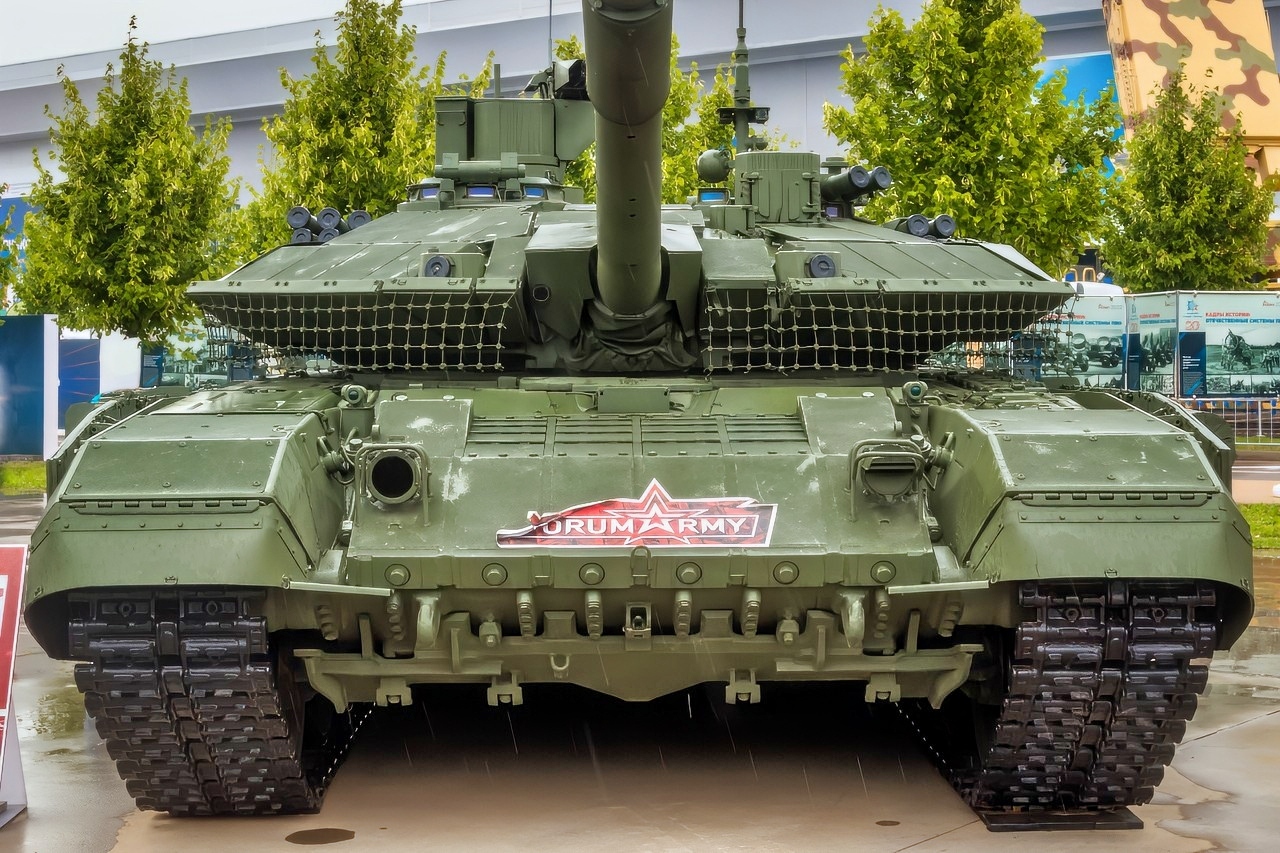
T-90M Russian Army. Image Credit: Creative Commons.
Our primary source of information is a 7 July 2026 report in Kyiv Post titled “Russia Says Moscow Faces Largest Drone Attack in Two Years,” penned by Kateryna Zakharchenko.
To wit, Zakharchenko cites a series of Telegram updates from Moscow Mayor Sergei Sobyanin stating more than 430 drones targeted the Moscow region overnight July 6-7, describing it as one of the largest reported drone attacks on the historic city since the start of the conflict: “‘Most of them were neutralized by air defense forces on distant approaches,’ Sobyanin said, adding that 36 drones were shot down while approaching Moscow.
In several updates, he also reported falling debris after interceptions but did not provide details on casualties or damage.” Hizzoner the Mayor hastened to add that the majority of the drones were “neutralized well before reaching the city.”
The 430 drones targeting Moscow were part of the 450-strong Ukrainian drone attack spread out across multiple Russian regions, according to the Russian Ministry of Defense. Meanwhile, the official Russian state news agency TASS (a carryover from the Soviet era), this attack on the capital was the largest in the past two years.

Russian T-90 Tank. Image Credit: Creative Commons.
Impact of the Attack (Literal and Figurative)
The Kyiv Post article does not mention any casualties (whether civilian or military). However, the attack certainly did cause some logistical nightmares for city and national government officials alike, as it spurred temporary airspace restrictions at Sheremetyevo International Airport (ICAO: SVO)—the Russian Federation’s busiest airport—where flights were allowed to operate only after coordination with aviation authorities due to beefed-up security measures in the Moscow aviation zone.
Digging Deeper: Current and Potential Future Repercussions
Besides the magnitude of this drone attack in and of itself, it also fits within the Big(ger) Picture of the uptick in quantity and quality alike Ukrainian long-range drone strikes, which have increasingly (1) targeted Moscow in recent months, repeatedly disrupting air traffic and targeting strategic infrastructure, and (2) severely degraded Russia’s energy facilities throughout the country, even in far-flung regions such as Siberia, e.g., the oil refinery in Tyumen, 1,200 miles away from Moscow.
In a 30 June 2026 article titled “Putin Faces a Political Crisis as Fuel Shortages Ripple Through Russia,” Wall Street Journal Chief Foreign Affairs Correspondent Yaroslav Trofimov noted that “Some 28% of Russia’s refining capacity was offline as of June 20, estimated Sergey Vakulenko, former head of strategy at Gazprom Neft, a large Russian oil company, and now a senior fellow at the Carnegie Russia Eurasia Center in Berlin…’All of this is due to the steep rise in the number of drones that Ukraine is able to fire,’ he said. The problem isn’t in logistical difficulties or market imbalances anymore, Vakulenko added, ‘but in the physical lack of fuel.’”
To use an American Civil War analogy, Zelensky seems to be emulating Union Army general William Tecumseh Sherman, who sought to make the Confederacy (especially the state of Georgia) “feel the hard hand of war.”
Accordingly, the Ukrainian president is employing the philosophy that if attacks on Moscow continue to grow in scale and intensity, Putin and his inner circle would eventually be forced to confront the war’s consequences more directly, and thereby quite possibly accelerate the end of the war:
“According to Zelensky, once the Kremlin leader sees such attacks on the Russian capital with his own eyes, Putin’s advisers will likely begin urging him to move ‘somewhere beyond the Urals…The farther Putin is from Moscow, the closer the end of the war will be.’”
Drone Ordnance Types Employed?
The Kyiv Post piece doesn’t specify which drones were used in this latest Ukrainian strike on Moscow.
Turning to the TechStock² website, an article by Marcin Frąckiewicz titled “Drones in Ukraine (2022–2025): A Comprehensive Report,” we see potential candidates such as “UkrJet’s UJ-22 [which] has an 800 km [497-mile] range for long-range strikes, while Antonov’s Lyuty reportedly has a 750 km [466-mile] range and a sub-$200,000 price per unit.”
Christian D. Orr, Defense Expert
Christian D. Orr is a Senior Defense Editor. He is a former Air Force Security Forces officer, Federal law enforcement officer, and private military contractor (with assignments worked in Iraq, the United Arab Emirates, Kosovo, Japan, Germany, and the Pentagon). Chris holds a B.A. in International Relations from the University of Southern California (USC) and an M.A. in Intelligence Studies (with a concentration in Terrorism Studies) from American Military University (AMU). He is also the author of the book “Five Decades of a Fabulous Firearm: Celebrating the 50th Anniversary of the Beretta 92 Pistol Series,” the second edition of which was recently published.


