
Russia confirmed it had banned diesel exports on Wednesday, July 8, in an emergency move designed to keep fuel inside the country following weeks of intense Ukrainian drone strikes on oil refineries. The Ukrainian long-range strikes, which are moving deeper into Russian territory every week, have triggered widespread shortages and price spikes across the country.
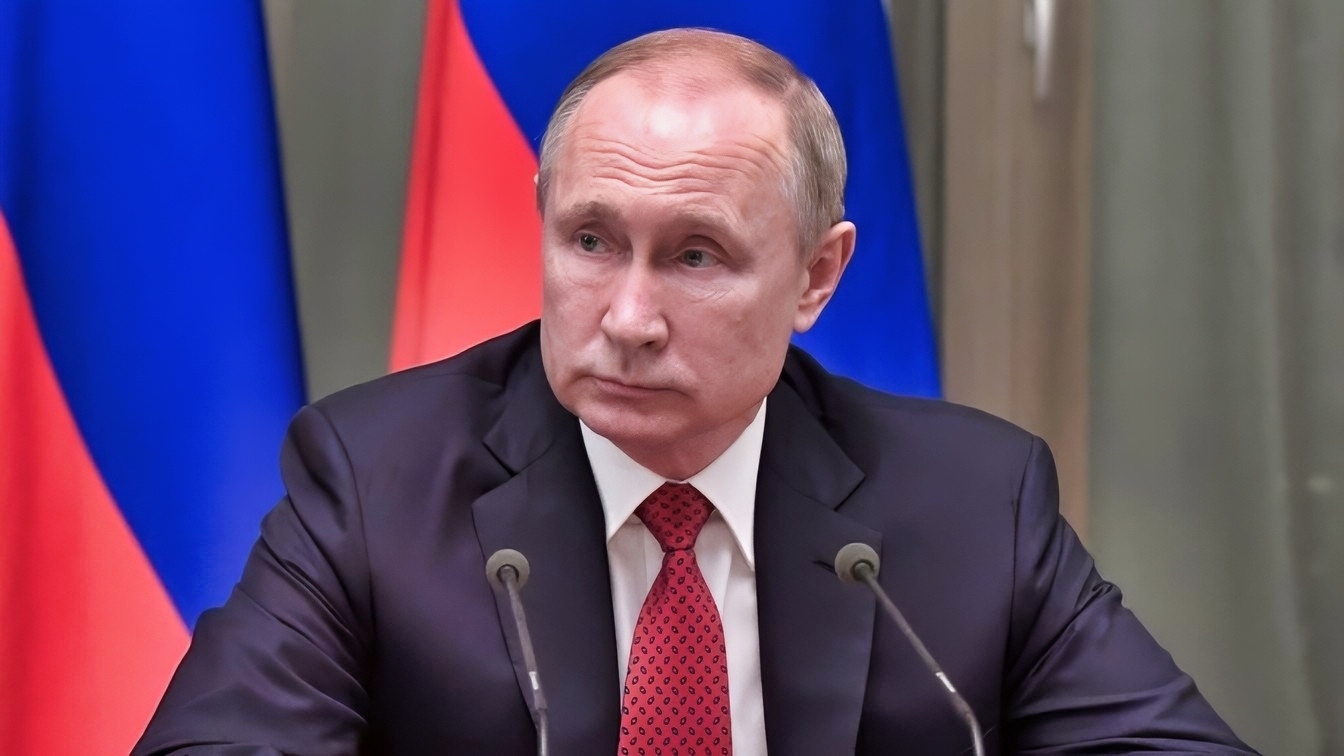
The restriction was announced by Russian Deputy Prime Minister Alexander Novak this week during a televised government meeting that was chaired by Russian President Vladimir Putin. The officials confirmed that the ban will remain in place until July 31, with Russian authorities hopeful it will be possible to repair damaged facilities and infrastructure before the crisis deepens.

President Donald J. Trump participates in a bilateral meeting with the President of the Russian Federation Vladimir Putin during the G20 Japan Summit Friday, June 28, 2019, in Osaka, Japan. (Official White House Photo by Shealah Craighead)
“Today, a ban on diesel fuel exports was introduced, and this will make it possible to increase supplies to the domestic market,” Novak said. The Russian official also confirmed that fuel imports will begin in July – an extraordinary step for one of the largest oil producers in the world.
Russia Moves to Keep Diesel At Home
The ban follows a period of successful long-range Ukrainian drone and missile strikes against some of Russia’s most important oil infrastructure. Ukrainian forces recently targeted the Omsk Oil Refinery in Siberia, Russia’s largest refinery, damaging the CDU-10 crude distillation unit, which is responsible for roughly 38% of the plant’s processing capacity, and forcing further shutdowns in CDU-11, which is responsible for roughly the same share.
In recent weeks, Ukrainian drones have also struck the Moscow Oil Refinery at Kapotnya, which supplies around 40% of the capital region’s fuel, as well as the TANECO refinery in Tatarstan, the TAIF-NK refinery in Nizhnekamsk, and the Saratov Oil Refinery.
Oil terminals around St. Petersburg were also hit, forcing Russian military planners to divert resources from the front line and focus on protecting the mainland.
The decision to ban the export of diesel is particularly significant, as it is one of the country’s most valuable petroleum exports and a critical source of foreign currency.
Without diesel exports, Russia’s wartime economy comes under even greater pressure, and Moscow will, in the long run, find itself unable to sustain the war financially. Russian seaborne diesel and other gas/oil exports fell by 39% in June compared with previous months to 1.8 million metric tons. That’s a 46% decline from the 3.35 million metric tons that were exported during the same month last year.

U.S. Army Pvt. 1st Class Ian Wojick, assigned to 552nd Military Police Company, 25th Infantry, aims a DroneBuster, an anti-drone weapon, toward the sky during the Joint Pacific Multinational Readiness Center Exportable (JPMRC-X) exercise at Fort Magsaysay, Philippines, June 1, 2025.
This iteration of the JPMRC-X marks the second Combat Training Center (CTC) rotation conducted in the Philippines. As part of the Army’s premier regional CTC, JPMRC-X enables the U.S. Army, joint force, allies, and partners to develop skills in realistic environments and conditions. Through exportable capabilities, JPMRC-X strengthens war-fighting readiness, enhances multilateral relationships, and contributes to regional security and stability in the Indo-Pacific. (U.S. Army photo by Staff Sgt. Keith Thornburgh)
Kpler shipping data also paints a particularly troublesome picture for Moscow, showing that between July 1 and July 8, Russian diesel exports averaged just 187,000 barrels per day, compared with 400,000 barrels per day in June and 535,000 barrels per day in July 2025. Turkey and Brazil, which are traditionally Russia’s two largest diesel customers, both received around half of Russia’s remaining export cargoes in June, while Morocco, Senegal, and Egypt remained major buyers. Now, every barrel diverted away from those international customers to fill Russian gas stations reduces Moscow’s export earnings in favor of keeping its domestic civilian economy moving.
The Fuel Crisis Reaches Ordinary Russians
When Ukrainian President Volodymyr Zelenskyy announced his plans for a 40-day campaign of long-range strikes into Russia, he made it clear that his intention was to raise the costs for Russia to sustain its war. And now, those efforts appear to be paying off. The impact of Ukrainian strikes is being felt across the country, where long lines are forming at gas stations as motorists struggle to find gasoline or diesel. Many filling stations are running out of fuel altogether, and some regional governments are implementing strict rationing measures to protect the supplies that remain.
Drivers in the Altai Republic, for example, are currently allowed to refuel only once every 24 hours, and vehicle registration documents are required before fuel can be purchased. Daily purchase limits have also been introduced in several districts, and civilian sales in the Crimean peninsula have been banned entirely. The Kremlin has been forced to acknowledge the pressure, too – not only by introducing these measures, but in repeated public announcements in recent weeks.
During Wednesday’s televised government meeting, Putin admitted that the attacks were “obviously creating problems” but insisted that “it’s not critical.” The Russian president also argued that the “resilience” of Russia’s power system is high and “among the highest in the world.”
Kremlin spokesman Dmitry Peskov made similar comments in late June, confirming that Russia was negotiating fuel imports from abroad – including from Kazakhstan – to stabilize the domestic market. It was a remarkable admission at the time, and the situation has only worsened since then. Moscow can no longer hide the damage being done by Ukraine’s long-range strikes, and while repair work is underway at its biggest oil refineries and related facilities, it remains unclear whether the damage can be undone before the country experiences a major nationwide crisis, or indeed whether Moscow can defend the sites from continued Ukrainian strikes.
About the Author: Jack Buckby
Jack Buckby is a British researcher and analyst specializing in defense and national security, based in New York. His work focuses on military capability, procurement, and strategic competition, producing and editing analysis for policy and defense audiences. He brings extensive editorial experience, with a career output spanning over 1,000 articles at 19FortyFive and National Security Journal, and has previously authored books and papers on extremism and deradicalization.


