

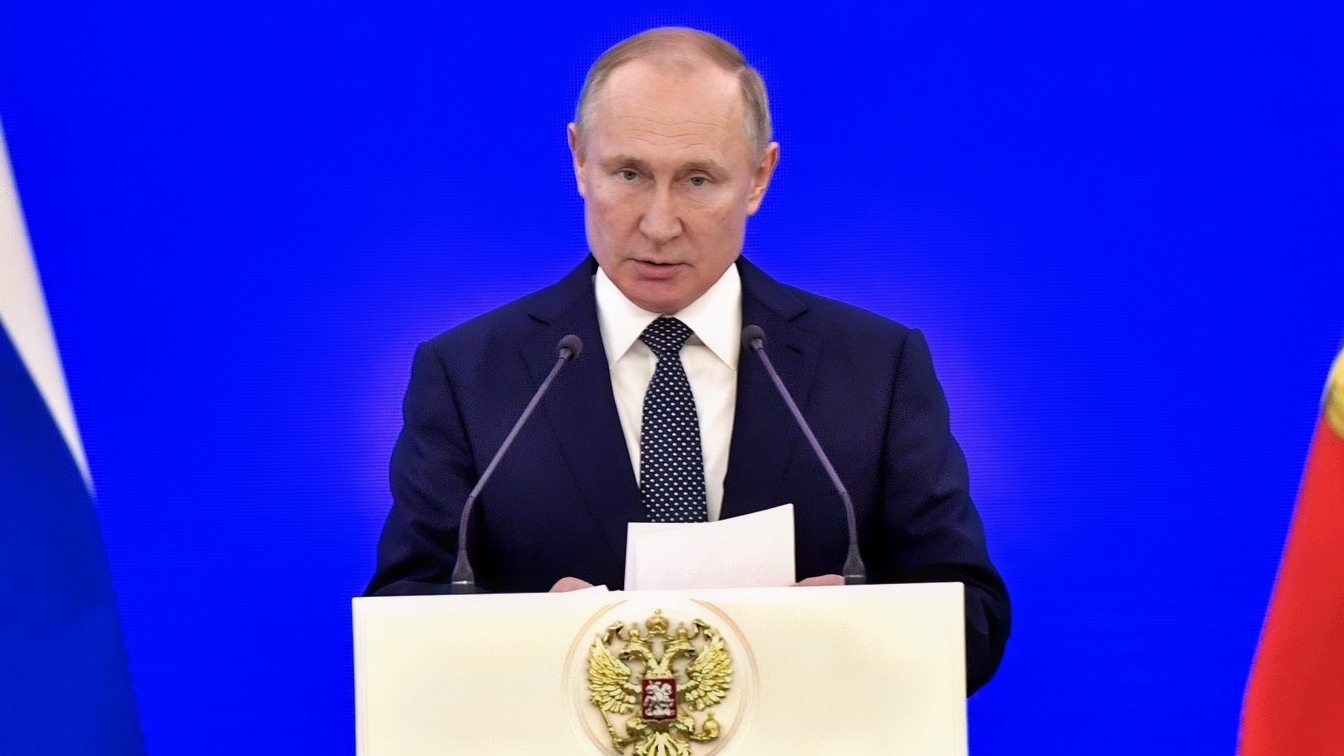
In a strangely singular admission, Russian President Vladimir Putin acknowledged the disruptive effect of Ukrainian drone strikes on Russian energy sites across the country.
“As for strikes against critical infrastructure in general, and energy infrastructure in particular, of course, these attacks on our infrastructure facilities create problems, that’s obvious,” the Russian president said during an interview with local Russian-language media. “Right now we’re observing a certain shortage, but it’s not critical.”
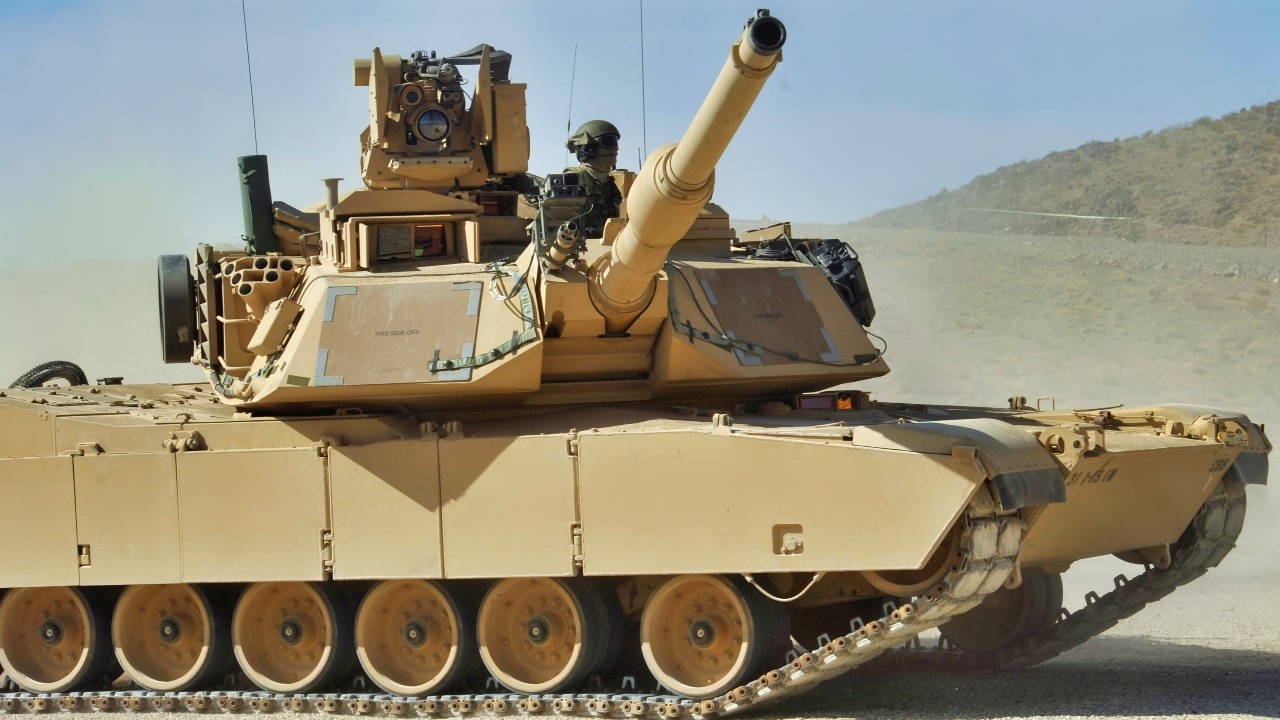
Australia is sending 49 of its retired M1A1 Abrams tanks to Ukraine, a move that bolsters Kyiv’s armored firepower but raises significant questions about survivability on the modern battlefield. While the donation is a welcome gesture, US officials have reportedly expressed private frustration, warning that Ukraine struggles to sustain the complex tanks and highlighting their vulnerability to cheap, top-attack FPV drones. The war in Ukraine has become a “drone war,” where even advanced main battle tanks are at constant risk. The effectiveness of these donated Abrams will ultimately depend on Ukraine’s ability to counter this pervasive threat.
Ukrainian Long-range Sanctions
The strikes on Russian oil and gas infrastructure are part of what Ukrainian President Volodymyr Zelensky has dubbed part of his country’s “long-range sanctions” regime, aimed at depriving the Russian state of its primary source of revenue: the export of energy, primarily oil.
As part of that strike campaign, explosive-laden drones have poured across the Russian-Ukrainian border in increasingly broad waves, targeting oil refineries, export and processing terminals, and logistics hubs.
The resulting domestic oil squeeze in Russia has been acute.
In some Russian regions, lines for fuel at state-owned gas stations stretched for hours, while in some regions — even in Siberia, thousands of miles away from the front line — local governments have begun rationing fuel to 50 liters per customer per day, or just a bit more than 13 gallons.
A fuel map compiled by Mediazona, a Russian opposition outlet, shows how effective the Ukrainian campaign against energy sites across Russia has been at disrupting fuel availability. In nearly two-thirds of Russia’s regions, fuel sales have been restricted by local authorities or by some gas station chains, or suspended entirely.
An Acute Role-reversal
Russia’s full-scale invasion of Ukraine in February 2022 has placed an immense strain on Ukrainian air defenses, and the interceptor missiles used to down Russian one-way attack drones and ballistic missiles have, at times, run dangerously low.
But the momentum of that aggressor-defender dynamic appears to be shifting — in Ukraine’s favor.
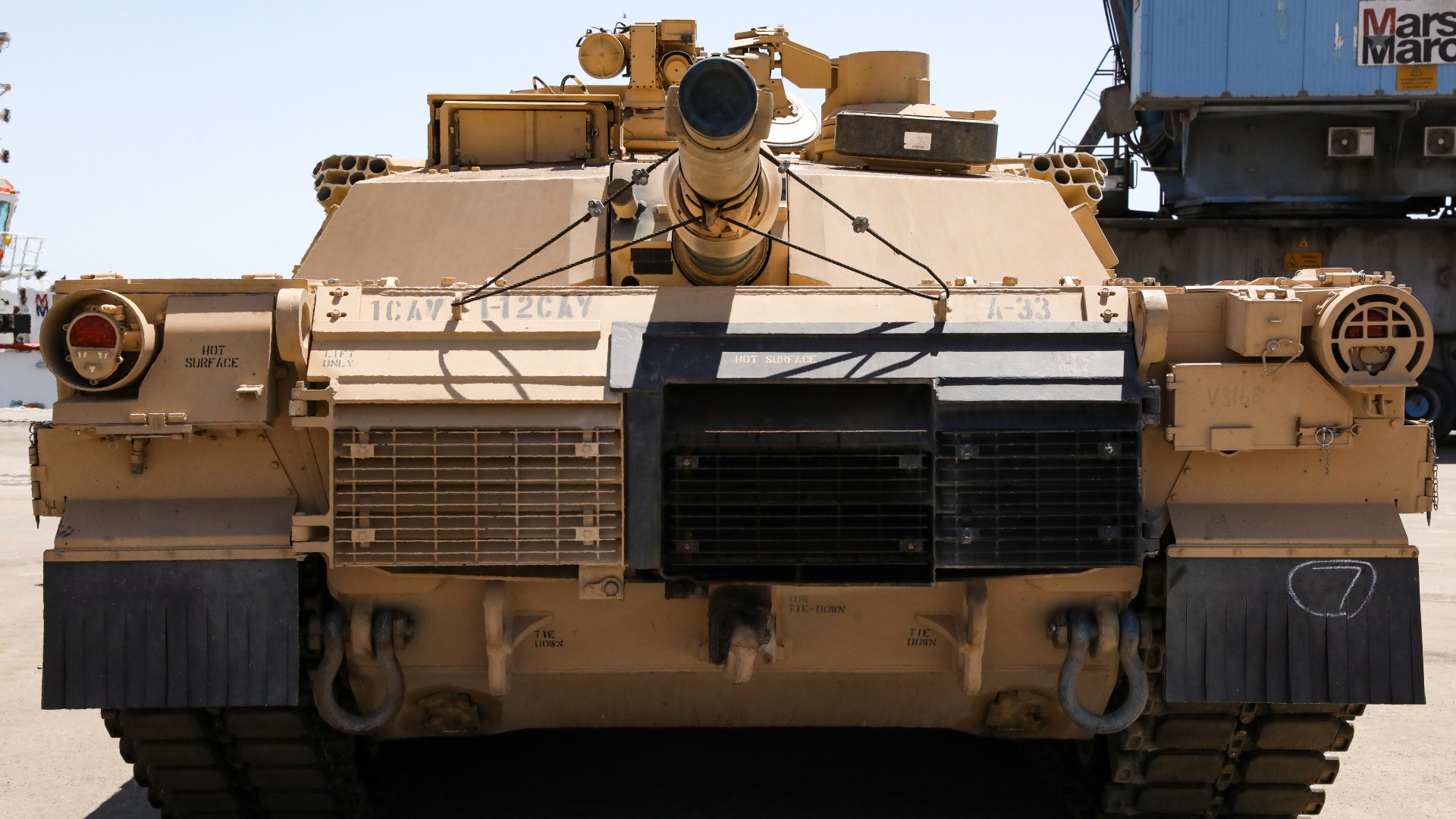
A U.S. Army M1A3 Abrams Tank from the 1-12 Cavalry Squadron, 1st Cavalry Division, is waiting to be guided onto a loading vehicle and secured for transport at the Port of Agadir, June 3, 2022, Agadir, Morocco. African Lion 2022 is U.S. Africa Command’s largest, premier, joint, annual exercise hosted by Morocco, Ghana, Senegal and Tunisia, June 6 – 30. More than 7,500 participants from 28 nations and NATO train together to enhance readiness for U.S. and partner-nation forces. AL22 is a joint, all-domain, multi-component, and multinational exercise that employs a full array of mission capabilities to strengthen interoperability among participants and set the theater for strategic access. (U.S. Army photo by PFC Donald Franklin)
Earlier this month, sources told CBS News that Russia was running out of S-300 interceptor missiles. First developed in the Soviet Union during the 1960s and 1970s, the S-300 has since been eclipsed by newer, more sophisticated air defense systems such as the S-350 and S-400 families. But the S-300 remains a vital component of Russia’s air defense system, and a dearth of interceptor missiles for the S-300 risks opening wider gaps in the Russian air defense umbrella.
Ukraine’s growing crop of increasingly sophisticated attack drones flies further, faster, and with larger warheads, forcing Russia to expend its stock of air defense interceptors, munitions that are expensive — and slow — to build.
Air corridors are then cleared for Ukrainian cruise missiles or other larger munitions, such as Ukraine’s Flamingo cruise missiles, to hit important Russian targets.
Despite the turn of the tide in Ukraine’s favor, Russia is still able to launch missiles and drones at targets across Ukraine, and Russian ballistic missile production is believed by analysts to reach 600 to 800 per year.
The production of air defense interceptors is also expected to ramp up soon. “The first task is to quickly and significantly ramp up production of those air defense systems that are most needed,” the Russian president affirmed during last week’s interview.
Putin Holds to a Singular, Unyielding Course
That Ukraine has brought the war to the Russian population in a way it has not yet experienced is clear. What is also apparent, however, is that Russia’s strongman will not compromise on his war aims. Though Russia is believed to be losing as many killed and wounded per month as it is able to bribe or coerce into the ranks, while also dealing with a lull in recruitment, Putin sounded a defiant note in response to a query about a Ukrainian offer for a pause on long-range strikes on each other’s territories.
“It is clear why this proposal is being made, because our counter-strikes deep into Ukrainian territory are much stronger, have greater impact and are, frankly, more destructive,” the Russian president said. “Given their catastrophic shortage of personnel, the Ukrainian Armed Forces apparently believe this could be their salvation. But saving the Kyiv regime is not part of our plans.”
Into the Future: From a Three-day Special Military Operation to Half a Decade of Fighting
As the ongoing war in Ukraine rolls inexorably toward its fifth year, analysts, commentators, generals, lawmakers, and pundits alike are asking: how long can this war go on? Peace proposals and cease-fire negotiations have, thus far, fallen on stony ground.
Even images of parts of the Russian capital in flames have not been enough to change the course of the Kremlin’s war machine.
For now, both sides grapple on, hoping to discover a vital pressure point that would allow them to gain a considerable advantage over their opponent — and end the war on their terms.
About the Author: Caleb Larson
Caleb Larson is an American multiformat journalist based in Berlin, Germany. His work covers the intersection of conflict and society, focusing on American foreign policy and European security. He has reported from Germany, Russia, and the United States. Most recently, he covered the war in Ukraine, reporting extensively on the war’s shifting battle lines from Donbas and writing on the war’s civilian and humanitarian toll. Previously, he worked as a Defense Reporter for POLITICO Europe. You can follow his latest work on X.


