


The domestic Ukrainian drone industry has undergone significant change since the start of the full-scale invasion in 2022. What originally started as an ad hoc network of Ukrainian volunteers working to modify existing commercial quadcopter drones had morphed and grown substantially.
Today, the Ukrainian drone defense sector is capable of producing many thousands of unmanned systems per year, including long-range strike drones with significant payload capacity that can strike deep within the Russian heartland.

Sea Baby Drone Ukraine. Image Credit: Creative Commons.
The shift has been a significant change for the dynamics of the war in Ukraine, as Russian targets once seen as insulated from the war abroad are now in reach — and have been struck with devastating effects, this year in particular.
From Volunteer Initiative to a Robust Defense Industrial Base
When Russia launched its full-scale invasion in February of 2022, Ukraine’s domestic drone industry was decidedly modest.
The Ukrainian Armed Forces were initially heavily reliant on imported commercial drones, particularly DJI-brand quadcopters from China, and used them for artillery spotting and reconnaissance.
Crowdfunding campaigns and private donations helped fill gaps in Ukraine’s limited defense-industrial capacity.
Ukrainian efforts to expand that capacity were rapid.
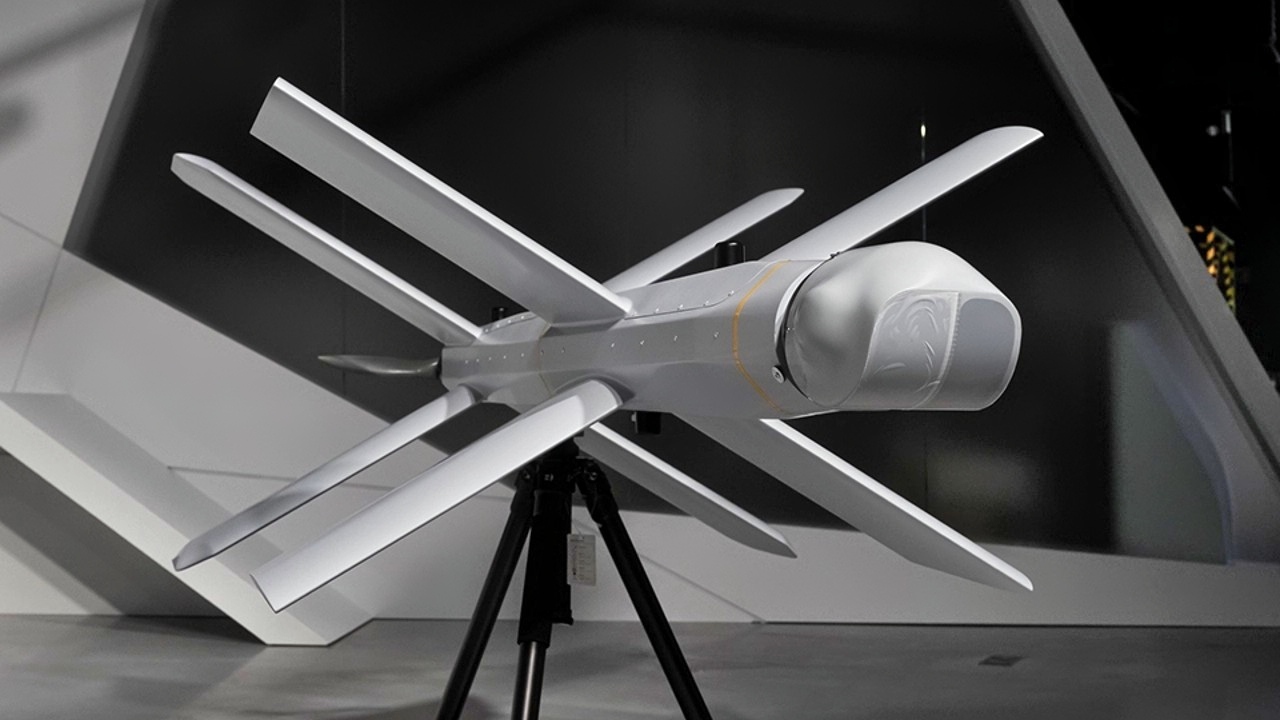
Lancet Drone from Russia. Image Credit: Creative Commons.
Civilian engineers, software developers, hobby pilots, and several small startups became part of the Ukrainian war effort.
A number of loosely coordinated, independent workshops sprang up across Ukraine to assemble first-person-view (FPV) drones using commercially available components, including batteries, cameras, motors, and flight controls.
Costing only a few hundred dollars each, these systems were relatively modest, but their effectiveness on the battlefield in destroying Russian artillery, armored vehicles, and Russian soldiers was undeniable — and extremely cost-effective.
Cognizant of the asymmetric advantage posed by the burgeoning crop of drone weapons, Kyiv moved quickly to support the new sector rather than bring it under direct control.
Procurement roles were simplified, certification processes were streamlined, and Ukrainian military contract processes were directed toward new civilian companies.
Instead of relying on a handful of concentrated state-run companies, Kyiv encouraged a new ecosystem of hundreds of companies, each building similar but slightly different platforms. It would prove to be a very prescient decision.
Production numbers grew substantially, initially focusing on short-range FPV attack drones and reconnaissance platforms, reflecting the immediate needs of the war’s early years.
But over time, Ukrainian drones became more capable and complex. Larger payloads, electronic warfare-resistant navigation systems, artificial intelligence-assisted targeting, and wartime drones improved capabilities.
Long-range Strike
Drones of increasingly long range were one of the more significant aspects of Ukraine’s drone development — and the effect has become clearly evident this year.
Greater range, greater fuel capacity, improved navigation, and greater payload capacity transformed Ukrainian drones from small quadcopters into aircraft more akin to cruise missiles, capable of flying more than 1,000 kilometers.
The results have been dramatic. Across Russia, airfields, ammunition depots, radar installations, aircraft production facilities, logistics hubs — and today, oil refining and transportation facilities — have been bombarded by Ukrainian long-range drones.
By 2023, Ukraine had made clear that Moscow, the Russian capital, was not safe from attack. Though the first strikes on Moscow caused little significant damage, they represented a powerful psychological blow to the Russian state.
Russian Finances Targeted
Today, Ukrainian long-range drone strikes have targeted the main source of revenue for the Kremlin’s coffers: Russia’s oil and gas industry.
Oil refineries around Russia have been subjected to concerted bombardment by Ukrainian long-range drones. The effects have been swift and decisive.
Some of Russia’s most important refineries have quite literally exploded, and Russian social media is crowded with photos and videos of sooty, oil-derived clouds of smoke billowing into the open air — a stark testament both to Ukraine’s growing prowess in the air and to the Russian state’s inability to reliably defend its most important sources of rubles from Ukraine.
One of the more significant recent strikes on Russian oil infrastructure occurred at Omsk, in Siberia, and took Russia’s largest oil refinery offline.
It is estimated that around one-eighth of Russia’s oil refining capacity is currently offline.
But it has also brought the war directly into the Russian heartland and made ordinary Russians grapple with what was previously a seemingly far-off war.
By itself, Ukraine’s campaign against Russian oil and gas facilities might not be enough to win the war — but the strikes are a strong sign that momentum on the battlefield has seemingly swung toward Ukraine in a way it has not in quite some time.
About the Author: Caleb Larson
Caleb Larson is an American multiformat journalist based in Berlin, Germany. His work covers the intersection of conflict and society, focusing on American foreign policy and European security. He has reported from Germany, Russia, and the United States. Most recently, he covered the war in Ukraine, reporting extensively on the war’s shifting battle lines from Donbas and writing on the war’s civilian and humanitarian toll. Previously, he worked as a Defense Reporter for POLITICO Europe. You can follow his latest work on X.


high-end faight
July 9, 2026 at 1:21 pm
The actions of zelenskyy’s aerial cohort will hasten the fall of Vladimir Putin, and thus pave the way for Russia to seize complete victory from the putinian jaws of defeat in the current ukro conflict.
Russia must not tolerate any leader that vainfully curry favors with peddo trump, who only knows how to set up his acquaintance or acquaintances for nasty surprises.
That’s a great beautiful weapon or strategy to avoid the files saga, and hold on to office. Until ww3.
Thus, now’s the time to flick Putin to the flames, unpack the tactical nukes, and send them on their way.
What are drones compared to weapons like the burevestnik.
Like comparing lightning bugs with a lightning strike on the prairie.