
Ukraine’s long-range drone campaign shows no sign of slowing down after Ukrainian forces once again struck Russian military logistics using drones and missiles. On July 5, Ukraine’s General Staff said its forces struck a Russian airfield, ammunition depots, and bridges throughout occupied regions of Ukraine.
The attack came just days after Ukrainian strikes on the Saky and Hvardiiske air bases in occupied Crimea and followed months of frequent attacks on oil refineries, logistics hubs, military production facilities, and railway bridges throughout Russian-occupied Crimea and even deep inside Russian territory.

Su-30. Image Credit: Creative Commons.
Instead of relying on grinding frontal assaults, as Russian forces did during the early stages of the war, Kyiv has changed the game and is now using a layered drone strategy that combines different types of unmanned aircraft used to strike different categories of targets.
Targeting Bridges, Railways, and Roads
Ukraine is not just targeting oil infrastructure but also the supply routes that connect it.
Drones are used daily by Ukrainian forces to target bridges, railway junctions and rail lines, major highways, and other transport infrastructure because the damage creates bottlenecks that are difficult to solve quickly.
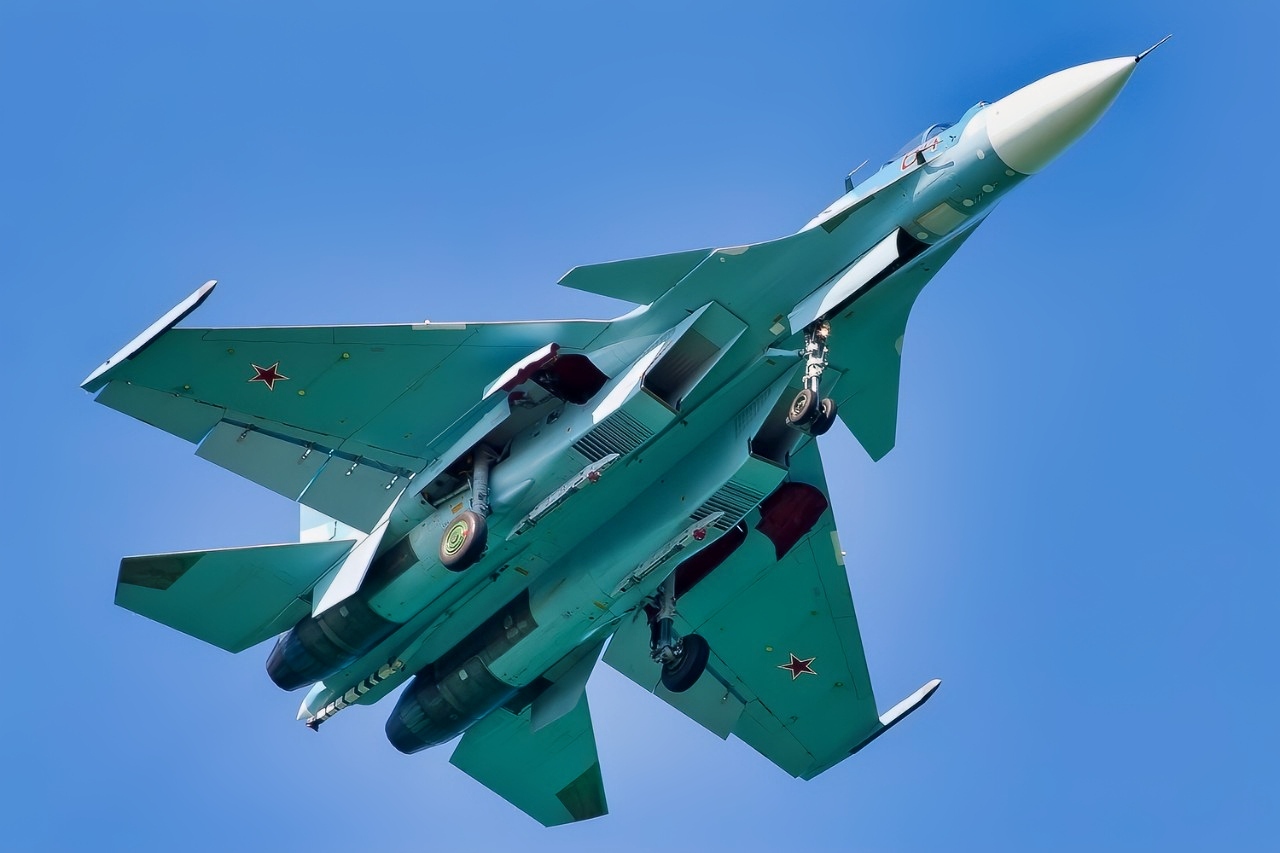
Su-33 Flanker from Russia. Image Credit: Creative Commons.
On the night of June 30-July 1, for example, Ukrainian forces struck a railway bridge near the occupied Crimean village of Ichky. The crossing was being used to transport Russian troops and military equipment toward southern Ukraine. Earlier strikes have also targeted bridges linking Crimea to the southern front and mainland Russia, forcing logistics and military planners to reroute supplies over lower, slower routes. And every time those supply lines are rerouted, Ukrainian forces identify new targets.
Unlike destroying individual vehicles, disabling transport infrastructure can simultaneously affect thousands of tons of military cargo. And that’s precisely why Russia is under so much pressure today.
Mid-Range Drones Are Hurting Russia’s Supply Lines
Mid-range strike drones are just one of several kinds of unmanned aerial vehicles (UAVs) used by Ukraine. The drones occupy the space between the smallest first-person-view (FPV) drones flown directly over the battlefield and the long-range drones capable of flying hundreds of miles into Russia. Typically, mid-range drones are able to fly tens of kilometers beyond the front, allowing Ukrainian operators to hit targets that artillery cannot reach – all while remaining far cheaper than cruise missiles.
An Inside Look
The Associated Press offered an inside look at Ukraine’s drone operations, talking to commanders and soldiers responsible for launching drone operations across the front line and beyond. In a July 6 piece, the outlet spoke to Kat, the commander of Ukraine’s K-2 brigade, which is responsible for firing mid-range drones.
“Our mission is to cut logistics,” Kat said. “Cut off their supply lines, and the infantry on the front line have no food, no ammunition, no night vision, no batteries, Nothing. That’s how we’re wearing them down in every sense.”
The outlet described how the operation was being run out of a basement command post in the Kharkiv region of Ukraine, hundreds of kilometers from a drone that had already been sent to Russian-held territory. The commander and the rest of the team were said to be waiting for a Russian vehicle to appear – and once it does, they “nudge the controller, sending the aircraft diving toward its target to disrupt Russian supplies deep behind the front.”
Other soldiers who spoke to the outlet described how they are targeting infrastructure and highways used to transport fuel, ammunition, reinforcements, and other military equipment. By slowing and making logistics more expensive, they said, Russian advances are harder to achieve. The soldiers also said that their drone operations are making Russian advances far less predictable and enabling Ukrainian counterattacks. That formula is working, too: the Crimean peninsula is at risk of being completely isolated from mainland Russia, and reports have even suggested that sensitive Russian military paperwork and hardware have already been moved out of the region.
Long-Range Drones Are Taking the War Deep Into Russia
Ukraine’s largest domestically produced attack drones, including the Antonov An-196 Liutyi and newer jet-powered drone-missiles like the Bars and Peklo, are designed to fly hundreds – and in some cases more than 1,000 kilometers – into Russian territory. The drones are used to strike larger strategic targets well beyond the front lines. And rather than attacking tactical military logistics, the drones are often used to strike oil refineries, pumping stations, export terminals, and fuel depots that generate revenue and fuel Russia’s war machine.
On July 4, for example, Ukrainian long-range drones struck the St. Petersburg Oil Terminal and military targets on Kronstadt Island, forcing Russian air defenses to engage. The operation was a success for Ukraine, causing significant damage to the facility.
By combining FPV drones, mid-range strike drones, and long-range attack drones into a layered system, Ukraine is completely offsetting Russia’s numerical advantages. Rather than trying to match Moscow tank-for-tank or soldier-for-soldier, the Ukrainian military is steadily dismantling the economic heart of the war and the logistics that make it possible.
About the Author: Jack Buckby
Jack Buckby is a British researcher and analyst specializing in defense and national security, based in New York. His work focuses on military capability, procurement, and strategic competition, producing and editing analysis for policy and defense audiences. He brings extensive editorial experience, with a career output spanning over 1,000 articles at 19FortyFive and National Security Journal, and has previously authored books and papers on extremism and deradicalization.


