


Russia’s Battlefield Losses Are Blamed on “War With NATO”: The Kremlin frequently promotes the narrative that it is fighting a direct war against the “collective West” to explain its ongoing military debacle in Ukraine.
By framing the conflict as a struggle against a combined 32-nation NATO alliance, Moscow attempts to mask the effectiveness of Ukrainian forces while maintaining support for the war at home.
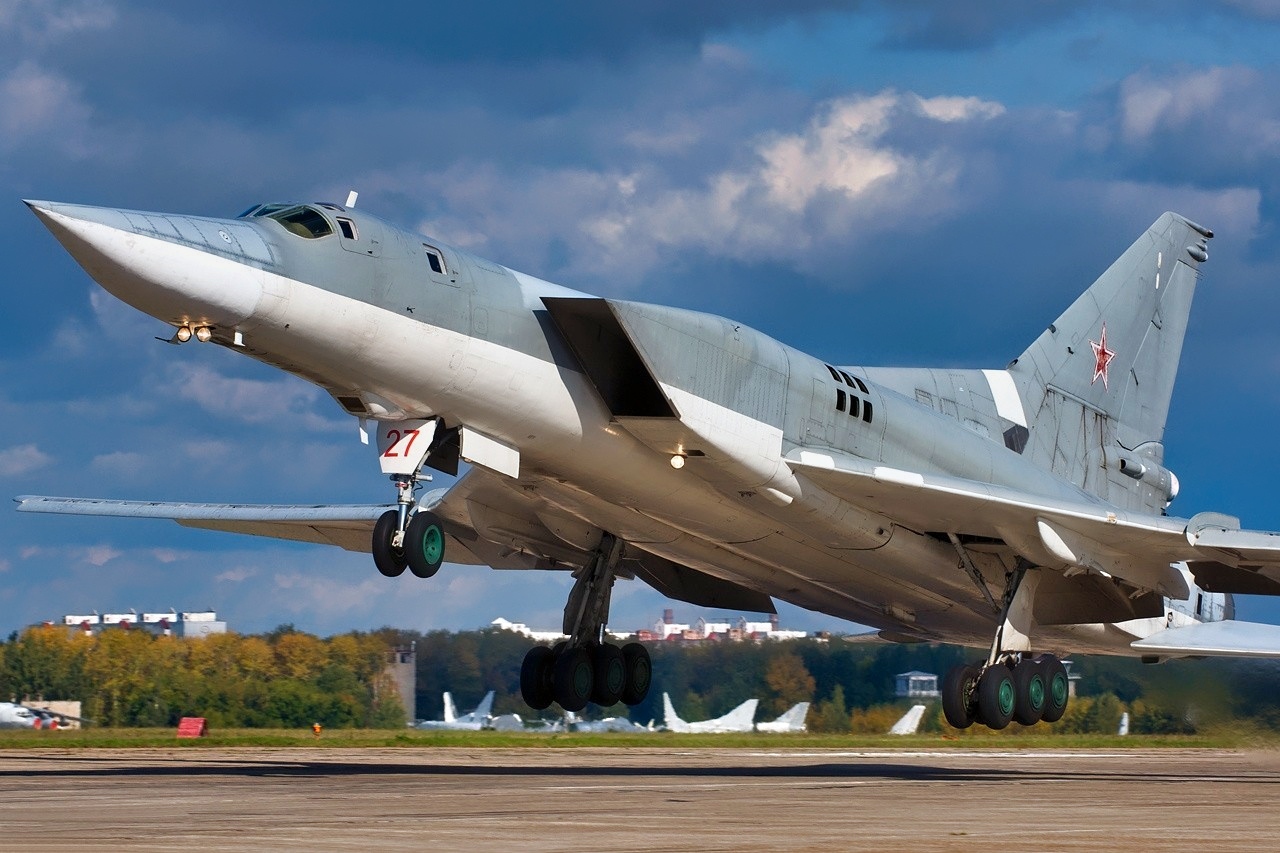
Tu-22M Backfire Bomber from Russia. Image Credit: Creative Commons.

Tu-22M3 Russian Bomber. Image Credit: Creative Commons.
Officials like Russian Foreign Ministry spokeswoman Maria Zakharova and the chief of Russia’s General Staff of the Armed Forces, Valery Gerasimov, continually claim that NATO is directly arming, integrating, and commanding Ukraine in order to hide Russian operational failures on the ground.
It is a convenient excuse for Russia’s terrible invasion campaign that has dragged on for four and a half years and cost it nearly a million and a half casualties. It is also a complete fabrication.
Gerasimov Tries To Cover His Own Failures By Blaming NATO
General Gerasimov was recently seen on Russian television, speaking with Putin, who was clad in military fatigues.
Gerasimov used NATO as a scapegoat to deflect from the massive strategic and tactical failures of the Russian military in the invasion of Ukraine. Rather than admitting to poor planning or logistical collapses, Gerasimov routinely points to Western involvement to explain away his military’s shortcomings.
Gerasimov and other top Russian generals consistently submit over-optimistic or fabricated reports to the Kremlin to obscure their battlefield failures, often citing NATO’s advanced weapons and intelligence as the reason for Russian stagnation.
Putin also claimed that this year, Moscow seized more than 3,000 square kilometers (1,158 square miles) of “our land” in Ukraine.
But because of the shifting front lines and Ukraine’s counteroffensive, Moscow’s actual gains between January and July amounted to a mere 97 sq km (37.4 sq miles), according to the Institute for the Study of War.
Putin has created a “constructed reality premised on a rejection of the tactical and operational developments,” the ISW said.
“Putin’s control over the information space and his ability to shape and propagate narratives of Russian military success are critical to maintaining this false reality,” it added. But Gerasimov persisted in the NATO myth.

Tu-22M Bomber from Russian Air Force. Image Credit: Creative Commons.
“Lacking success on the ground, the Kyiv regime is trying to convince its Western sponsors that it has taken the initiative and has had significant battlefield gains,” Gerasimov told Putin.
Putin responded by telling Gerasimov to continue analyzing Western countries’ involvement in the war.
“We’ll need this analysis for the possible making of responsible decisions in the future,” Putin said.
The Reality Paints A Very Different Picture On The Ground
Russia’s underperformance in Ukraine stems from a combination of severe logistical failures, catastrophic manpower and equipment attrition, and fierce Ukrainian resistance. The campaign has been plagued by deep-rooted systemic issues within its military.
Early military planning for the invasion was undermined by poor intelligence, an overestimation of Russian military expertise, a vast underestimation of Ukraine’s ability to resist, substandard supply chains, a lack of preparation for urban combat, and rigid command structures.
These breakdowns left Russian forces unable to sustain their initial advances and left them vulnerable to Ukrainian counteroffensives.
Institutional corruption, cronyism, and poor unit cohesion have historically resulted in units being under-resourced and lacking essential support. Additionally, infighting and lack of coordination between federal military branches and militias further hindered the effectiveness of Russian operations.
Gerasimov’s much-vaunted Battalion Tactical Group (BTG) modernization, intended to function like U.S. and NATO formations, failed in practice. The rigid, top-down Soviet command structure prevented lower-level officers from acting dynamically, leading to massive armored losses.
None of these had anything to do with involvement from the West or NATO.
While Ukraine has had massive support from the West, the vast majority of its drone forces are supplied with indigenously produced drones.
Justifying Russia’s Failures To The People
Lieutenant General Ihor Romanenko, former deputy head of Ukraine’s general staff of armed forces, told Al Jazeera that Putin is trying to convince the Russian people that the reason the “special military operation” has dragged on so long is because of Western support and war with NATO.
Russia uses “such a propaganda approach as it needs to show why the war has to be scaled up, why this is happening, that this is a war already, and they’re at war not with Ukraine, but with all of NATO,” he said.
Romanenko believes that Russia is preparing for a post-September 20 election mobilization.
“That’s why Russia is continuing active hostilities; it carries out strikes and will conduct at least a partial mobilization that is planned for after the election,” Romanenko added.
Russia’s failures on the battlefield stem from many significant factors. But NATO and Western involvement are hardly at the top of the list. Russia should but won’t look within for those answers.
MORE – Ukraine Is Now a Drone Superpower
About the Author: Steve Balestrieri
Steve Balestrieri is a National Security Columnist. He served as a US Army Special Forces NCO and Warrant Officer. In addition to writing on defense, he covers the NFL for PatsFans.com and is a member of the Pro Football Writers of America (PFWA). His work was regularly featured in many military publications


