
Ukraine carried out another large-scale drone and missile attack against Russia overnight into Monday, July 13, hitting targets throughout the country. Strikes were reported in the Moscow region and in Russia’s southern regions, proving that Kyiv’s ongoing long-range strike strategy is working as intended.
The attacks reportedly killed three people in the Moscow region and injured at least five others. Additional strikes also triggered a major fire at an oil depot in the Russian Stavropol region and followed another wave of Ukrainian strikes over the weekend that hit the Syzran oil refinery, Russian fuel tankers, ferries, and electrical infrastructure that supports Russia’s ongoing invasion of Ukraine.

HIMARS Rocket. Image Credit: Creative Commons.
The latest round of strikes comes after President Volodymyr Zelenskyy promised a 40-day-long strike campaign that would raise the cost of continuing Russia’s military operations. Today, those strikes are causing widespread power outages and fuel shortages throughout a country that, outside wartime, is one of the world’s largest exporters of crude oil.
Three Killed Near Moscow
The first strikes reached Moscow during the early hours of Monday, with Ukrainian drones targeting the capital and its dense air defense network. Pionersky, in the Istra municipal district, incurred the deadliest of the attacks. According to Moscow Governor Andrey Vorobyov, a drone struck the area, killing three people and injuring three others.
In a Telegram statement, Vorobyov said, “In the settlement of Pionersky in the Istra municipal district, as a result of a drone falling, three people were killed and three more were injured.”
The Moscow regional governor said that emergency services were working at the scene and victims were receiving assistance.
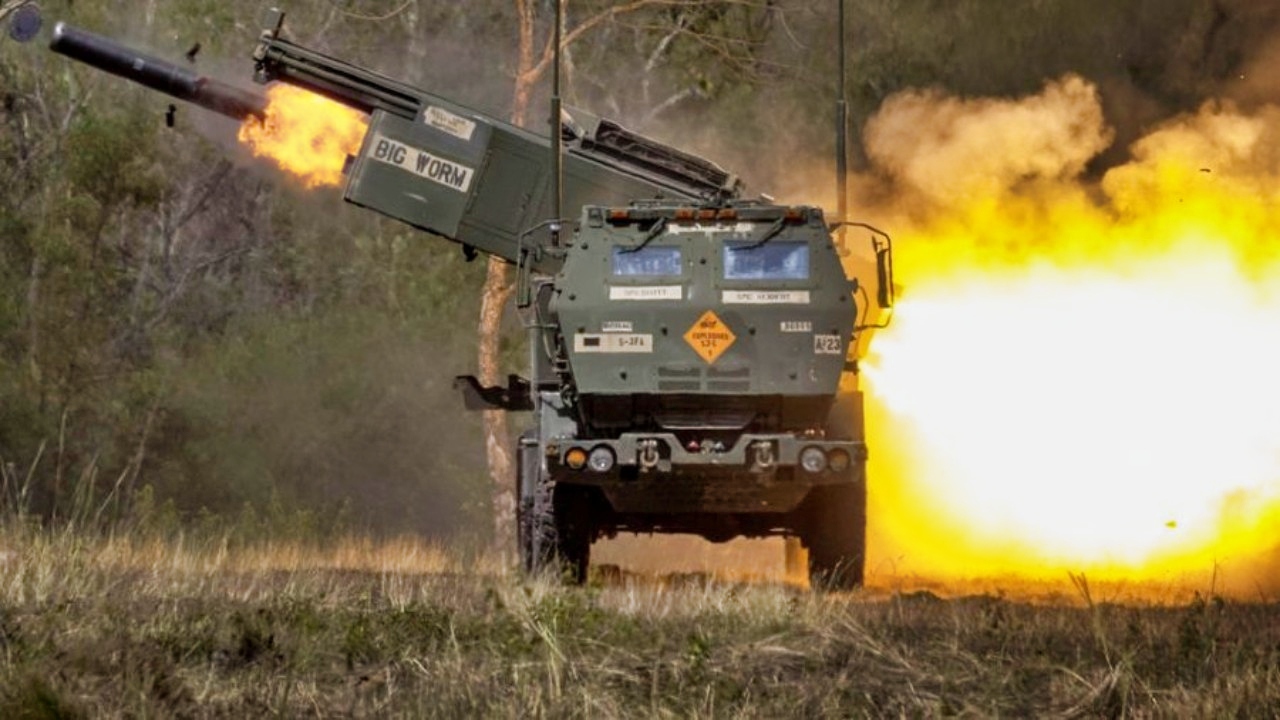
HIMARS. Image Credit: U.S. Government.
Vorobyov also confirmed later that another drone had struck a residential apartment building in Solnechnogorsk, with the attack injuring two others. He also described how private homes in the village of Babkino were damaged during the overnight strikes. According to Vorobyov, air defense systems intercepted or suppressed a total of 81 Ukrainian drones over the Moscow region, with several still reaching their intended targets.
Moscow Mayor Sergei Sobyanin also provided updates throughout the night as drones continued to approach the capital. Writing on Telegram, the mayor said that Russian air defense forces had repelled another attack by enemy drones flying toward Moscow. Sobyanin published multiple updates throughout the night as the strikes kept coming.
Russia’s Ministry of Defense also said its air defenses had destroyed 243 Ukrainian fixed-wing drones over Russian territory overnight, including dozens flying over the Moscow region.
A Weekend Campaign Against Oil Refineries
Monday’s strikes followed a weekend of intense attacks by the Ukrainians. Early on Sunday morning, Ukrainian drones struck the Syzran oil refinery in Russia’s Samara region. The facility is one of the country’s most important fuel-processing facilities, owned by Rosneft. Residents told local media they heard explosions shortly after dawn, and videos soon went viral on social media showing huge plumes of smoke rising from the refinery complex.
Ukraine also expanded its campaign against Russia’s maritime logistics during the same time period. According to Robert Brovdi, commander of Ukraine’s Unmanned Systems Force, Ukrainian forces successfully struck at least 10 fuel tankers and 4 ferries. The vessels were said to be supporting Russian logistics around the Sea of Azov and occupied Crimea. The strikes follow weeks of successful attacks against transport logistics and infrastructure in the occupied peninsula, forcing Russia to use sea routes to move fuel into the region.
Writing on social media, Brovdi described the attacks as the “technological humiliation” of the Russian empire, stating that “it will fall because of Crimea.” He also noted that the Russian shadow fleet, which moves sanctioned oil products globally, is now “noticeably shrinking” and can no longer move through the Kerch Strait.
The attacks forced the suspension of shipping through the Sea of Azov over the weekend as authorities assessed the damage and searched for additional aircraft or unmanned vessels.
Ukraine Promises More Strikes
The strikes follow Ukrainian President Volodymyr Zelenskyy’s announcement of the formation of a new Long-Range Impact Command intended to coordinate deep strikes inside Russia through the remainder of the planned 40-day campaign and beyond.
“Today, I signed a decree establishing a special command within the Armed Forces – a command for long-range, effectively global, impact on Russia over this war. This command must concentrate 100% of available resources on further degrading Russia’s warfighting potential. The commander in charge of this direction will be strong and certainly highly experienced,” Zelenskyy said in a nightly address.
The news expands on Zelenskyy’s promise to continue raising the cost of fighting the war for Russia – and the results over the weekend into Monday prove that the strategy is having a measurable impact.
Russia has suspended diesel exports, imposed fuel rationing across several regions, and temporarily halted shipping in parts of the Sea of Azov following repeated attacks on fuel depots and refineries. Despite Moscow’s insistence that it will keep fighting, Ukraine keeps raising the costs – and it’s unclear how long Russia has left before it is simply forced to stop.
About the Author: Jack Buckby
Jack Buckby is a British researcher and analyst specializing in defense and national security, based in New York. His work focuses on military capability, procurement, and strategic competition, producing and editing analysis for policy and defense audiences. He brings extensive editorial experience, with a career output spanning over 1,000 articles at 19FortyFive and National Security Journal, and has previously authored books and papers on extremism and deradicalization.


