
Did Generals Ignore Warnings Before Deadly Iranian Drone Strike?: Survivors of an Iranian drone strike that killed six U.S. soldiers at Port Shuaiba, Kuwait, have accused senior Army commanders of ignoring repeated warnings that the facility was vulnerable and had already been identified as a likely target for Iranian forces. The shock allegations, which were detailed in a report by the Washington Post following interviews with 17 survivors and witnesses, raise new questions about one of the deadliest attacks on American forces during the U.S.-Iran War.
The attack, which took place on March 1, came one day after the United States and Israel launched Operation Epic Fury – the initial military campaign that destroyed Iranian military targets and prompted Tehran to retaliate with hundreds of missile and drone launches across the Middle East. Then, around 30 minutes after soldiers at Port Shuaiba were told that it was safe to leave their protective bunkers, an Iranian Shahed-type one-way attack drone hit the unit’s operations center and killed six members of the Army Reserve’s 103rd Expeditionary Sustainment Command. The strike also injured 30 other people.

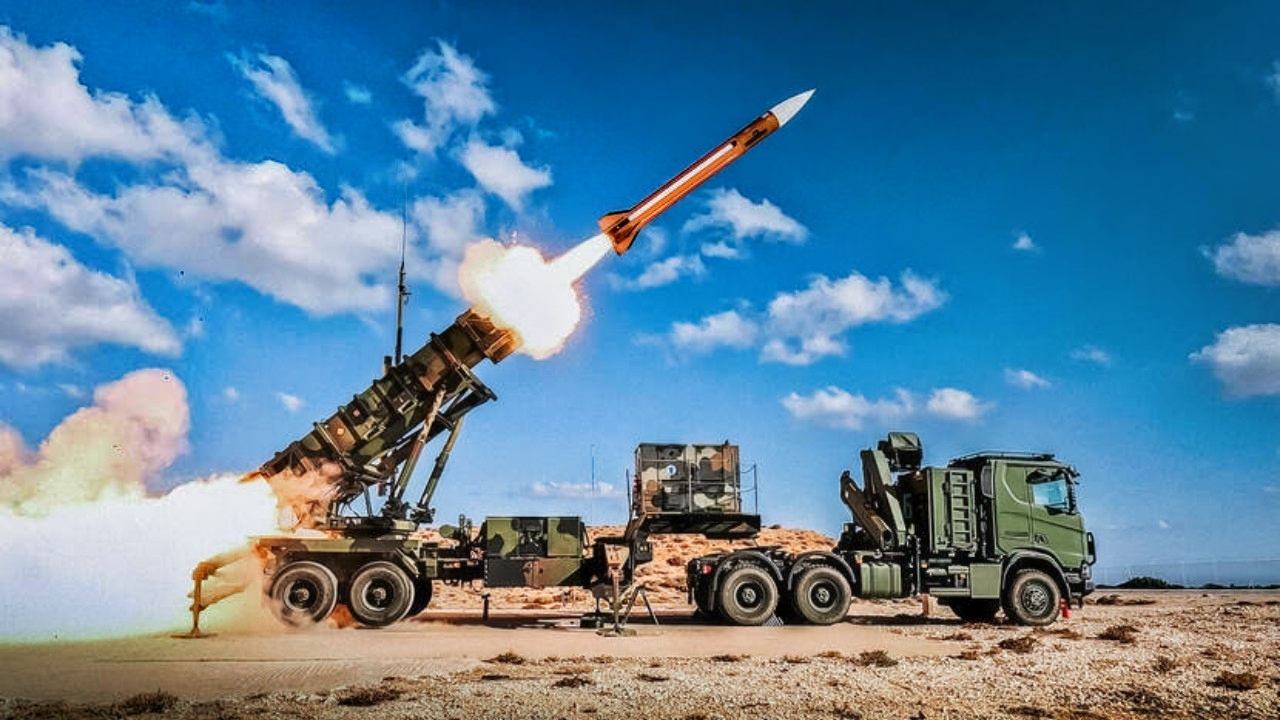
Exercise Artemis Strike is a German-led tactical live fire exercise with live Patriot and Stinger missiles at the NATO Missile Firing Installation in Chania, Greece from Oct. 31-Nov. 09. Over 200 U.S. soldiers and approximately 650 German airmen will be participating in the realistic training within a combined construct, exercise the rigors associated with force projection and educate operators on their air missile defense systems. The 10th Army Air Missile Defense Command will deploy, operate and fire live missiles within a tactical scenario, under Supreme Headquarters Allied Powers Europe operational readiness evaluation criteria.

German soldiers assigned to Surface Air and Missile Defense Wing 1 fire the Patriot weapons system at the NATO Missile Firing Installation (NAMFI) during Artemis Strike Nov. 7 in Chania, Greece. Artemis Strike is a German-led multinational air defense exercise. German soldiers Over 200 U.S. soldiers and approximately 650 German airmen will be participating in the realistic training within a combined construct, exercise the rigors associated with force projection and educate operators on their air missile defense systems. (Photo By Officer Candidate Sebastian Apel, Air Defence Missile Group 24)
Soldiers Say Intelligence Warnings Were Ignored
According to soldiers and individuals familiar with the matter, concerns about Port Shuaiba were raised months before the war began. The 103rd Expeditionary Sustainment Command had been deployed to Kuwait in 2025 and was initially based at Camp Arifjan before the Pentagon decided to disperse troops across smaller facilities to make them harder for Iran to target. Port Shuaiba, which is a commercial port roughly 30 minutes away, was among those locations.
According to the investigation, assessments confirmed that troops should not be stationed at the facility because it lacked adequate defenses. One complaint later submitted to the Army Inspector General reportedly stated that the assessments had gone so far as to recommend that no personnel be relocated to Shuaiba Port at all. Three soldiers told the outlet that Brig. Gen. Clint Barnes and Maj. Gen. John Hinson had received classified briefings in which they were warned that Port Shuaiba had been identified by Iran as a potential target.
“We knew it was an identified target,” one of the soldiers told The Washington Post.
The soldiers also alleged that requests for additional counter-drone defenses were made, and that a mobile EAGLS system – designed to defeat unmanned aircraft – was not approved because the U.S. military did not have one available.
Questions Over Port Shuaiba’s Defenses
According to the Washington Post’s investigation, soldiers who inspected the site before the war identified multiple shortcomings that they believed left Port Shuaiba vulnerable to precisely the type of attack Iran carried out. While nearby air defense systems did prove capable of intercepting some of the smaller drones launched at the facility, several soldiers told the Post that the port itself lacked the specialized defenses that were required to intercept Shahed-style drones – like the EAGLS system that was not provided despite requests for its delivery.
The concerns went beyond inadequate air defenses, too. Survivors told the outlet that the operations center itself offered very little protection against an attack from above. While the building was surrounded by concrete T-walls that could protect personnel from ground-level explosions and shrapnel, the soldiers noted that it did not feature hardened overhead protection that would withstand a drone strike.
Further to those concerns, multiple soldiers also told the newspaper that they had observed unidentified quadcopter drones flying around Port Shuaiba in the days before the attack, which had led some to suspect that Iranian forces were conducting reconnaissance ahead of the strike.
What Now?
It’s unclear at this stage whether the claims will ever be officially answered. According to the Washington Post, the Army has already shared the findings of its investigation with the families of those who were killed, but a U.S. official familiar with that inquiry said that it does not make any recommendations for punitive action, nor does it assign fault for the decisions that placed troops at the port to begin with. A separate classified investigation by U.S. Army Central, the body responsible for Army operations in the Middle East, also examined the intelligence warnings and the port’s defensive capabilities, but those findings will not be released publicly.
In written responses to the Washington Post ahead of the publication of its investigation, Army Central said that the facility had been chosen “in accordance with operational plans” and had been fortified, with sufficient bunker space for the personnel assigned there.
The command also insisted that unit leadership had immediately supported the evacuation of personnel before they were medically evacuated due to their own injuries.
However, Army Central did not directly address any questions about whether force-protection assessments had recommended against using the port, or whether requests for additional counter-drone systems were denied.
About the Author: Jack Buckby
Jack Buckby is a British researcher and analyst specializing in defense and national security, based in New York. His work focuses on military capability, procurement, and strategic competition, producing and editing analysis for policy and defense audiences. He brings extensive editorial experience, with a career output spanning over 1,000 articles at 19FortyFive and National Security Journal, and has previously authored books and papers on extremism and deradicalization.


