

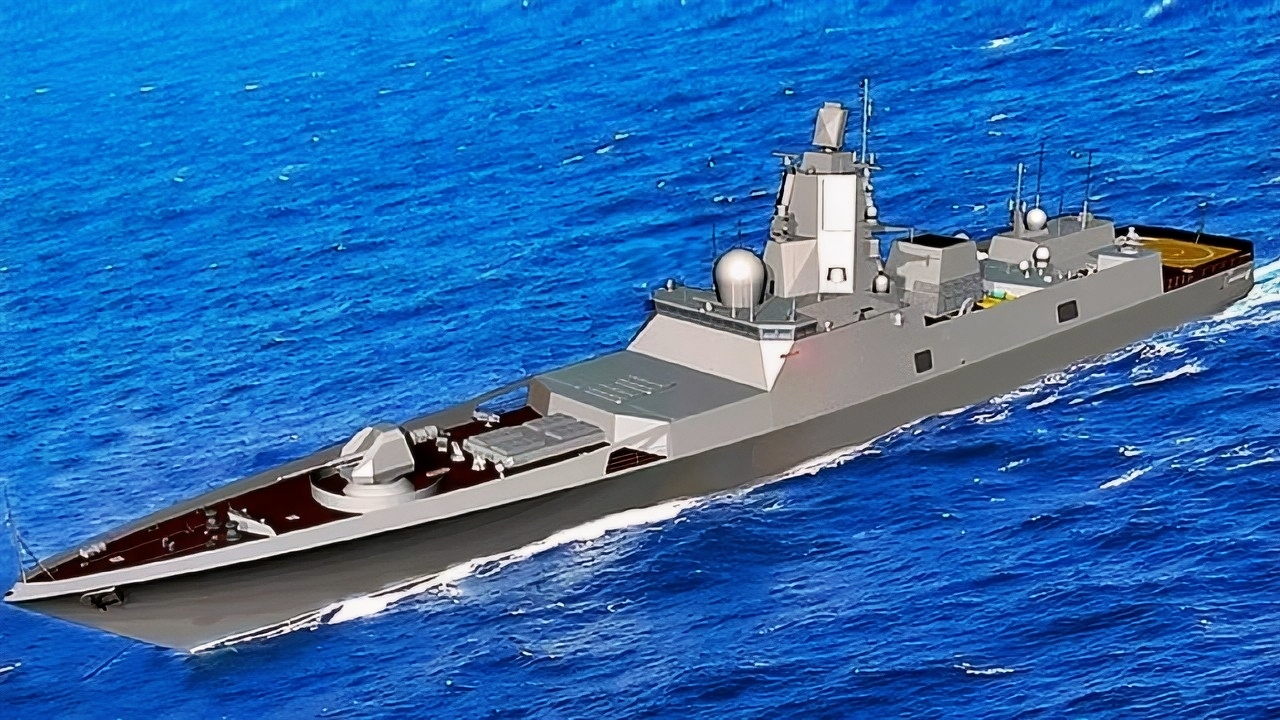
Ukraine continues its bid to overwhelm Russia with a dynamic war of maneuver, notably using advanced drones.
Recent reports suggest that more than 50 Russian vessels have effectively withdrawn from the Sea of Azov and are sheltering farther south in the Black Sea following an intense Ukrainian drone campaign.

Kirov-Class Russian Navy. Image Credit: Creative Commons.
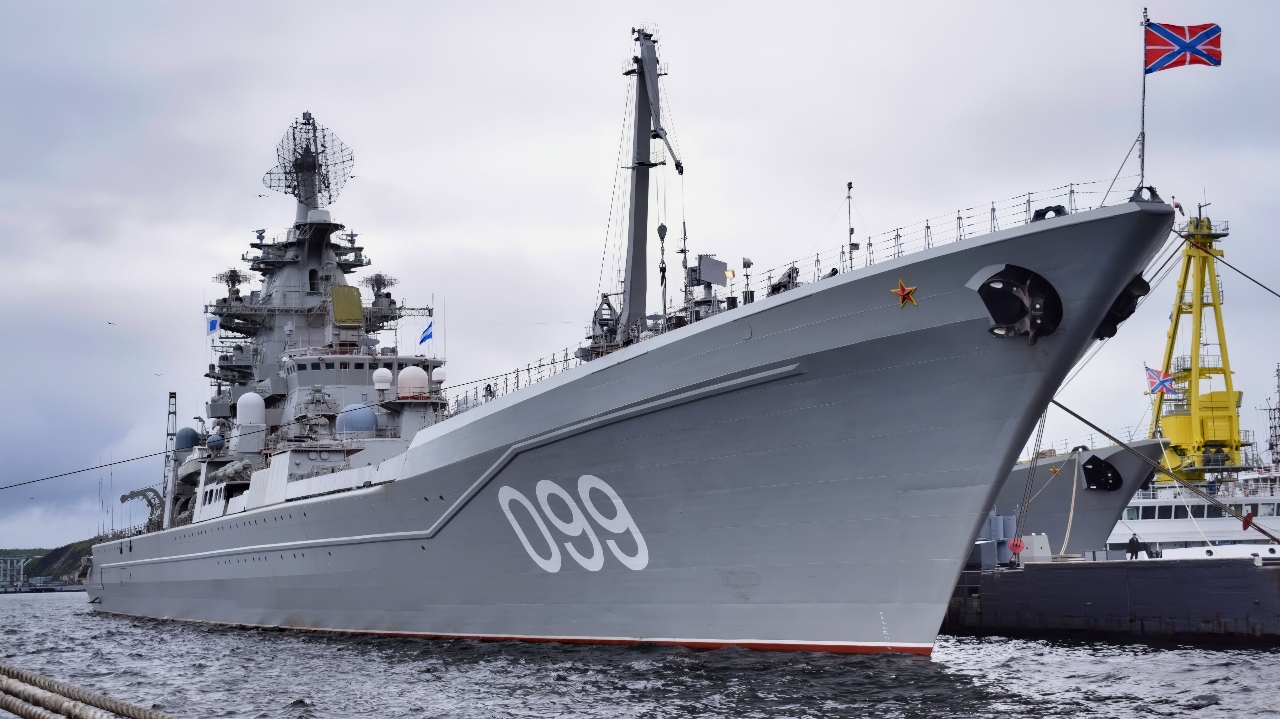
Kirov-Class Russian Navy Cleaned Up. Image Credit: Creative Commons.
According to UNITED24, Kyiv is claiming victory over Russia in its recent campaign against Russian maritime logistics, specifically in the distant Sea of Azov.
These attacks, conducted by Ukrainian drones, indicate an escalation by Kyiv in that the Ukrainians are no longer simply focused on attacking warships.
Ukrainian drones are increasingly being directed to attack Russian fuel tankers, merchant ships, ferries, logistics ships, critical Russian oil infrastructure, and ports supporting Crimea.
A Bid to Shift the Battlefield
Kyiv’s forces want to make Russian use of the Sea of Azov prohibitively dangerous. The Guardian reports that Russia has indeed suspended shipping through the vital Don-Azov Canal; Kyiv claims that more than 90 vessels were affected in less than a week.
The Financial Times similarly reports that Ukraine hit 21 Russian vessels in 72 hours, including numerous fuel tankers supporting Russian Crimea.
In the wake of recent–decisive–Russian battlefield victories along the frontline in the east, Kyiv wants to shift Russian focus away from the momentum they’re gathering in Ukrainian “Fortress Cities,” like Konstantinovka, by launching sustained–sweeping–assaults on Russia itself.
Particularly, Ukrainian forces badly want to pressure Russia in places like Crimea, where Kyiv desires to reclaim the territory it lost to Russia in 2014.
Why the Sea of Azov Matters
Ukraine has already spent much of the war attacking Russian naval forces and shipping lines in the Black Sea.
And while the Black Sea remains the center of gravity for Russian maritime interests, the Sea of Azov is another important pillar supporting Russia’s economy and its overall ability to wage war.
According to the George C. Marshall European Center for Security Studies, the Sea of Azov is a primary shipping route for Russian commodities (notably grain from agricultural centers such as Rostov and Krasnodar) to international markets.
By the way, Rostov and Krasnodar are key for global wheat exports.
By seizing the transport of these goods from Russia to global markets via the Sea of Azov, Ukraine is helping set the conditions for what analysts, such as independent war correspondent Michael Yon, warn is an impending global famine.
The closure of the Strait of Hormuz (SoH) has already disrupted critical global agricultural production. Now, Ukrainian attacks on Russian wheat shipments from the Sea of Azov will compound this dangerous trend.
The Iran War Connection
Another core function of the Sea of Azov, in the analysis of the Middle East Institute, is to connect the Volga-Don Canal and the Don-Azov Canal, which themselves provide Russia with continuous inland maritime networks ultimately connecting the Caspian Sea with the European river systems (all of which loop back to the Black Sea).
Thus, Moscow can deploy its warships and goods and project power across multiple inland maritime regions. Ukraine’s persistent drone attacks disrupt that.
Another unique connection to the Iran War is the Caspian Sea.
A massive amount of trade is conducted between Russia and the Islamic Republic of Iran via the Caspian Sea. Indeed, since the start of the Iran War, with the SoH essentially shut down since February 28, Iran has managed to avoid a total collapse of its critical oil and natural gas industries, thanks to inland sea transportation routes such as the Caspian Sea.
Ukraine’s attacks on the Sea of Azov, in an indirect way, complicate the flow of Russian goods across that entire inland maritime transportation network (especially after the US allegedly attacked Belt-and-Road Initiative railways in northern Iran and after Israeli warplanes purportedly threatened Russian-flagged ships in the Caspian Sea earlier in the war).
Again, this will massively harm global food flows.
But it is part of Kyiv’s overall grand strategy of attacking the underpinnings of Russian power (its industry, its agriculture, its trade, all in a grand effort to collapse the Russian will to fight Ukraine.
Clearly, Ukraine is conducting a logistics interdiction campaign. Rather than destroy the Russian armies directly (which they cannot, as evidenced by the setback around Konstantinovka), Kyiv wants to disrupt fuel flows, critical rail lines, essential ports, key bridges, ferries, warehouses, refineries, and merchant shipping. Andriy Zahorodniuk, a Ukrainian deputy defense minister, says that Russia has effectively lost control of a “critical maritime corridor.”
Crimea Under Sustained Pressure
Before the Ukraine War began in February 2022, the Ukrainian parliament passed a law requiring its government to use military force to reunite the Crimean Peninsula with Kyiv.
Of course, this is a seemingly impossible task, given how well-fortified Russian forces are in Crimea. Indeed, Crimea has been fully integrated into the Russian Federation.
And Russian officials, such as Dmitry Medvedev, have repeatedly expressed a willingness on the part of Russia to employ tactical nuclear weapons in the event Ukrainian forces attempt to seize Crimea.
There’s no way that Ukraine could retake Crimea conventionally.
So, Ukraine has taken an indirect, unconventional strategic approach to weakening Russian resolve in Crimea. They’ve targeted the imported fuel and other critical supply flows that Crimea relies upon.
These normally flow through the Kerch Bridge, aboard those ferries targeted recently by Ukrainian drones, fuel tankers, and coastal shipping routes.
Because Ukraine has attacked every one of those systems over the last year, and they are escalating those attacks, they’ve caused significant disruptions to Crimea.
Everything from fuel shortages to disruptions in electricity has defined life in Crimea because of these persistent Ukrainian attacks.
These events have, in turn, forced emergency declarations, damaged Crimea’s vital tourism industry, and increased pressure on Russian logistics.
Can Drone Warfare Change the Course of the War?
From the Ukrainian perspective, their expansive drone warfare campaign has effectively flipped the script on the Russians.
The Russians have enjoyed a series of victories along the front lines of the war in Ukraine. Yes, those victories were slow to arrive.
But they have come.
Ukraine risks a collapse of its position along the front unless it can do something drastic to reframe the war and alleviate the intensifying Russian pressure along the front.
Strikes on the Sea of Azov and other key Russian infrastructure, Kyiv believes, will have real strategic effects that will grant Ukraine the ultimate victory it desires.
The Ukrainian attempts to reshape the war in their favor after experiencing tough setbacks, such as around Konstantinovka, are dynamic.
They’ve had an outsized impact.
Yet, there has been little indication that the desired effect of these drastic drone campaigns–a reduction in the Russian will and capability to wage war–has occurred.
Come to think of it, these strikes appear to have only further militated against the Russians’ will to utterly defeat the NATO-backed Ukrainians on the battlefield, irrespective of the costs.
The Stakes for Russia–and the World
In the meantime, the unintended global consequences of these actions are severe. Cutting off the flow of key wheat supplies from the Sea of Azov with these attacks will harm both Russia and the world’s wheat consumers.
It might harm Russia. But unless it does serious harm in the near term (which it won’t), the Russian Armed Forces will continue pressing ahead against Ukraine’s “Fortress Cities.” It’s a race against time now.
Can the Russians knock what remains of Ukraine’s Armed Forces out of the fight by increasing their pressure against those diminishing Ukrainian forces in the “Fortress Cities,” or will the Russians be bogged down long enough against those remaining “Fortress Cities” to allow for Ukraine’s logistics interdiction campaign to have its intended effect on Moscow?
And how will this interdiction campaign affect global food supplies, given the ongoing disruptions caused by the SoH closure?
Given the size of Russia, its armaments, and the fact that this is the country that lost 20 million people during the Second World War and kept fighting on until ultimate victory in 1945, I’d not bet against the Russians enduring these hardships longer than Ukraine can sustain its war on the front lines.
And if the Ukrainian position along that front collapses, as it seems poised to do, then the Russian Army will have a straight path to Odesa, the last Ukrainian port city along the Black Sea–and few defenders will stand between Russia’s forces and that historic port city.
About the Author: Brandon J. Weichert
Brandon J. Weichert is the Senior National Security Editor at 19FortyFive.com. He also manages The Weichert Brief on Substack. Weichert also hosts “National Security Talk” on Rumble. He is the author of four bestselling national security books, the most recent of which is A Disaster of Our Own Making: How the West Lost Ukraine (Encounter Books). Follow him via Twitter/X @WeTheBrandon.


Swamplaw Yankee
July 14, 2026 at 5:52 am
So, where is the International war criminal concept? All these Kremlin Muscovy ethnic parasite KOLONIZERS who have no electricity, water, Gasoline, diesel are going to order fast food as they patiently wait for the magic beans that will make Odesa vanish?
Oh wait, Not a single parasite KOLONIZER in Crimea is grabbing the nearest horse + wagon to get to the nearest stolen farm + help hand harvest the stolen crops? The assumption is that they are all out in the vast forests of Crimea chopping green wood for the coming FREE winter cold.