

A Russian dissident living in Latvia who ABC News describes as “once one of the most powerful men in Russia,” Mikhail Kasyanov, believes that mounting domestic political pressures-such as recent protests or shifts in public opinion-are increasingly challenging Vladimir Putin’s authority over the Ukraine War.
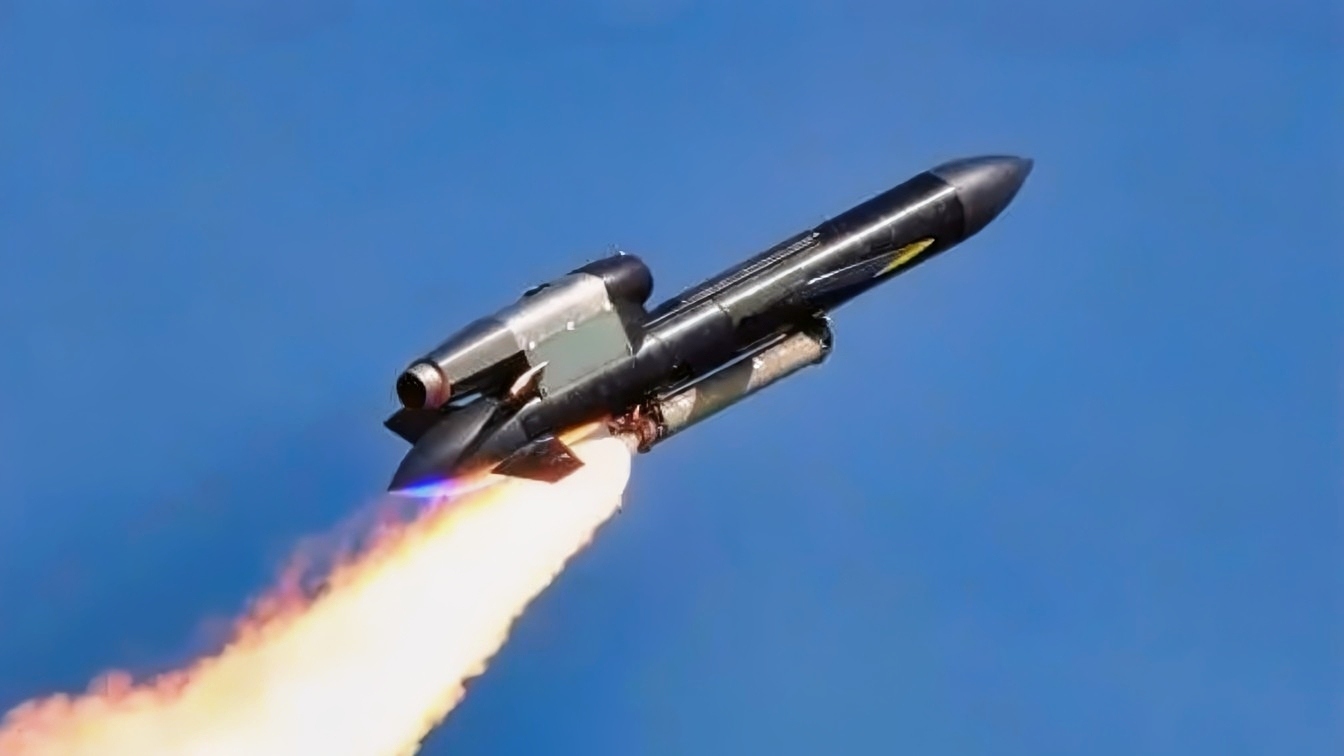
Recent strikes deep inside Russia by the Ukrainians have targeted oil production, refining, and export facilities as well as cultural symbols, like Russia’s “second capital” of St. Petersburg.

Switchblade Drone. Image Credit: Industry Handout.

Ukraine Switchblade Drone. Image Credit: Creative Commons.
These strikes, per the Russian dissident, have engendered animosity among the all-important Russian middle class, as this group fears impending shortages and an overall drag on the economy from these recent Ukrainian strikes.
ABC News highlights what it describes as “Putin’s continued refusal to order a general mobilization despite Russia’s enormous battlefield losses,” which, per the formulation of Kasyanov, are seen as “a tacit acknowledgment that the Kremlin does not want to risk urban, middle-class ire.”
The Russian Middle Class Wants Victory, Not Compromise
What’s missed in all this, however, is that the Russian middle class’s anger stems from their belief that the leadership’s reluctance to commit to the war-by escalating or ending it fully and decisively- undermines their hopes for a clear victory, thus influencing Putin’s strategic calculus.
Western analysts and Russian expatriates in the West who dislike the Putinist regime believe that with just a bit more pressure from the West, the Putin government will be forced to stand down in the Ukraine War. But this defies all logic.
After all, look at the battlefield losses the Russians have sustained precisely because President Vladimir Putin has chosen–and refuses to abandon–his “Special Military Operation” (SMO) formulation.
Kasyanov is likely correct in his assertion that Putin, as a politician, does not want to upset the apple cart domestically.
That’s why he has refused to expand the SMO into a full-blown war against Ukraine, with total mobilization of the Russian reserves.
But this is not likely because the Russian middle class doesn’t want to escalate the war to achieve victory. It’s probably because Putin has misinterpreted the political mood among the Russian middle class just as he miscalculated how easy it would be to take Kyiv at the start of the war (and how he misunderstood the intentions of the Western powers during the failed Istanbul Conference in 2022).
Russia’s middle class wants the war over quickly. But they want it ended by military victory. Not negotiations. Not a ceasefire. They want the perceived threat ended.
After all, many Russians have lost friends or loved ones on the front lines, and they want those sacrifices to lead to meaningful success. This desire for a decisive win reflects their frustration and hope for closure.
Why Putin Continues to Restrain Escalation
Putin is not listening to that sentiment, though. And it isn’t only because he likely miscalculated the mood of his people when it comes to fighting Ukraine (they’re not loving the war, but they do want to win it for the sake of their loved ones and their country).
Putin is also likely still hoping he can avoid a greater escalation against NATO while keeping the nuclear genie from being loosed from its atomic lamp.
Plus, Putin badly wants to see his economy restored to the global trading network.
Throughout the war, Putin has sent key advisers to meet in secret with Americans to discuss everything from potential sanctions relief to establishing new rare-earth mineral mining deals.
Here again is possible evidence for why Putin has held his hand for as long as he has regarding escalation. If he goes big into Ukraine the way that many of his middle-class countrymen desire, it could ensure a wider war erupts with the West.
It might very easily lead to Russia being forever cut off from Western networks.
Western Pressure May Be Producing the Opposite Effect
Western analysts often misjudge Russia and Putin. These analysts believe that increased military pressure on the Russian economy and people will cause the Russian military to collapse.
But these attacks are only fueling Russian resolve and opposition to Ukraine and the West, highlighting the need for cautious analysis.
After all, we are talking about a country that lost 20 million people fighting the Nazis in the Second World War–and, despite those losses, utterly defeated the mighty German war machine in 1945.
Losing some gasoline and slowing the Russian economy will not have the effect that people like Kayanov think it will.
About the Author: Brandon J. Weichert
Brandon J. Weichert is Senior National Security Editor. He also manages The Weichert Brief on Substack. Weichert also hosts “National Security Talk” on Rumble. He is the author of four bestselling national security books, the most recent of which is A Disaster of Our Own Making: How the West Lost Ukraine (Encounter Books). Follow him via Twitter/X @WeTheBrandon.


