

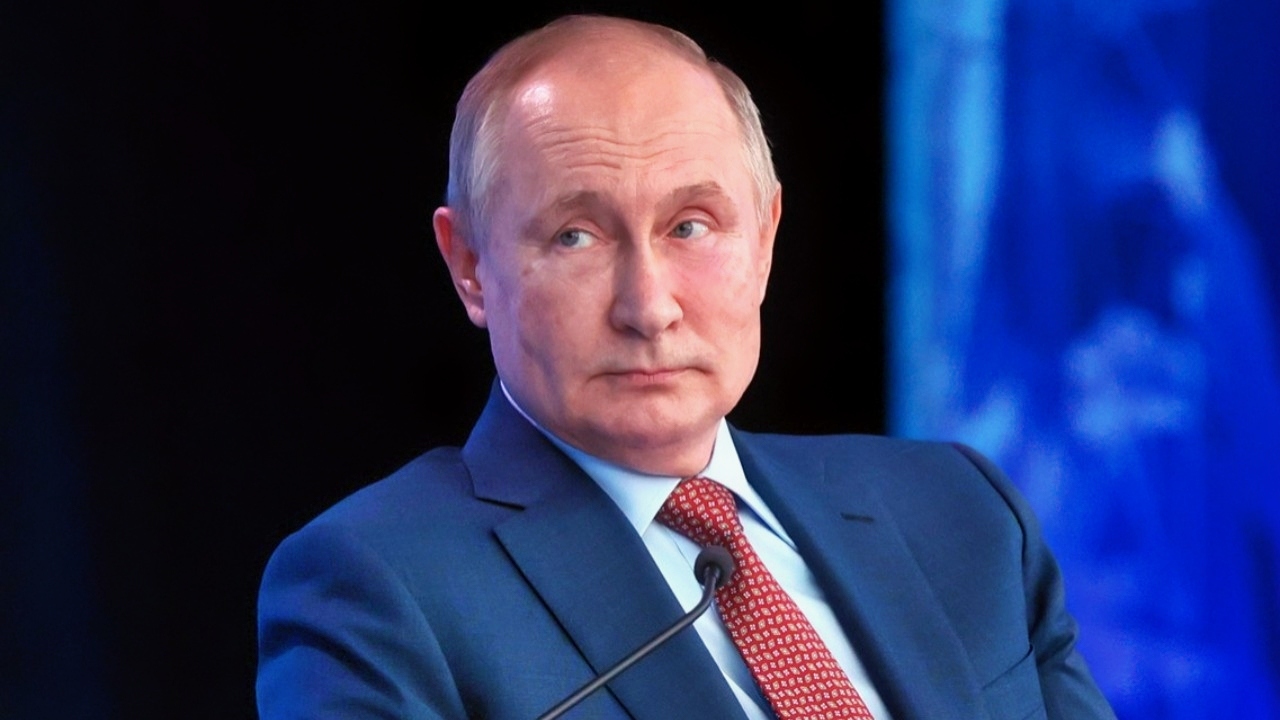
Russian President Vladimir Putin is in an increasingly unenviable situation. There are multiple forces not trending in his favor, but the central dilemma comes down to this: The number of allegedly rational arguments used to justify the Ukraine war at the outset that are still defensible today is zero.
At the same time, the number of complications arising from the Russian military’s progressive underperformance and former KGB Lt. Col. Putin’s overpromising is multiplying. The war is being continued not only to no definable positive end, but also to the increasing detriment of whatever future there might be for Russia when the conflict finally ends.
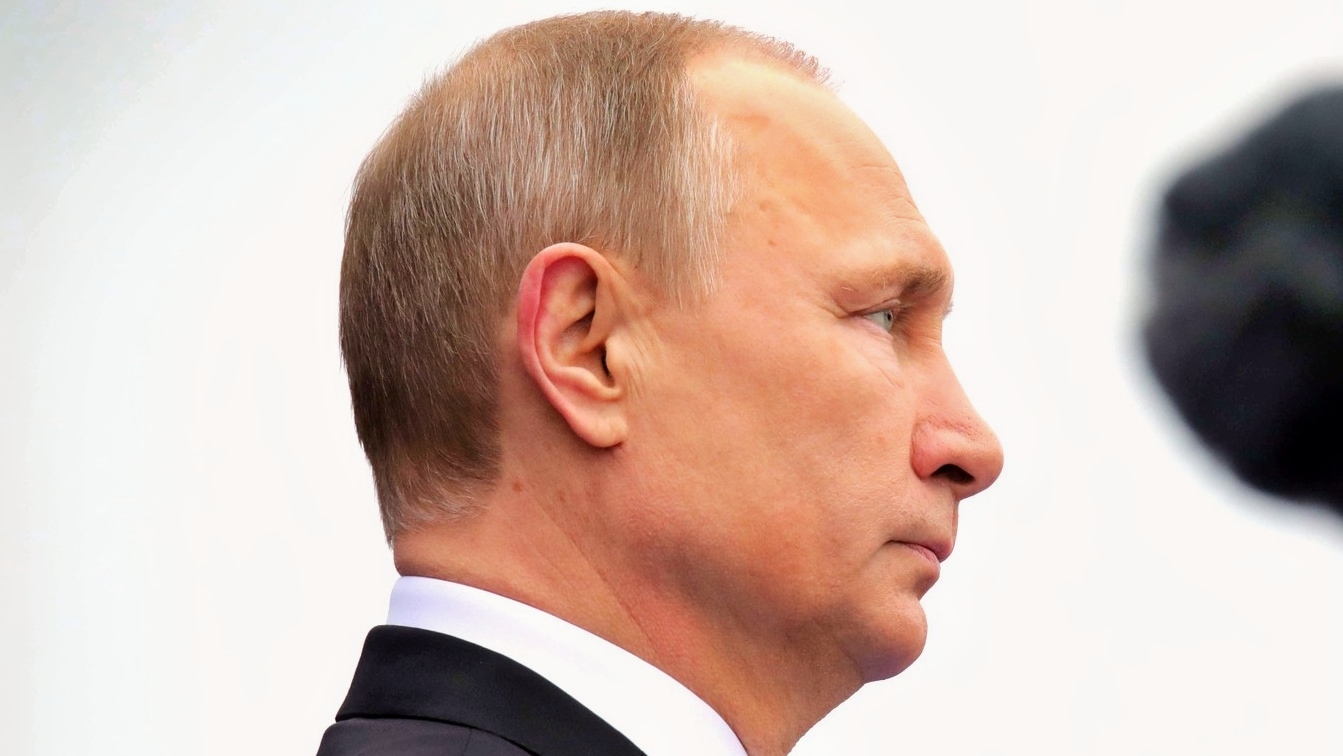
Putin in Red Square in 2017 Creative Commons Image.
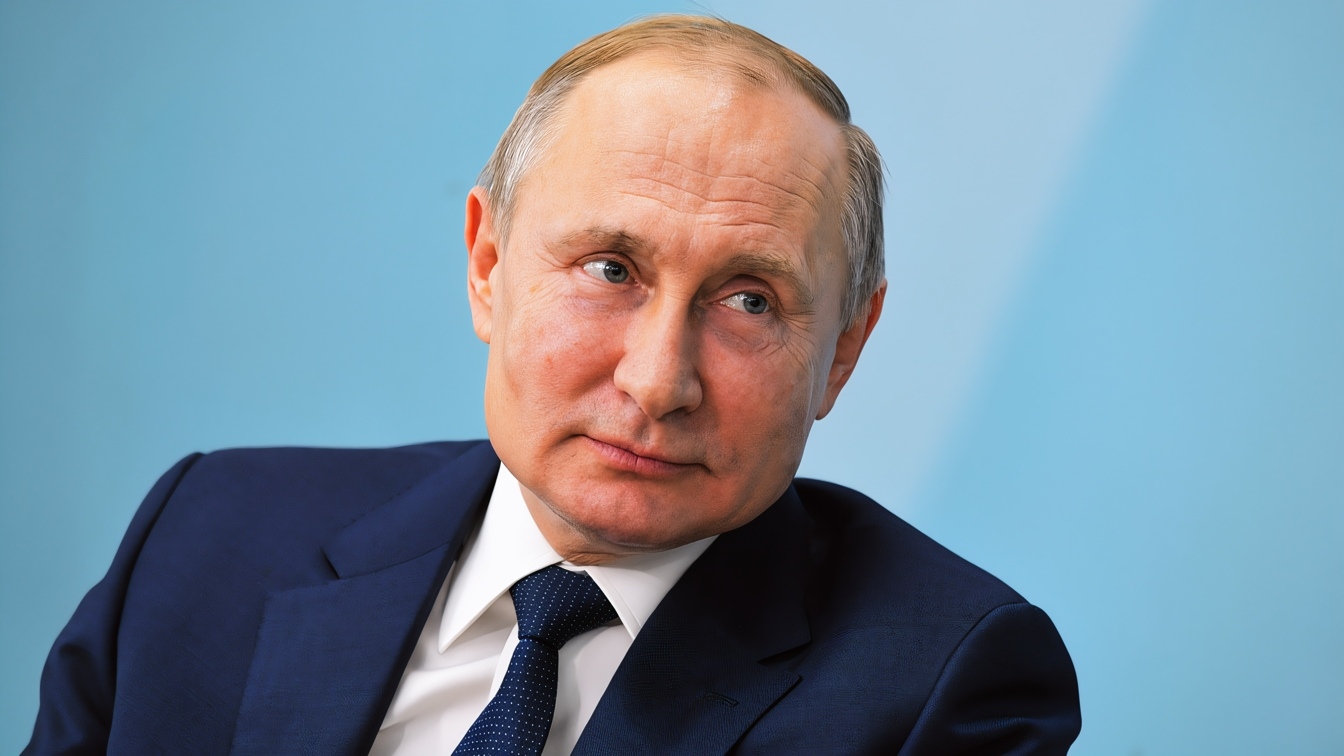
Putin in 2020 Russian Government Photo Handout
An example is that one of the primary justifications for invading Ukraine, according to Putin and his inner circle, was the need for a “land bridge” between the illegally invaded and occupied region of Crimea and mainland Russia, which has become an impossibility at this point.
Russia may still occupy the land corridor that links the two territories, but it by no means controls it. It is Ukraine that controls this logistical lifeline.
As the Washington Post said last month, Kyiv has “put a stranglehold on Crimea, using an increasingly capable fleet of mid- and long-range drones to destroy roads and other infrastructure used by Russia to funnel troops and weapons to the front.”
NATO and “Russian Greatness”
Another one of Putin’s hot-list items was that Ukraine had to be invaded lest the specter of NATO expansion bring the alliance even closer to Russia’s borders.
As proof of the wannabe spy-turned-president’s Midas touch in reverse, his invasion actually instead caused two of Russia’s closest and perennially neutral neighbors – Finland in 2023 and Sweden in 2024 – to abandon that neutrality and join the alliance.
Then there is the fantasy that Putin has always trumpeted about how he would “restore Russia’s greatness” while all the time he was actually doing a better job of destroying his country than would have been possible if he were doing it on purpose. If anything, he has guaranteed that Russia’s future for about as far as anyone can see is that of a broken, bankrupt nation that has one of the worst demographic profiles of any modern industrialized state and will likely be condemned to a pariah status for decades.
There are also better than even odds that Russia, as a unified nation-state, will not survive the war’s aftermath or Putin’s demise – whichever comes first.
In the meantime, the dictator in the Kremlin is beset by a host of new domestic pressures and potential sources of instability stemming from this war, which he himself decided was the best path forward for his country. As time passes and the rationale for war proves increasingly unsupportable, the situation inside Russia today bears no resemblance to what it was on the first day of the war.
The War Comes Home And Other Headaches
What is proving to be one of the most prevalent indicators that Putin is no longer in control of the conflict and is doing his country no good is the phenomenon that the war is no longer just on the front lines and in cities like Kyiv, which are continually hit with Russian missiles and drones. Ukraine’s continually expanding drone and missile campaign is now reaching deep into Russian territory and even into Moscow itself.
These attacks have disrupted Russia’s oil refining capacity and have reduced the output of petrol and diesel processing plants from 5.4 million barrels per day in June 2025 to 3.8 million per day last month. This has caused a dramatic fuel shortage and has upended civilian life far from the battlefield.
Then there is Russia’s economy. Overall performance, which initially ticked up due to runaway military spending, is now dropping sharply due to the burden of years of uncontrolled defense outlays. A combination of labor shortages, inflation, and high interest rates is now a drag on growth and is creating growing pressure on the budget.
Diplomatic initiatives have also failed to bring about a favorable settlement for Putin. The lack of results in this area may be laid at least in part at the feet of Russian Foreign Minister Sergei Lavrov. One Ukrainian colleague likened his approach in any interactions to “heavy-handed thuggery masquerading as diplomacy and then backed up by a machine that generates a reality distortion field.” However it is characterized, the civilized world is not impressed.
On top of it all, Putin’s trust rating among Russians fell by 4.4 percentage points to 72.3 percent during the two weeks leading up to 10 July. This is according to a survey by the official Russian polling agency, VTsIOM. Back in April, Putin’s ratings fell by one of the largest margins even in a one-month period, prompting VTsIOM to change its polling methodology to a format that would deliver responses more favorable to Putin.
Putin’s popularity numbers – manipulated as they may be – are still high enough for him to claim legitimacy in his decision to continue the war. His political machine also maintains tight control over the results of the upcoming September elections, to the point that they can almost be considered rigged.
But these artificially created facades cannot obscure the decline in his ratings and the black smoke from burning refineries that blocks out the sun in so many Russian cities these days. Trends that, as they continue they undermine the narrative that Russians remain overwhelmingly in support of the continuation of the war in Ukraine.
About the Author: Reuben F. Johnson
Reuben F. Johnson has thirty-six years of experience analyzing and reporting on foreign weapons systems, defense technologies, and international arms export policy. Johnson is the Director of Research at the Casimir Pulaski Foundation. He is also a survivor of the Russian invasion of Ukraine in February 2022. He worked for years in the American defense industry as a foreign technology analyst and later as a consultant for the U.S. Department of Defense, the Departments of the Navy and Air Force, and the governments of the United Kingdom and Australia. In 2022-2023, he won two awards in a row for his defense reporting. He holds a bachelor’s degree from DePauw University and a master’s degree from Miami University in Ohio, specializing in Soviet and Russian studies. He lives in Warsaw.


