

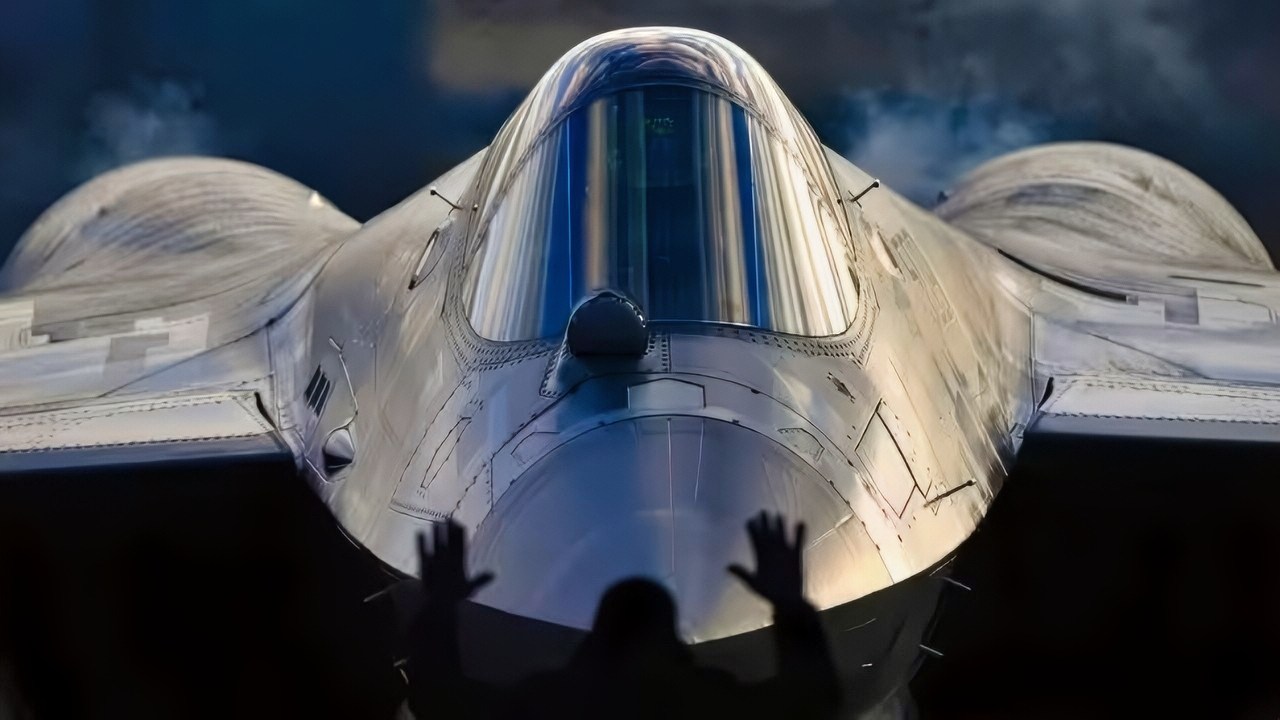
Russian Su-57 5th-Generation Fighter Crashes in What May Be a Friendly-Fire Incident: On 23 July, a Russian military jet, which according to eyewitnesses and videos posted on Russian internet sites is a Sukhoi Su-57, crashed in the Moscow Oblast. The aircraft is the latest-generation Russian fighter and is said to demonstrate some level of stealth in its blended-body design.
Both Russian and Ukrainian Telegram channels have reported that the pilot ejected and survived, and there were no reports of casualties on the ground. As to the cause of the crash, Russia’s own pro-war internet channels, known popularly as “Z bloggers,” have already pointed the finger at Moscow’s own air defense.
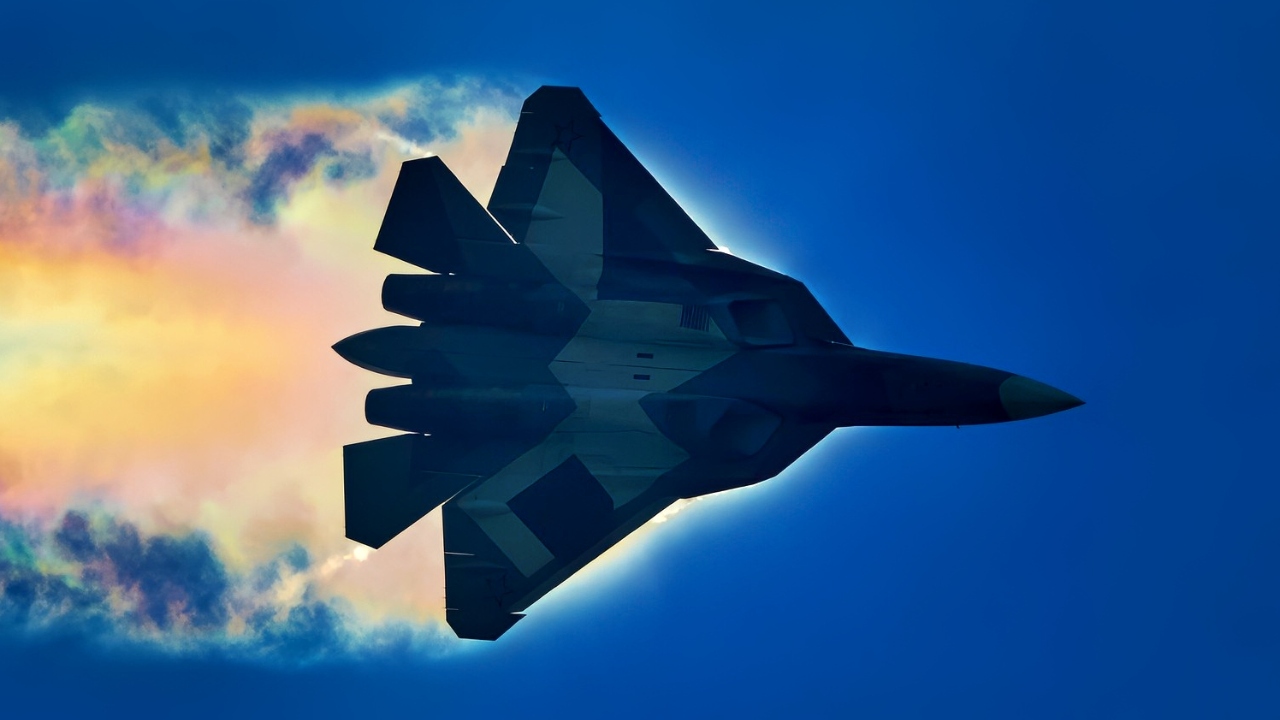
Su-57 Felon Fighter with Trail. Image Credit: Creative Commons.
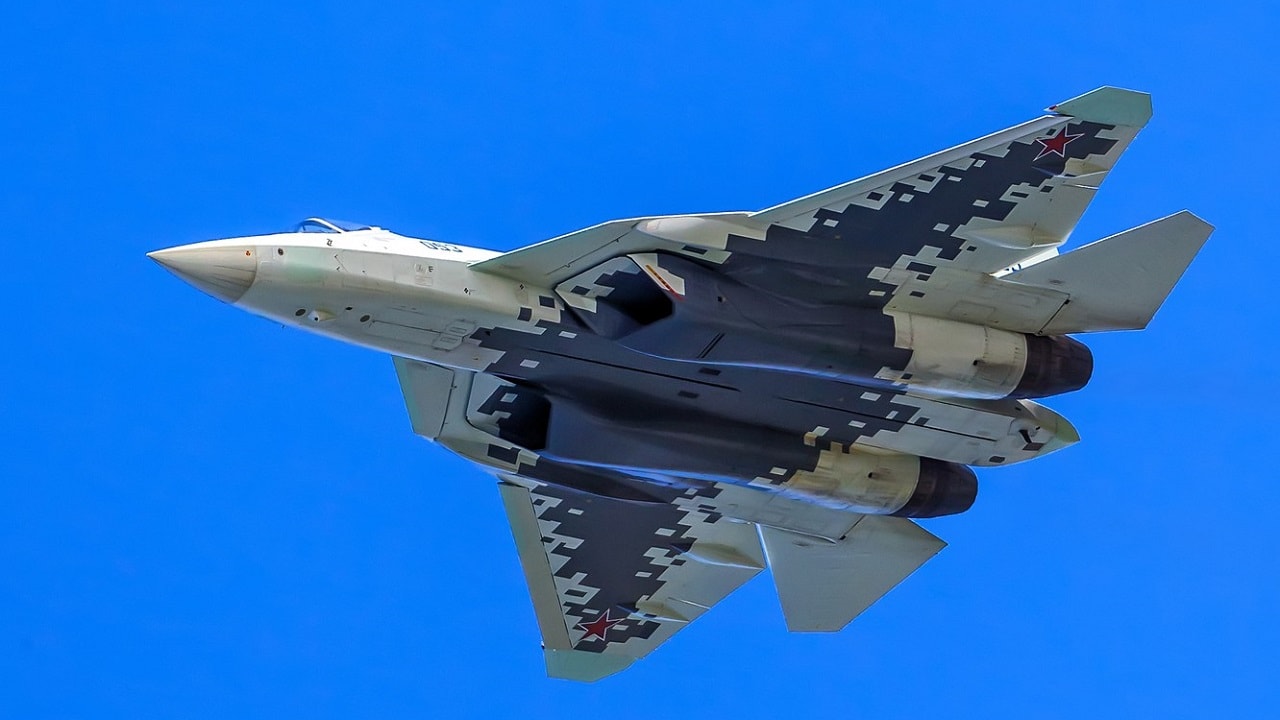
Su-57 Felon from Russian Air Force. Image Credit: Creative Commons.
Of course, this is breaking news, and there is no confirmation about how this all unfolded; no one right now knows the real cause. But there is a lot of online speculation floating around, that’s for sure.
As one Ukraine military site commented, “Russia keeps losing warplanes it cannot quickly replace — burned out at their bases by Ukrainian drones while they were still on the ground, crashing in accidents due to aging airframes flown at high sortie rates, and, more recently, shot out of the sky in air-to-air combat by the Ukraine Air Force’s (PSU) F-16 fighters.”
A case of the latter is thought to have been the cause of the loss of a Su-35 that occurred earlier this month.
Fighter Jet Woes for Su-57 Felon
“They’re not stealthy when they are on the ground,” said one Ukraine defense enterprise director from a design house that boasts air defense as one of its specialties. Ukraine’s drone forces have proven their ability to hit Russian assets even when they have been relocated to bases so far from the front line that Moscow thought they were located in a safe haven.
Each loss adds to Russia’s most pressing issue with regard to its tactical aircraft force: today’s production rates are very low, sometimes only slightly above one aircraft per month. There are also other production delays due to sanctions that have prevented the importation of numerous electronic components and other production inputs.
In addition, production inputs for fighter aircraft are not a top priority in Russia today. Air defense, drone production, and everyday frontline consumables like the many calibers of ammunition used are at the top of the list. Those enterprises receive resources before all the others.
With such stunted production rates, any jet lost in action or to attacks on airbases when they are on the tarmac adds to an already overstretched force. One senior Russian minister has also said this month that the wartime spooling up of the defense sector has now reached its apex and production rates will begin to fall off from here.
“The defense industry as the locomotive of industrial growth will soon reach its maximum output and a high base and will no longer provide the substantial boost to manufacturing growth that it did previously,” Industry and Trade Minister Anton Alikhanov told the Russian news agency Interfax.
Is This a Case of Friendly Fire?
The Su-57 Felon went down at approximately 1350 hours in the Odintsovo district near Zvenigorod, a municipality west of Moscow.
The Russian outlet REN TV reported the crash, and the local channel Zven_Info also published photos of a fire said to be from the aftermath of the crash located in a field near civilian homes.
The Russian Telegram channel Mash reported the aircraft was a Su-57 on a training flight mission and that the pilot had ejected. Russia’s Defense Ministry, speaking to the state news agency TASS, stated that a combat-trainer crashed during take-off, but without identifying the designation of the aircraft, that the pilot ejected, and that there had been no destruction on the ground as a consequence.
But Russia’s war blogger community was far more informative than the MoD and other official channels, but, of course, at this point, harder to confirm, offering speculation as to what might have occurred. Milblogger Romanov wrote that “a number of questions” should go to the crew of BARS-Moskva, a mobile air-defense group that is charged with guarding the capital. Another Russian channel, arrowsmap, said that the air defense crew assigned to protect the jet had shot it down and also asked whether a shoulder-fired missile had brought down the 5th-generation fighter. Again, this is online speculation at this point.
Those bloggers also warned that now standing down such crews as this one that had been assigned to protect the airbase would leave Moscow’s skies undefended from Ukrainian drones. Ukraine is said to have had no role in the situation, but none of the friendly-fire claims carried any official confirmation.
Articles published today in the Russian and Ukrainian press point out that more often than not, Russian air defense crews are another threat to their own pilots.
Russia’s air defense forces shot down one of their own Su-27s over occupied Crimea in March 2024. They also killed a Su-35 pilot with an S-300 over occupied Tokmak in 2023, and opened fire on one of their own helicopters near Moscow in 2025 after mistaking it for a drone.
Poor coordination between Russian air crews and its air-defense batteries has cost Moscow its own aircraft on several occasions. Losing a scarce 5th-generation jet in the same manner, if confirmed, would say more about the lack of competence in the air defense forces that are meant to shield Moscow than the potential threat from Ukrainian attacks, commented one Ukrainian news outlet.
“After these highly-publicized attacks on Moscow as of late – the Wildberries strikes, attacks on refineries, etc. these air defense crews are likely to have a hair trigger and are probably told to shoot first and ask questions later,” said the same Ukraine defense enterprise director. “This is the most probable cause for what appears to be a friendly-fire incident with this Su-57.”
About the Author: Reuben F. Johnson
Reuben F. Johnson has thirty-six years of experience analyzing and reporting on foreign weapons systems, defense technologies, and international arms export policy. Johnson is the Director of Research at the Casimir Pulaski Foundation. He is also a survivor of the Russian invasion of Ukraine in February 2022. He worked for years in the American defense industry as a foreign technology analyst and later as a consultant for the U.S. Department of Defense, the Departments of the Navy and Air Force, and the governments of the United Kingdom and Australia. In 2022-2023, he won two awards in a row for his defense reporting. He holds a bachelor’s degree from DePauw University and a master’s degree from Miami University in Ohio, specializing in Soviet and Russian studies. He lives in Warsaw.


