
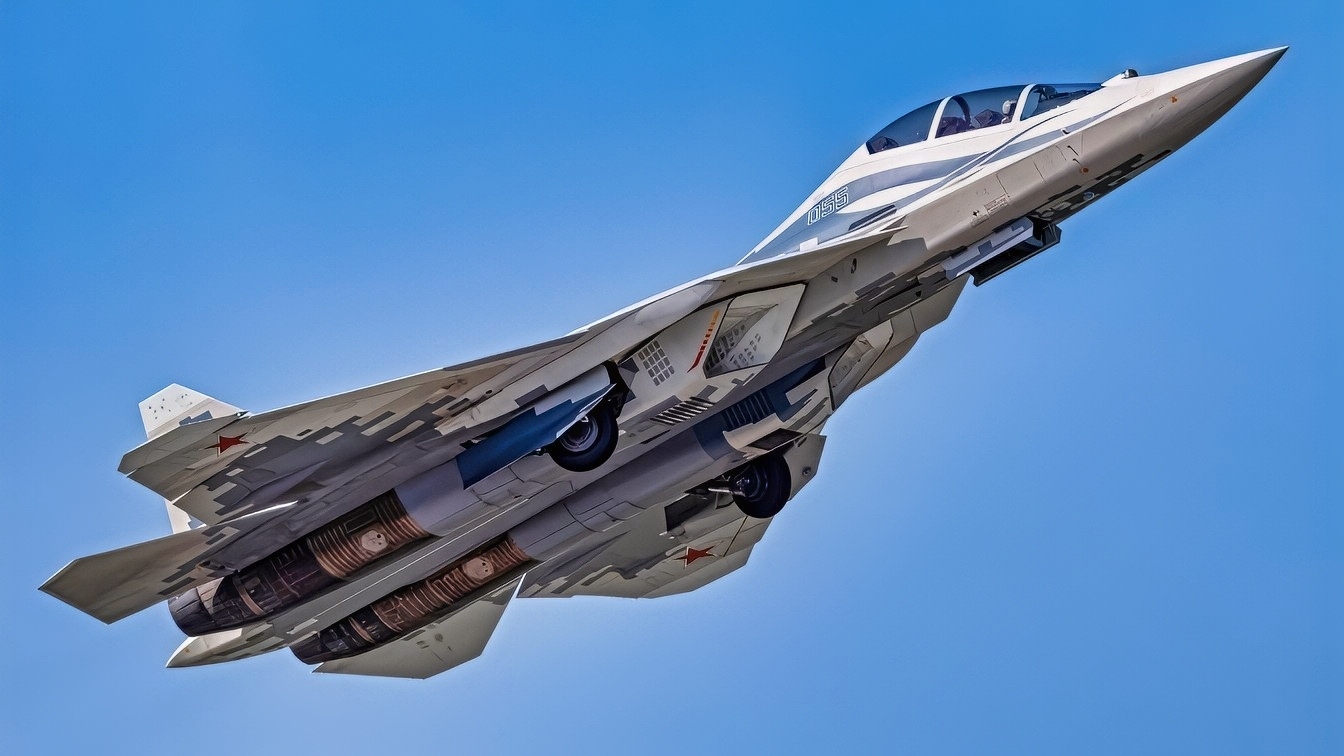
Russia’s United Aircraft Corporation confirmed on May 19 that the new two-seat Su-57D Felon stealth fighter completed its first flight, with Sukhoi chief test pilot Sergei Bogdan at the controls. The Su-57D features an elongated canopy and a tandem cockpit configuration, with the second crew member positioned behind and above the pilot. First Deputy Prime Minister Denis Manturov said the aircraft will function as a combat trainer and a command-and-control platform. UAC CEO Vadim Badeha said the aircraft is intended for export. Algeria, India, and North Korea are among potential customers. Russia has already tested pairing the baseline Su-57 with the S-70 Okhotnik-B unmanned combat air vehicle.
Russia’s Su-57D Has Arrived

Su-57 Felon Fighter Ready for Action. Image Credit: Creative Commons.
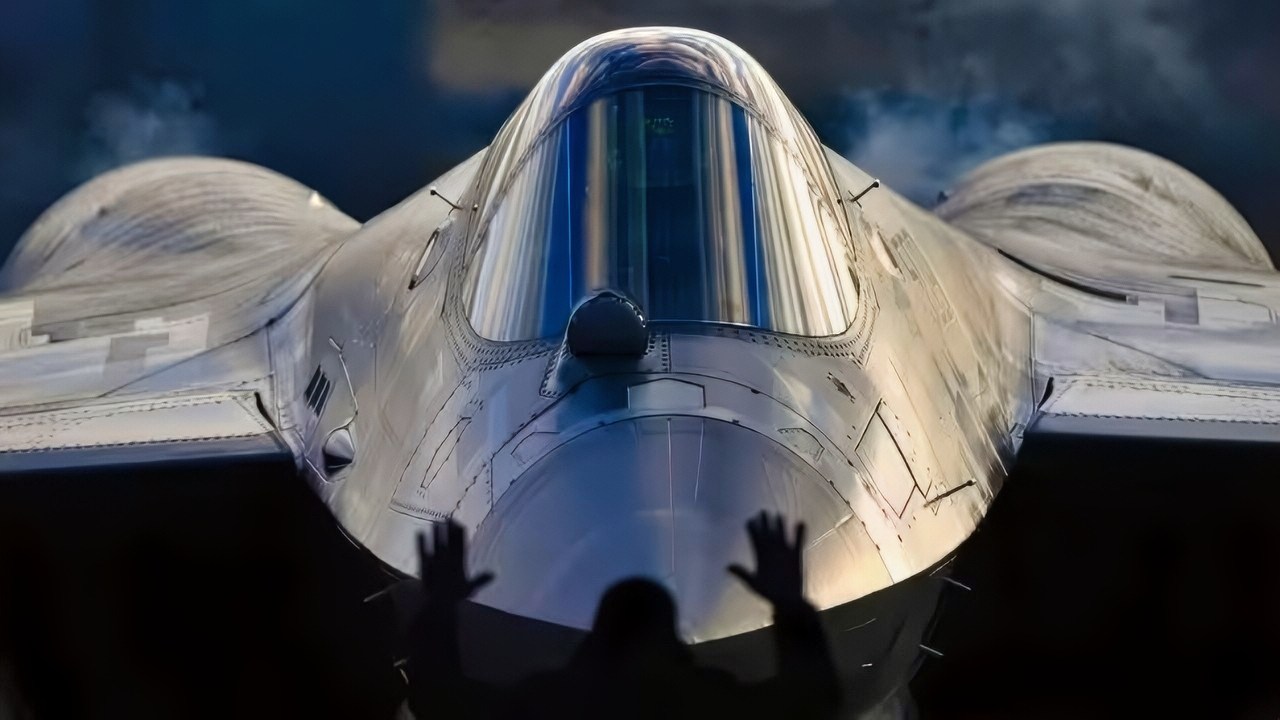
Su-57 Felon Fighter. Image Credit: X Screenshot.
Russia has begun flight testing a new two-seat version of its Su-57 Felon stealth fighter, with the United Aircraft Corporation confirming on May 19 that the aircraft had completed its first flight.
Sukhoi chief test pilot Sergei Bogdan flew the aircraft, and new imagery has appeared online, offering the best look at it yet.
The new variant, widely referred to as the Su-57D, was publicly revealed only days earlier, when imagery on the Fighterbomber Telegram channel showed what appeared to be the aircraft during taxi testing.
Official imagery released afterward showed a much clearer view of the jet, including its longer canopy and raised second cockpit behind the pilot.
Russia Begins Testing The Su-57D
UAC said the first flight was completed as planned and in accordance with the assigned flight mission.
Russian First Deputy Prime Minister Denis Manturov said the aircraft would combine combat capabilities with those of a trainer and a command-and-control platform.

Su-57 Felon Fighter Back in 2011. Image Credit: Creative Commons.

Su-57 Felon Fighter Stealth. Image Credit: Creative Commons.
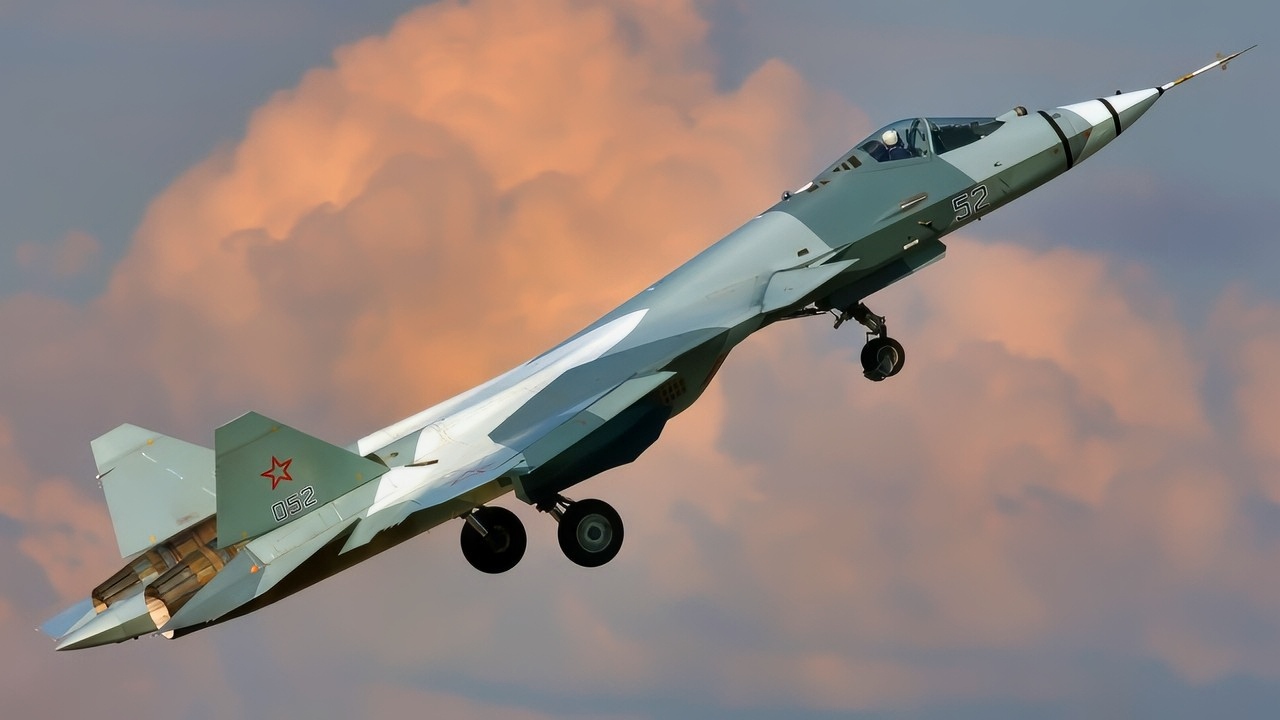
Su-57 Felon Stealth Fighter in the Sky. Image Credit: Creative Commons.
“Flight tests have begun on the prototype of the Su-57, a fifth-generation two-seater fighter.
This aircraft, developed independently by our aircraft manufacturers, will, in addition to its unique combat characteristics, also possess the capabilities of a combat trainer and a command and control aircraft,” Manturov said.
Vadim Badeha, UAC’s chief executive, also indicated that the aircraft was intended for export sales.
“I am confident that the two-seater version of the aircraft will significantly contribute to its success in foreign markets,” Badeha said.
What’s Different
There are several clearly visible changes to the aircraft, including an elongated cockpit canopy and a tandem seating arrangement, in which the second crew member is positioned behind and above the pilot.
That configuration almost certainly required changes to the internal avionics and fuel storage systems. It’s also worth noting that the changes may have imposed penalties on the aircraft’s low-observable shaping, given that changes to the outer mold line can affect radar signature.

Su-57. Image Credit: Creative Commons.

Su-75 Checkmate and Su-57. Image Credit: Creative Commons.
There have long been questions about the Su-57 program due to Russia’s limited production numbers and ongoing sanctions pressure, which make it difficult to procure parts.
Even so, Moscow has continued to develop the platform through new weapons and propulsion work – and now there is a two-seat variant.
Built for Drone Warfare
The question now is what the second crew member is for. Russia says the aircraft can be used as a combat trainer, but it may also be used for crewed-uncrewed teaming, serving as an airborne command platform.
That would place the Su-57D in the same category as China’s two-seat J-20S, which is widely considered a command-and-control platform for drones and future loyal-wingman operations.
Making room for a second pilot paves the way for a future of manned-unmanned teaming – a concept also being built upon by U.S. programs, including the Next Generation Air Dominance (NGAD) that will produce a sixth-generation fighter. The idea is that a second crew member in the aircraft controls drones and manages electronic warfare configuration, while the pilot focuses on regular aircraft controls.
Russia has already experimented with pairing the Su-57 with the S-70 Okhotnik-B unmanned combat air vehicle. That earlier testing makes the Su-57D especially relevant, even if Russia’s drone and stealth programs remain constrained by the war in Ukraine and Western sanctions.
Export Ambitions
Russia has clear export ambitions for the Su-57D. Badeha’s statement explicitly suggests Russia may be using the two-seat aircraft to revive interest in a fighter that has struggled to attract major overseas buyers so far, with India among potential customers.
New Delhi previously worked with Moscow on the Fifth Generation Fighter Aircraft program, an Indian-customized derivative of the Su-57. That effort collapsed years ago amid Indian concerns over performance, technology transfer, cost, and design priorities. One of India’s longstanding preferences was a two-seat version.
Russia is now preparing to field a configuration India once wanted, just as New Delhi is pursuing its own Advanced Medium Combat Aircraft program and closely monitoring China’s stealth fighter development.
It’s too early to say whether the aircraft could pull India back, but Russia will be hoping it’s an attractive option for customers who want a fifth-generation fighter but cannot access Western aircraft like the F-35. Reports dating back to at least 2020 indicate that Algeria may be one of the first customers for the aircraft, while others suggest that North Korea may also be in line to make purchases.
Big Ambitions, But With Limits
The appearance of the Su-57D is not a sign that Russia has solved the problems facing its fighter industry. A prototype first flight is not the same as serial production or operational fielding, and it is certainly not a guarantee of export success.
Russia still has to prove that it can build the aircraft in meaningful numbers, integrate the required mission systems, and then pair it effectively with unmanned aircraft.
The timing also comes into play here. Russia is trying to modernize its air force while sustaining a long war in Ukraine, absorbing sanctions, and competing with U.S. and Chinese advances in next-generation air combat.
Still, the Su-57D is not insignificant. It shows that Russia understands where air combat is heading.
MORE – China Has Thousands of Missiles to Point at Navy Aircraft Carriers
MORE – Canada’s F-35 Purchase Could Get Squashed
About the Author: Jack Buckby
Jack Buckby is a British researcher and analyst specializing in defense and national security, based in New York. His work focuses on military capability, procurement, and strategic competition, producing and editing analysis for policy and defense audiences. He brings extensive editorial experience, with a career output spanning over 1,000 articles at 19FortyFive and National Security Journal, and has previously authored books and papers on extremism and deradicalization.


