

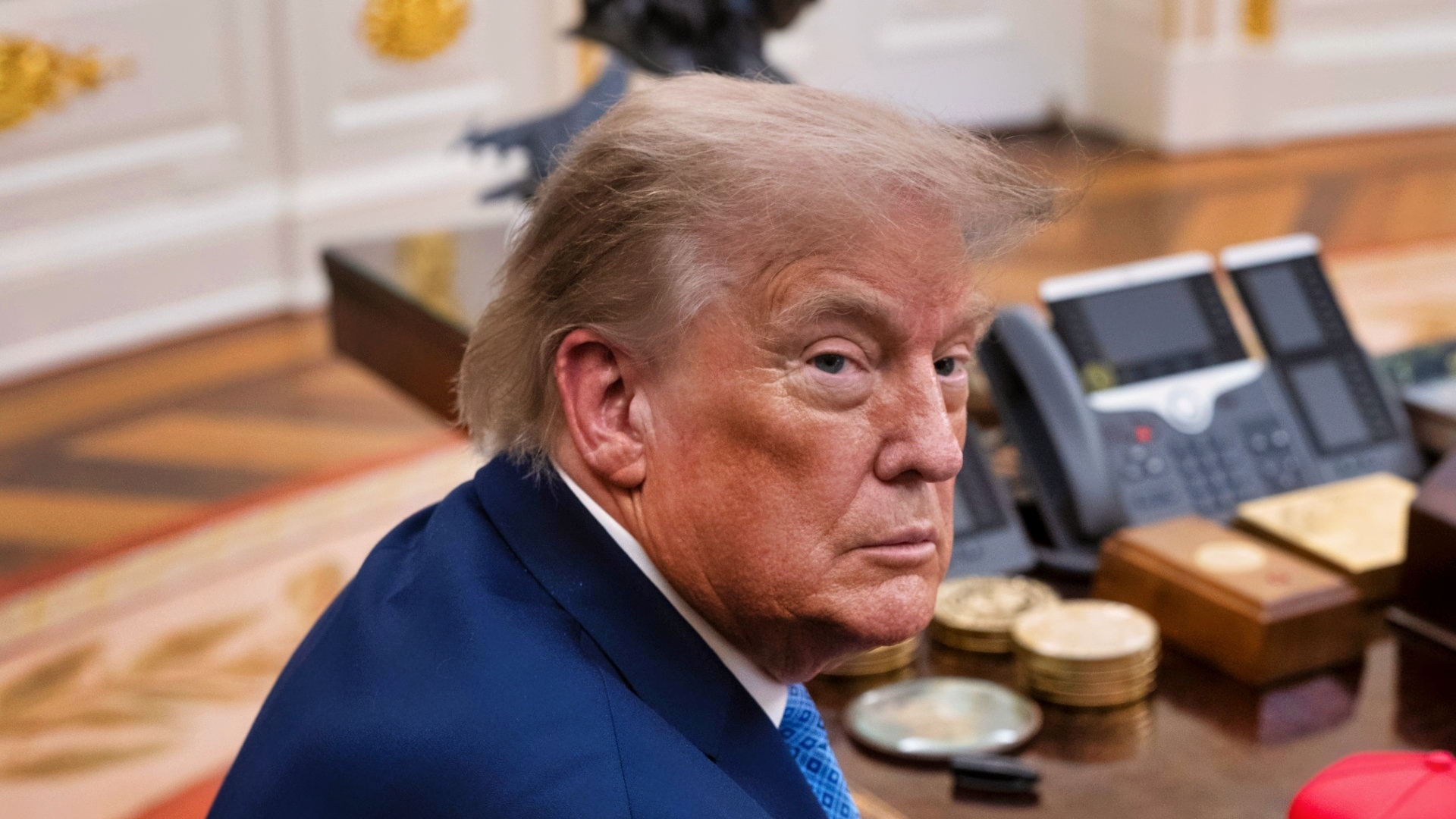
President Donald Trump spent part of Friday meeting with senior advisers and Cabinet officials about escalating the war with Iran, according to a source who spoke to CNN. Then he came out and talked about diplomacy.
Speaking to reporters afterward, Trump said American officials were actively negotiating with Tehran and that the Iranians seemed to be getting more serious than at any point so far. He did not retire the military option. He said the bombing campaign could continue, or the United States could, in his phrasing, “make it a heavier dose,” and that the administration would see what emerged while the talking went on.

An F-35A Lightning II, flown by Maj. Kristin “Beo” Wolfe, F-35 A Lightning II Demonstration Team commander, performs aerial displays during the Joint Base Andrews 2022 Air & Space Expo, at JBA, Md., Sept. 18, 2022. Wolfe demonstrated several difficult maneuvers throughout her performance at the Air & Space Expo to provide an opportunity for people to see U.S. military air capabilities in action. (U.S. Air Force photo by Airman 1st Class Ben Cash)
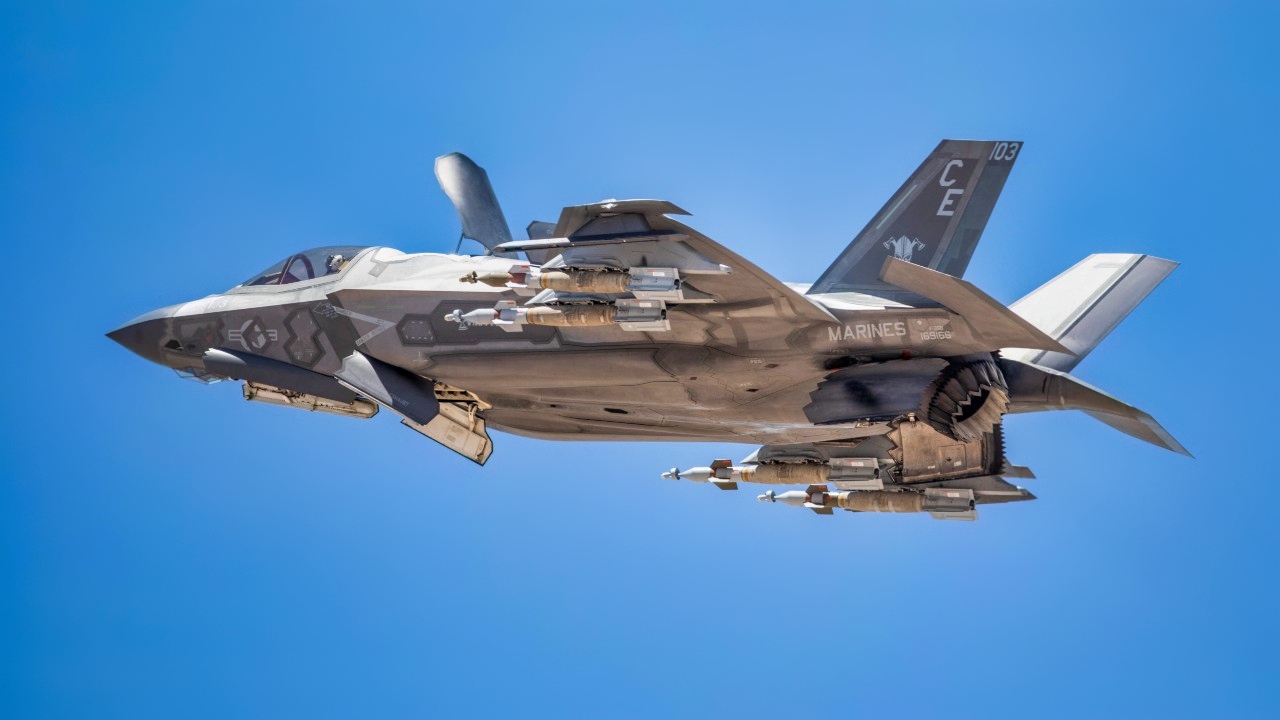
F-35 Beast Mode. Image Credit: Creative Commons.
That was a shift in emphasis from twenty-four hours earlier. On Thursday, Trump told Axios he was weighing a far larger operation, saying he was “considering a massive attack. Bigger than ever before” and that he was close to a decision.
In the same interview, he offered a blunt rationale for escalating rather than settling, saying the Iranians “haven’t received enough pain yet.”
Both messages are still operative. Trump has said the exit from this war could come diplomatically or militarily, and on Friday he declined to say he had chosen.
The War Did Not Pause for the Diplomacy
American aircraft struck Iran overnight into Friday for the 13th consecutive night since the ceasefire arrangement collapsed earlier this month, with the U.S. military describing the campaign as an effort to degrade Iran’s ability to threaten shipping.
The U.S. military said one of Friday morning’s targets was the Islamic Revolutionary Guard Corps naval headquarters at Zibanekar. A provincial deputy governor told Iranian state media that the strike damaged equipment at the complex.
Iran answered across the Gulf. Its military said Friday that it had launched drone attacks on American bases in Bahrain, Jordan and Kuwait, naming Isa Air Base in Bahrain, where it claimed to have hit fuel tanks, storage warehouses and barracks with Arash loitering munitions, and Al-Azraq in Jordan, where it said it targeted aircraft hangars and maintenance facilities. Bahraini authorities reported air raid sirens. Explosions were also heard near a base hosting American forces at Erbil in northern Iraq.
The United States has not confirmed that any of its facilities or personnel were struck, and the Iranian damage claims have not been independently verified.
At Sea, and in the Markets
The maritime fight widened on the same day. The U.S. military said it disabled a tanker attempting to run its blockade of Iranian ports. Saudi Arabia said it struck Houthi targets in Yemen after the group attacked another Saudi vessel in the Red Sea, an expansion that now has Riyadh trading fire with an Iranian-aligned militia while the Strait of Hormuz remains effectively shut.
Oil eased. Brent crude fell roughly four percent Friday to about $96 a barrel after touching $101 on Thursday, its highest level since May. It finished the week up about eight percent.
What the Decision Involves: Trump’s Nightmare Is Military Stocks Getting Low
The choice Trump described Friday is narrower than the rhetoric suggests, for reasons that have accumulated over nearly five months of fighting.
The United States has expended more than a thousand Tomahawk cruise missiles in this campaign, the heaviest use of the weapon in its history, and has drawn down air-launched standoff munitions and interceptor stocks alongside it. Escalation on the scale Trump has floated would come out of magazines that are already thinner than they were in March, at a time when American forces in the Gulf are absorbing near-daily Iranian drone and missile attacks that consume interceptors of their own.
The other constraint is the objective. Thirteen nights of strikes have been aimed largely at Iran’s ability to close Hormuz, and the strait is still closed. A larger operation would have to accomplish something the current one has not, and Trump has not said publicly what target set that would involve.
For now, the administration is running both tracks at once, negotiating and bombing, and Trump’s own description of where that leads was that the talking continues and the outcome remains to be seen.
About the Author: Harry J. Kazianis
Harry J. Kazianis (@Grecianformula) was the former Senior Director of National Security Affairs at the Center for the National Interest (CFTNI), a foreign policy think tank founded by Richard Nixon based in Washington, DC. Harry has over a decade of experience in think tanks and national security publishing. His ideas have been published in the NY Times, The Washington Post, The Wall Street Journal, CNN, and many other outlets worldwide. He has held positions at CSIS, the Heritage Foundation, the University of Nottingham, and several other institutions related to national security research and studies. He is the former Executive Editor of the National Interest and the Diplomat. He holds a Master’s degree focusing on international affairs from Harvard University.


