


Ukrainian President Zelensky has declared that he needs 300 PAC-3 interceptor missiles to fend off future Russian attacks before winter arrives.
In the past, Russia has targeted Ukraine’s energy infrastructure before and during winter, when the country is most in need of heating.
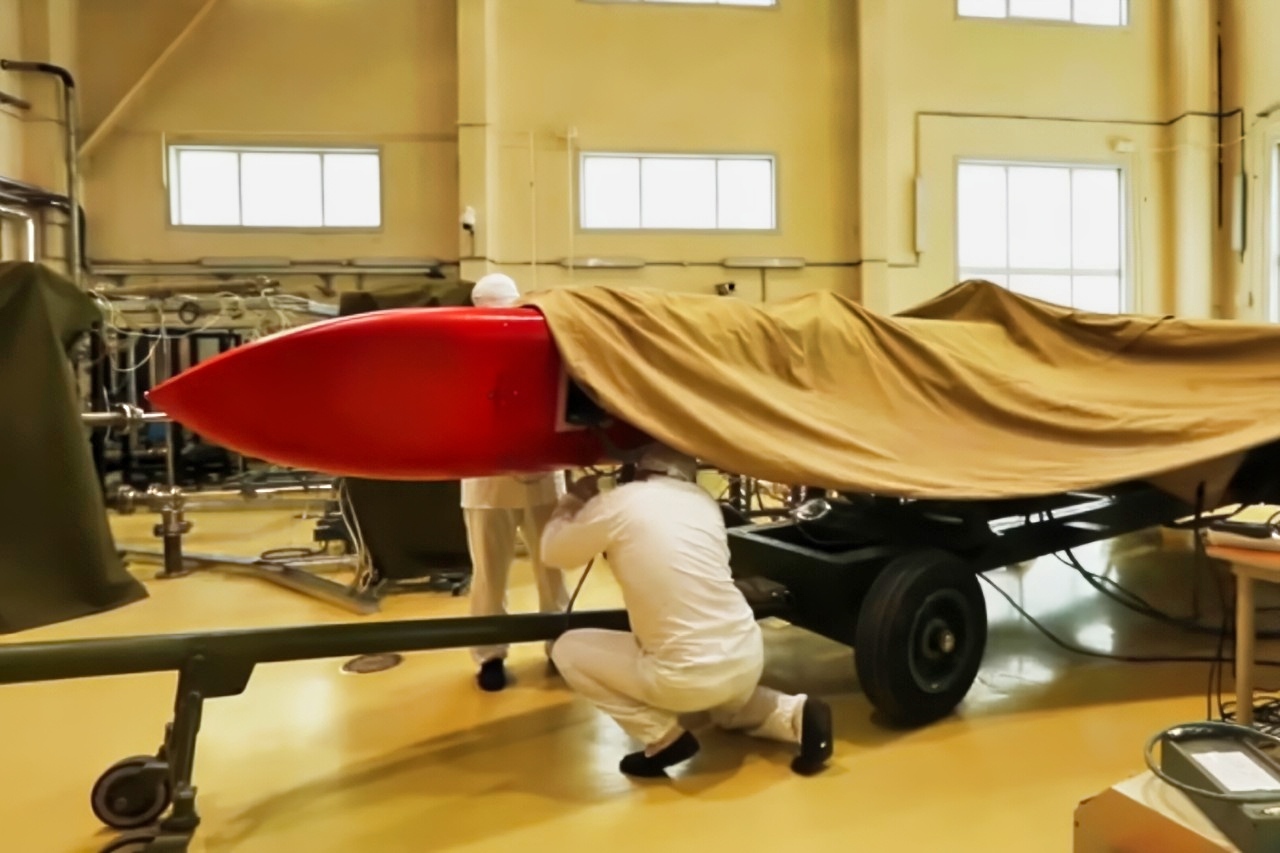
Skyfall Missile Russian Flying Chernobyl. Russian Government/Screenshot.

Image Credit: Creative Commons. Image is of a Russian missile being tested.
In the recent past, however, Kyiv has experienced a critical shortage of air defense missiles, leaving the country defenseless against Russia’s ballistic missiles.
Although Trump has promised Zelensky a license to produce PAC-3 interceptors, the likelihood that production lines will be built and brought into operation in a timely manner is low. Until then, Ukraine will have to wait for its European allies to provide donations.
Ukraine’s Search for More Interceptor Missiles
On Tuesday, before attending the funeral for Senator Lindsey Graham, Zelensky and Trump held a brief meeting to discuss the production of more Patriot interceptors for Ukraine.
Both leaders described the meeting positively, calling it a productive conversation despite lasting less than an hour. Zelensky reportedly urged the American President to give Ukraine an emergency supply of 300 Patriot PAC-3 interceptors ahead of Moscow’s inevitable winter campaign, which will likely target Ukraine’s already faltering energy infrastructure.
Observers have noted that Trump and Zelensky’s relationship has improved significantly since Trump assumed his second term, and many republicans who were once critical of Ukraine have now come around to support Kyiv.
At the NATO summit in Ankara, Trump stated that he would give Kyiv a license to manufacture Patriot interceptors domestically. “This way, you can’t complain that we’re not giving them enough. I said, ‘Make them yourself,’” Trump humorously said.
Some experts in the U.S. have expressed positivity toward the deal. “Ukraine has shown that its defense industry is capable, innovative and creative,” said Luke Coffey, a senior fellow at the Hudson Institute. “I have no doubt that when they’re granted the license, they will be able to produce these missiles, which will hopefully mean there will be more available for the U.S.”
Establishing production lines in Ukraine would be extremely beneficial for Kyiv once the war is over. Due to the high global demand for PAC-3 interceptors, producing these valuable missiles would generate significant revenue for Ukraine and go a long way toward rebuilding the country.
Producing PAC-3s in Ukraine: Easier Said Than Done
That said, the likelihood of production lines opening up in the near future—or ever, for that matter—is slim. Any such proposal will first have to clear bureaucratic, regulatory, and congressional hurdles before Ukraine can even dream of setting up factories.
The main issue, however, is logistical. Patriot Missiles, as TWZ writes, are difficult to manufacture. Producing the individual components of a PAC-3, like the solid rocket motor and the active radar seeker, is difficult even for the U.S. The U.S. has been attempting to scale its production of interceptor missiles recently, but has run into several bottlenecks from sub-tier contractors. Even if Ukraine obtains a production license, when the country can obtain these valuable components remains a big unknown.
Assuming that Ukraine gets the contract approved by Congress and fills out all the other necessary paperwork, assuming that the facilities are built, Ukraine still faces the threat of Russian drones and ballistic missiles. Previous missile attacks from Russia in the past months have targeted the industrial base of Ukraine.
While smaller, simpler projects like drones can escape Russia’s ISR, large-scale production of complicated missiles like PAC-3s is bound to be noticed by Moscow. “From my perspective, I am absolutely 100% concerned about the Ukrainians and anyone they let in those facilities,” said David Shank, the former Commandant of the Air Defense Artillery School at Fort Sill, Oklahoma. “And of course that brings into play how much information and capability we are willing to share for the Ukrainians to build Patriot interceptors.” The technology behind the PAC-3 is highly classified. Sharing it with a country currently at war with its neighbors poses a considerable risk to the U.S.
Outpaced by Russian Production Lines
Even if Zelenskyy gets his 300 PAC-3s and even if production of more interceptors is set up in Ukraine, Kyiv still has to compete with Russia’s steady production of ballistic missiles. According to Ukraine’s Defense Intelligence Directorate (GRU), the Russian military-industrial complex plans to produce 700 9M723 Iskander ballistic missiles this year, the same number as last year.
According to some estimates, production of Iskanders remains steady at 55-60 per month. At the same time, the GRU reports that production of RM-48U missiles, which can be launched from S-300/S-400 air defense systems, has more than doubled, with the current monthly delivery rate at around 50 missiles. In other words, the Russians are producing more ballistic missiles than the U.S. is producing PAC-3s.
This raises serious concerns about the U.S.’ s ability to supply Ukraine, especially since the U.S. has its own supply to worry about. According to a CSIS report, the U.S. has fired between 1,060 and 1,600 interceptor missiles from March to April; this does not account for the recent surge in violence following the collapse of the Memorandum of Understanding. As of March, only 172 missiles have been supplied.
CSIS estimates that it will take at least three years to refill the U.S.’ inventory to prewar levels at current production rates. Consequently, Ukraine likely cannot rely on the U.S. for interceptor missiles and will have to rely on Europe.
Europe, however, has depleted much of its own stocks to refill Ukraine and can only donate so many missiles without threatening its own national security. In the near-to-mid-term, deliveries to Ukraine will likely remain small, leaving Kyiv and other cities across the country at the mercy of Russia’s ballistic missiles.
About the Author: Isaac Seitz
Isaac Seitz, a Defense Columnist, graduated from Patrick Henry College’s Strategic Intelligence and National Security program. He has also studied Russian at Middlebury Language Schools and has worked as an intelligence Analyst in the private sector.


Zazu
July 30, 2026 at 1:10 pm
Get rid of the labor unions that infest our prime suppliers and then the US can easily produce 2x what we do now.
Doyle
July 31, 2026 at 12:39 am
If Russia is announcing its production rates for weapons it’s a lie. Ukraine has been decentralizing its power grid since the start of Russia’s terror campaign against Ukrainian civilian.