


Ukraine’s Department of Defense has codified and approved mass production for Firefly, a low-cost, precision-guided add-on kit designed for drone-dropped munitions.
Fitted to heavy “Baba Yaga” bomber drones like the Vampire and Kazhan, the system dramatically increases strike accuracy from high altitudes while resisting enemy electronic warfare.
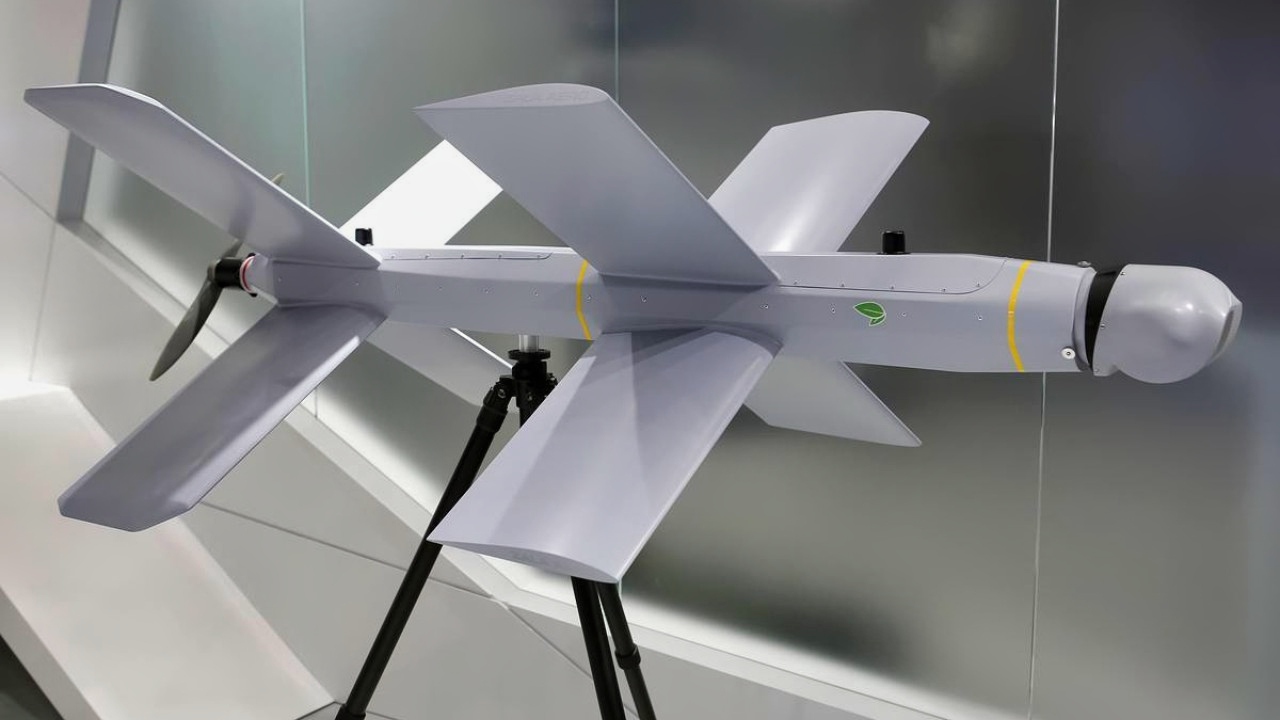
Lancet Drone. Image Credit: Russian State Media.
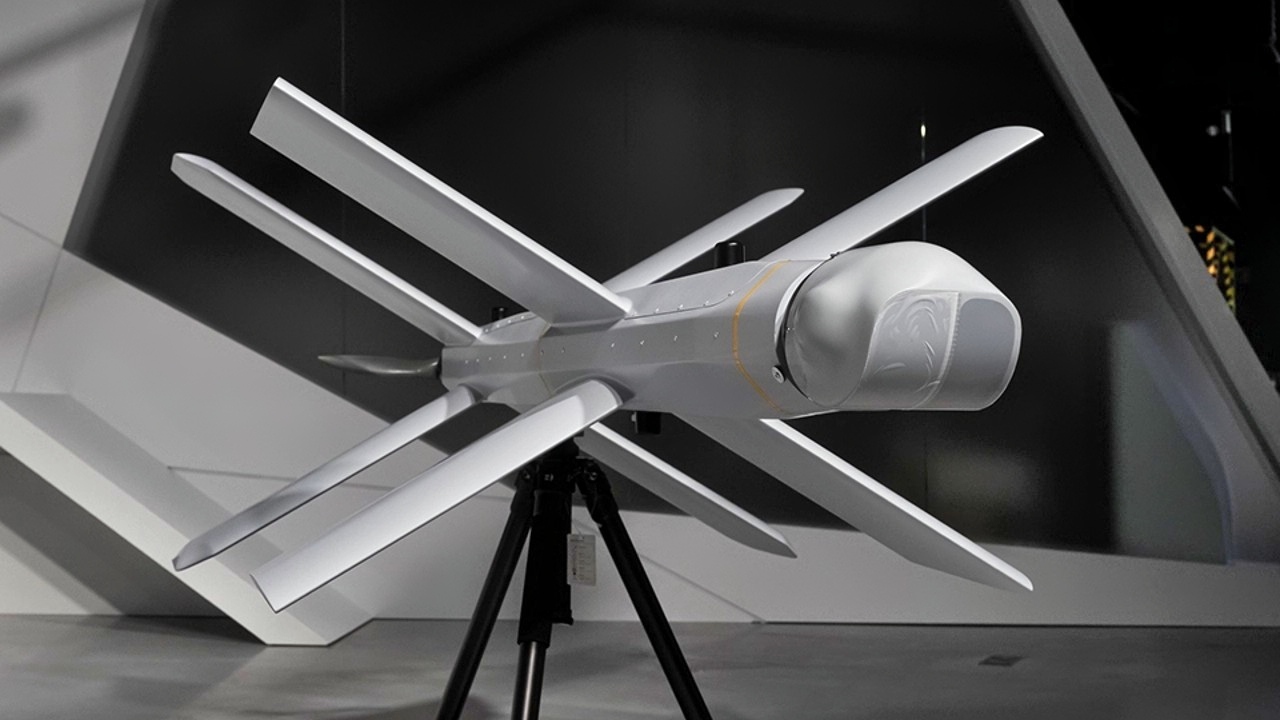
Lancet Drone from Russia. Image Credit: Creative Commons.
The Russians have nicknamed these drones the “Baba Yaga,” which is a reference to the Slavic mythological creature Baba Yaga, a supernatural witch who flies around in a cauldron. It was also used in the “John Wick” films as the moniker attached to Keanu Reeves’ character, “The Boogeyman.”
This is a powerful new capability for Ukraine’s fleet of heavy bomber drones. It is described as an add-on kit suitable for bombs from 2 to 20 pounds.
This low-cost design is significant as Ukrainian manufacturers say that they can produce 10,000 units a month and are ready to ramp up as needed. It is a potential game-changer for Ukrainian drone units.
The Ukrainian Firefly Guided Munitions
The Firefly guided munition operates when dropped from heights of 600 to 2,625 feet (up to 800 meters), keeping carrier drones safe from small-arms fire and localized jamming.
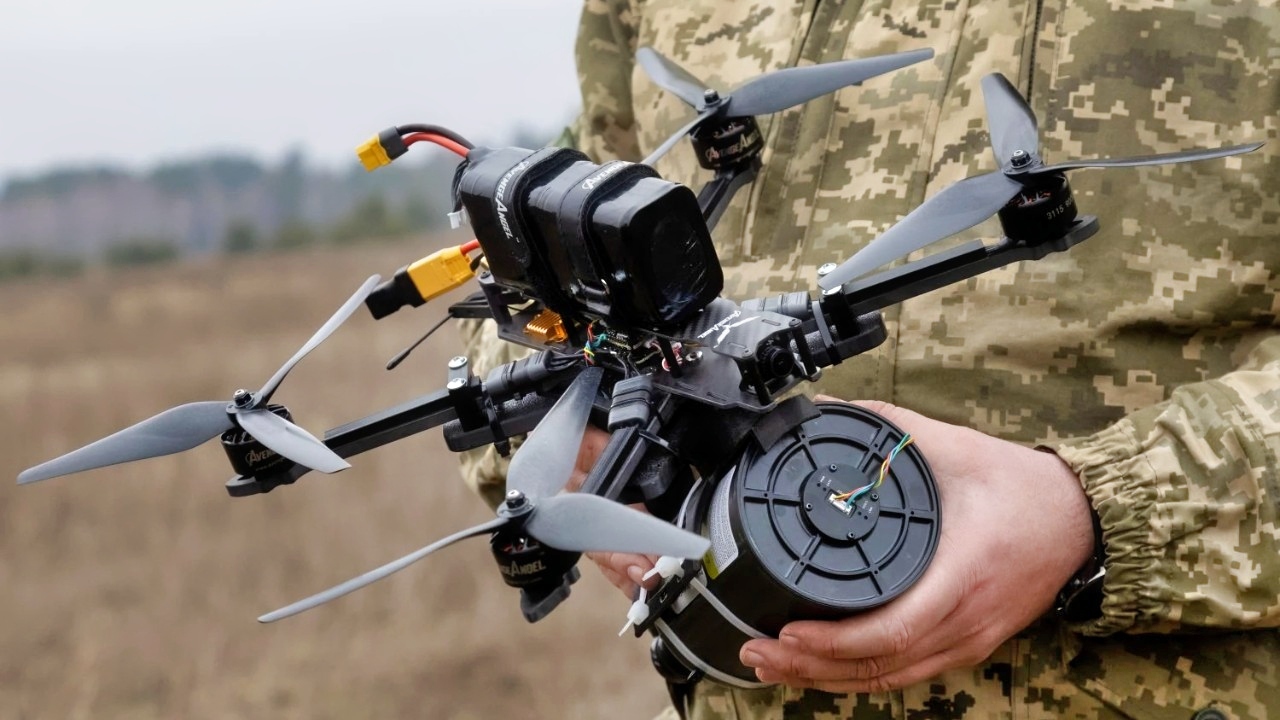
Ukraine Drone. Image Credit: Creative Commons.
It independently calculates and corrects its flight trajectory during descent, achieving a very small margin of error of only 2 to 7 feet.
Ukraine’s Defense Ministry officially approved the domestic Firefly guided drone bomb series for military deployment, marking the entry of a $240 precision-guided munition system into mass production.
The Firefly was designed specifically to strike hardened enemy positions, including fortified dugouts, fortifications, and protected defensive strongpoints.
Firefly munitions have already been tested on Ukraine’s main bomber drones and are ready for mass production.
ArmyRecognition wrote that, “The available imagery indicates that Firefly is an unpowered, aerodynamically controlled bomb rather than a missile.
The photographed munition has an ogive nose, a cylindrical central body, and several control or stabilizing surfaces, with no visible rocket motor or exhaust section.
“The reported 0.9-to-9-kilogram compatibility range suggests that Firefly is not a single standardized warhead but a modular guidance and control assembly that can be matched to different explosive bodies.
“Ukraine has not disclosed the explosive filling, fuze, penetration mechanism or warhead options. Those omissions are operationally significant: a fragmentation charge may be effective against troops in an open trench, whereas a covered dugout normally requires a direct hit, sufficient explosive mass and an impact-delay or penetration fuze.
“A total munition mass of nine kilograms does not mean nine kilograms of explosive, and Firefly should not be assumed capable of defeating thick reinforced concrete without evidence of a purpose-designed penetrator or shaped-charge section.”
The Deadly Ukrainian “Baba Yaga” Drones
Ukraine operates a wide variety of heavy multicopter bombers, including the Vampire. Kazhan, Heavy Shot, Perun, Nemesis, and others.
The Vampire, the most common type, delivers a 33-pound bombload some 20 miles; Kazhan drones carry up to 66 pounds of munitions. Unlike single-use FPVs, the bombers return to base, reload, and attack again and again.
Designed for military operations, it carries heavy payloads like mortar rounds, demolition charges, and anti-tank mines for precision targeting, remote mining, and frontline logistics.
These hexacopter or octocopter reusable drone bombers operate primarily at night, instilling psychological fear due to their loud rotor noise and precise destructive strikes against Russian targets.
A Russian milblogger lamented that the Ukrainian Baba Yaga drones were so effective and that Russia hasn’t fielded anything comparable.
“We have very good FPV drones. But all Ukrainian FPV drones are integrated into a unified ground control station, while ours are fragmented — there’s a control station for Ovod drones, then separate systems for fiber-optic drones — all different. They have better standardization. The biggest problem is ‘Baba Yaga,” the blogger added.
The Firefly Will Allow Drones To Keep Moving, Thus Protecting Them
When drones over the battlefield drop unguided munitions, they are forced to hover closely over their targets. This exposes the drone to rifle and machine gun fire, interceptor drones, and jamming.
But dropping a Firefly guided munition allows the drone operator to release it from a much higher altitude, making its detection acoustically much harder.
And it can keep moving, which will protect it from fire from ground targets and interceptor drones, as well as jamming.
With the planned 10,000 units a month at a cost of just $240 per unit, it will equip Ukraine’s reusable bomber drones with a munition capable of taking out numerous small targets that don’t necessarily require costly missile expenditure, and would be harder to hit with an unguided munition.
About the Author: Steve Balestrieri
Steve Balestrieri is a National Security Columnist. He served as a US Army Special Forces NCO and Warrant Officer. In addition to writing on defense, he covers the NFL for PatsFans.com and is a member of the Pro Football Writers of America (PFWA). His work was regularly featured in many military publications


