
As Ukraine expands its long-range strike campaign against Russia beyond the planned 40 days, Russia is seeking to exploit Kyiv’s biggest strategic weakness: a shortage of interceptors capable of shooting down ballistic missiles out of the sky.
Russian forces fired 24 ballistic missiles during a roughly two-hour-long assault on Kyiv and surrounding regions early on Wednesday, August 5, alongside four other missiles and 115 drones.
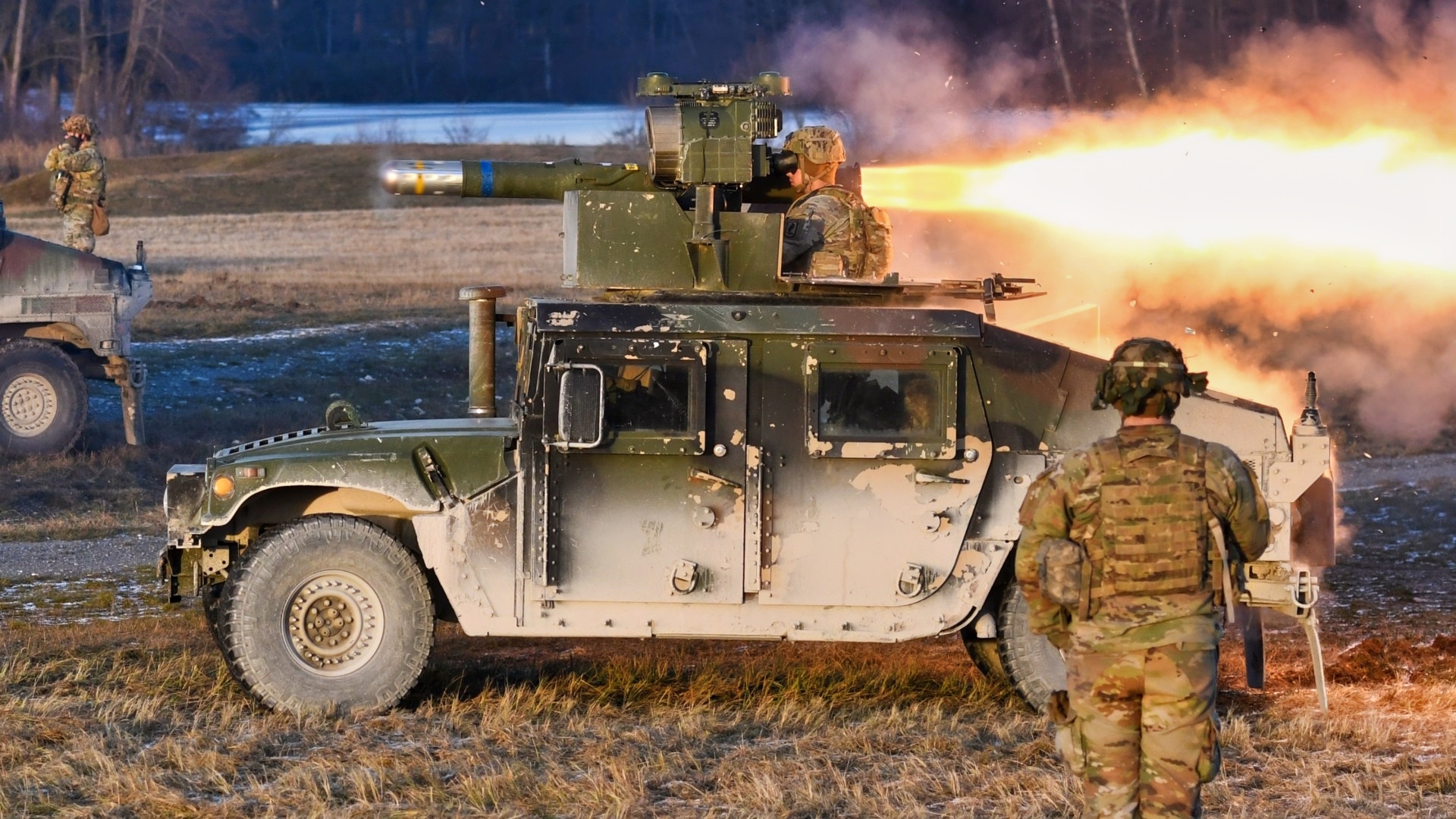
U.S. Paratroopers, assigned to 1st Squadron, 91st Cavalry Regiment, 173rd Airborne Brigade, fire a Tube-launched, Optically tracked, Wire-guided (TOW) missile at the 7th Army Training Command’s Grafenwoehr Training Area, Germany, Dec. 13, 2022. The 173rd Airborne Brigade is the U.S. Army Contingency Response Force in Europe, capable of projecting ready forces anywhere in the U.S. European, Africa or Central Commands’ areas of responsibility.
(U.S. Army photo by Markus Rauchenberger)
Ukraine failed to intercept a single ballistic missile, and the attack killed 17 people and wounded at least 44.
A Problem Kyiv Can’t Solve
The problem is only getting worse, and this is not the first round of ballistic missile strikes from Russia.
This week, Ukrainian President Volodymyr Zelenskyy said that Ukraine had received only around one-third as many missile interceptors from its allies in 2026 as it did in 2025, even as Russian ballistic missile production increases.
Ukraine now believes that Moscow could have the capacity to launch as many as 100 ballistic missiles a month, and Kyiv doesn’t have the weapons it needs to defend against them.
Zelenskyy has spent months pressing Washington and other allies for more Patriot interceptors, which remain Ukraine’s only proven defense against these threats, but those calls have not been met with a significant increase in deliveries.
It leaves Ukraine in a difficult and seemingly contradictory situation: its long-range strikes are putting Russian refineries out of action and crippling logistics infrastructure, but Moscow retains the ability to inflict potentially devastating damage on Ukraine’s energy grid if it concentrates ballistic missiles against critical energy infrastructure ahead of the winter months.
Zelenskyy Urgently Requires Patriots
The Patriot air defense system has become Ukraine’s most valuable protection against Russian ballistic missiles.
It may not be the only weapon capable of intercepting ballistic missiles, but it is widely available to Ukrainian forces and has proven effective in combat against Russian Iskander-M ballistic missiles and North Korean KN-23 and KN-24 missiles, which Moscow has also incorporated into its strike campaign.
Since 2023, Ukraine has received several Patriot batteries from the United States, Germany, the Netherlands, and Romania, together with hundreds of interceptor missiles, but Kyiv says expenditure rates now far exceed deliveries.
Those inventories, however, have been largely depleted following repeated Russian missile barrages.
Zelenskyy Keeps Making Appeals
On August 6, Zelenskyy published another video on social media, again calling on his allies to prioritize the delivery of interceptors, describing the number one challenge Ukraine faces as “Russian strikes.”
“As of now, the number one challenge is Russian strikes. The United States knows exactly what we need and that this is not about something abstract. This is about protecting lives. These are real people, individual lives,” he said.
The Ukrainian president also issued a broad appeal. He said that the decisions that need to be made must not just come from the United States, but all allies who have stockpiles of weapons that he believes are better spent protecting Ukraine than remaining in storage.
“Air defense support is needed, and that requires a political decision. In Europe too. In the G7 countries too,” he continued.
It is by no means the first time Zelenskyy has called for more interceptors, and it almost certainly won’t be the last.
Giving Up Patriots Is Hard To Do
Ukraine’s allies cannot reasonably be accused of abandoning Kyiv.
That’s not what’s happening.
The Kiel Institute notes that Ukraine’s allies have allocated more than $300 billion in military, financial, and humanitarian assistance since 2022, including over $100 billion in direct support from the United States.
The issue is not that Ukraine’s allies are unwilling to help, but that Patriot interceptors are not unlimited.
Every missile transferred to Ukraine is removed from inventories that are intended to defend American forces and allies against Russia, Iran, China, and similarly aggressive adversaries.
The war with Iran has made that trade-off even harder.
According to the Center for Strategic and International Studies, the United States entered the conflict with Iran with an estimated 2,300 Patriot interceptors, but had only 759 to 827 remaining by late July.
Roughly 65% of the prewar inventory had therefore been expended, alongside 38% of America’s THAAD interceptors. Reuters also reported that Washington had used virtually all of its ATACMS and Precision Strike Missiles and almost half of its Tomahawk inventory.
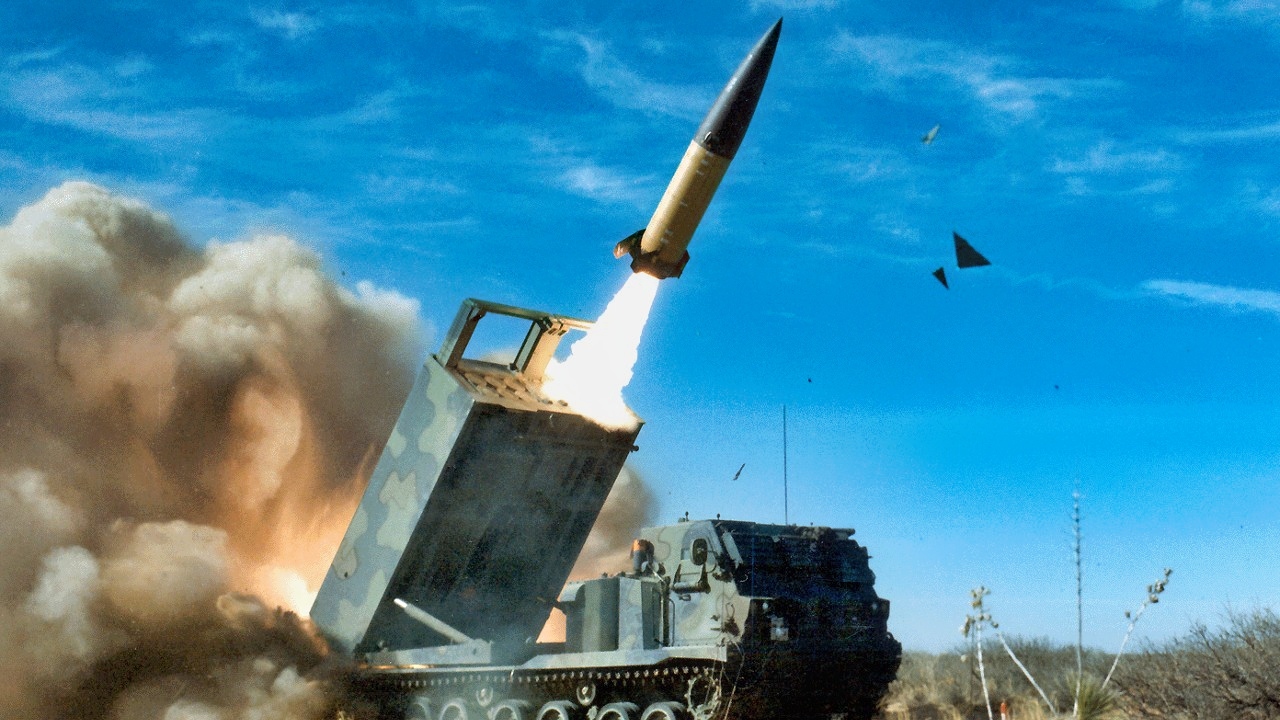
An ATACMS missile being launched from an M270 MLRS.
The shortages have become a major problem for Washington, making a deal with Tehran truly urgent.
President Donald Trump reportedly confronted Defense Secretary Pete Hegseth at Camp David last week after learning that stocks were lower than he was led to believe, with Hegseth allegedly blaming Deputy Defense Secretary Stephen Feinberg for failing to keep the president informed.
The administration publicly disputes the existence of a crisis, but the estimates explain why Washington cannot simply empty its remaining Patriot stocks and still support Ukraine.
Zelenskyy will probably secure additional interceptors over time, but it likely won’t be enough.
The deliveries certainly won’t be quick enough to cover Ukraine’s needs, either.
In the longer term, Kyiv’s only hope may be Freyja, a Ukrainian-European low-cost ballistic missile defense project. Its developers are targeting a first successful interception by mid-next year, leaving Ukraine exposed for at least one more winter.
About the Author: Jack Buckby
Jack Buckby is a British researcher and analyst specializing in defense and national security, based in New York. His work focuses on military capability, procurement, and strategic competition, producing and editing analysis for policy and defense audiences. He brings extensive editorial experience, with a career output spanning over 1,000 articles at 19FortyFive and National Security Journal, and has previously authored books and papers on extremism and deradicalization.


