

On Monday, the 60-day period from the June Memorandum of Understanding between the U.S. and Iran expired, seemingly rendering that agreement even more dead than it previously appeared.
This leaves the conflict between the U.S. and Iran in a sort of limbo, as the sides have not been attacking each other in recent weeks, but have also not made peace.
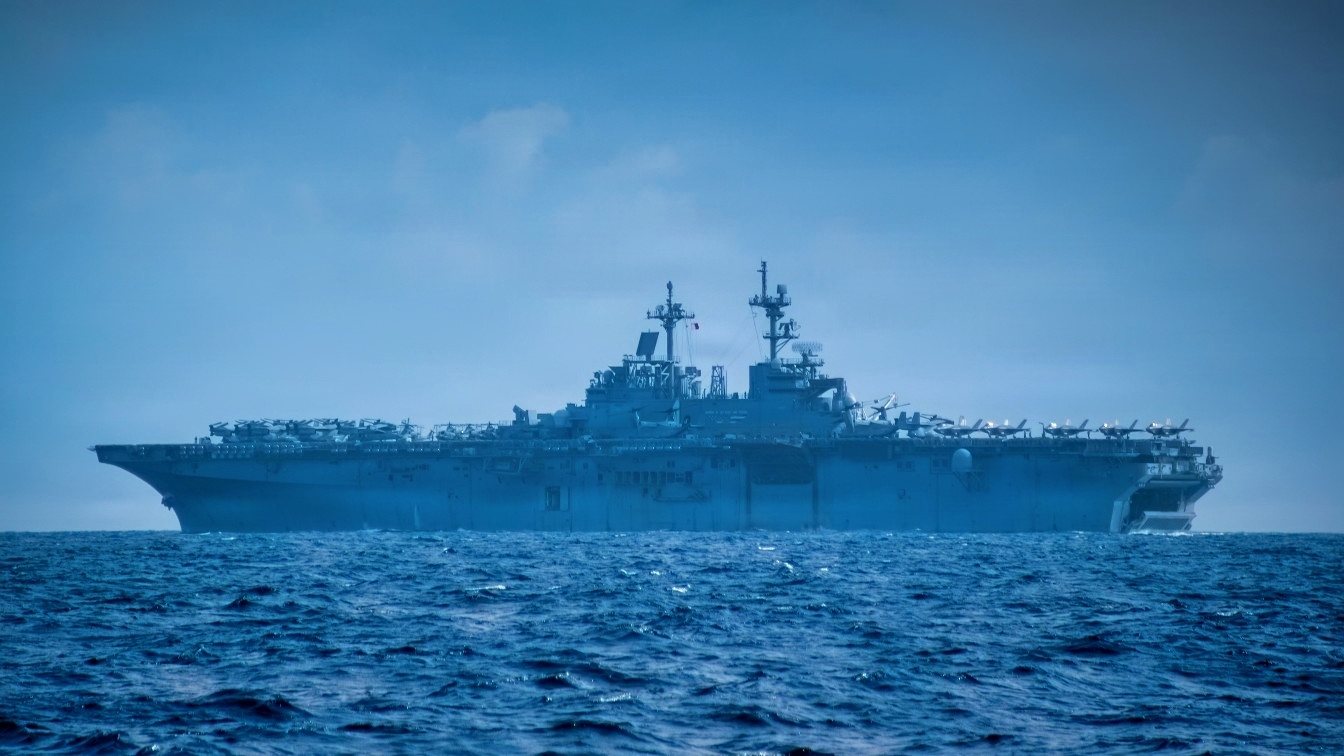
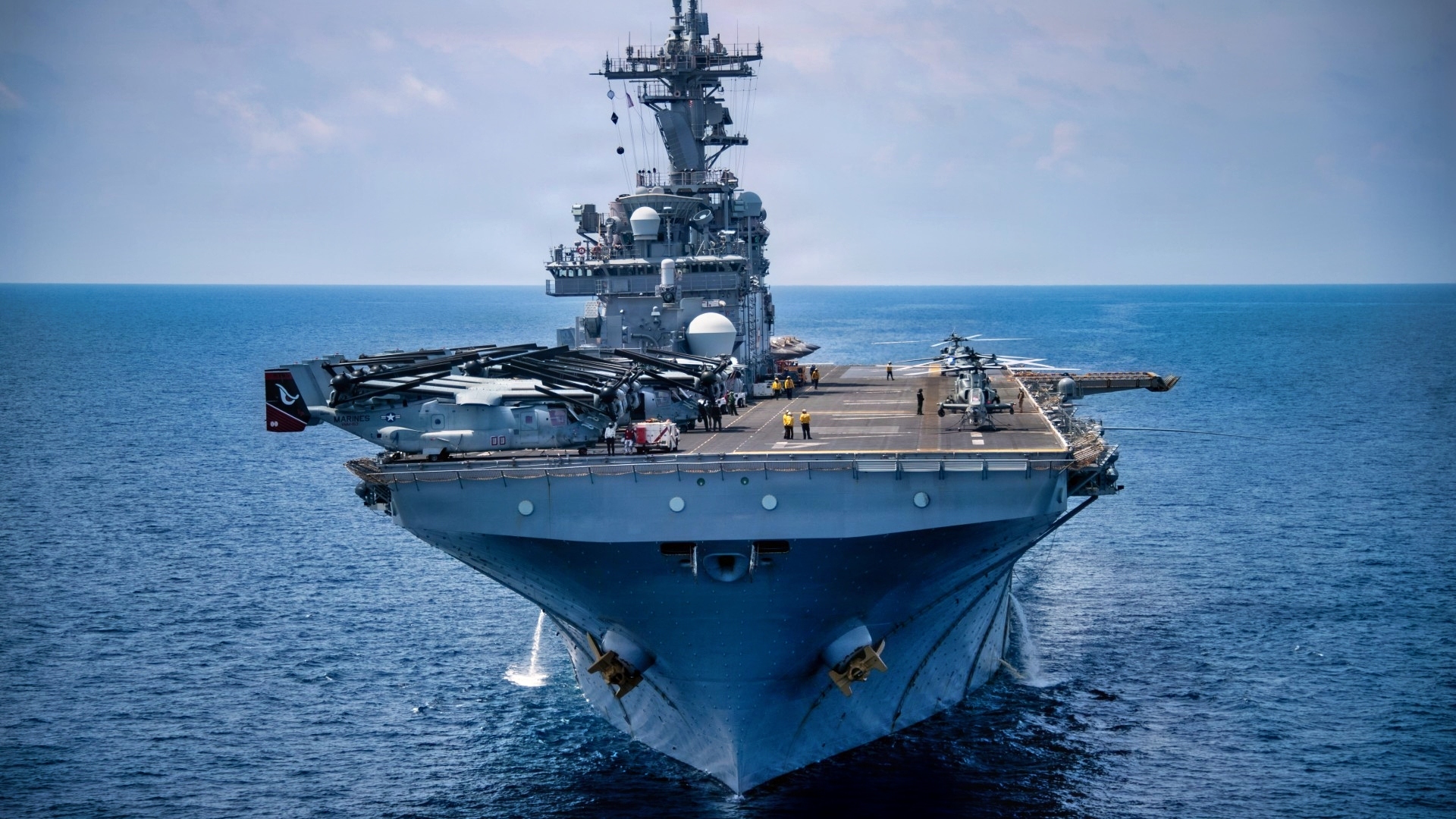
Wasp-class amphibious assault ship USS Boxer (LHD 4) transits the South China Sea, June 4, 2026. Boxer, flagship of the Boxer Amphibious Ready Group, is underway with the 11th Marine Expeditionary Unit in the U.S. 7th Fleet area of operations. U.S. 7th Fleet, the Navy’s largest forward-deployed numbered fleet, routinely interacts and operates with allies and partners to preserve a free and open Indo-Pacific (U.S. Navy photo by Mass Communication Specialist Seaman Eliora Sims)
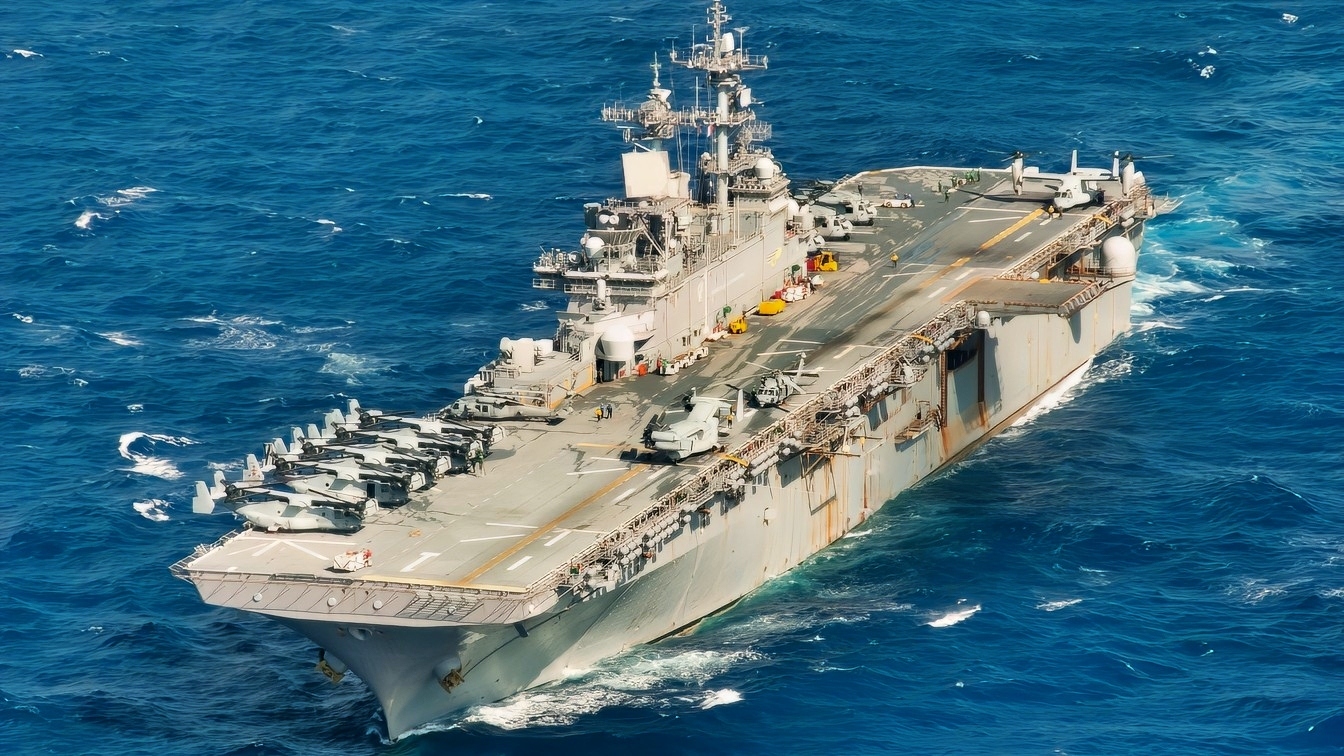
The amphibious assault ship USS Wasp (LHD 1) sails in the Philippine Sea Aug. 26, 2018 during a Passing Exercise (PASSEX) with the Japan Maritime Self Defense Force. PASSEX enabled the Wasp ARG and the JMSDF a chance to practice communications and maneuvering procedures. The Wasp Amphibious Ready Group is currently operating in the region to enhance interoperability with partners and serve as a ready-response force for any type of contingency. (U.S. Navy photo by Mass Communication Specialist 3rd Class Taylor King)
Iran and Oman have, for nearly two weeks, been reportedly close to a deal on control of the Strait of Hormuz, but no agreement has been announced, and earlier this week, President Donald Trump threatened to bomb the U.S. ally Oman.
So, what’s next for the Strait of Hormuz and the broader conflict? Trump provided some clues on Tuesday.
“No Talks”
On Truth Social Tuesday, the president declared that “there are no talks or conversations going on, or scheduled, with the Islamic Republic of Iran.” In addition, Trump said that “The Naval Blockade remains in full force and effect. The Hormuz Strait is open and operating. All water mines have been removed or detonated.”
A few hours earlier, Trump had posted a graphic to Truth Social, proclaiming the Strait of Hormuz a “New U.S. Territory.”
Per CNBC, no one but Trump seems to agree that the U.S. now controls the Strait, nor does it appear to be official U.S. policy to treat the Strait of Hormuz as a U.S. territory.
Traffic through the Strait remains at a standstill.
Marc Sievers, who served as ambassador to Oman for most of Trump’s first term, discussed the situation there and expressed doubts that the U.S. would actually go through with bombing Oman.
“It’s very hard for me to imagine [U.S. Central Command] planning bombing raids on Omani targets when we’ve worked very closely with the Omanis and developed their ports and so forth for access for the U.S. Navy over a number of years,” Sievers said in a CNBC appearance this week.
“But clearly there is frustration in the White House that Oman seems to be partnering closely with the Iranians on developing a channel for the Strait of Hormuz.” He added that he thinks Trump would like Oman to step away and let the U.S. handle talks with Iran.
The risk consultancy the Eurasia Group, per CNBC, “no longer expects a peace deal by September,” and now sees a de-escalation by year-end as more likely. The group instead sees a “limited deal” as more likely.
“Any recovery in Hormuz flows will be partial,” the Eurasia Group said.
Escalation From Iran?
Meanwhile, the Wall Street Journal reported on Sunday about Iran’s “secret plan” to escalate the war.
After the Memorandum of Understanding was agreed to in June, the Journal said, Iran’s hardline leaders came up with “a different plan.” Believing that the U.S. and Israel were seeking a temporary peace to “take pressure off the global economy” and plan a bigger attack, Iran’s plan was to “prepare for a bigger fight.”
What was Iran’s plan, according to “Iranian and Arab officials” who talked to the Journal?
Parts of the plan include giving the Islamic Revolutionary Guard Corps more control over Iran’s military, “expanding domestic counterintelligence operations,” and producing more missiles and drones.
Around this time, Iran began attacking ships trying to traverse the Strait of Hormuz, while its allies, the Houthis, began attacking Saudi ships in the Red Sea.
Intelligence officials in Arab countries, the Journal said, noticed evidence of “a strategic shift inside the country’s hard-line leadership to get their forces ready to widen the war and raise the costs for the U.S.”
And that’s more evidence that the war is nowhere near over.
“There is also a widespread view in Iran that the main war has not yet begun,” Mohammad Hassan Sangtarash, a Tehran-based defense analyst, told the Journal.
“What we have seen so far is increasingly interpreted through the lens of ‘salami-slicing’ tactics—limited, incremental escalation designed to weaken capabilities before a larger confrontation.”
This has also, the Journal said, led to widespread distrust between the two sides, making any permanent end to the war even more unlikely.
About the Author: Stephen Silver
Stephen Silver is an award-winning journalist, essayist, and film critic, and contributor to the Philadelphia Inquirer, the Jewish Telegraphic Agency, Broad Street Review, and Splice Today. The co-founder of the Philadelphia Film Critics Circle, Stephen lives in suburban Philadelphia with his wife and two sons. For over a decade, Stephen has authored thousands of articles that focus on politics, national security, technology, and the economy. Follow him on X (formerly Twitter) at @StephenSilver, and subscribe to his Substack newsletter.


